
Bay of Kotor (Kotor, Perast)
Where mountains meet the sea in a medieval fairytale 🏰🐱⛰️
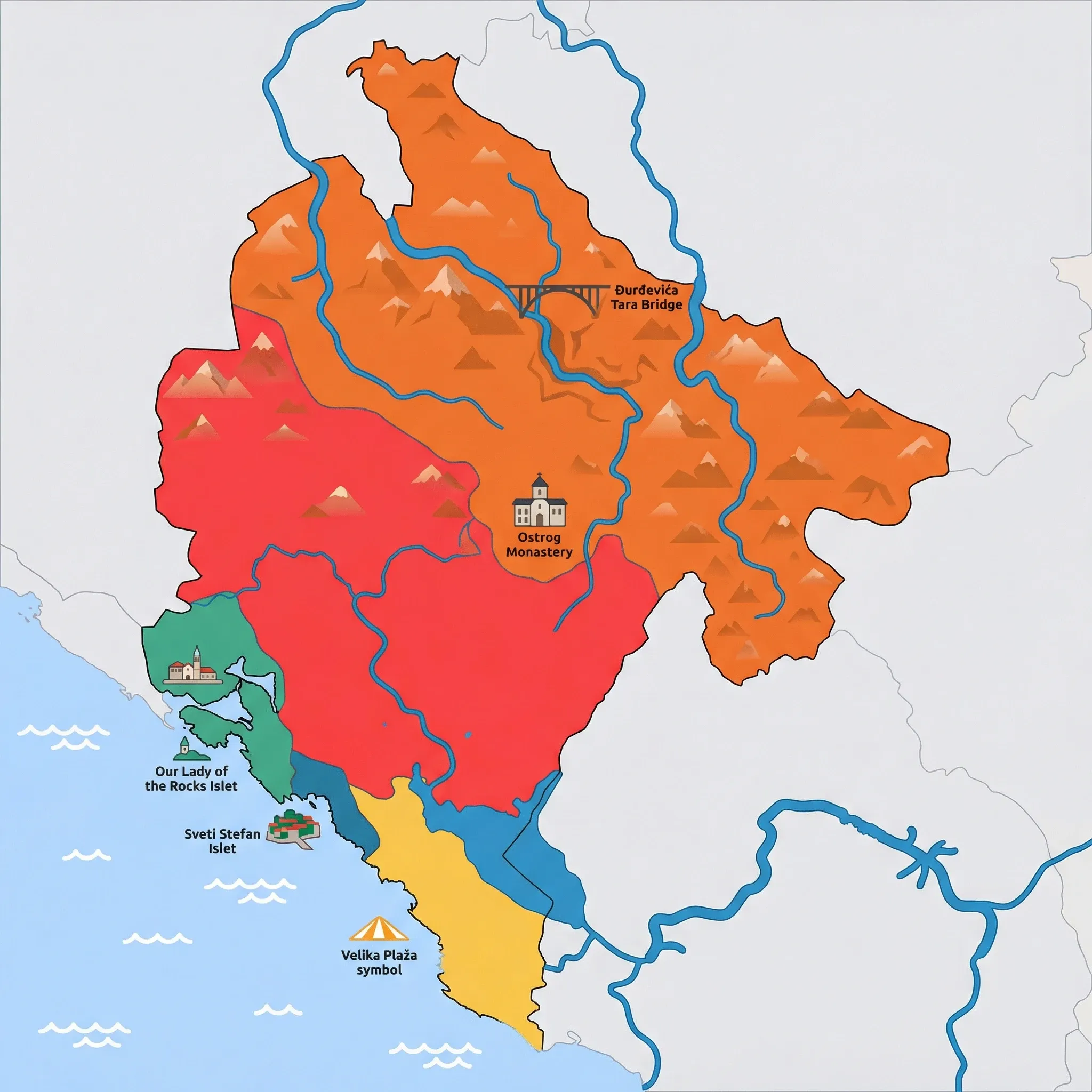
Click a region to explore
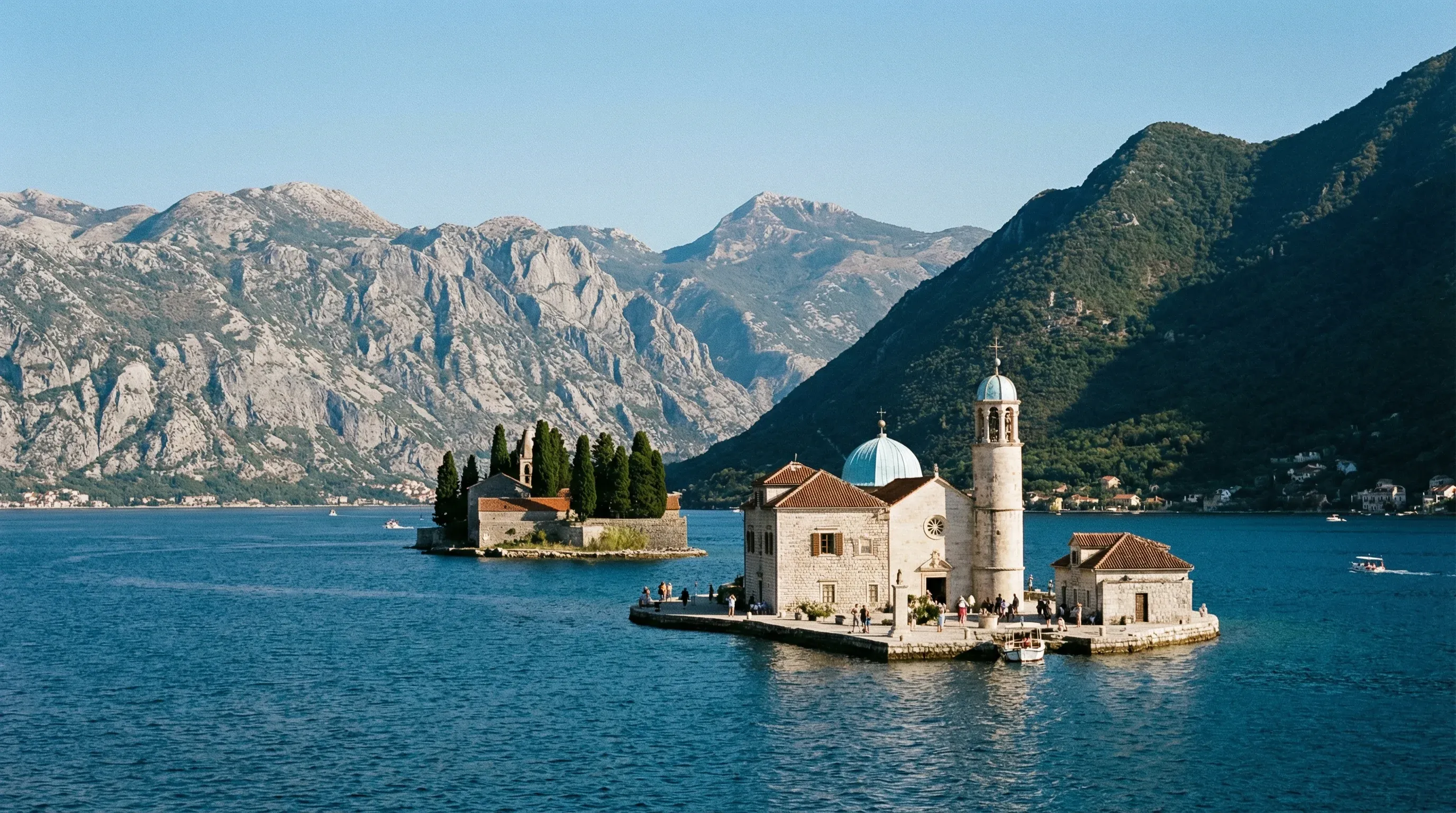
The Bay of Kotor (Boka Kotorska) is arguably the most visually stunning corner of the Balkans, often described as the southernmost fjord in Europe. For families, it feels like stepping into a storybook illustration. The geography here is dramatic: steep, grey limestone mountains rise vertically from the calm, glass-like waters of the Adriatic, sheltering a string of medieval stone towns that have changed little over centuries. Unlike the open ocean, the bay is protected from large waves, making the water exceptionally calm and safe for swimming with young children, although parents should note that beaches here are typically pebbly or concrete pontoons rather than sandy stretches. The region is rich in history, from Venetian palaces to Austrian fortresses, yet it remains accessible and engaging for younger travelers who can roam car-free old towns and explore ancient ramparts.
The climate is Mediterranean, with hot, dry summers and mild, rainy winters. However, the unique topography means mountains can trap clouds, providing dramatic atmospheric changes. For families, the culture here is incredibly welcoming; children are doted on in restaurants, and the pace of life is slow and relaxed. The town of Kotor itself is a highlight, a labyrinth of cobblestone alleys hidden behind massive walls. It is famously known as a haven for cats—hundreds of strays are cared for by the community, becoming unofficial mascots that children absolutely adore spotting around every corner. Whether you are kayaking in the calm bay waters or driving the serpentine roads for panoramic views, the Boka offers a mix of nature and history that keeps both parents and kids captivated.
Key Attractions
The crown jewel for active families is the Kotor Fortress (San Giovanni). While the full hike to the top is demanding, even a shorter climb to the Church of Our Lady of Remedy offers breathtaking views over the red roofs and the bay that children will remember forever. Just a short drive or boat ride away lies the picture-perfect town of Perast. Here, the absolute must-do activity is hiring a small boat to visit Our Lady of the Rocks. It is the only artificial island in the Adriatic, built by rocks thrown by local sailors over centuries; the legend of its creation fascinates children, and the boat trip itself is short and safe.
For a deeper dive into the region's seafaring past, the Maritime Museum of Montenegro in Kotor is housed in a baroque palace and displays model ships, weapons, and uniforms that spark the imagination of young pirates. If you want to escape the summer heat, a drive up the famous 25-serpentine road leads to Lovćen National Park. Here, the temperature drops, and families can enjoy easy hiking trails, an adventure park with zip lines, and the monumental mausoleum at the summit, offering views that stretch all the way to Italy on a clear day.
Practical Advice
The best time to visit is May, June, or September. July and August can be stiflingly hot and crowded with cruise ship passengers. If visiting in high summer, explore the old towns in the early morning (before 9:00 am) or late afternoon/evening to avoid the midday crush and heat. Strollers can be difficult in Kotor Old Town due to cobblestones and stairs; a baby carrier is highly recommended. Parking is scarce and expensive—using local buses (Blue Line) or taxis is often less stressful than driving into the town centers.
Food & Drink
Typical meal times: Lunch is usually served from 1:00 pm to 3:00 pm, while dinner is a late affair, typically starting from 8:00 pm to 10:00 pm, though tourist areas serve continuously.
Typical meal costs: A mid-range family lunch costs around €45–75 (approx. $50–80 USD / £40–65 GBP). Coffee is cheap (€1.50–2.50), while fresh fish is sold by the kilogram and can be pricey.
Dietary requirements: Vegetarian options are increasingly common (risottos, grilled vegetables, pastas), but vegan options are limited in traditional konobas. Gluten-free awareness is growing but cross-contamination is a risk in small kitchens.
Signature dishes:
- Crni Rižot (Black Risotto) – A rich, savory rice dish colored with cuttlefish ink, featuring chunks of cuttlefish and garlic; kids often find the black tongue effect hilarious.
- Bokelian Stew – A traditional fish stew made with several types of white fish, vegetables, and Mediterranean herbs, typical of the bay area.
- Krempita – A custard cream cake with a flaky pastry top; the Kotor variety is legendary and a massive, sugary hit with children.
Why this score?
The region offers a mix of developed historic sites and accessible outdoor activities like the steep 1,350-step climb to San Giovanni Fortress. While the bay itself is calm and family-friendly, the surrounding Lovćen and Orjen massifs provide rugged hiking opportunities within a short distance. It serves as a gateway to more intense terrain while maintaining a base of comfortable Mediterranean hospitality.
Why this score?
Kotor has a functional general hospital and several private clinics that are accustomed to treating international tourists and cruise passengers. Most pharmacies and medical staff in this high-traffic area speak basic to functional English, though specialized care often requires a trip to the capital. Emergency response times are generally good due to the compact nature of the coastal settlements.
Why this score?
As a UNESCO World Heritage site and a primary cruise ship port, this region is Montenegro's most iconic international draw, comparable to the Dalmatian Coast. It experiences high visitor density during the summer months with a well-developed infrastructure of boutique hotels, museums, and guided tours. The concentration of foreign tourists in the Old Town of Kotor and Perast remains consistently high throughout the peak season.

The Bay of Kotor is the most expensive region in Montenegro but remains good value compared to Croatia or Italy. Accommodation prices peak in July/August. A family apartment costs €80–150 (approx. $85–160 USD / £70–130 GBP) per night. A scoop of gelato is approx €1.50–2.50 (approx. $1.60–2.70 USD / £1.30–2.15 GBP).

Getting Here & Around
Getting Here
- Airports – Tivat Airport (TIV) is just 10 minutes from Kotor. Dubrovnik Airport (DBV) in Croatia is a 1.5-hour drive (plus border crossing time) and offers more international connections.
- Driving – The region is accessible via the Adriatic Highway. Driving from Dubrovnik involves a border crossing that can have long queues in summer.
- Bus – Reliable bus connections run from Dubrovnik, Podgorica, and Belgrade to the main bus station near Perast Old Town and Kotor.
Getting Around
- Car – Useful for reaching Lovćen National Park, but parking in Kotor and Perast is notoriously difficult and expensive.
- Boat – Water taxis and ferries are a fun way to hop between towns. The ferry at Kamenari-Lepetane saves a 40-minute drive around the bay.
- Walking – The old towns of Kotor and Perast are pedestrian-only zones, perfect for safe wandering with children.
- Bus – The 'Blue Line' local bus runs frequently along the coast between Kotor and Tivat, stopping at all major villages.
Nearby Airports (1 airport)
Tivat
TIVTivat
View full flight map for Montenegro →
Official Links

Packing List
Beaches are pebbly or concrete; protects feet from sharp stones and sea urchins.
Roads around the bay and up to Lovćen are incredibly winding and serpentine.
Kotor's Old Town has many stairs and uneven cobbles unsuitable for strollers.
The bay is backed by mountains and sudden, short downpours are common even in summer.
Most beaches are pebbly or concrete, and sea urchins are common in the rocky shallows.
Roads are famously winding and serpentine, especially the route from Kotor to Lovćen.
Even in August, temperatures in the Durmitor mountains can drop significantly in the evening.
Many small bakeries, ice cream stands, and rural parking lots do not accept cards.
Essential if you plan to visit Lake Skadar or the Ada Bojana river area.

Activities & Best Times

Hiking, wildlife, outdoor exploration, ecotourism
The dramatic fjord-like landscape provides exceptional hiking on the Ladder of Kotor and rural immersion at traditional smokehouses and farms. May, June, and September offer ideal temperatures for exploration, whereas mid-summer can be too hot for strenuous trekking and winters are exceptionally wet.

Urban tourism, museums, historical sites, architecture
While Kotor Old Town is UNESCO-listed and beautiful, the region has one major historic town (Kotor) plus smaller settlements. 'Excellent' should be reserved for regions with world-class cultural density (Venice, Florence, Paris scale). Bay of Kotor is outstanding for the Balkans but not a global top-tier cultural destination.

Sport tourism, fitness activities, active recreation
Features internationally recognized cycling segments of the EuroVelo 8 and high-quality adventure parks on the surrounding massifs. Activity is best in late spring and early autumn; summer heat and high tourist traffic on narrow roads make July and August less optimal for cycling.

Beach resorts, marine activities: diving, snorkelling, kite surfing, wind surfing, sailing
While the bay's beaches are smaller and pebbly compared to the open coast, the calm, crystal-clear waters of Orahovac and Morinj are excellent for families. The swimming season is strictly confined to the warm summer months when water temperatures reach comfortable levels for international travelers.

Learning experiences, scientific sites, historical education
The Maritime Museum and Boka Aquarium provide significant specialized learning opportunities regarding the region's unique marine biology and naval heritage. These facilities align their peak operations with the summer tourist season, seeing significantly reduced accessibility and activity during the rainy winter months.

Scenic drives, countryside tours, route-based travel
The Kotor-Lovćen Serpentine is one of Europe's most famous scenic drives, offering breathtaking panoramas of the Adriatic. Peak conditions occur when roads are dry and visibility is high, while July and August see heavy traffic congestion on the narrow coastal loops.

Attractions (13 total)



Public Holidays & Calendar Next 12 months
Public holidays, festivals, cultural celebrations, and seasonal natural phenomena coming up in Bay of Kotor (Kotor, Perast) over the next 12 months.
Loading holidays and events...

Travel Advisory
All major international agencies agree that Montenegro is safe for travel and requires only standard safety awareness. There are no significant country-wide security threats, although localized protests and seasonal petty crime occur.
Safety Topics
Traveller Advice (3 groups)

Women should exercise standard caution, particularly when out alone at night. There have been infrequent reports of drink spiking and assault in nightlife districts; always stay with trusted companions and monitor your beverages.

While same-sex relationships are legal, social attitudes can be conservative in certain areas. Discretion regarding public displays of affection is recommended to avoid unwanted attention or harassment.

All foreign visitors must register with the local police or a tourism office within 24 hours of arrival. Most hotels and registered rental accommodations will handle this for you, but it is your responsibility to confirm it has been completed.
Agency Summaries
No major travel restrictions are in place. Visitors are advised to monitor local news for reports of protests, such as those in the Zeta region, which can occasionally disrupt transportation to Podgorica Airport.
Montenegro is considered safe for visitors. Standard safety measures are recommended. Travellers should stay alert to their surroundings and use extra care when navigating narrow or winding mountain roads.
New Zealand does not have a specific high-risk advisory for Montenegro. Standard travel precautions apply, with a strong recommendation for comprehensive health insurance that includes medical evacuation.
Irish citizens are encouraged to follow standard safety protocols and stay informed of local developments. Registration of stay is a legal requirement for all foreign visitors.
The country is generally safe, though travellers should be mindful of petty crime and fraud. Vigilance is advised near the Kosovo border due to unpredictable security, and visitors should avoid any large public gatherings or protests.
Travellers should maintain a standard level of safety awareness. While the crime rate is generally low, petty theft like pickpocketing is more frequent during the peak summer tourist season, particularly in crowded areas and on public transport.
Information is provided for general guidance only and does not constitute travel, safety, medical, or legal advice. Conditions may change. Users are responsible for independently verifying information before travel.