
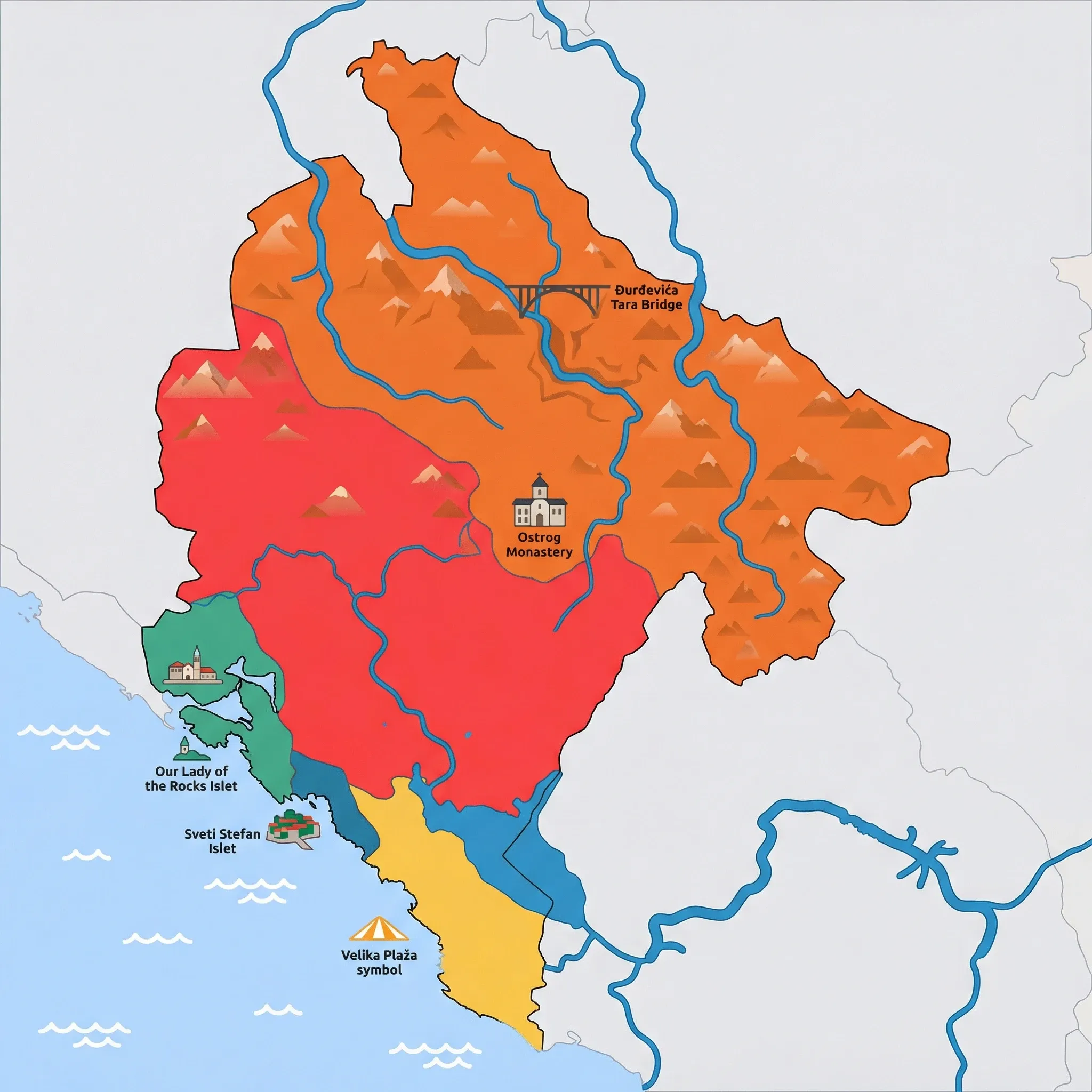
Click a region to explore
Podgorica & Central Montenegro is often overlooked by tourists rushing to the coast, but for families, it holds some of the country's most unique experiences. The geography here shifts from the flat, fertile plains around the capital, Podgorica, to the dramatic wetland wilderness of Lake Skadar and the limestone highlands of Cetinje. It is a region of contrasts: the capital is modern and relaxed with excellent parks, while just an hour away, the old royal capital of Cetinje feels like a museum town frozen in the 19th century. The climate here is extreme in summer—Podgorica is one of the hottest cities in Europe—so wise families plan activities around water or higher altitudes.
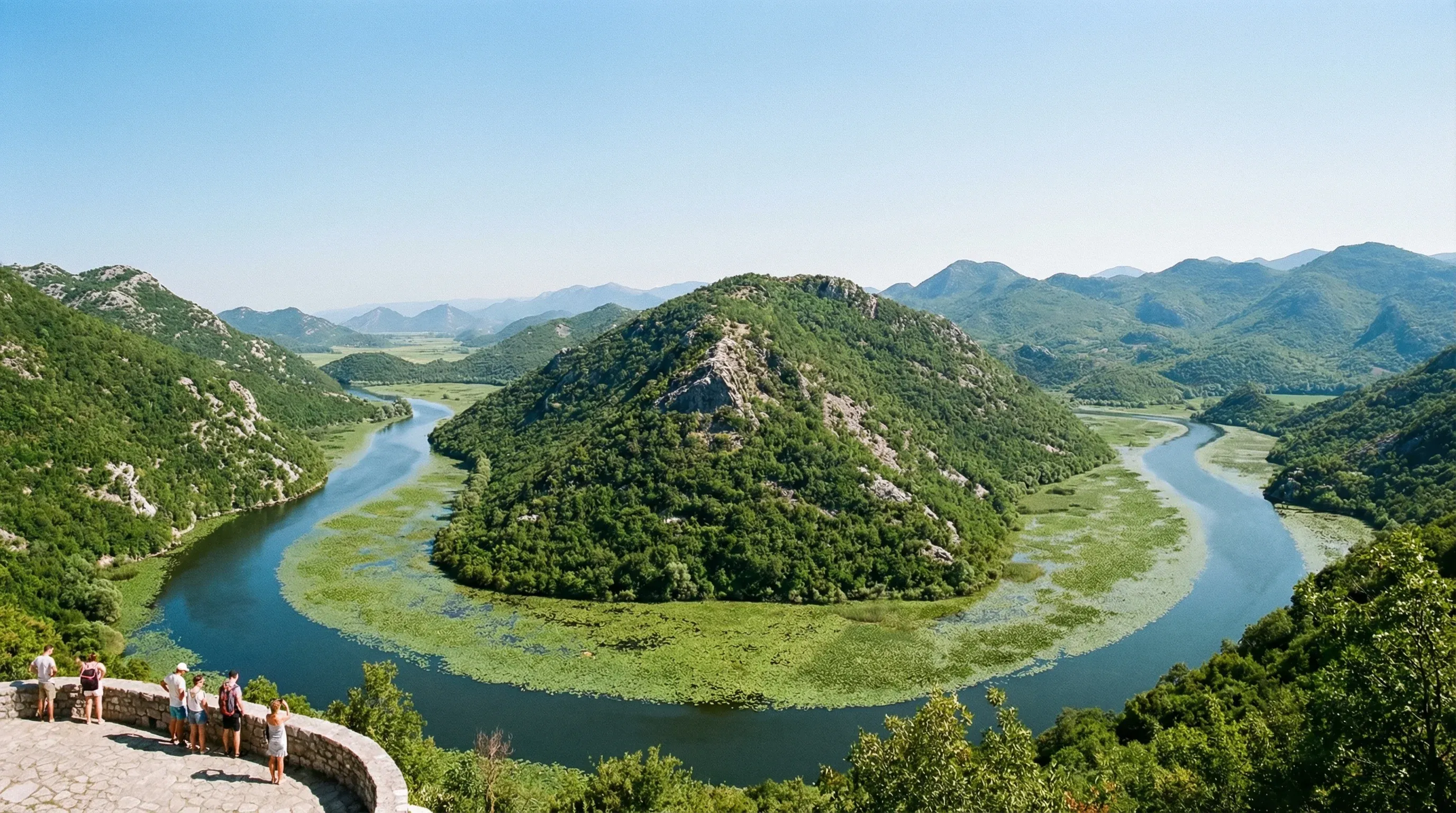
The absolute highlight for children is Lake Skadar (Skadarsko Jezero). It is the largest lake in Southern Europe and a major bird sanctuary. Taking a traditional wooden boat (chun) through the lily pads feels like a jungle expedition; kids will be thrilled to spot the rare Dalmatian pelicans, herons, and submerged ruins of island prisons. The region also houses the spiritual heart of the country. Even if you aren't religious, the engineering marvel of monasteries built into sheer cliffs leaves a lasting impression on visitors of all ages.
Key Attractions
The must-see natural wonder is Lake Skadar National Park. Virpazar is the main gateway for families, where you can easily hire boats. Ask for a captain who knows where the birds nest. The calm water is safe for swimming, though weedy, and boat tours usually stop for a dip. For a cultural jaw-dropper, visit Ostrog Monastery. It looks impossible, carved high into a vertical cliff face. The drive up is hair-raising (serpentine roads), so many families prefer taking the local shuttle bus from the lower car park. It’s a site of pilgrimage, so it offers a lesson in respect and tradition.
In the historic heart of the country, Cetinje Historic Core is lovely for a stroll. It has huge parks where kids can run free, and the King Nicholas' Museum gives a glimpse into royal life with uniforms and weapons that interest school-age kids. Just outside Cetinje lies Lipa Cave (Lipska Pećina), a massive cave system accessible by a fun tourist train that descends into the earth—a guaranteed hit with children.
Practical Advice
Avoid Podgorica in July and August mid-days; temperatures frequently exceed 40°C (104°F). Plan visits for early morning or late evening. Lake Skadar is best visited in late spring when the water lilies are in bloom and birds are most active. When visiting monasteries like Ostrog or Cetinje, modest dress is required (shoulders and knees covered)—pack a scarf or sarong for quick cover-ups.
Food & Drink
Typical meal times: Standard European times. Lunch 1:00 pm – 3:00 pm. Restaurants around the lake are open all day.
Typical meal costs: Generally cheaper than the coast. Family lunch: €40–70 (approx. $43–75 USD / £35–60 GBP). Lake fish is a specialty and priced by category.
Dietary requirements: Freshwater fish is king here. Vegetarians will find excellent cheeses, locally grown vegetables (tomatoes are incredible), and salads.
Signature dishes:
- Krap (Carp) – Skadar Lake carp, traditionally prepared deep-fried or smoked; the smoked version has a texture almost like ham.
- Japraki – A local variety of dolma; minced meat and rice rolled in raštan (collard greens) leaves, smaller and more delicate than cabbage rolls.
- Priganice with Honey – Fried dough balls served with local honey; the region produces excellent honey which makes this a top treat.
Why this score?
The central region offers diverse landscapes ranging from the expansive wetlands of Lake Skadar to the dramatic Mrtvica Canyon. Kayaking and birdwatching at the lake provide moderate outdoor engagement, while the cave systems like Lipa Cave offer managed adventure for families. It provides a good balance of accessibility and nature without the extreme physical demands of the northern massifs.
Why this score?
Podgorica is home to the Clinical Centre of Montenegro, the country's most advanced tertiary care facility with the widest range of specialists. While it may not meet the luxury standards of Western European hubs, it is the most reliable place for complex medical needs and diagnostics in the country. English-speaking doctors are more common here than in the rural northern or southern districts.
Why this score?
As the capital city and main transport hub, Podgorica sees many international arrivals, though most travelers quickly depart for the coast or mountains. Major cultural sites like Ostrog Monastery and Lake Skadar National Park attract significant day-trip traffic but lack the sustained overnight stay numbers of the Riviera. It remains a secondary destination for those looking to explore the country's history and religious heritage beyond the beaches.

Podgorica and the central region offer excellent value. Accommodation in the capital is business-oriented but cheaper on weekends/summer. A nice apartment costs €40–70 (approx. $43–75 USD / £35–60 GBP). Lake Skadar boat tours are the main expense, costing approx €25–40 (approx. $27–43 USD / £22–35 GBP) per hour for a private boat (negotiable).

Getting Here & Around
Getting Here
- Airports – Podgorica Airport (TGD) is the main hub, located just 15 minutes from the capital and 20 minutes from Lake Skadar National Park.
- Train – The railway connects Podgorica to Virpazar (Lake Skadar) in just 30 minutes, a cheap and scenic adventure for kids.
- Driving – Centrally located, this region is the crossroads of Montenegro. The roads are generally wider and straighter here than on the coast.
Getting Around
- Car – The best way to link the capital, the lake, and the monasteries. Driving to Ostrog Monastery requires confidence on narrow mountain roads.
- Train – Good for day trips from Podgorica to the lake (Virpazar) or north to Kolašin.
- Taxi – inexpensive within Podgorica (approx €2–4 per ride).
Nearby Airports (1 airport)
Podgorica
TGDPodgorica
View full flight map for Montenegro →
Official Links

Packing List
Required for entering monasteries (Ostrog, Cetinje); shoulders and knees must be covered.
Essential for birdwatching (pelicans, pygmy cormorants) on Lake Skadar.
Lake Skadar is a wetland; mosquitoes can be aggressive in the evenings.
Most beaches are pebbly or concrete, and sea urchins are common in the rocky shallows.
Roads are famously winding and serpentine, especially the route from Kotor to Lovćen.
Even in August, temperatures in the Durmitor mountains can drop significantly in the evening.
Many small bakeries, ice cream stands, and rural parking lots do not accept cards.
Essential if you plan to visit Lake Skadar or the Ada Bojana river area.

Activities & Best Times

Hiking, wildlife, outdoor exploration, ecotourism
Lake Skadar National Park and Mrtvica Canyon offer internationally significant biodiversity and dramatic hiking. Peak months offer mild weather, while shoulder months balance summer heat and autumn rain.

Urban tourism, museums, historical sites, architecture
Cetinje is the historic heart of Montenegro with museums of national importance, while Podgorica offers contemporary galleries. Extremely high winter rainfall and high summer temperatures in the Zeta Plain limit peak suitability to transitional seasons.

Sport tourism, fitness activities, active recreation
Boasts significant adventure infrastructure including Lovćen Adventure Park and recognized trekking routes like Top Trail 4. Peak activity is constrained by the Zeta Plain's high summer temperatures and heavy winter rainfall.

Scenic drives, countryside tours, route-based travel
The region features the iconic 'Old Road' serpentines and Panoramic Road 3, offering world-class scenic vistas. Driving conditions are best avoided in winter due to extreme precipitation and potential mountain ice.

Learning experiences, scientific sites, historical education
The Natural History Museum and specialized visitor centers at Lake Skadar provide solid scientific engagement for families. While authentic, they are secondary to the region's nature and culture offerings.

Winter sports, ski resorts, snow activities
Ski Center Vučje provides a small-scale, authentic winter sports experience for families, though it lacks the infrastructure of world-class alpine resorts. The season is short due to fluctuating snow lines.

Amusement parks, family entertainment venues
Imanje Knjaz Aqua Park serves as a localized family entertainment hub, primarily useful for cooling off during the peak summer heat. It is not an international destination-level theme park.

Attractions (18 total)



Public Holidays & Calendar Next 12 months
Public holidays, festivals, cultural celebrations, and seasonal natural phenomena coming up in Podgorica & Central over the next 12 months.
Loading holidays and events...

Travel Advisory
All major international agencies agree that Montenegro is safe for travel and requires only standard safety awareness. There are no significant country-wide security threats, although localized protests and seasonal petty crime occur.
Safety Topics
Traveller Advice (3 groups)

Women should exercise standard caution, particularly when out alone at night. There have been infrequent reports of drink spiking and assault in nightlife districts; always stay with trusted companions and monitor your beverages.

While same-sex relationships are legal, social attitudes can be conservative in certain areas. Discretion regarding public displays of affection is recommended to avoid unwanted attention or harassment.

All foreign visitors must register with the local police or a tourism office within 24 hours of arrival. Most hotels and registered rental accommodations will handle this for you, but it is your responsibility to confirm it has been completed.
Agency Summaries
No major travel restrictions are in place. Visitors are advised to monitor local news for reports of protests, such as those in the Zeta region, which can occasionally disrupt transportation to Podgorica Airport.
Montenegro is considered safe for visitors. Standard safety measures are recommended. Travellers should stay alert to their surroundings and use extra care when navigating narrow or winding mountain roads.
New Zealand does not have a specific high-risk advisory for Montenegro. Standard travel precautions apply, with a strong recommendation for comprehensive health insurance that includes medical evacuation.
Irish citizens are encouraged to follow standard safety protocols and stay informed of local developments. Registration of stay is a legal requirement for all foreign visitors.
The country is generally safe, though travellers should be mindful of petty crime and fraud. Vigilance is advised near the Kosovo border due to unpredictable security, and visitors should avoid any large public gatherings or protests.
Travellers should maintain a standard level of safety awareness. While the crime rate is generally low, petty theft like pickpocketing is more frequent during the peak summer tourist season, particularly in crowded areas and on public transport.
Information is provided for general guidance only and does not constitute travel, safety, medical, or legal advice. Conditions may change. Users are responsible for independently verifying information before travel.