

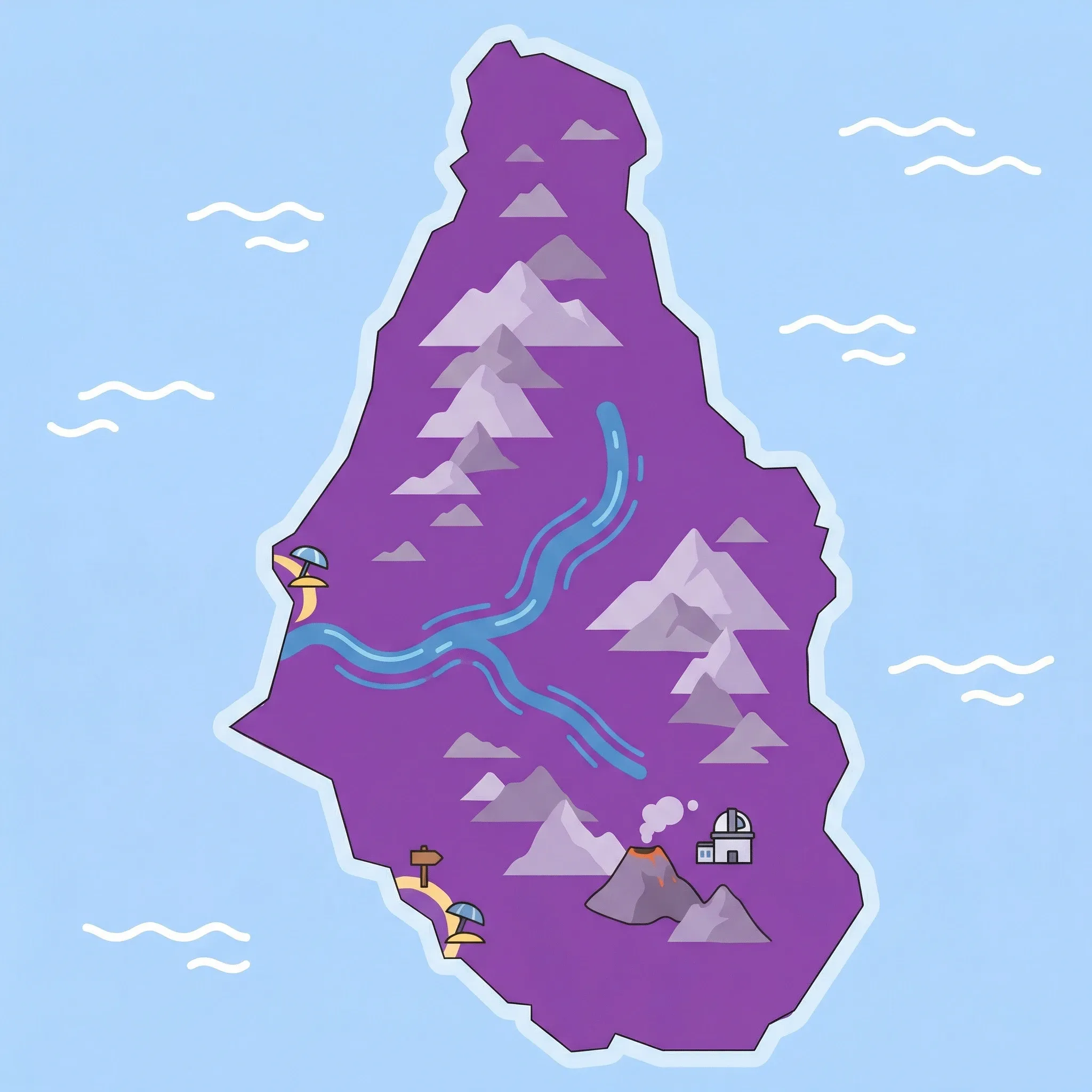
⚠️ SAFETY WARNING: Montserrat is home to the Soufrière Hills Volcano, which has been active since 1995. The island is divided into safe zones (North) and exclusion zones (South). Visitors must strictly obey all signage and never enter the Exclusion Zone (Zone V) without a certified guide and police permission. The northern part of the island is safe, fully functioning, and open for business.
Overview
Montserrat is a British Overseas Territory that defies the typical Caribbean cliché. While it offers the lush green hills and azure waters expected of the region, its recent history has been shaped by the dramatic activity of the Soufrière Hills Volcano. For families, this makes Montserrat a fascinating open-air classroom where geography comes to life. The atmosphere is quiet, safe, and friendly, reminiscent of the Caribbean fifty years ago, with no large resorts or cruise ship crowds. It is a place for curiosity, nature, and relaxation rather than high-octane entertainment.
The island’s unique "Emerald Isle" heritage-a legacy of early Irish settlers-blends seamlessly with Afro-Caribbean culture. Families will find a slow pace of life where children are welcomed warmly. The volcanic activity has created stunning black-sand beaches in the north, while the buried capital in the south offers a sobering but awe-inspiring look at nature's power. Hiking trails are well-marked and generally manageable for active children, winding through rainforests that teem with wildlife like the endemic Montserrat Oriole.
Key Attractions
The absolute highlight for any visitor is the Montserrat Volcano Observatory (MVO). It is the perfect starting point for families to understand the island's geology. The centre features interactive displays and a documentary that explains the eruptions, while the viewing deck offers a safe, panoramic view of the steaming volcano. It turns a scary concept into an educational marvel for kids, demystifying the science behind the ash and lava.
For a truly unforgettable experience, families should book a guided tour of Plymouth (The Buried City). Often called the "Pompeii of the Caribbean," this was the island's capital until it was evacuated and buried by volcanic flows. Walking through the silent, ash-covered streets where roofs barely poke above the ground is a profound experience that captivates older children and teenagers. It is history and geology frozen in time.
To balance the science with culture, visit the National Museum of Montserrat in Little Bay. It houses artifacts ranging from pre-Columbian indigenous tools to items salvaged from the volcanic crisis, helping to piece together the human story of the island. Afterwards, families can relax at Little Bay Beach, where the waters are generally calm and perfect for swimming with younger children.
Practical Advice
The best time to visit is between December and May when the weather is drier and cooler. Families should bring cash (Eastern Caribbean Dollars or USD) as not all smaller vendors accept cards. Renting a car is essential for getting around, but be prepared for steep, winding roads; a temporary driving licence is required. Medical facilities are limited to a small hospital in the north, so comprehensive travel insurance including medical evacuation is non-negotiable.
Food & Drink
Typical meal times: Lunch is usually served from 12:00 pm to 2:30 pm, and dinner from 6:30 pm to 9:00 pm. Many places close early, so plan evening meals in advance.
Typical meal costs: Mains typically range from EC$40–95 (approx. $15–35 USD / £12–28 GBP). A casual lunch might cost EC$25–40 (approx. $9–15 USD / £7–12 GBP).
Dietary requirements: Vegetarian options are generally available, often featuring local provisions like breadfruit and sweet potato. Gluten-free requires more communication with chefs, as flour is a common thickener in stews.
Family-friendly dining: Most restaurants are casual and welcoming to children. Highchairs may be scarce in smaller local spots ("rum shops"), so a portable booster seat is handy.
Signature dishes:
- Goat Water – The national dish; a rich, dark, spicy stew made with goat meat, breadfruit, and dumplings, traditionally served with crusty bread rolls.
- Saltfish and Bake – Flaked salted cod sautéed with onions and peppers, served with fried dough bakes; a breakfast staple kids often enjoy.
- Duckna – A sweet, dense pudding made from sweet potato, coconut, and spices, wrapped and boiled in a banana leaf.
- Cassava Bread – A traditional flatbread made from cassava root, often eaten with toppings or as a snack.
Safety
Montserrat is one of the safest islands in the Caribbean regarding crime, which is virtually non-existent. However, environmental safety is paramount. Always check the daily volcanic hazard level report from the MVO. The Exclusion Zone (Zone V) is illegal to enter without a police permit and a certified guide. Ashfall is rare in the north but can occur; if it does, stay indoors and wear masks. Roads can be steep with deep ghauts (ravines) on the side, so drive carefully.

Travel costs are moderate to high due to the island's remote nature. A family of four can expect to spend around EC$800–1200 (approx. $300–445 USD / £235–350 GBP) per day, covering car rental, mid-range accommodation, and meals. Supermarket goods are imported and can be pricey.
Age Suitability




Did you know? Montserrat welcomes approximately 2,000 international visitors per year. Most visitors come from Americas.
Why this score?
The island offers a unique 'adventure' landscape dominated by the Soufrière Hills Volcano and the restricted Exclusion Zone, which provides a rugged experience unlike typical resort destinations. Families can explore the buried city of Plymouth via boat or supervised tours and hike the lush, uncrowded trails of the Centre Hills Forest Reserve. While the terrain is dramatic and off-the-beaten-path, the northern 'Safe Zone' remains accessible and navigable for active families.
Why this score?
Medical facilities are very limited, centered around the small Glendon Hospital which provides basic emergency and primary care but lacks specialized services. While the staff is English-speaking and follows British-influenced medical standards, serious injuries or complex illnesses require stabilization and immediate medical evacuation to Antigua or beyond. The island's small population and remote status mean that healthcare infrastructure is modest and not equipped for significant tourist surges.
Why this score?
With only approximately 1,600 annual international visitors, Montserrat is one of the least-visited destinations globally, fitting the profile of a niche territory with almost no foreign tourism. The tourism industry was severely impacted by the 1995 volcanic eruption, and today it lacks the high-capacity resorts and international flight volume found on neighboring Caribbean islands. Most visitors are day-trippers from nearby islands or niche adventure travelers specifically interested in the volcano.
Montserrat is not a budget destination, but it is less expensive than luxury neighbors like St. Barths. Because almost everything is imported, grocery and dining prices can be higher than expected. Accommodation ranges from guest houses at $200–350 XCD (approx. $75–130 USD / €70–120 EUR) to villas at $675–1,350 XCD (approx. $250–500 USD / €230–460 EUR) per night. Car rental averages $135–175 XCD (approx. $50–65 USD / €45–60 EUR) per day.

Getting There & Around
Getting There
- By Air – The most reliable method is a short 20-minute flight from Antigua (ANU) to John A. Osborne Airport (MNI) with FlyMontserrat or ABM Air. The small Islander aircraft offer spectacular views but can be noisy for sensitive children.
- By Sea – A ferry service operates between Antigua and Montserrat (Little Bay), taking about 90 minutes. Schedules are seasonal and subject to sea conditions.
- Entry Requirements – Visitors must have a valid passport. Visas are not required for US, Canadian, UK, and most EU citizens for short stays. Check your government website for the latest visa requirements, or use the IATA Travel Centre entry-requirements checker.
Getting Around
- Car Hire – The most practical way to explore. You will need to purchase a temporary driving licence for EC$50 (approx. $19 USD) from the police station or rental agency. Driving is on the left.
- Taxis – Available but can be expensive for multiple daily trips. They are reliable and drivers are often excellent impromptu guides to local history.
- Minibuses – Public buses run on the main road but do not have a fixed schedule suitable for touring families.
Official Links

Packing List
Essential for safe viewing of the volcano dome and distant exclusion zone details from observation decks.
The ferry crossing from Antigua can be rough, and the small 9-seater planes can be bumpy.
Required for walking in the ash-covered areas of Plymouth and on rocky volcanic trails.
ATMs are scarce (often only one working on the island) and many small vendors do not take cards.
Useful if venturing near the exclusion zone borders or on days with wind-blown volcanic ash.

Activities & Best Times

Adventure & Nature
Very GoodHiking, wildlife, outdoor exploration, ecotourism
The Soufrière Hills Volcano and the lush Centre Hills provide world-class hiking and dramatic volcanic landscapes. Peak visitation aligns with the cooler dry season (December-April) when trail conditions on the Oriole Walkway are safest and most comfortable.

Educational & Exploratory
Very GoodLearning experiences, scientific sites, historical education
The Montserrat Volcano Observatory and Plymouth exclusion zone tours offer internationally significant educational experiences in active volcanology and disaster science. This is a world-class destination for geology/earth science educational tourism, comparable to Pompeii or Mount St. Helens. The 'marginal' rating is incorrect - this is THE primary international draw for Montserrat.
Beach & Sea
GoodBeach resorts, marine activities: diving, snorkelling, kite surfing, wind surfing, sailing
Features unique volcanic black sand at Woodlands Beach and pristine seclusion at Rendezvous Bay, accessible only by boat or hike. The dry winter months offer the calmest seas and best visibility for snorkeling, while the late summer hurricane season poses significant travel risks.

City & Cultural
GoodUrban tourism, museums, historical sites, architecture
While Plymouth ('Modern Pompeii') is unique and significant, it is a buried, evacuated city accessible only on guided tours. There are no functioning cultural institutions, museums, theaters, or heritage infrastructure - all were destroyed in the 1990s eruptions. The experience is archaeological/disaster tourism rather than active cultural engagement. 'good' better reflects the niche appeal and limited scope compared to functioning heritage cities.

Road Trips & Scenic
GoodScenic drives, countryside tours, route-based travel
Steep, winding routes like the Garibaldi Hill ascent offer spectacular vistas of the island's recovery and destruction. Best experienced when cloud cover is minimal and roads are dry, avoiding the heavy tropical downpours of August through October.

Sports & Active
GoodSport tourism, fitness activities, active recreation
Offers challenging, internationally recognized hiking infrastructure like the Silver Hills Trail. These active pursuits are best enjoyed in the cooler, drier months to avoid heat exhaustion and slippery trail conditions prevalent in the peak rainy season.




Public Holidays & Calendar Next 12 months
Public holidays, festivals, cultural celebrations, and seasonal natural phenomena coming up in Montserrat over the next 12 months.
Loading holidays and events...

Travel Advisory
All major international agencies agree that Montserrat is a safe destination where travellers only need to exercise standard safety awareness. No elevated security risks are currently identified.
Safety Topics
Traveller Advice (3 groups)
Accessibility infrastructure is extremely limited. Travellers with mobility issues will find it difficult to navigate buildings, pedestrian paths, and public transportation systems.

While same-sex sexual activity is legal, the local society remains socially conservative. Public displays of affection may be met with disapproval, though hotels are generally welcoming to all guests regardless of orientation.

Female travellers should follow standard safety precautions, particularly when travelling alone or in isolated areas at night. Conservative dress is advised away from beaches.
Agency Summaries
Visitors should maintain standard safety awareness. While crime is relatively infrequent, petty theft such as pickpocketing does occur. The Soufrière Hills Volcano remains active and is closely monitored by local authorities; travellers should stay informed about volcanic alert levels. Road safety is a concern due to steep, winding terrain and varying conditions.
The security environment is considered stable and comparable to large Australian cities. Travellers should use common sense and remain vigilant against petty crime. Comprehensive travel insurance is strongly recommended as medical facilities are limited.
As a British Overseas Territory, Montserrat is generally safe with low crime rates. Visitors must be aware of volcanic activity risks and the hurricane season (June to November). Social norms are conservative, and modest dress is expected outside of beach areas. There is no British Embassy on the island, so assistance is provided by local authorities.
No specific travel warnings are in effect. Visitors are advised to take standard health precautions, including protecting themselves against mosquito-borne illnesses like Zika and Chikungunya. Tap water safety is not guaranteed, and bottled water is recommended.
Irish citizens can visit without a visa for up to 180 days. Safety risks are low, but travellers should monitor local news for updates on weather conditions, particularly during the Atlantic hurricane season from July to October.
Travellers are advised to follow standard security measures. Petty crime occurs, particularly in areas frequented by tourists. The territory has no legal restrictions on same-sex relations, though social attitudes are generally conservative. Infrastructure for those with physical disabilities is limited.
Information is provided for general guidance only and does not constitute travel, safety, medical, or legal advice. Conditions may change. Users are responsible for independently verifying information before travel.