
Key Attractions
No family trip is complete without experiencing the chaotic magic of Jemaa el-Fnaa in Marrakech. By day, it is a market; by night, it transforms into an open-air theatre with storytellers, musicians, and food stalls that will leave kids wide-eyed. Just a short ride away, the vivid blue Majorelle Garden offers a calm, colorful retreat perfect for a relaxing stroll. For a history lesson that feels like an adventure, explore the sprawling Bahia Palace, with its intricate mosaics and hidden courtyards. Further north, the ancient Fes el Bali is the world's largest car-free urban zone. Kids will be fascinated (and perhaps a little smelly!) by the Chouara Tannery, where leather is dyed in stone vessels just as it has been for centuries. On the coast, the Hassan II Mosque in Casablanca-one of the few mosques open to non-Muslims-features a glass floor over the ocean and a laser beam pointing to Mecca. Finally, for cinema-loving families, the Ksar of Aït Benhaddou and nearby Atlas Film Studios in Ouarzazate offer the chance to walk through the sets of famous movies like Gladiator and The Mummy.Practical Advice
The best times to visit are spring (March–May) and autumn (September–November) when temperatures are pleasant. Summer can be fiercely hot, especially in the interior and desert. Tap water is generally not safe to drink; stick to bottled or filtered water. A baby carrier is essential for medinas, as strollers struggle on cobblestones and steps. Bring layers, as the desert drops to freezing at night.Food & Drink
Typical meal times: Lunch is the main meal, typically served from 1:00 pm to 3:00 pm. Dinner is a late affair, usually starting between 8:00 pm and 10:00 pm.
Typical meal costs: 70–150 MAD (approx. $7–15 USD / €6.50–14 EUR) for a mid-range main course. Street food snacks cost 20–50 MAD (approx. $2–5 USD / €1.80–4.50 EUR).
Dietary requirements: Vegetarians are well-catered for with vegetable tagines and couscous, though vegan concepts are less understood outside tourist hubs. Gluten-free travelers must be careful as bread (khobz) is central to every meal, but rice and potato dishes are common. Nut allergies require vigilance due to the prevalence of almonds and walnuts in desserts and savory dishes.
Family-friendly dining: Moroccan culture loves children, and they are welcome everywhere. Most restaurants do not have specific "kids' menus" but offer mild, shareable dishes like brochettes (skewers) and couscous that kids enjoy. Highchairs are rare in local eateries but common in tourist-focused restaurants.
Signature dishes:
- Tagine – A slow-cooked stew named after the conical clay pot it’s cooked in, featuring tender meat (chicken, lamb, or beef) with vegetables and dried fruits like apricots or prunes.
- Couscous – Tiny steamed balls of semolina wheat, traditionally served on Fridays, piled high with seven vegetables and meat.
- Pastilla (Bastilla) – A unique sweet-and-savory pie made of flaky phyllo dough, stuffed with spiced chicken (or pigeon) and almonds, and dusted with powdered sugar and cinnamon.
- Harira – A hearty tomato-based soup with lentils, chickpeas, and vermicelli, traditionally eaten to break the fast during Ramadan but available year-round.
- Msemen – Square, flaky pancakes often eaten for breakfast or as a snack, delicious with honey or soft cheese.
Family Travel Notice
When travelling with minors, ensure you carry full birth certificates and, if applicable, notarized consent letters from any non-travelling parent to satisfy border authorities.

A family of four can expect to spend around 2,000–3,000 MAD (approx. $200–300 USD / €185–280 EUR) per day. This budget covers mid-range riad accommodation, meals at local restaurants, and entry fees. Street food and local transport are very cheap, while guided desert tours and alcohol (heavily taxed) will increase costs.
Age Suitability




Did you know? Morocco welcomes approximately 10.9 million international visitors per year. Most visitors come from Europe.
Explore Regions
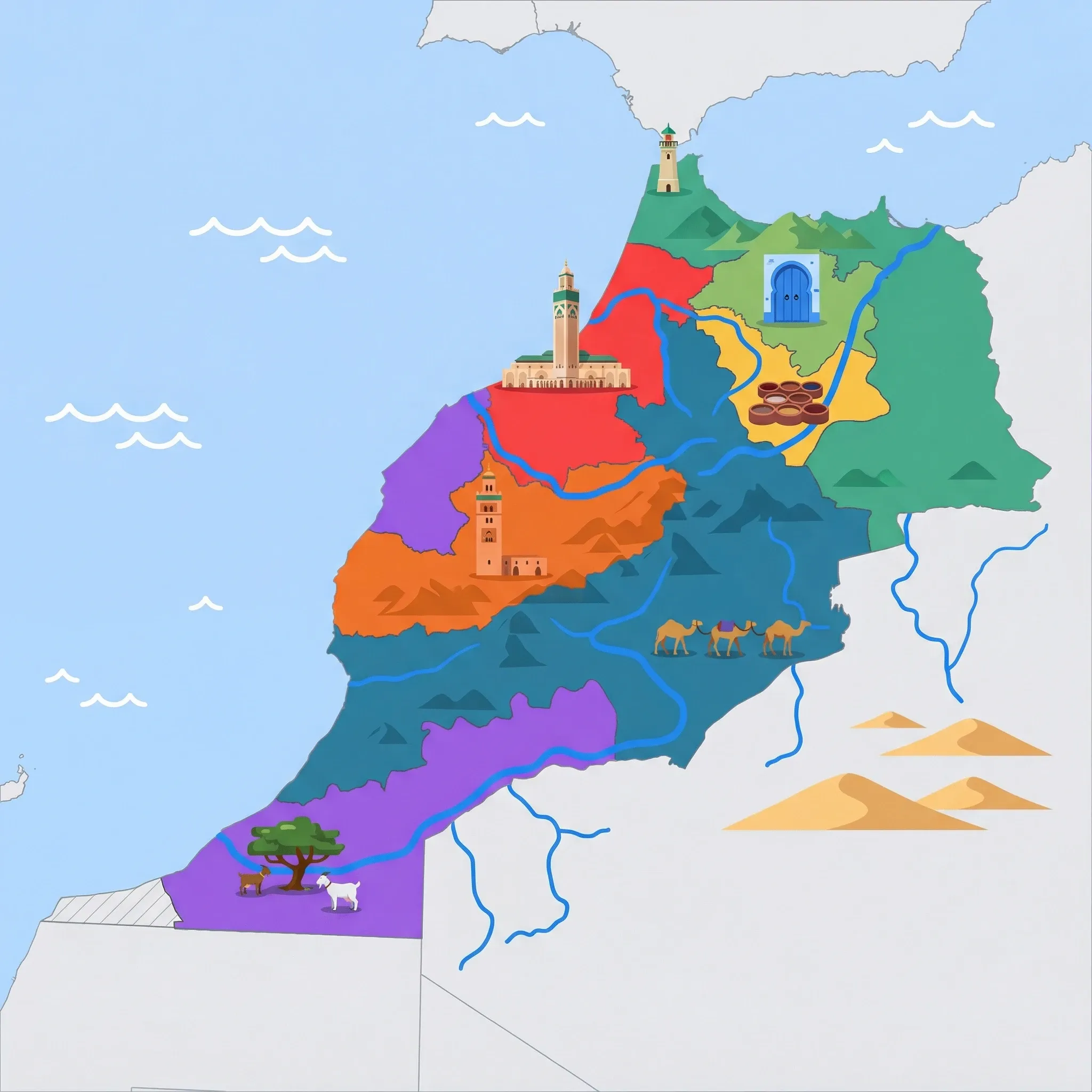
7 Regions
Casablanca & Atlantic Coast
Modern metropolises and historic kasbahs meeting the Atlantic waves 🌊🇲🇦
Chefchaouen & Rif Mountains
Wander through a real-life blue labyrinth in the mountains 💙⛰️
Essaouira & Southern Coast
Wind, waves, and fortress walls on the relaxed coast 🌬️🏄♂️
Fes & Middle Atlas
Ancient imperial cities and cedar forests filled with monkeys 🐒🌲
Marrakech & High Atlas
A sensory wonderland of souks, red walls, and snow-capped peaks 🐍🏔️
Sahara & Southeast (Merzouga, Ouarzazate)
Sleep under a million stars in the golden dunes ✨🐪
Tangier & Northern Morocco
Where the Mediterranean meets the Atlantic at the gateway to Africa 🌍⚓
Click on a region marker to explore details. Use the dropdown to color regions by activity suitability.

Getting There & Around
Getting There
- By Air – Mohammed V International Airport (CMN) in Casablanca is the main hub, but many families fly directly into Marrakech Menara (RAK) to access Marrakech & High Atlas. Tangier (TNG) and Fes (FEZ) also have international connections.
- By Sea – Ferries cross the Strait of Gibraltar from Spain (Tarifa or Algeciras) to Tangier Ville or Tangier Med ports, a popular route for those exploring Tangier & Northern Morocco.
- Entry Requirements – Visitors from the US, UK, EU, Canada, and Australia do not need a visa for tourist stays up to 90 days. Passports must be valid for at least 6 months beyond the date of entry. Check your government website for the latest visa requirements, or use the IATA Travel Centre entry-requirements checker.
Getting Around
- Trains – The ONCF network is excellent. The high-speed Al Boraq connects Tangier & Northern Morocco to Casablanca & Atlantic Coast in just over 2 hours. Children under 4 travel free; ages 4–12 get discounts.
- Car Hire – Useful for the Sahara & Southeast road trips. Driving can be chaotic in cities, but main routes like the N9 over the Atlas are paved and scenic.
- Buses – CTM and Supratours offer reliable, air-conditioned coaches for routes not served by trains, such as to Essaouira & Southern Coast.
- Taxis – Petit taxis (small hatchbacks) are for city trips; always insist on the meter. Grand taxis (large sedans) travel between towns on fixed routes and are shared.

Packing List
Many sinks and bathtubs in traditional riads and older hotels lack plugs.
Essential for protecting phones and cameras from fine desert sand in the Sahara.
The winding roads through the Atlas Mountains (Tizi n'Tichka pass) can be nauseating.
Vital for tipping bathroom attendants and guardians, who often don't have change.
Dehydration happens fast in the dry desert heat; these are hard to find in rural areas.
Public restrooms often lack paper; carrying your own supply is standard practice.

Activities & Best Times

Adventure & Nature
ExcellentHiking, wildlife, outdoor exploration, ecotourism
Home to North Africa's highest peaks, providing authentic trekking and wilderness experiences in the Toubkal National Park. High mountain conditions are best in late spring and early autumn; winter brings heavy snow while mid-summer heat makes valley trekking difficult.
Home to the world-renowned Erg Chebbi dunes and dramatic Todra Gorges, providing an authentic and visually stunning desert wilderness experience. Peak months offer comfortable temperatures, whereas the extreme summer heat makes desert exploration hazardous.
Boasts high-quality coastal trekking and camel expeditions through unique Argan forests and sand dunes, exemplified by the Ranch de Diabat. Summer months are off-season for inland exploration due to intense heat in the forest zones, while winter rainfall can degrade trail conditions.

City & Cultural
ExcellentUrban tourism, museums, historical sites, architecture
A world-class cultural hub featuring a UNESCO-listed Medina, intricate palaces, and sophisticated art museums like the Yves Saint Laurent Museum. Peak visitation occurs during spring and autumn when temperatures are ideal for exploring historic quarters and vibrant markets.
The iconic blue-washed Medina and historical Kasbah provide a globally unique urban heritage experience. Spring and autumn offer the most comfortable walking temperatures, while summer can be crowded and winters notably cold and damp.
Fes is home to the world's most intact medieval medina and the Roman ruins of Volubilis, offering an unparalleled authentic cultural immersion. Peak visitation occurs during the mild spring and autumn, while extreme summer heat in July and August makes exploring the narrow streets uncomfortable.

Sports & Active
Very GoodSport tourism, fitness activities, active recreation
A premier destination for trekking and canyoning with internationally recognized routes like the Grand Cascade trail. Peak periods reflect the best weather for high-intensity physical activity before the summer heat or winter rains.
Offers world-class rock climbing in the Todra Gorges and significant trekking routes like the Jebel Saghro traverse. Optimal conditions occur during mild windows, avoiding the freezing winter nights and extreme summer sun that affects outdoor physical exertion.
The region is an internationally recognized destination for high-altitude trekking and road cycling, notably the Atlas Mountain Race route. Activities are constrained by extreme mountain winter conditions and intense summer heat in lower elevations.

Relaxation & Wellness
GoodSpa retreats, wellness centers, peaceful getaways
Famous for its historic hammam culture and high-end wellness riads offering authentic steam bath treatments. These indoor experiences are best enjoyed in cooler months, as the intense summer heat makes traditional thermal rituals less appealing.
Home to the historic thermal springs of Moulay Yacoub and Sidi Harazem, the region is a traditional center for spa-based restoration. The mineral-rich waters are best enjoyed during cooler months, as the high heat of summer makes the hot spring experience less appealing.
Traditional hammams offer an authentic Moroccan wellness experience rooted in local history. These indoor facilities are most inviting during the cooler months as a restorative escape from the mountain chill.

Road Trips & Scenic
GoodScenic drives, countryside tours, route-based travel
Features iconic scenic drives like the Tizi n'Tichka pass and the Route of the Thousand Kasbahs. Travel is optimal when mountain passes are clear of winter snow and temperatures are comfortable for long-distance touring.
The Mediterranean Rocade and high-altitude Rif passes offer dramatic scenery and authentic rural encounters. These routes are best driven during clear, mild months to avoid mountain fog or slippery conditions during the winter rainy season.
The 'Imperial Triangle' and 'Middle Atlas Cedar Forest Route' offer stunning scenic drives through diverse landscapes from ancient cities to alpine lakes. Driving conditions are optimal in the clear spring and autumn, while winter snow in the Atlas and summer heat in the lowlands present challenges.

Theme Park & Entertainment
GoodAmusement parks, family entertainment venues
Offers several water-based entertainment complexes like Oasiria that provide high-quality family recreation. These facilities are primarily seasonal destinations intended to provide relief during the hottest summer months.
Regional family draws like Coco Park and the Diamant Vert water park provide entertainment for families visiting the Fes area. These attractions are primarily seasonal, with water-based parks peaking during the hot summer months when local and international families seek cooling activities.
With venues like Sindibad and various aquaparks, the region offers solid regional entertainment. Peak activity aligns with summer school holidays when water-based attractions are fully operational.
Beach & Sea
GoodBeach resorts, marine activities: diving, snorkelling, kite surfing, wind surfing, sailing
Authentic Mediterranean beaches like Quemado provide a strong regional draw for swimming and coastal recreation. Tourism is highly concentrated in the hot summer months, as water temperatures are too cool for most international travelers for the rest of the year.
Features iconic coastal sites like the Caves of Hercules and Dalia Beach along the Mediterranean coast. High summer is the primary season for swimming and coastal recreation when water temperatures are most inviting for families.
A world-renowned destination for wind and kite surfing due to the consistent 'Alizé' trade winds, though the Atlantic waters remain chilly year-round. While excellent for water sports, the persistent wind and cool sea temperatures make it less suitable for traditional sunbathing outside of the warmest summer months.

Educational & Exploratory
MarginalLearning experiences, scientific sites, historical education
Niche educational draws like the Museum for Water Civilization offer unique scientific insights into regional heritage. Visitation mirrors general cultural patterns, peaking when the weather is suitable for multi-site exploration.
Specialized fossil and mineral museums in Erfoud offer unique geological insights into the Sahara's prehistoric past. These facilities serve as interesting educational stops during primary tourism seasons but are rarely standalone travel motivators.
The Ecomusée de l'Arganier provides a niche, authentic educational experience focused on the region's unique endemic ecology. It serves as a specialized interest site rather than a primary destination-level motivator for international families.

Festivals & Seasonal
MarginalEvents, celebrations, seasonal attractions
Hosts internationally significant events such as the Marrakech International Film Festival and the Popular Arts Festival. These world-class events draw sophisticated global audiences but are strictly limited to specific weeks in the calendar.
The Fes Festival of World Sacred Music is a globally significant event that transforms the city into a cultural hub. Peak timing is strictly tied to the festival dates, typically in June, which attracts a sophisticated international audience despite the rising temperatures.
Home to the Gnaoua World Music Festival, an internationally significant event that transforms the city into a cultural hub. Outside of this specific event window, the region lacks other high-profile international festivals.

Ski & Snow
MarginalWinter sports, ski resorts, snow activities
Oukaïmeden provides a unique African alpine experience, though the infrastructure is rustic by international standards. The season is short and highly dependent on unpredictable annual snowfall in the High Atlas.
Michlifen and Jbel Hebri provide a unique opportunity for skiing in Africa, though infrastructure is modest compared to European standards. The season is short and highly dependent on erratic winter snowfall, usually limited to January and February.

Public Holidays & Calendar Next 12 months
Public holidays, festivals, cultural celebrations, and seasonal natural phenomena coming up in Morocco over the next 12 months.
Loading holidays and events...
Climate & Weather
Casablanca & Atlantic Coast
Show Details
| Month | Temp °C | Rain | Humidity |
|---|
Chefchaouen & Rif Mountains
Show Details
| Month | Temp °C | Rain | Humidity |
|---|
Essaouira & Southern Coast
Show Details
| Month | Temp °C | Rain | Humidity |
|---|
Fes & Middle Atlas
Show Details
| Month | Temp °C | Rain | Humidity |
|---|
Marrakech & High Atlas
Show Details
| Month | Temp °C | Rain | Humidity |
|---|
Sahara & Southeast (Merzouga, Ouarzazate)
Show Details
| Month | Temp °C | Rain | Humidity |
|---|

Travel Advisory
All major agencies recommend exercising a high degree of caution or increased vigilance. The primary driver for this assessment is the underlying threat of terrorism targeting public and tourist areas, supplemented by risks of civil unrest and regional border instabilities.
Safety Topics
Traveller Advice (5 groups)
When travelling with minors, ensure you carry full birth certificates and, if applicable, notarized consent letters from any non-travelling parent to satisfy border authorities.

Be aware that same-sex relations are legally restricted in Morocco. Public displays of affection are generally discouraged for all couples but may lead to significant legal or social complications for LGBTQ+ individuals.

Do not hike alone in remote mountain or desert regions. Use only officially sanctioned guides and ensure vehicles are well-equipped for off-road conditions in the south.

Consider dressing conservatively to respect local customs and reduce the likelihood of unwanted attention. It is advisable to avoid walking alone in isolated areas or after dark.

Maintain a high level of situational awareness in crowded markets, medinas, and near government buildings. Ensure comprehensive travel insurance is in place and monitor local media for sudden demonstrations.
Agency Summaries
Irish citizens are urged to be vigilant and avoid large public gatherings. The advisory notes that while the terrorism risk level has seen some statistical decline, the potential for indiscriminate attacks remains a concern for foreign visitors.
Travellers should remain highly vigilant throughout Morocco due to a persistent threat of terrorist activity. While the general safety situation is stable, specific border areas including the 20km zone adjacent to Algeria and regions near the Western Sahara Berm should be avoided entirely due to military presence and landmines.
The U.S. government recommends increased caution due to the risk of terrorism. Extremist groups continue to plan potential attacks that could target tourist sites, transport hubs, and local government facilities without warning.
British citizens are advised to monitor local conditions closely. While most visits are trouble-free, recent updates have focused on managing risks from severe weather and civil demonstrations. Regional risks exist, particularly in the disputed territory of Western Sahara.
New Zealanders should exercise heightened security awareness due to terrorism and potential civil unrest. Violent clashes during protests have been reported recently, and strict 'do not travel' warnings apply to the militarized boundary in Western Sahara.
Australia maintains a high caution level primarily due to terrorism risks in tourist precincts. Recent advisories also highlight flooding in northern provinces and the necessity of obtaining an e-visa prior to arrival.
Information is provided for general guidance only and does not constitute travel, safety, medical, or legal advice. Conditions may change. Users are responsible for independently verifying information before travel.