
Essaouira & Southern Coast
Wind, waves, and fortress walls on the relaxed coast 🌬️🏄♂️
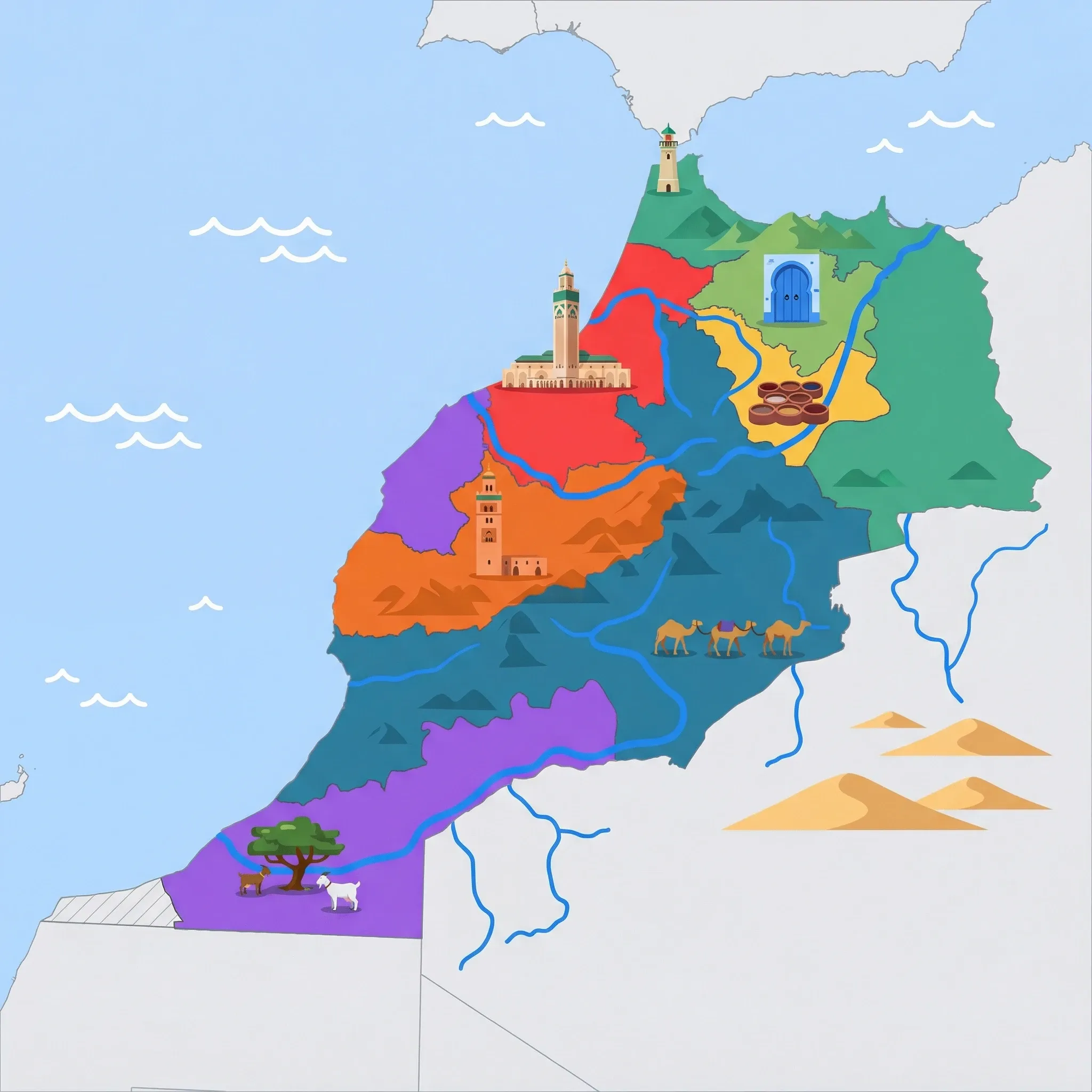
Click a region to explore
Overview
Essaouira is often described as the "Windy City of Africa," but for families, it translates to the "Relaxed City." If Marrakech is a sensory explosion, Essaouira is a deep, calming breath. Encircled by golden stone ramparts and filled with white-washed houses with blue shutters, the town has a distinct maritime charm that feels like a blend of Brittany and North Africa. The medina here is UNESCO-listed but compact and easy to navigate; grid-like streets replace the confusing mazes of other cities, meaning parents can let older children wander with a bit more freedom. The vibe is artistic and musical, famously hosting the Gnaoua World Music Festival, and street musicians are a common, delightful sight for kids.
The geography is defined by the "Alizés" trade winds, which keep the temperatures mild year-round but can make sunbathing difficult. Instead of lying on a towel, families here engage in active fun: kite flying, surfing, camel trekking, and horse riding on the beach are the main events. Just south of the city lies the village of Sidi Kaouki, a surf haven with wild, untouched beaches perfect for adventurous families. The region is also the heart of Argan country; the road to Essaouira is lined with the famous trees (sometimes with goats climbing them!), offering a unique geography lesson on one of the world's rarest oils.
Key Attractions
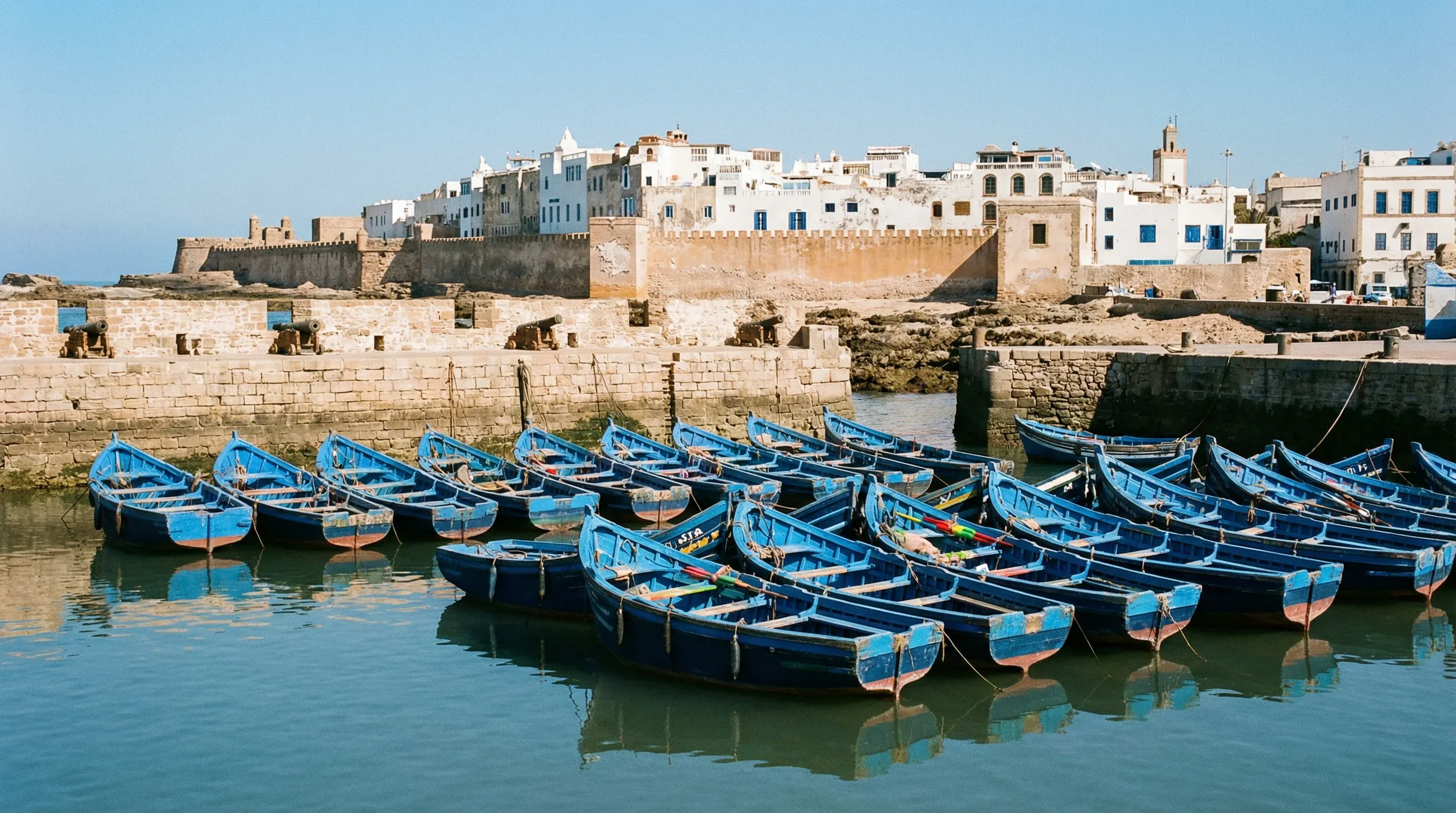
The Medina of Essaouira is the star attraction. Families can walk atop the Skala de la Ville, the impressive sea bastions where old brass cannons still point out to sea—a location famous for filming Game of Thrones. Below the ramparts, the working fishing port is a hive of activity where kids can watch bright blue wooden boats unload the day's catch of sardines and eels. For beach time, head to Sidi Kaouki Beach, located about 25km south. It’s wilder and less crowded than the main town beach, offering excellent surf schools that cater to beginners and children. Nature lovers should consider a trip further south to the Souss-Massa National Park, a birdwatcher's paradise home to the endangered Northern Bald Ibis.
Practical Advice
Essaouira is a year-round destination, but bring layers. The wind can be chilly even in July. It is one of the most hassle-free cities in Morocco; shopkeepers are polite and rarely pushy. The beach within Essaouira town has a gentle slope and shallow water, making it safe for paddling, but be mindful of strong currents further out or at Sidi Kaouki.
Food & Drink
Typical meal times: Lunch is 12:00 pm to 3:00 pm. Dinner is generally served from 7:00 pm to 10:00 pm.
Typical meal costs: Fresh fish grilled at the port stalls costs around 50–100 MAD (approx. $5–10 USD / €4.50–9 EUR) per person depending on weight. Restaurant meals range from 80–150 MAD (approx. $8–15 USD / €7.50–14 EUR).
Dietary requirements: Excellent for pescatarians. Fresh seafood is everywhere. Vegetarian options are standard (tagines/salads). Nut allergies: be aware that Argan oil (a nut product) is used for dipping bread and in salads (Amlou).
Signature dishes:
- Grilled Sardines – Fresh from the Atlantic, dusted with rock salt and cumin, and grilled over charcoal. Simple, cheap, and delicious.
- Amlou – A thick spread made from toasted almonds, honey, and Argan oil. Known as "Moroccan Nutella," kids absolutely love it on warm bread.
- Fish Tagine with Argan Oil – A local twist on the classic, using the nutty oil to finish the dish, often cooked with preserved lemons.
Why this score?
The region is famous for kite-surfing, camel trekking along the dunes, and quad biking, providing a manageable level of outdoor excitement. The infrastructure is well-developed for tourists, making these activities accessible even for families with young children.
Why this score?
The city has functional local hospitals and several private clinics that can handle routine issues and minor emergencies. However, specialized care or major trauma cases usually require a three-hour drive to Marrakech, where more sophisticated facilities are available.
Why this score?
Essaouira is a well-established destination for European travelers seeking a relaxed coastal atmosphere and wind-based watersports. Its UNESCO-listed medina and annual Gnaoua Festival ensure a steady stream of international visitors throughout the year.

Essaouira is generally good value. Accommodation ranges from budget hostels to luxury riads. A family suite in a nice riad costs 800–1,500 MAD (approx. $80–150 USD / €75–140 EUR). Seafood at the port is priced by weight—agree on the price before they cook it. Activities like surf lessons cost around 250 MAD (approx. $25 USD / €23 EUR) for two hours.
Family Travel Notice
When travelling with minors, ensure you carry full birth certificates and, if applicable, notarized consent letters from any non-travelling parent to satisfy border authorities.

Getting Here & Around
Getting Here
- Bus – Comfortable Supratours buses depart frequently from Marrakech (approx. 3 hours). The station in Essaouira is conveniently close to the Medina gates.
- Airports – Essaouira-Mogador Airport (ESU) is small with direct flights from a few European cities (e.g., Paris, London, Brussels). Alternatively, fly into Marrakech (RAK) and transfer by road.
- Private Transfer – A popular option for families traveling from Marrakech. It costs around 800–1,000 MAD (approx. $80–100 USD / €75–90 EUR) and allows stops to see the "goat trees."
Getting Around
- Walking – The Medina of Essaouira is entirely pedestrianized and flat, making it much easier for walking than Fes or Chefchaouen.
- Petit Taxi – Blue taxis are useful for getting from the medina to the lighthouse or the bus station. They are cheap and run on meters.
- Camel/Horse – A popular mode of transport along the beach, not just a tourist ride but a legitimate way to explore the coastline towards Diabat.
Nearby Airports (2 airports)
Goulimime Airport
GLNGoulimime
Plage Blanche
TTATan Tan
View full flight map for Morocco →
Official Links

Packing List
The trade winds blow strong and cool year-round; t-shirts are rarely enough in the evening.
Long hair will be constantly whipped around by the wind without management.
Some parts of the beach have sharp rocks and sea urchins, especially near rock pools.
This is one of the best places in the world for kite flying; buying one locally is pricey.
Many sinks and bathtubs in traditional riads and older hotels lack plugs.
Essential for protecting phones and cameras from fine desert sand in the Sahara.
The winding roads through the Atlas Mountains (Tizi n'Tichka pass) can be nauseating.
Vital for tipping bathroom attendants and guardians, who often don't have change.
Dehydration happens fast in the dry desert heat; these are hard to find in rural areas.
Public restrooms often lack paper; carrying your own supply is standard practice.

Activities & Best Times

Hiking, wildlife, outdoor exploration, ecotourism
Boasts high-quality coastal trekking and camel expeditions through unique Argan forests and sand dunes, exemplified by the Ranch de Diabat. Summer months are off-season for inland exploration due to intense heat in the forest zones, while winter rainfall can degrade trail conditions.

Urban tourism, museums, historical sites, architecture
The UNESCO-listed Medina of Essaouira offers a uniquely authentic, bohemian atmosphere with its 18th-century ramparts, artisan workshops, and vibrant fishing port. Peak visitation aligns with mild spring and autumn weather, while summer shoulder months see increased domestic crowds and strong coastal winds.

Beach resorts, marine activities: diving, snorkelling, kite surfing, wind surfing, sailing
A world-renowned destination for wind and kite surfing due to the consistent 'Alizé' trade winds, though the Atlantic waters remain chilly year-round. While excellent for water sports, the persistent wind and cool sea temperatures make it less suitable for traditional sunbathing outside of the warmest summer months.

Scenic drives, countryside tours, route-based travel
The scenic N1 coastal highway offers spectacular Atlantic vistas and access to remote fishing villages like Imsouane. Driving conditions are best during the clear, sunny days of spring and autumn, avoiding the occasional winter coastal mists.

Sport tourism, fitness activities, active recreation
Infrastructure for active sports is well-developed, particularly for surfing at Imsouane and mountain biking in the Argan forests. Peak season is driven by the reliable summer wind conditions required for the region's primary sport-tourism draw.

Learning experiences, scientific sites, historical education
The Ecomusée de l'Arganier provides a niche, authentic educational experience focused on the region's unique endemic ecology. It serves as a specialized interest site rather than a primary destination-level motivator for international families.

Events, celebrations, seasonal attractions
Home to the Gnaoua World Music Festival, an internationally significant event that transforms the city into a cultural hub. Outside of this specific event window, the region lacks other high-profile international festivals.

Attractions (9 total)



Public Holidays & Calendar Next 12 months
Public holidays, festivals, cultural celebrations, and seasonal natural phenomena coming up in Essaouira & Southern Coast over the next 12 months.
Loading holidays and events...

Travel Advisory
All major agencies recommend exercising a high degree of caution or increased vigilance. The primary driver for this assessment is the underlying threat of terrorism targeting public and tourist areas, supplemented by risks of civil unrest and regional border instabilities.
Safety Topics
Traveller Advice (5 groups)

When travelling with minors, ensure you carry full birth certificates and, if applicable, notarized consent letters from any non-travelling parent to satisfy border authorities.

Be aware that same-sex relations are legally restricted in Morocco. Public displays of affection are generally discouraged for all couples but may lead to significant legal or social complications for LGBTQ+ individuals.

Do not hike alone in remote mountain or desert regions. Use only officially sanctioned guides and ensure vehicles are well-equipped for off-road conditions in the south.

Consider dressing conservatively to respect local customs and reduce the likelihood of unwanted attention. It is advisable to avoid walking alone in isolated areas or after dark.

Maintain a high level of situational awareness in crowded markets, medinas, and near government buildings. Ensure comprehensive travel insurance is in place and monitor local media for sudden demonstrations.
Agency Summaries
Irish citizens are urged to be vigilant and avoid large public gatherings. The advisory notes that while the terrorism risk level has seen some statistical decline, the potential for indiscriminate attacks remains a concern for foreign visitors.
Travellers should remain highly vigilant throughout Morocco due to a persistent threat of terrorist activity. While the general safety situation is stable, specific border areas including the 20km zone adjacent to Algeria and regions near the Western Sahara Berm should be avoided entirely due to military presence and landmines.
The U.S. government recommends increased caution due to the risk of terrorism. Extremist groups continue to plan potential attacks that could target tourist sites, transport hubs, and local government facilities without warning.
British citizens are advised to monitor local conditions closely. While most visits are trouble-free, recent updates have focused on managing risks from severe weather and civil demonstrations. Regional risks exist, particularly in the disputed territory of Western Sahara.
New Zealanders should exercise heightened security awareness due to terrorism and potential civil unrest. Violent clashes during protests have been reported recently, and strict 'do not travel' warnings apply to the militarized boundary in Western Sahara.
Australia maintains a high caution level primarily due to terrorism risks in tourist precincts. Recent advisories also highlight flooding in northern provinces and the necessity of obtaining an e-visa prior to arrival.
Information is provided for general guidance only and does not constitute travel, safety, medical, or legal advice. Conditions may change. Users are responsible for independently verifying information before travel.