
Fes & Middle Atlas
Ancient imperial cities and cedar forests filled with monkeys 🐒🌲
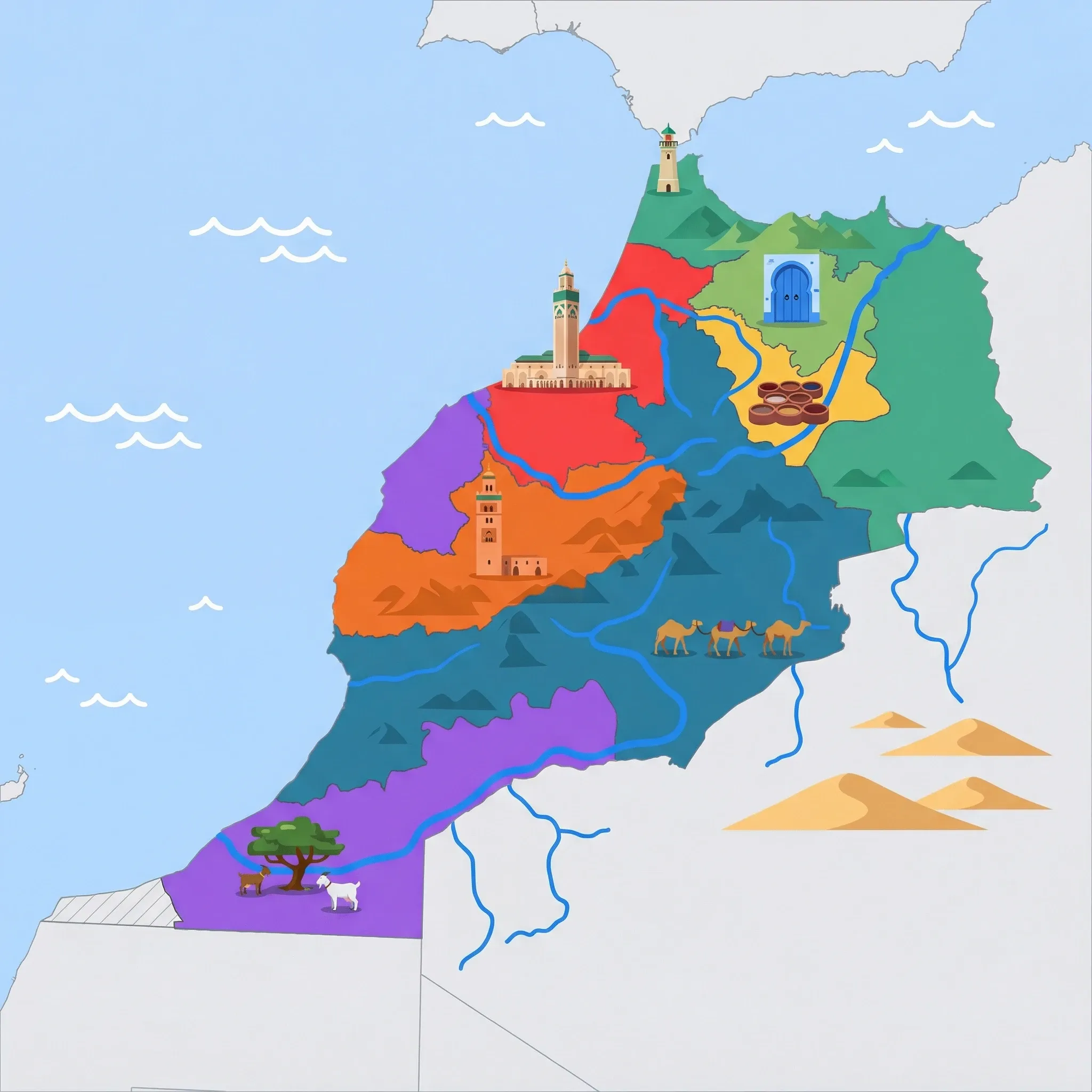
Click a region to explore
Overview
This region represents the spiritual and cultural heart of Morocco. Fes, the oldest of the imperial cities, is home to Fes el Bali, a UNESCO World Heritage site and a labyrinth of over 9,000 alleys. For families, Fes is an intense, immersive education. It is a place of donkey carts, ancient madrasas, and craftsmen hammering copper and tanning leather exactly as they have for a thousand years. While the sensory overload can be challenging for very young children, teenagers often find the "time travel" aspect of Fes fascinating. The city feels authentic and raw.
However, the region is not just about the intensity of the city. Just an hour south lies the Middle Atlas, a complete contrast of cool cedar forests, lakes, and alpine architecture. The town of Ifrane, often called "Little Switzerland," looks like a European ski village with its slanted roofs and manicured parks. This duality—the medieval chaos of Fes combined with the natural tranquility of the Atlas mountains—makes the region a balanced itinerary for families. You can spend the morning navigating the souks and the afternoon watching wild monkeys play in the snow or cool shade of the Cèdre Gouraud Forest.
Key Attractions
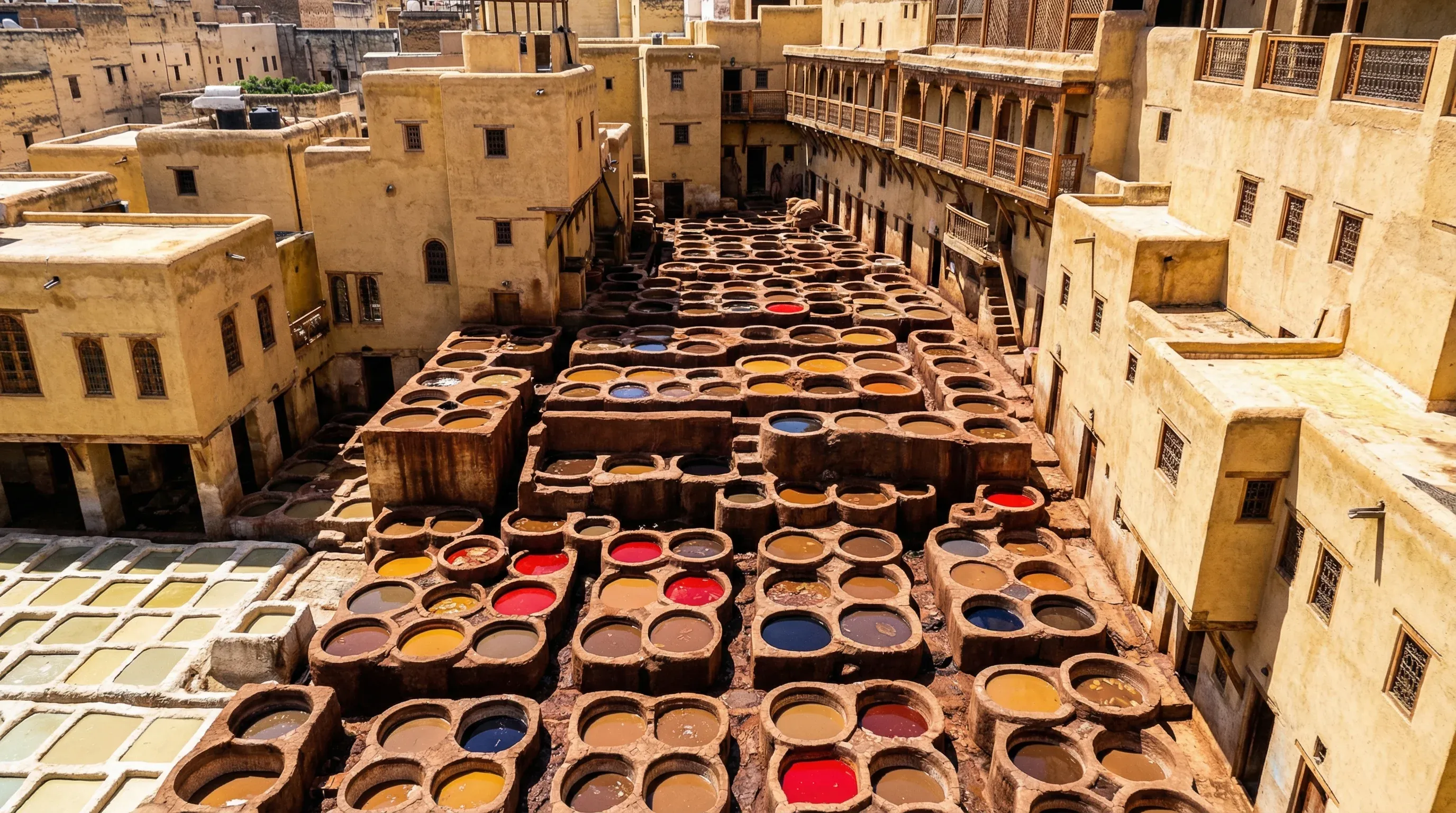
In Fes, the Chouara Tannery is iconic. The view of the honeycomb stone vats filled with colorful dyes is spectacular; visit in the morning for the most vibrant colors, and give kids a sprig of mint (usually provided) to mask the smell. The Bou Inania Madrasa is one of the few religious buildings non-Muslims can enter, offering stunning tile work (zellij) that captivates budding artists. To let off steam, head to Jnan Sbil (Bou Jeloud Gardens), a beautiful oasis of greenery just outside the medina walls. Outside the city, a day trip to Volubilis is essential. These Roman ruins are among the best-preserved in Africa. Children can run freely among the ancient columns and mosaics without the crowds found at European sites. Finally, the Ifrane National Park near Azrou offers the chance to see Barbary macaques in the wild; they are accustomed to humans, but caution is always advised.
Practical Advice
Navigating the Fes medina with a stroller is nearly impossible due to steps, crowds, and uneven ground; a carrier is essential for toddlers. Hiring a licensed guide for your first day in Fes is highly recommended—not just for history, but to stop you getting hopelessly lost. The best time to visit is Spring or Autumn. Summers in Fes can be blisteringly hot (40°C+), making the escape to the Middle Atlas mountains necessary.
Food & Drink
Typical meal times: Lunch 12:30 pm to 2:30 pm. Dinner 7:30 pm to 10:00 pm.
Typical meal costs: Street food (sandwiches/soup) 20–40 MAD (approx. $2–4 USD / €1.80–3.70 EUR). Sit-down meals 100–200 MAD (approx. $10–20 USD / €9–18 EUR). Fes is known for its high-end gastronomy which can cost more.
Dietary requirements: Fes is the culinary capital. Vegetarian options are plentiful (vegetable pastilla is a treat). Sweet and savory flavors are often combined. Allergies: Dried fruits (apricots, prunes) and nuts (almonds) are very common in savory dishes.
Signature dishes:
- Pastilla (Bastilla) – A famous Fessi pie made of layers of thin pastry (warqa) stuffed with pigeon or chicken, almonds, and eggs, dusted with icing sugar and cinnamon. A sweet-savory masterpiece.
- Khlii – Dried, preserved meat (usually beef) confit in fat. Often served with fried eggs for a heavy, delicious breakfast.
- Makouda – Deep-fried potato balls, a favorite street food snack for children.
Why this score?
The labyrinthine medina offers a unique urban adventure, while the Middle Atlas provides cedar forests and wildlife viewing near Ifrane. While not extreme wilderness, the terrain requires significant walking and navigation, offering a moderate physical challenge.
Why this score?
As a major urban center, Fes offers decent healthcare through various private clinics and a large university hospital system. Facilities are generally reliable for tourists, though English-speaking staff are less common than in Casablanca or Marrakech.
Why this score?
Fes is one of the world's premier cultural destinations, anchored by the vast Fes el-Bali medina and nearby Roman ruins of Volubilis. It maintains a high volume of international tourism, though it feels slightly more traditional and less commercially saturated than Marrakech.

Fes offers incredible value. Authentic leather goods and ceramics can be bought for a fraction of European prices if you haggle well. A family dinner in a nice palace-restaurant might cost 400–600 MAD (approx. $40–60 USD / €37–55 EUR). Entry to monuments is cheap, usually 70 MAD (approx. $7 USD / €6.50 EUR) for adults and often free or discounted for children.
Family Travel Notice
When travelling with minors, ensure you carry full birth certificates and, if applicable, notarized consent letters from any non-travelling parent to satisfy border authorities.

Getting Here & Around
Getting Here
- Airports – Fes-Saïss Airport (FEZ) has expanded significantly with low-cost flights from Europe.
- Train – Fes is the terminus of the main rail line from Marrakech (approx. 6.5 hours) and is connected to Casablanca/Rabat (3–4 hours). The train station is in the Ville Nouvelle, a taxi ride from the Medina.
- Bus/Taxi – Grand Taxis are the standard way to reach Ifrane and Azrou from Fes (approx. 1 hour drive).
Getting Around
- Walking – Inside Fes el Bali, walking is the only option. Watch out for "Balak!" (Look out!) shouted by donkey drivers.
- Petit Taxi – Red taxis in Fes are cheap and necessary to get between the Medina, the New Town, and the train station. Drivers generally use meters.
- Car Rental – Recommended only for the day trip to the Middle Atlas (Ifrane National Park) and Volubilis. Do not try to drive inside the old city.
Nearby Airports (1 airport)
Saiss
FEZFes
View full flight map for Morocco →
Official Links

Packing List
The medina is a dense maze; if a child wanders off, finding them visually is difficult.
Dab under noses before visiting the tanneries to mask the strong smell of hides.
Public toilets in the old city often lack soap and paper.
Streets can be dirty with donkey waste and puddles; sandals are not recommended in the medina.
Many sinks and bathtubs in traditional riads and older hotels lack plugs.
Essential for protecting phones and cameras from fine desert sand in the Sahara.
The winding roads through the Atlas Mountains (Tizi n'Tichka pass) can be nauseating.
Vital for tipping bathroom attendants and guardians, who often don't have change.
Dehydration happens fast in the dry desert heat; these are hard to find in rural areas.
Public restrooms often lack paper; carrying your own supply is standard practice.

Activities & Best Times

Urban tourism, museums, historical sites, architecture
Fes is home to the world's most intact medieval medina and the Roman ruins of Volubilis, offering an unparalleled authentic cultural immersion. Peak visitation occurs during the mild spring and autumn, while extreme summer heat in July and August makes exploring the narrow streets uncomfortable.

Hiking, wildlife, outdoor exploration, ecotourism
The Middle Atlas offers unique cedar forests and encounters with wild Barbary macaques, providing a distinct North African wilderness experience. Spring and autumn offer ideal hiking temperatures, while the high-altitude forests serve as a cooler refuge during the summer months.

Spa retreats, wellness centers, peaceful getaways
Home to the historic thermal springs of Moulay Yacoub and Sidi Harazem, the region is a traditional center for spa-based restoration. The mineral-rich waters are best enjoyed during cooler months, as the high heat of summer makes the hot spring experience less appealing.

Scenic drives, countryside tours, route-based travel
The 'Imperial Triangle' and 'Middle Atlas Cedar Forest Route' offer stunning scenic drives through diverse landscapes from ancient cities to alpine lakes. Driving conditions are optimal in the clear spring and autumn, while winter snow in the Atlas and summer heat in the lowlands present challenges.

Sport tourism, fitness activities, active recreation
Purpose-built infrastructure like the Michlifen Adventure Park and numerous mountain biking loops support an active holiday in the Atlas foothills. The mid-seasons provide the best balance of daylight and comfortable temperatures for strenuous outdoor activity.
Amusement parks, family entertainment venues
Regional family draws like Coco Park and the Diamant Vert water park provide entertainment for families visiting the Fes area. These attractions are primarily seasonal, with water-based parks peaking during the hot summer months when local and international families seek cooling activities.

Events, celebrations, seasonal attractions
The Fes Festival of World Sacred Music is a globally significant event that transforms the city into a cultural hub. Peak timing is strictly tied to the festival dates, typically in June, which attracts a sophisticated international audience despite the rising temperatures.

Winter sports, ski resorts, snow activities
Michlifen and Jbel Hebri provide a unique opportunity for skiing in Africa, though infrastructure is modest compared to European standards. The season is short and highly dependent on erratic winter snowfall, usually limited to January and February.

Attractions (17 total)



Public Holidays & Calendar Next 12 months
Public holidays, festivals, cultural celebrations, and seasonal natural phenomena coming up in Fes & Middle Atlas over the next 12 months.
Loading holidays and events...

Travel Advisory
All major agencies recommend exercising a high degree of caution or increased vigilance. The primary driver for this assessment is the underlying threat of terrorism targeting public and tourist areas, supplemented by risks of civil unrest and regional border instabilities.
Safety Topics
Traveller Advice (5 groups)

When travelling with minors, ensure you carry full birth certificates and, if applicable, notarized consent letters from any non-travelling parent to satisfy border authorities.

Be aware that same-sex relations are legally restricted in Morocco. Public displays of affection are generally discouraged for all couples but may lead to significant legal or social complications for LGBTQ+ individuals.

Do not hike alone in remote mountain or desert regions. Use only officially sanctioned guides and ensure vehicles are well-equipped for off-road conditions in the south.

Consider dressing conservatively to respect local customs and reduce the likelihood of unwanted attention. It is advisable to avoid walking alone in isolated areas or after dark.

Maintain a high level of situational awareness in crowded markets, medinas, and near government buildings. Ensure comprehensive travel insurance is in place and monitor local media for sudden demonstrations.
Agency Summaries
Irish citizens are urged to be vigilant and avoid large public gatherings. The advisory notes that while the terrorism risk level has seen some statistical decline, the potential for indiscriminate attacks remains a concern for foreign visitors.
Travellers should remain highly vigilant throughout Morocco due to a persistent threat of terrorist activity. While the general safety situation is stable, specific border areas including the 20km zone adjacent to Algeria and regions near the Western Sahara Berm should be avoided entirely due to military presence and landmines.
The U.S. government recommends increased caution due to the risk of terrorism. Extremist groups continue to plan potential attacks that could target tourist sites, transport hubs, and local government facilities without warning.
British citizens are advised to monitor local conditions closely. While most visits are trouble-free, recent updates have focused on managing risks from severe weather and civil demonstrations. Regional risks exist, particularly in the disputed territory of Western Sahara.
New Zealanders should exercise heightened security awareness due to terrorism and potential civil unrest. Violent clashes during protests have been reported recently, and strict 'do not travel' warnings apply to the militarized boundary in Western Sahara.
Australia maintains a high caution level primarily due to terrorism risks in tourist precincts. Recent advisories also highlight flooding in northern provinces and the necessity of obtaining an e-visa prior to arrival.
Information is provided for general guidance only and does not constitute travel, safety, medical, or legal advice. Conditions may change. Users are responsible for independently verifying information before travel.