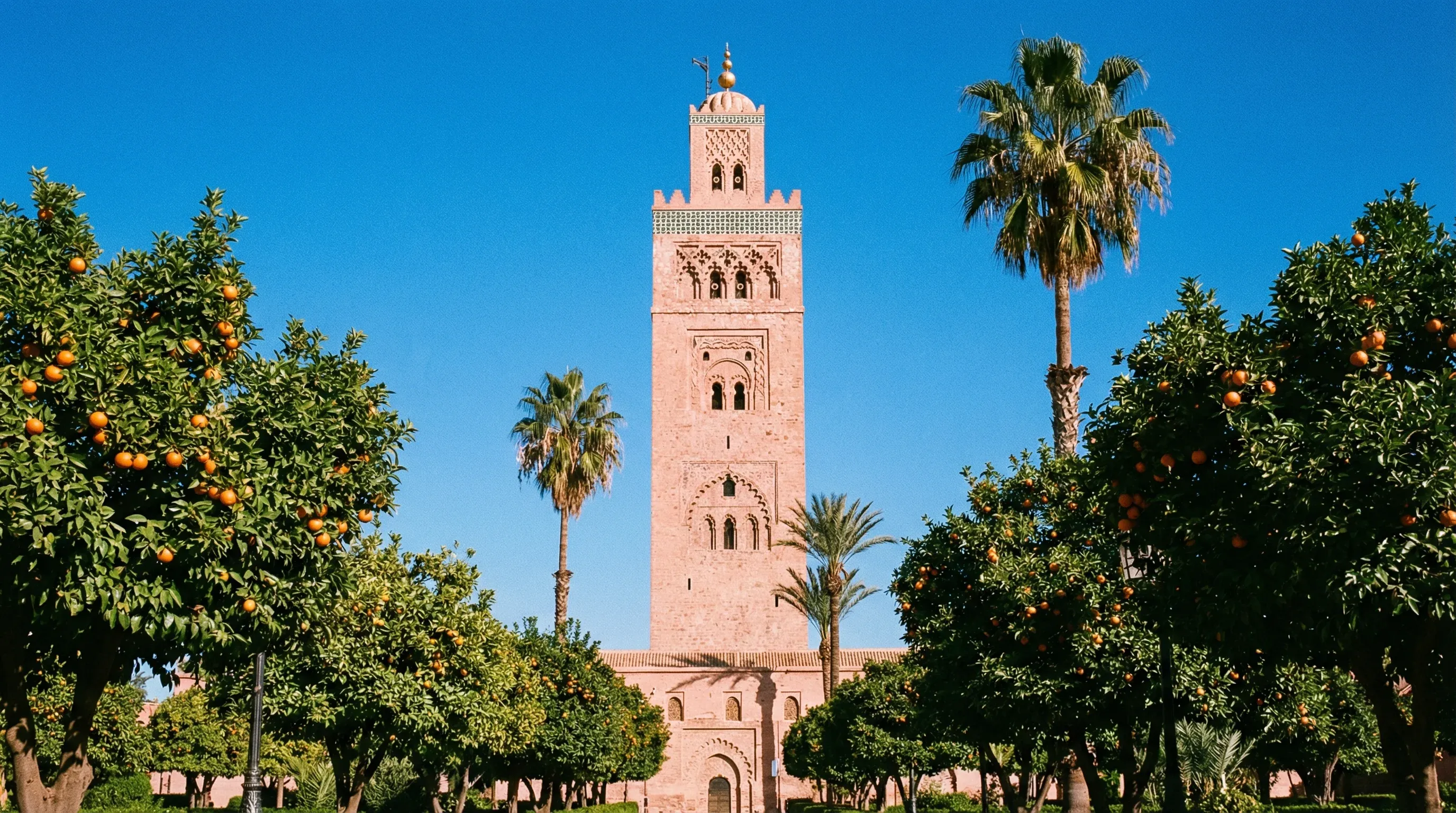

Marrakech & High Atlas
A sensory wonderland of souks, red walls, and snow-capped peaks 🐍🏔️
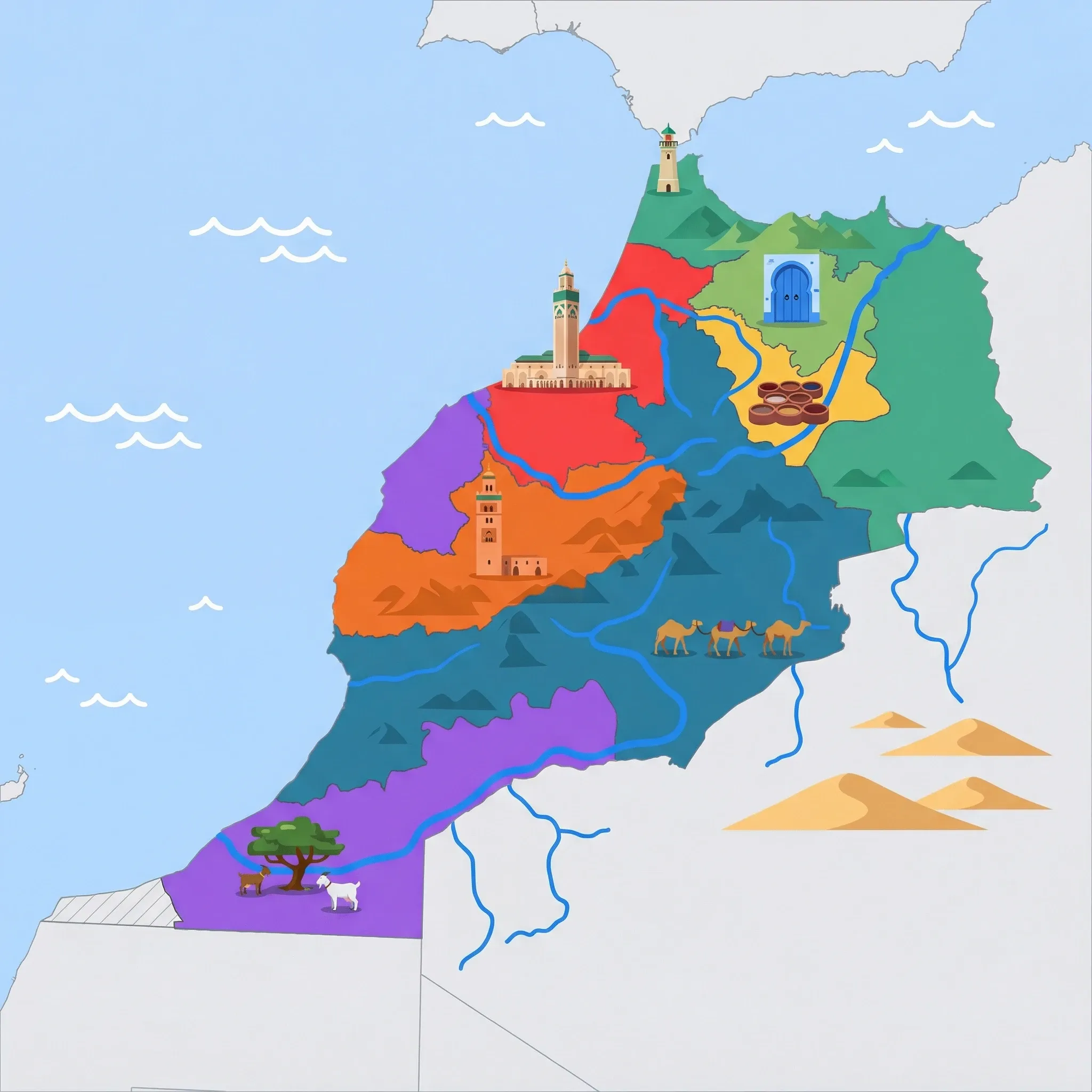
Click a region to explore
Overview
Marrakech is the destination most families envision when they think of Morocco: the "Red City," where ancient walls glow at sunset and the air smells of spices and orange blossom. It is a city of high energy and stark contrasts. In the Medina, life feels medieval, with narrow alleys and bustling markets; in the Ville Nouvelle (Gueliz), you find modern malls and McDonalds. For children, the main square, Jemaa el-Fnaa, is a living circus of acrobats, monkeys, and musicians. While exhilarating, the hustle can be intense, so balancing medina time with pool time is the secret to a happy family trip here. Many hotels and riads are designed as sanctuaries with courtyards and pools that shut out the chaos.
Geographically, Marrakech sits at the foot of the High Atlas Mountains. This proximity is its greatest asset. You can be haggling for carpets in the morning and eating lunch by a river in the mountains by noon. The High Atlas region offers fresh air, Berber village culture, and spectacular scenery that feels a world away from the city. Whether it's the waterfalls of the Ourika Valley or the snowy peaks visible from the city rooftops, the mountains provide a necessary natural counterpoint to the urban buzz.
Key Attractions
The heartbeat of the city is Jemaa el-Fnaa. Visit in the late afternoon as the stalls set up; kids will be wide-eyed at the snake charmers (keep a safe distance and pay if you take photos). For a calmer experience, the Majorelle Garden is a botanical masterpiece with vivid blue buildings and giant cacti that look like they are from a Dr. Seuss book. History comes alive at the Badi Palace, a vast ruin where storks nest on the towering mud-brick walls—kids love spotting the birds and exploring the sunken gardens. To cool off, Oasiria Water Park is the best in the country, featuring ample shade, lazy rivers, and slides suitable for all ages. For a day trip, the Ourika Valley offers riverside restaurants where you can eat with your feet in the water while kids climb rocks.
Practical Advice
Marrakech can be overwhelming. Prepare kids for the attention; shopkeepers will often joke with them or offer sweets. Motorbikes zip through the narrowest pedestrian alleys, so always walk on the right and keep young children firmly by the hand. The heat in July and August is fierce (often 45°C+), so plan sightseeing for early morning and late evening, staying by the pool midday.
Food & Drink
Typical meal times: Lunch 12:30 pm to 3:00 pm. Dinner is lively and late, from 8:00 pm onwards, especially in the square.
Typical meal costs: Stalls in Jemaa el-Fnaa offer dinner for 50–80 MAD (approx. $5–8 USD / €4.50–7.50 EUR). Restaurant meals range widely from 100 MAD to 500+ MAD (approx. $10–50 USD / €9–45 EUR) in luxury spots.
Dietary requirements: Very accommodating. Vegetarian and gluten-free requests are understood in tourist areas. Fresh fruit juices are everywhere—ensure they are made with bottled water if you have sensitive stomachs.
Signature dishes:
- Tangia – Not to be confused with Tagine. This is a bachelor's stew of beef or lamb, lemon, garlic, and saffron, slow-cooked in a clay urn in the embers of the local hammam (bathhouse).
- Orange Juice – The freshly squeezed juice from the carts in Jemaa el-Fnaa is legendary, sweet, and incredibly cheap (approx 5-10 MAD).
- Briouat – Triangular fried pastries filled with almond paste (sweet) or cheese/meat (savory).
Why this score?
The proximity to the High Atlas Mountains allows for serious trekking and mountain biking, including expeditions to North Africa's highest peak, Mount Toubkal. Families can engage in mule treks through Berber villages, providing a significant but accessible mountain adventure.
Why this score?
Marrakech has a well-developed private medical sector that specifically caters to the large expat and tourist populations. Clinics like the Marrakech Medical Centre offer high standards of care and are accustomed to dealing with international travel insurance providers.
Why this score?
Marrakech is Morocco's tourism flagship, attracting millions of international visitors to its world-famous souks, palaces, and Jemaa el-Fnaa square. Its massive hotel infrastructure and direct flight connections make it a major international draw comparable to top-tier European cultural regions.

Marrakech caters to all budgets. You can survive on $20/day or spend $2000/day. A standard family meal in a nice terrace restaurant costs 300–500 MAD (approx. $30–50 USD / €28–46 EUR). Taxis should cost 20–50 MAD (approx. $2–5 USD / €1.80–4.60 EUR) for city trips. Haggle for everything in the souks; start at one-third of the asking price.
Family Travel Notice
When travelling with minors, ensure you carry full birth certificates and, if applicable, notarized consent letters from any non-travelling parent to satisfy border authorities.

Getting Here & Around
Getting Here
- Airports – Marrakech Menara Airport (RAK) is a major international hub with beautiful architecture. It is only 15-20 minutes from the city center.
- Train – The rail station connects to Casablanca (2.5 hours) and Fes. It is modern and easy to navigate.
- Bus – CTM and Supratours operate extensive networks from here to the coast and the desert.
Getting Around
- Walking – The best way to see the Medina of Marrakech. Be ready to get lost; it's part of the fun. Download offline maps.
- Petit Taxi – Beige/Yellow taxis. Essential for moving between the Medina and the New Town (Gueliz). Insist on the meter; if they refuse, find another.
- Caleche – Horse-drawn carriages are a tourist favorite. Negotiate the price firmly before getting in. A tour around the ramparts at sunset is magical.
Nearby Airports (3 airports)
Beni Mellal National Airport
BEMBeni Mellal
Essaouira Airport
ESUEssaouira
Marrakesh Menara Airport
RAKMarrakech
View full flight map for Morocco →
Official Links

Packing List
Dehydration happens fast in the dry heat; water alone sometimes isn't enough for active kids.
Wet these and drape around necks during midday sightseeing to prevent overheating.
Some medina alleyways are poorly lit at night, and uneven paving stones are trip hazards.
Hotel pools are heavily chlorinated to combat the heat/algae; sore eyes are common.
Many sinks and bathtubs in traditional riads and older hotels lack plugs.
Essential for protecting phones and cameras from fine desert sand in the Sahara.
The winding roads through the Atlas Mountains (Tizi n'Tichka pass) can be nauseating.
Vital for tipping bathroom attendants and guardians, who often don't have change.
Dehydration happens fast in the dry desert heat; these are hard to find in rural areas.
Public restrooms often lack paper; carrying your own supply is standard practice.

Activities & Best Times

Hiking, wildlife, outdoor exploration, ecotourism
Home to North Africa's highest peaks, providing authentic trekking and wilderness experiences in the Toubkal National Park. High mountain conditions are best in late spring and early autumn; winter brings heavy snow while mid-summer heat makes valley trekking difficult.

Urban tourism, museums, historical sites, architecture
A world-class cultural hub featuring a UNESCO-listed Medina, intricate palaces, and sophisticated art museums like the Yves Saint Laurent Museum. Peak visitation occurs during spring and autumn when temperatures are ideal for exploring historic quarters and vibrant markets.

Spa retreats, wellness centers, peaceful getaways
Famous for its historic hammam culture and high-end wellness riads offering authentic steam bath treatments. These indoor experiences are best enjoyed in cooler months, as the intense summer heat makes traditional thermal rituals less appealing.

Scenic drives, countryside tours, route-based travel
Features iconic scenic drives like the Tizi n'Tichka pass and the Route of the Thousand Kasbahs. Travel is optimal when mountain passes are clear of winter snow and temperatures are comfortable for long-distance touring.

Sport tourism, fitness activities, active recreation
The region is an internationally recognized destination for high-altitude trekking and road cycling, notably the Atlas Mountain Race route. Activities are constrained by extreme mountain winter conditions and intense summer heat in lower elevations.
Amusement parks, family entertainment venues
Offers several water-based entertainment complexes like Oasiria that provide high-quality family recreation. These facilities are primarily seasonal destinations intended to provide relief during the hottest summer months.

Learning experiences, scientific sites, historical education
Niche educational draws like the Museum for Water Civilization offer unique scientific insights into regional heritage. Visitation mirrors general cultural patterns, peaking when the weather is suitable for multi-site exploration.

Events, celebrations, seasonal attractions
Hosts internationally significant events such as the Marrakech International Film Festival and the Popular Arts Festival. These world-class events draw sophisticated global audiences but are strictly limited to specific weeks in the calendar.

Winter sports, ski resorts, snow activities
Oukaïmeden provides a unique African alpine experience, though the infrastructure is rustic by international standards. The season is short and highly dependent on unpredictable annual snowfall in the High Atlas.

Attractions (25 total)



Public Holidays & Calendar Next 12 months
Public holidays, festivals, cultural celebrations, and seasonal natural phenomena coming up in Marrakech & High Atlas over the next 12 months.
Loading holidays and events...

Travel Advisory
All major agencies recommend exercising a high degree of caution or increased vigilance. The primary driver for this assessment is the underlying threat of terrorism targeting public and tourist areas, supplemented by risks of civil unrest and regional border instabilities.
Safety Topics
Traveller Advice (5 groups)
When travelling with minors, ensure you carry full birth certificates and, if applicable, notarized consent letters from any non-travelling parent to satisfy border authorities.

Be aware that same-sex relations are legally restricted in Morocco. Public displays of affection are generally discouraged for all couples but may lead to significant legal or social complications for LGBTQ+ individuals.

Do not hike alone in remote mountain or desert regions. Use only officially sanctioned guides and ensure vehicles are well-equipped for off-road conditions in the south.

Consider dressing conservatively to respect local customs and reduce the likelihood of unwanted attention. It is advisable to avoid walking alone in isolated areas or after dark.

Maintain a high level of situational awareness in crowded markets, medinas, and near government buildings. Ensure comprehensive travel insurance is in place and monitor local media for sudden demonstrations.
Agency Summaries
Irish citizens are urged to be vigilant and avoid large public gatherings. The advisory notes that while the terrorism risk level has seen some statistical decline, the potential for indiscriminate attacks remains a concern for foreign visitors.
Travellers should remain highly vigilant throughout Morocco due to a persistent threat of terrorist activity. While the general safety situation is stable, specific border areas including the 20km zone adjacent to Algeria and regions near the Western Sahara Berm should be avoided entirely due to military presence and landmines.
The U.S. government recommends increased caution due to the risk of terrorism. Extremist groups continue to plan potential attacks that could target tourist sites, transport hubs, and local government facilities without warning.
British citizens are advised to monitor local conditions closely. While most visits are trouble-free, recent updates have focused on managing risks from severe weather and civil demonstrations. Regional risks exist, particularly in the disputed territory of Western Sahara.
New Zealanders should exercise heightened security awareness due to terrorism and potential civil unrest. Violent clashes during protests have been reported recently, and strict 'do not travel' warnings apply to the militarized boundary in Western Sahara.
Australia maintains a high caution level primarily due to terrorism risks in tourist precincts. Recent advisories also highlight flooding in northern provinces and the necessity of obtaining an e-visa prior to arrival.
Information is provided for general guidance only and does not constitute travel, safety, medical, or legal advice. Conditions may change. Users are responsible for independently verifying information before travel.