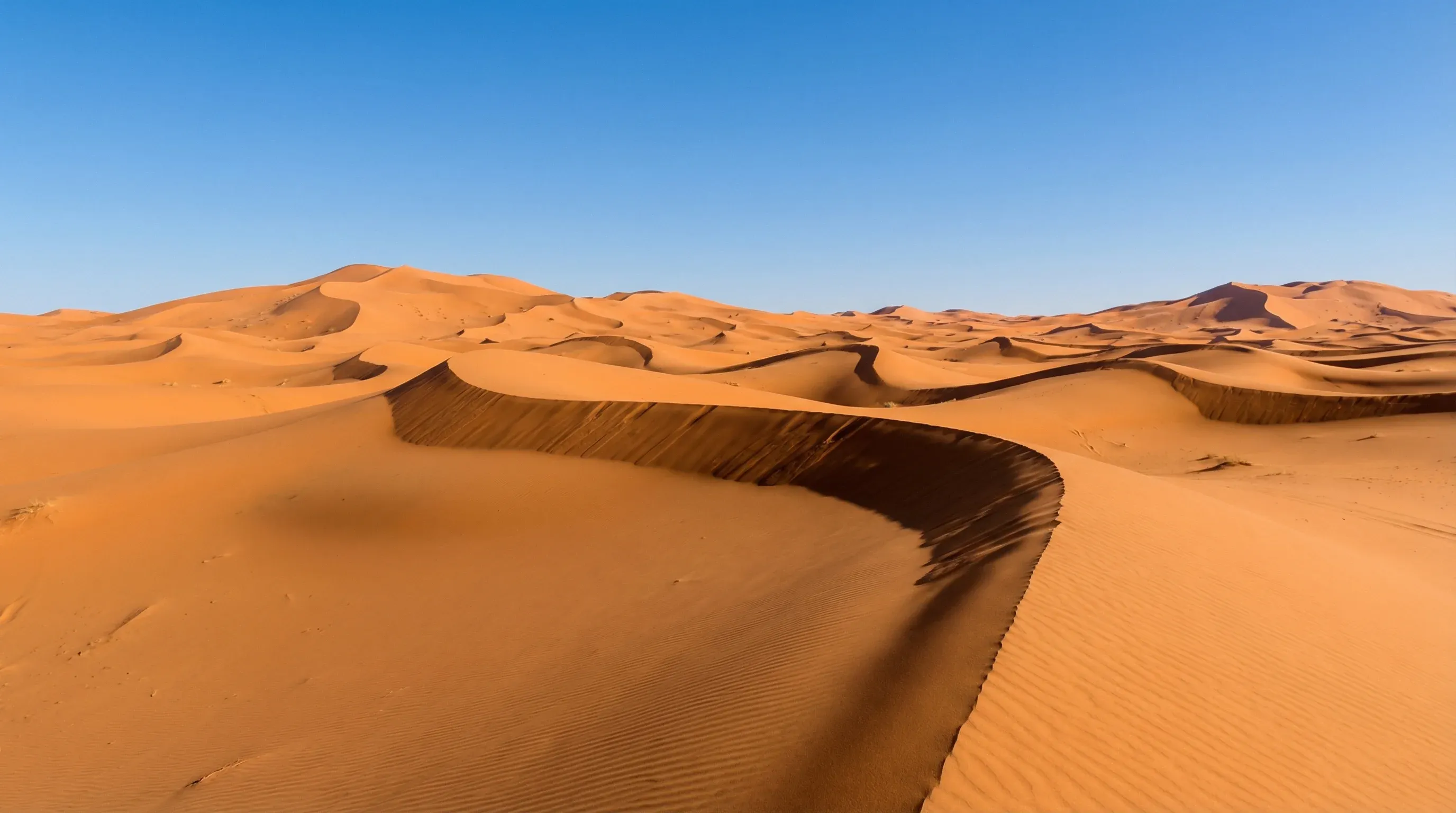

Sahara & Southeast (Merzouga, Ouarzazate)
Sleep under a million stars in the golden dunes ✨🐪
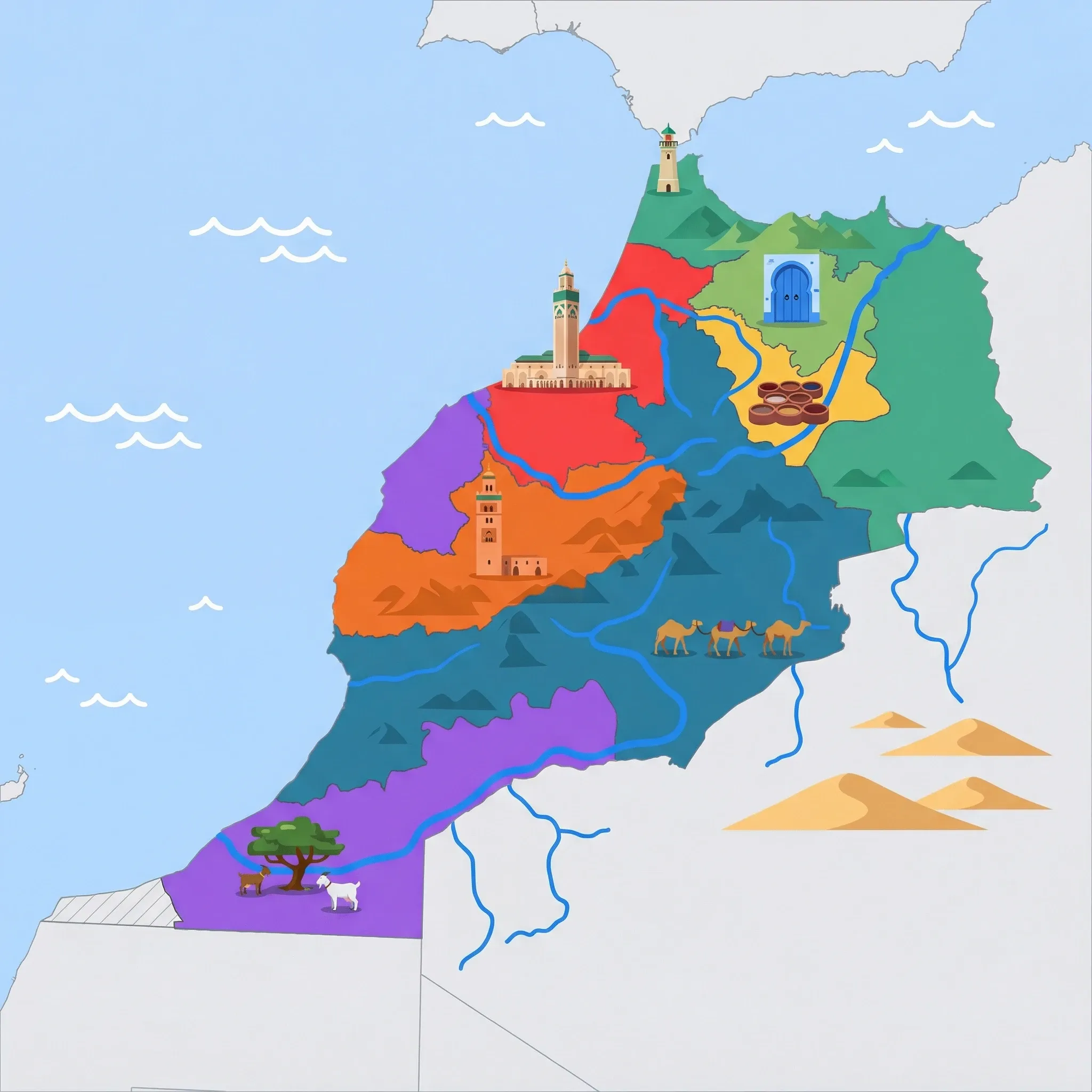
Click a region to explore
Overview
The Southeast is the Morocco of the imagination: vast, orange landscapes, crumbling mud-brick castles, and the endless silence of the Sahara Desert. For families, a trip here is a true expedition. The distances are long, but the rewards are unforgettable. This region teaches children about geology, nomadic cultures, and astronomy in the most hands-on way possible. The journey typically starts in Ouarzazate, known as "Ouallywood" due to its film studios, and continues along the "Road of a Thousand Kasbahs" through dramatic gorges to the dunes of Merzouga.
The highlight for any child is the Sahara itself. The Erg Chebbi dunes near Merzouga rise up to 150 meters high. Climbing them is exhausting but rolling down them is pure joy. Spending a night in a desert camp, sitting around a campfire with Berber drumming and seeing the Milky Way stretch across the sky, is a core memory for many families. However, this region requires patience; it involves long hours in the car. It is best suited for school-aged children and teens who can handle the travel time. The dry heat is intense, but the lack of humidity makes it more bearable than the coast.
Key Attractions
Before reaching the desert, the Ksar of Aït Benhaddou is an essential stop. This UNESCO fortified village is a real-life sandcastle that kids will recognize from movies like Gladiator or The Mummy. Nearby, the Atlas Film Studios allow families to wander through leftover sets of Egyptian temples and Tibetan palaces—a fun, kitschy playground. Further east, the Todra Gorges offer a spectacular natural break; the canyon walls are 300 meters high but only 10 meters apart at the narrowest point, with a shallow river perfect for wading. Finally, the Erg Chebbi Dunes are the main event. Camel treks here are generally short (around 1 hour) to reach the camps, which is the perfect duration for kids. Sandboarding down the dunes is a popular activity provided by most camps.
Practical Advice
Do not attempt a day trip to the desert from Marrakech—it is at least a 9-10 hour drive one way. Plan for a minimum of 3 days/2 nights, stopping in Ouarzazate or the Dades Valley to break the journey. October to April is the season; summer (June-August) is dangerously hot (50°C) and many camps close. Bring motion sickness medication for the winding roads through the Atlas Mountains to get here.
Food & Drink
Typical meal times: Meal times are dictated by tour stops. Lunch is usually 1:00 pm. Dinner in desert camps is served late, around 8:30 pm or 9:00 pm.
Typical meal costs: Prices in remote areas can be higher due to transport costs. Set menus for tourists are common, costing 100–150 MAD (approx. $10–15 USD / €9–14 EUR).
Dietary requirements: Options are more limited in the desert. Tagine (chicken/lemon or vegetable) is the standard meal. Let your camp know dietary needs in advance as supplies are bought at weekly markets.
Signature dishes:
- Medfouna (Berber Pizza) – A stuffed bread filled with spiced meat, onions, and hard-boiled eggs, baked in the sand or a traditional oven. A regional specialty of the Tafilalt area.
- Dates – The region produces the best dates in Morocco (Majhoul variety). They are large, sweet, and sold everywhere.
- Kali – A mutton dish cooked with spices and sheep tail fat, preserved for winter.
Why this score?
This is Morocco's most rugged region, involving long drives through mountain passes, desert camping, and off-road 4x4 expeditions. The environment is harsh and remote, offering a high level of adventure for families willing to venture far from urban centers.
Why this score?
Medical infrastructure is extremely sparse once you leave Ouarzazate, with only very basic clinics available in desert outposts like Merzouga. Emergency evacuation to Marrakech is often necessary for serious conditions, as local facilities lack specialized equipment and staff.
Why this score?
The dunes of Erg Chebbi and the kasbahs of Ouarzazate are iconic Moroccan images that draw most long-haul travelers. Despite the long travel distances required to reach the desert, the region remains a high-priority bucket-list destination for international tour groups.

Costs depend on the luxury level of your desert camp. Standard camps with shared bathrooms cost 400–600 MAD (approx. $40–60 USD / €37–55 EUR) per person. Luxury camps with en-suite showers and electricity cost 1,500–3,000 MAD (approx. $150–300 USD / €140–280 EUR) per person. Transport (private driver/4x4) will be your biggest expense.
Family Travel Notice
When travelling with minors, ensure you carry full birth certificates and, if applicable, notarized consent letters from any non-travelling parent to satisfy border authorities.

Getting Here & Around
Getting Here
- Driving – The N9 road crosses the High Atlas via the Tizi n'Tichka Pass (N9). It is one of the most scenic drives in the world but requires a confident driver and a reliable vehicle.
- Bus – Supratours runs a daily bus from Marrakech to Merzouga (approx. 12 hours). It is long and tiring for young kids.
- Airports – Ouarzazate Airport (OZZ) and Errachidia Airport (ERH) have flights from Casablanca. Flying to Errachidia puts you just 2 hours from the dunes, saving immense travel time.
Getting Around
- 4x4 Vehicle – Essential for the final leg into the desert camps if they are deep in the dunes. Most camps organize this transfer.
- Camel – The traditional way to enter the dunes. Secure children firmly; camels are taller and jerkier than expected when standing up.
- Rental Car – Useful for the drive from Ouarzazate to the gorges, but standard cars cannot drive on sand. Stick to the tarmac.
Nearby Airports (4 airports)
Inezgane Airport
AGAAgadir
Moulay Ali Cherif
ERHErrachidia
Zagora Airport
OZGZagora
Ouarzazate
OZZOuarzazate
View full flight map for Morocco →
Official Links

Packing List
Essential for wrapping around the face to protect against blowing sand during camel rides.
The air is incredibly dry and fine sand gets everywhere; contacts are difficult to wear.
Long drives and camps with limited electricity means charging devices can be tricky.
Sand destroys electronics. Put phones/cameras in bags when not shooting.
Many sinks and bathtubs in traditional riads and older hotels lack plugs.
The winding roads through the Atlas Mountains (Tizi n'Tichka pass) can be nauseating.
Vital for tipping bathroom attendants and guardians, who often don't have change.
Dehydration happens fast in the dry desert heat; these are hard to find in rural areas.
Public restrooms often lack paper; carrying your own supply is standard practice.

Activities & Best Times

Hiking, wildlife, outdoor exploration, ecotourism
Home to the world-renowned Erg Chebbi dunes and dramatic Todra Gorges, providing an authentic and visually stunning desert wilderness experience. Peak months offer comfortable temperatures, whereas the extreme summer heat makes desert exploration hazardous.

Urban tourism, museums, historical sites, architecture
Features the iconic UNESCO-listed Aït Benhaddou and historic clay kasbahs that offer an unparalleled glimpse into ancient trans-Saharan trade history. Spring and autumn provide the best light and temperatures for exploring these labyrinthine heritage sites.

Sport tourism, fitness activities, active recreation
Offers world-class rock climbing in the Todra Gorges and significant trekking routes like the Jebel Saghro traverse. Optimal conditions occur during mild windows, avoiding the freezing winter nights and extreme summer sun that affects outdoor physical exertion.

Scenic drives, countryside tours, route-based travel
The Road of a Thousand Kasbahs and the Tizi n'Tichka pass offer spectacular mountain-to-desert transitions through authentic Berber landscapes. Driving is best in transitional seasons; winter can occasionally close high passes and summer heat is punishing.

Learning experiences, scientific sites, historical education
Specialized fossil and mineral museums in Erfoud offer unique geological insights into the Sahara's prehistoric past. These facilities serve as interesting educational stops during primary tourism seasons but are rarely standalone travel motivators.

Spa retreats, wellness centers, peaceful getaways
Natural hot springs provide traditional restorative experiences in a rustic setting, though they lack the luxury of international spa resorts. These are best enjoyed in the cooler winter and spring months when the thermal waters provide a pleasant contrast to the air.

Amusement parks, family entertainment venues
The region's film industry history is showcased at Atlas and CLA Studios, offering authentic movie set tours rather than traditional amusement rides. Best visited during months with moderate temperatures to enjoy the expansive outdoor studio grounds.

Attractions (13 total)



Public Holidays & Calendar Next 12 months
Public holidays, festivals, cultural celebrations, and seasonal natural phenomena coming up in Sahara & Southeast (Merzouga, Ouarzazate) over the next 12 months.
Loading holidays and events...

Travel Advisory
All major agencies recommend exercising a high degree of caution or increased vigilance. The primary driver for this assessment is the underlying threat of terrorism targeting public and tourist areas, supplemented by risks of civil unrest and regional border instabilities.
Safety Topics
Traveller Advice (5 groups)
When travelling with minors, ensure you carry full birth certificates and, if applicable, notarized consent letters from any non-travelling parent to satisfy border authorities.

Be aware that same-sex relations are legally restricted in Morocco. Public displays of affection are generally discouraged for all couples but may lead to significant legal or social complications for LGBTQ+ individuals.
Do not hike alone in remote mountain or desert regions. Use only officially sanctioned guides and ensure vehicles are well-equipped for off-road conditions in the south.

Consider dressing conservatively to respect local customs and reduce the likelihood of unwanted attention. It is advisable to avoid walking alone in isolated areas or after dark.

Maintain a high level of situational awareness in crowded markets, medinas, and near government buildings. Ensure comprehensive travel insurance is in place and monitor local media for sudden demonstrations.
Agency Summaries
Irish citizens are urged to be vigilant and avoid large public gatherings. The advisory notes that while the terrorism risk level has seen some statistical decline, the potential for indiscriminate attacks remains a concern for foreign visitors.
Travellers should remain highly vigilant throughout Morocco due to a persistent threat of terrorist activity. While the general safety situation is stable, specific border areas including the 20km zone adjacent to Algeria and regions near the Western Sahara Berm should be avoided entirely due to military presence and landmines.
The U.S. government recommends increased caution due to the risk of terrorism. Extremist groups continue to plan potential attacks that could target tourist sites, transport hubs, and local government facilities without warning.
British citizens are advised to monitor local conditions closely. While most visits are trouble-free, recent updates have focused on managing risks from severe weather and civil demonstrations. Regional risks exist, particularly in the disputed territory of Western Sahara.
New Zealanders should exercise heightened security awareness due to terrorism and potential civil unrest. Violent clashes during protests have been reported recently, and strict 'do not travel' warnings apply to the militarized boundary in Western Sahara.
Australia maintains a high caution level primarily due to terrorism risks in tourist precincts. Recent advisories also highlight flooding in northern provinces and the necessity of obtaining an e-visa prior to arrival.
Information is provided for general guidance only and does not constitute travel, safety, medical, or legal advice. Conditions may change. Users are responsible for independently verifying information before travel.