
Inhambane & Tofo
Historic charm meets the giants of the deep 🐋
Click a region to explore
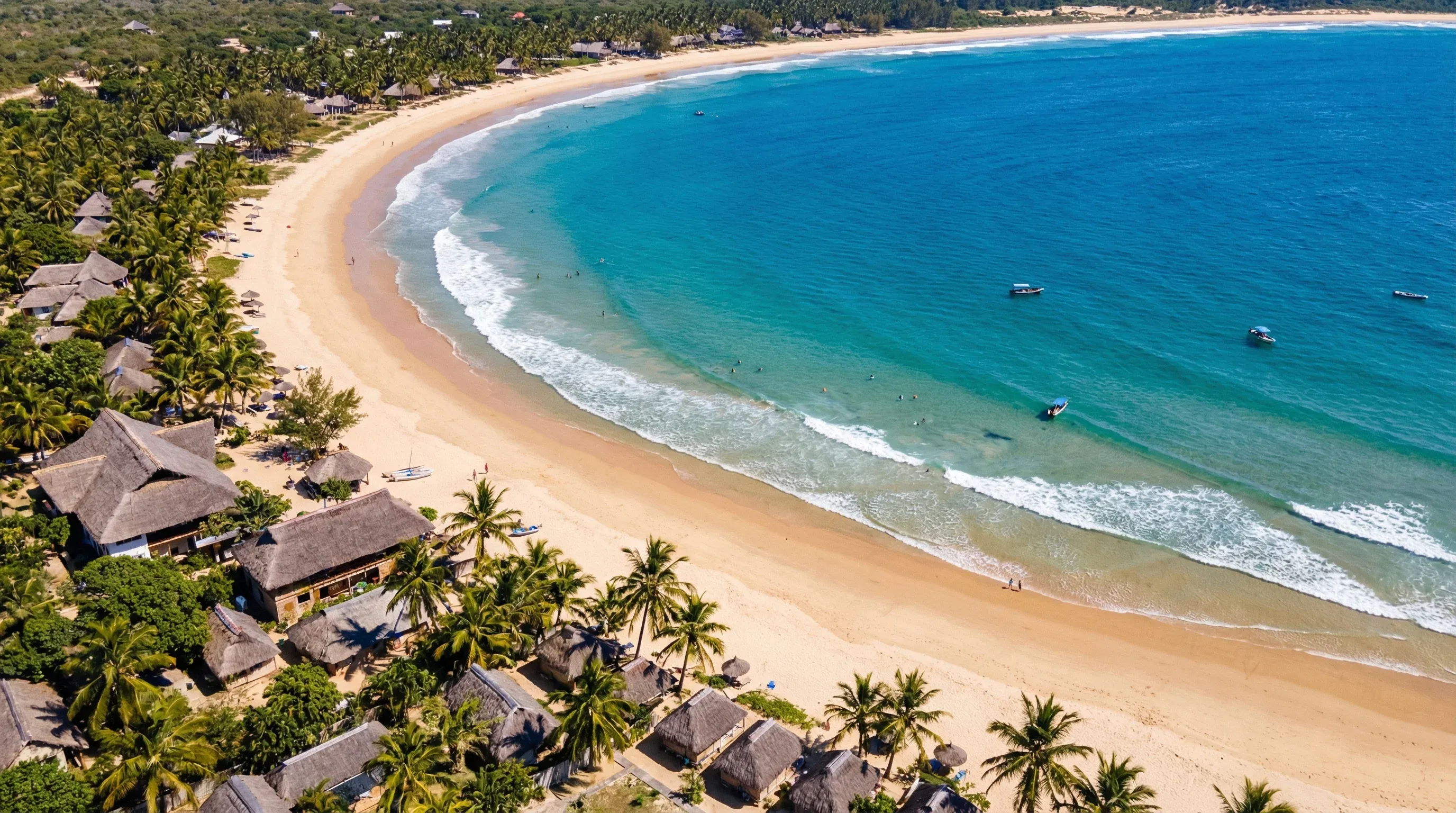
The Inhambane and Tofo region offers a perfect dual-experience for families: a dose of history followed by barefoot beach adventure. Inhambane City, located on a calm bay, is one of the oldest settlements on the east coast of Africa. It feels like a place frozen in time, where dhows still sail across the bay and colonial architecture lines the quiet streets. For families, it is a gentle introduction to Mozambican culture, manageable in size and safe to explore on foot. A short drive across the peninsula leads to the open ocean beaches of Tofo and Barra, which are radically different in energy. Tofo is a bustling, bohemian beach village famous globally for its 'Ocean Safaris'. The vibe here is laid-back and surfer-chic, with sandy roads and markets selling fresh coconuts and colourful sarongs.
What makes this region truly special for children is the accessibility of marine giants. This is one of the few places in the world where whale sharks and manta rays are resident year-round. The 'Ocean Safari' boats launch right from the sand, and while swimming with these animals is suited for strong swimmers (usually older children and teens), seeing them from the boat is magical for all ages. The beaches at Barra are generally calmer and better suited for toddlers and younger children compared to the surf breaks at Tofinho. The vast coconut groves surrounding the area also offer opportunities for quad biking and village tours, giving families a look at rural life away from the tourist strip.
Key Attractions
In Inhambane City, the Cathedral of Our Lady of the Immaculate Conception is a must-visit landmark. Built 200 years ago, its rusted clock tower offers a ladder climb that adventurous older kids will love for the panoramic views over the town and harbour. In Tofo, the beach itself is the main attraction, but the local market is also a highlight, offering fresh fruit and local crafts. Families should also consider a boat trip to the estuary near Barra to see flamingos and starfish in the shallow, calm waters, which provides a relaxing contrast to the high-energy ocean waves.
Practical Advice
The best time to visit is May to October. Tofo can get very busy during South African school holidays (December/January) and prices spike. Tofo is a malaria area, so appropriate precautions (nets, sprays, prophylaxis) are non-negotiable. The sun is incredibly strong; high SPF rash vests are recommended for kids spending all day in the water. Cash is king in local markets, though many lodges now accept cards.
Food & Drink
Typical meal times: Lunch is casual, usually 12:00 pm to 3:00 pm. Dinner is served from 6:00 pm to 9:30 pm.
Typical meal costs: A fresh seafood meal in a local restaurant costs 600–1,200 MZN (approx. $10–19 USD / €9–17 EUR). Street food is much cheaper.
Dietary requirements: Tofo is very tourist-friendly and accommodates vegetarian and vegan diets well (smoothie bowls and veggie burgers are common). Gluten-free options are available at western-owned lodges but rarer in local spots.
Signature dishes:
- Pãozinho – Fresh Portuguese-style bread rolls, best eaten hot from the bakery (padaria) in the morning.
- Lulas Grelhadas – Grilled calamari, caught locally and usually incredibly tender, served with chips or rice.
- Chamussas – Triangular savory pastries (samosas) filled with fish, beef, or vegetables, perfect for a quick beach snack.
Why this score?
The region offers accessible adventure through ocean safaris to see whale sharks and manta rays. While the coastal terrain is easy to navigate, the reliance on 4x4 vehicles for many beach tracks adds a layer of ruggedness for visiting families.
Why this score?
Inhambane City has basic provincial healthcare facilities that are often under-resourced. While there are small private clinics in the Tofo area catering to travelers, they are only equipped for minor ailments and stabilize patients for transport elsewhere.
Why this score?
Tofo is a globally recognized hotspot for megafauna diving, yet it primarily caters to a specific demographic of backpackers and adventure divers. The total annual visitor numbers are modest compared to established tropical beach hubs in Asia or the Caribbean.

Tofo offers great value compared to the islands. A family bungalow ranges from 4,000–9,000 MZN (approx. $63–140 USD / €58–130 EUR) per night. Ocean safaris generally cost 2,500–3,500 MZN (approx. $40–55 USD / €36–50 EUR) per person. Local market food is very cheap, with fruit and bread costing pennies.

Getting Here & Around
Getting Here
- Airports – Inhambane Airport (INH) is small and located just outside the city. It receives flights from Maputo and Johannesburg. Transfers to Tofo take about 30 minutes.
- Driving – The drive from Maputo on the EN1 takes 7–9 hours. The road is paved but can have potholes and roaming livestock.
- Ferry – A passenger ferry connects Inhambane City across the bay to Maxixe, where the Cathedral of Our Lady of the Immaculate Conception can be seen from the water as you approach.
Getting Around
- Tuk-tuks – Widely available in Tofo and Inhambane. They are cheap and fun for short trips between the beach and the market.
- Walking – Tofo village is very compact and best explored on foot.
- Car – Useful if you want to travel between Tofo, Tofinho, and Barra, as they are spread out over several kilometers.
Nearby Airports (1 airport)
Inhambane
INHInhambane
View full flight map for Mozambique →
Official Links

Packing List
The sun is extreme and kids will be in the water for hours.
To capture the whale sharks and dolphins during ocean safaris.
The boat launches into the surf can be choppy; essential for sensitive tummies.
Street lighting is minimal in Tofo and power cuts can occur.
Mozambique uses the 3-pin 'South African' plug (Type M), which universal adapters rarely include.
Essential for protecting the pristine coral ecosystems in marine reserves like Bazaruto.
Street lighting is scarce and power cuts happen; essential for navigating lodges at night.
Keeps valuables safe during dhow sailing trips and wet ocean safari boat launches.
Tolls, police fines, and rural markets often cannot accept cards or large bills.
Fine sand is everywhere, especially if visiting the dunes of Bazaruto or Suguta.

Activities & Best Times

Hiking, wildlife, outdoor exploration, ecotourism
Offers exceptional marine megafauna encounters and scenic coastal trekking trails. The peak months align with the humpback whale migration and provide comfortable temperatures for exploring the Tofo to Barra coastal routes.

Urban tourism, museums, historical sites, architecture
Inhambane is one of East Africa's oldest settlements, featuring authentic colonial architecture, iconic cathedrals, and vibrant local markets. The winter months offer the most pleasant conditions for walking tours of the historic urban core.

Sport tourism, fitness activities, active recreation
Supported by major scuba diving centers and established coastal horse riding trails, this region caters well to active families. Peak season offers the best conditions for both sea-based and land-based activities without extreme tropical heat.

Beach resorts, marine activities: diving, snorkelling, kite surfing, wind surfing, sailing
Pristine white-sand beaches with world-renowned diving for manta rays and whale sharks. Peak season provides dry weather and optimal underwater visibility, while the summer months are avoided due to high humidity and cyclone risks.

Scenic drives, countryside tours, route-based travel
The 'Coconut Coast' and Inhambane Peninsula offer unique scenic drives through palm-fringed landscapes and coastal villages. Dry season travel is essential as some coastal tracks can become difficult during the heavy summer rains.




Public Holidays & Calendar Next 12 months
Public holidays, festivals, cultural celebrations, and seasonal natural phenomena coming up in Inhambane & Tofo over the next 12 months.
Loading holidays and events...

Travel Advisory
All major agencies recommend exercising increased vigilance due to high crime, civil unrest, and localized terrorism. While the country is generally accessible, specific northern regions are under 'Do Not Travel' advisories.
Safety Topics
Agency Summaries
Heightened security risks and kidnapping threats persist across the country. Higher risk levels apply to northern regions due to militant activity.
There are significant security concerns nationwide related to civil unrest, violent crime, and terrorism. Extensive travel restrictions are in place for the northern provinces.
The advisory level was recently adjusted to reflect a decrease in election protests, though caution is still required nationwide due to health risks, crime, and terrorism. Northern provinces remain at 'Do Not Travel' status.
Irish citizens are advised to be alert to street crime and avoid specific areas of Maputo City after dark. New visa-free rules for tourists are in effect.
Travellers should remain extremely vigilant due to high crime rates, the threat of terrorism in the north, and potential for violent civil unrest. Regional travel bans are in place for several northern districts.
While general advice is standard, the FCDO maintains strict warnings against travel to several northern districts. Crime and kidnapping for ransom are major concerns in urban areas like Maputo.
Information is provided for general guidance only and does not constitute travel, safety, medical, or legal advice. Conditions may change. Users are responsible for independently verifying information before travel.