
Northern Mozambique & Quirimbas
Ancient history and untamed wilderness ⚠️
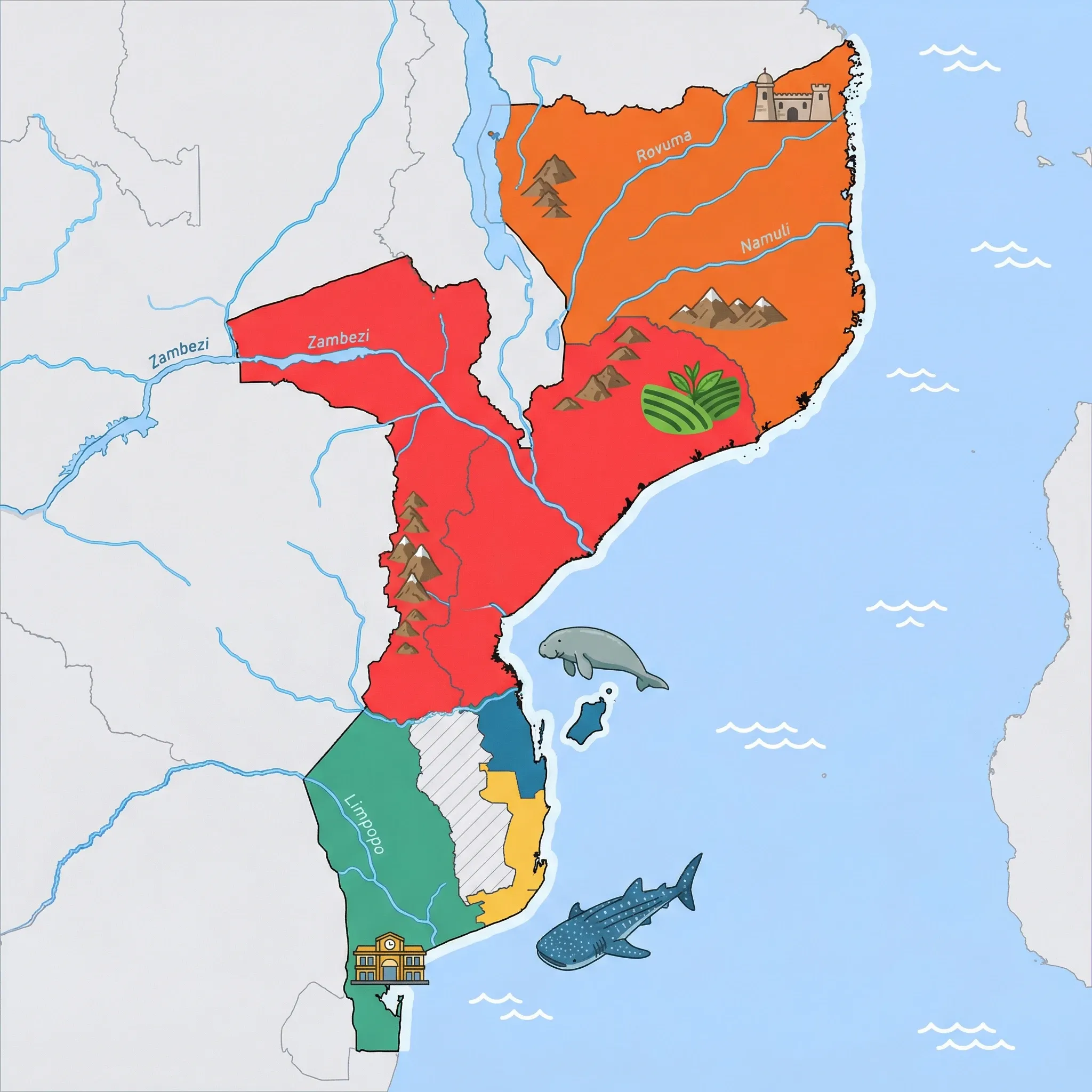
Click a region to explore
⚠️ SAFETY WARNING: Due to ongoing armed conflict, terrorism, and military operations, government agencies (including CA, USA, UK, AU, IE, NZ) advise travelers to avoid all travel to Cabo Delgado province and the Quirimbas Archipelago. There is a high risk of violent attack and kidnapping. Families are strongly urged to consult their own government's official travel advisory before considering a trip to any part of Northern Mozambique, as the security situation is volatile and dangerous.
Despite the current severe restrictions, Northern Mozambique remains culturally the most fascinating part of the country. It is the cradle of the nation's history, where African, Arab, and Portuguese influences have intertwined for centuries. The landscape is incredibly diverse, ranging from the dramatic inselbergs (island mountains) of Nampula to the turquoise waters of the Quirimbas Archipelago. The region feels far more 'African' and traditional than the south, with a predominantly Muslim population and a coastline dotted with dhows sailing on the trade winds. While tourism is currently halted in many areas, the region holds incredible potential for the future.
The crown jewel of the north—and a place that is sometimes accessible even when the far north is not (check local advice meticulously)—is the Ilha de Moçambique. This tiny, crescent-shaped island was the capital of Portuguese East Africa for nearly 400 years. Connected to the mainland by a 3km bridge, it is a living museum of crumbling colonial palaces, mosques, and thatched houses. The atmosphere is hauntingly beautiful and distinct from anywhere else in Southern Africa. Further inland, the vast wilderness of Niassa offers one of the last true frontiers for wildlife, though it is incredibly remote and difficult to access.
Key Attractions
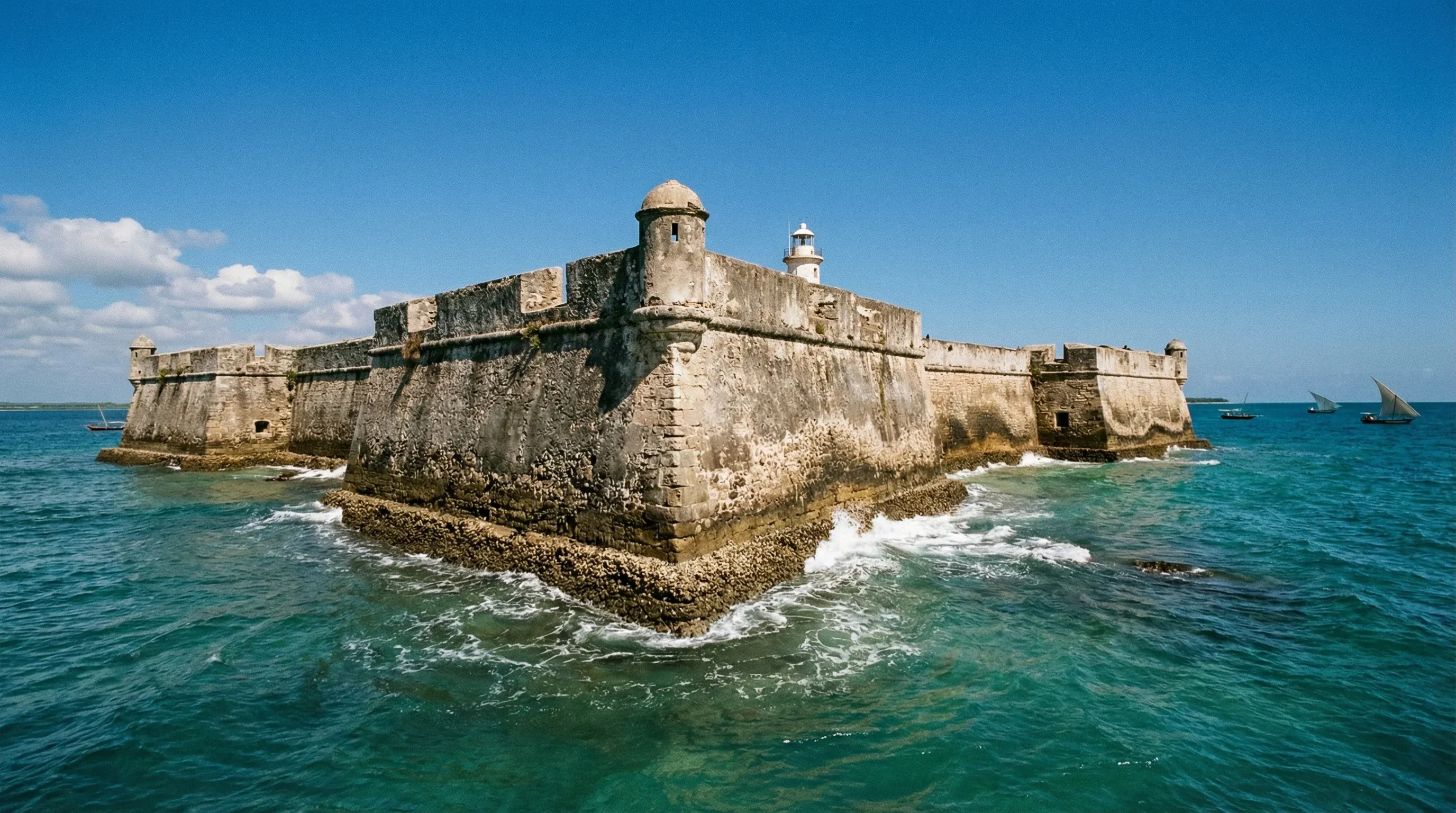
The Island of Mozambique (Stone Town) is a UNESCO World Heritage site and the primary cultural attraction. Families can wander the quiet streets, visiting the massive Fortaleza de São Sebastião, the oldest complete fort in sub-Saharan Africa. Inside the fort, the Chapel of Nossa Senhora de Baluarte (built in 1522) is the oldest European building in the southern hemisphere. The Palácio de São Paulo, a former governor's palace, is now a museum filled with Indo-Portuguese furniture and artifacts that tell the story of the spice trade. For nature lovers, Wimbe Beach in Pemba is the gateway to the ocean, though currently, safety in Pemba fluctuates.
Practical Advice
Travel here requires extreme caution and meticulous planning. Nampula and Ilha de Moçambique are generally more stable than Cabo Delgado, but conditions change. Flights to Nampula (APL) are the safest entry method. Malaria risk is high. Respect local Islamic culture by dressing modestly (covering shoulders and knees) when off the beach.
Food & Drink
Typical meal times: Lunch 12:00 pm to 2:00 pm. Dinner 6:30 pm to 9:00 pm.
Typical meal costs: Meals are generally cheaper than in Maputo. A dinner costs 800–1,500 MZN (approx. $12–24 USD / €11–22 EUR).
Dietary requirements: The cuisine is heavily influenced by the coast. Fresh fish is the staple. Vegetarians can rely on bean dishes and cassava but options are limited compared to the south.
Signature dishes:
- Galinha à Zambeziana – Although named after Zambezia, this coconut-grilled chicken is a staple across the north.
- Matata – A clam and peanut stew made with pumpkin leaves, unique to this region and distinct from the 'Matapa' found in the south (note the spelling difference!).
Why this score?
This is one of Africa's last frontiers, featuring the massive and wild Niassa Special Reserve and remote island chains. The lack of infrastructure, combined with current security travel advisories, makes any journey here a high-stakes, serious adventure.
Why this score?
Outside of the regional capital Pemba, which has limited hospital services, medical infrastructure is virtually non-existent for tourists. Reliable emergency response and English-speaking medical staff are extremely difficult to find in the remote northern reaches.
Why this score?
Tourism in this region has been severely impacted by regional instability and the remoteness of the Quirimbas Archipelago. Aside from the UNESCO-listed Ilha de Moçambique, international visitor numbers are currently very low due to security concerns and logistical challenges.

Costs are difficult to generalize due to the lack of tourism. Functional hotels in Nampula cost around 5,000–9,000 MZN (approx. $80–140 USD / €73–130 EUR). Boutique lodges on <a data-attraction-id="45689">Island of Mozambique</a> charge international rates, approx. 9,500–16,000 MZN (approx. $150–250 USD / €140–235 EUR).

Getting Here & Around
Getting Here
- Airports – Nampula Airport (APL) is the safest gateway to the region. Pemba Airport (POL) serves Cabo Delgado but is subject to security concerns.
- Driving – Road travel in Cabo Delgado is highly dangerous and should be avoided. The road from Nampula to Island of Mozambique is generally passable but requires local security intel.
Getting Around
- Walking – On Island of Mozambique, walking is the only real way to explore Stone Town's narrow alleys.
- Private Driver – Essential for safety. Do not use public buses (chapas) in this region due to security risks.
Nearby Airports (4 airports)
Nampula
APLNampula
Nacala
MNCNacala
Pemba
POLPemba
Lichinga
VXCLichinga
View full flight map for Mozambique →
Official Links

Packing List
Essential for respecting the conservative Islamic culture on Ilha de Moçambique.
Recommended for remote travel where cellular networks are unreliable or compromised.
ATMs are unreliable or non-existent outside major cities; carry small denominations.
GPS can be patchy and digital reliance is risky in security-sensitive zones.
Mozambique uses the 3-pin 'South African' plug (Type M), which universal adapters rarely include.
Essential for protecting the pristine coral ecosystems in marine reserves like Bazaruto.
Street lighting is scarce and power cuts happen; essential for navigating lodges at night.
Keeps valuables safe during dhow sailing trips and wet ocean safari boat launches.
Tolls, police fines, and rural markets often cannot accept cards or large bills.
Fine sand is everywhere, especially if visiting the dunes of Bazaruto or Suguta.

Activities & Best Times

Urban tourism, museums, historical sites, architecture
The Island of Mozambique is a UNESCO World Heritage site offering a world-class blend of African, Arab, and Portuguese history within a living urban environment. The cooler, dry winter months are ideal for exploring the historic fortresses and stone town architecture without extreme tropical heat.

Hiking, wildlife, outdoor exploration, ecotourism
Home to the Niassa Special Reserve, providing an authentic and rugged wilderness experience that appeals to families seeking off-the-beaten-path safari. Visitation is restricted to the dry season as summer rains frequently make the remote tracks and bush camps inaccessible.

Beach resorts, marine activities: diving, snorkelling, kite surfing, wind surfing, sailing
Offers high-end exclusivity and pristine coral reefs in the Quirimbas Archipelago, though infrastructure is more limited than the Maldives. Peak months offer optimal underwater visibility and calm seas, while the summer wet season brings cyclone risks and heavy humidity.

Scenic drives, countryside tours, route-based travel
Features spectacular coastal drives and remote wilderness routes through the Niassa highlands that appeal to adventurous, self-sufficient travelers. Driving is highly seasonal, with peak conditions occurring only after the mud clears from the substantial summer rains.

Sport tourism, fitness activities, active recreation
The Quirimbas island-hopping trails and inland mountain summits offer distinctive trekking and cycling opportunities for active families. These activities are best pursued during the coolest months of June to August to avoid heat exhaustion and rainy season trail closures.

Learning experiences, scientific sites, historical education
The Maritime Museum provides significant historical context for the region's trade history, though it serves more as a supplement to the cultural landscape than a primary destination. Conditions for visiting follow the general tourism window to avoid the peak monsoon humidity.

Attractions (11 total)



Public Holidays & Calendar Next 12 months
Public holidays, festivals, cultural celebrations, and seasonal natural phenomena coming up in Northern Mozambique & Quirimbas over the next 12 months.
Loading holidays and events...

Travel Advisory
All major agencies recommend exercising increased vigilance due to high crime, civil unrest, and localized terrorism. While the country is generally accessible, specific northern regions are under 'Do Not Travel' advisories.
Safety Topics
Agency Summaries
Heightened security risks and kidnapping threats persist across the country. Higher risk levels apply to northern regions due to militant activity.
There are significant security concerns nationwide related to civil unrest, violent crime, and terrorism. Extensive travel restrictions are in place for the northern provinces.
The advisory level was recently adjusted to reflect a decrease in election protests, though caution is still required nationwide due to health risks, crime, and terrorism. Northern provinces remain at 'Do Not Travel' status.
Irish citizens are advised to be alert to street crime and avoid specific areas of Maputo City after dark. New visa-free rules for tourists are in effect.
Travellers should remain extremely vigilant due to high crime rates, the threat of terrorism in the north, and potential for violent civil unrest. Regional travel bans are in place for several northern districts.
While general advice is standard, the FCDO maintains strict warnings against travel to several northern districts. Crime and kidnapping for ransom are major concerns in urban areas like Maputo.
Information is provided for general guidance only and does not constitute travel, safety, medical, or legal advice. Conditions may change. Users are responsible for independently verifying information before travel.