
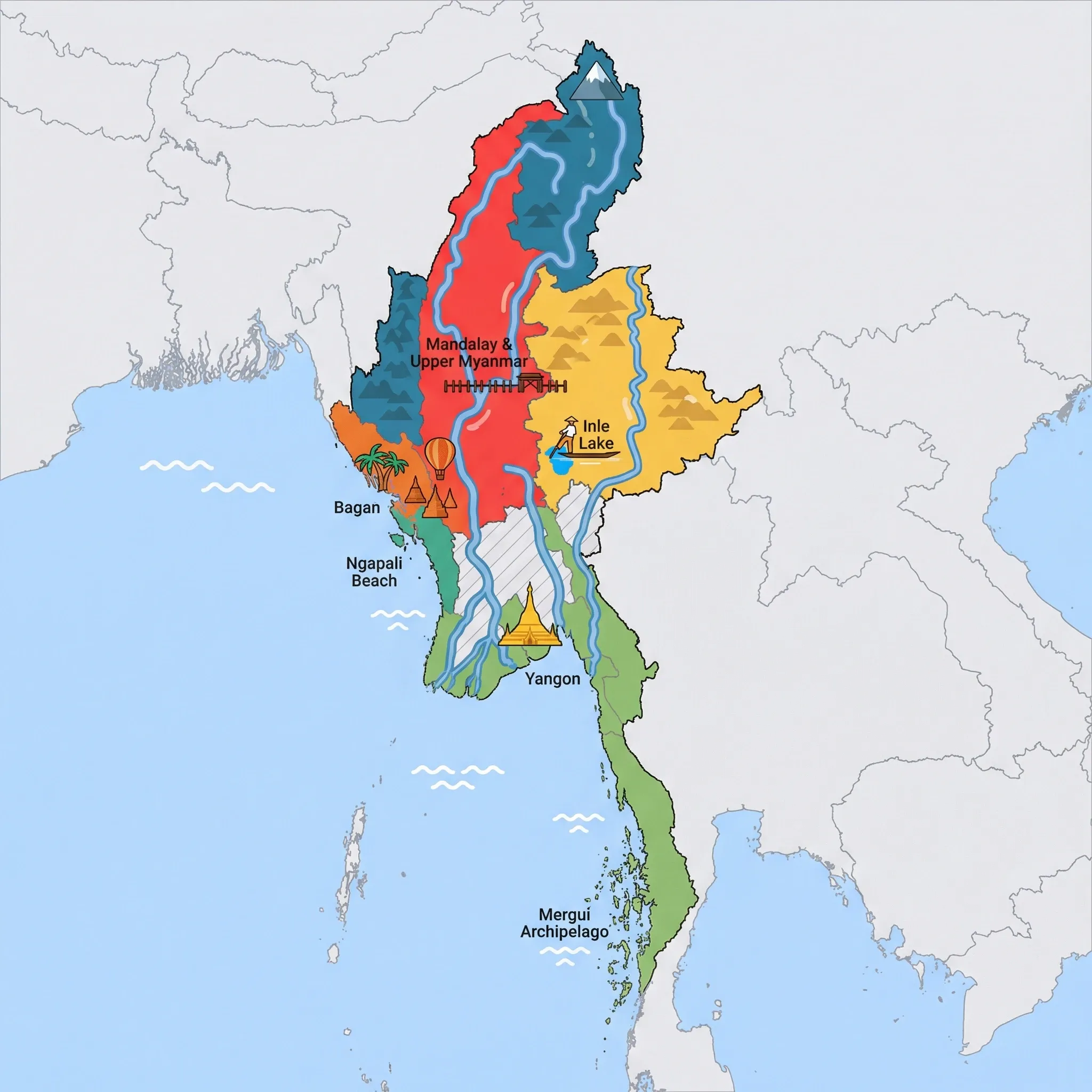
Click a region to explore
⚠️ SAFETY WARNING: Due to the risk of civil unrest, arbitrary detention, and bombings near government/military sites, government agencies (including CA, USA, UK, AU, IE, NZ) advise travelers to reconsider or avoid travel to Yangon. While less active than conflict zones, the security situation is fragile, and curfews may apply. Families are strongly urged to consult their own government's official travel advisory before considering a trip, as circumstances and risk assessments vary.
Overview
Yangon (formerly Rangoon) is a city of contrasts: crumbling British colonial buildings stand next to glittering ancient pagodas, and sleek modern malls rise above chaotic wet markets. For families, it is a sensory overload in the best way. The city is lush and green, known as the "Garden City of the East," with large lakes and parks that offer respite from the traffic. While the sidewalks can be treacherous for strollers, the warmth of the people makes navigating the city rewarding.
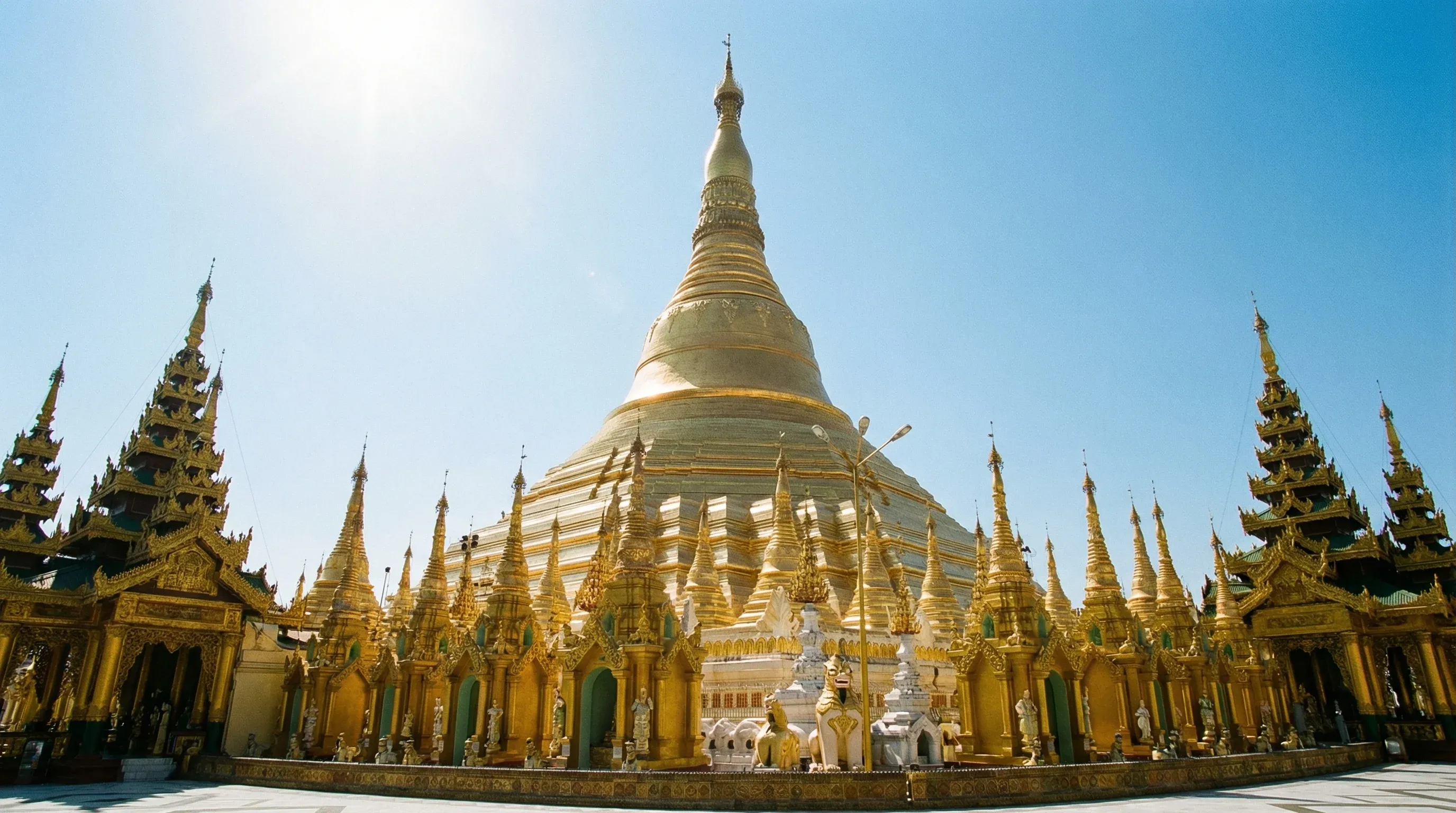
The pace here is slower than Bangkok or Hanoi. Men still wear the traditional longyi (sarong) and women wear thanaka (natural sunblock) on their faces. For children, the highlight is undoubtedly the Shwedagon Pagoda—it looks like a fairy tale palace made of gold. Beyond the temples, the city offers a circular train ride that is a window into local life, and plenty of gentle activities like swan boat rides on the lakes.
Key Attractions
No visit is complete without the Shwedagon Pagoda. It is 99 meters of solid gold plate and diamonds. Go at sunset when the heat dies down; kids can pour water over the Buddha statue corresponding to the day of their birth (a fun local astrology tradition). Nearby, Kandawgyi Lake offers a boardwalk with views of the royal barge; it's a great place for toddlers to run around safely.
For a bit of chaos and shopping, Bogyoke Aung San Market (Scott Market) is a maze of gems, lacquerware, and textiles. It’s colorful and covered, making it good for rainy days. If the kids need to see animals, the Yangon Zoological Gardens is the oldest zoo in Southeast Asia, though facilities are aging.
Practical Advice
Yangon is hot and humid year-round. Taxis are cheap and essential for families—do not try to walk long distances in the heat. The traffic can be gridlocked, so allow extra time to get to the airport.
Food & Drink
Typical meal times: Lunch 11:30 am to 1:30 pm; Dinner 6:00 pm to 9:00 pm.
Typical meal costs: A meal at a clean, air-conditioned restaurant costs 40,000–80,000 MMK (approx. $13–26 USD / €12–25 EUR) for a family.
Dietary requirements: Very easy. Yangon has everything from traditional Burmese curries to high-end Italian and Japanese food. Halal and vegetarian options are common.
Signature dishes:
- Mohinga – The national dish: rice noodles in a catfish and lemongrass chowder, usually eaten for breakfast but available all day.
- Ohn No Khao Swè – Wheat noodles in a mild, creamy coconut chicken curry broth. Very kid-friendly.
- Samosa Salad – Samosas chopped up with cabbage, mint, and tamarind sauce. A delicious street snack found everywhere.
Why this score?
The experience is almost entirely urban, focusing on markets, colonial architecture, and religious sites. Aside from navigating crowded streets or riding the slow-moving circular train, there is very little rugged or adventurous activity for visiting families.
Why this score?
Yangon offers the highest standard of medical care in Myanmar, including several private hospitals that cater to the expatriate community. Facilities like Pun Hlaing and various international clinics offer English-speaking staff and better equipment than any other region in the nation.
Why this score?
As the primary international gateway and home to the Shwedagon Pagoda, Yangon is the most visited region in the country. It functions as a recognized stop on Southeast Asian itineraries, though it doesn't reach the mega-destination status of cities like Bangkok or Singapore.

Yangon offers incredible value. Luxury 5-star hotels that would cost $300 in Singapore can be found here for $80–120 USD. Local transport is negligible ($2–3 USD per taxi ride). Eating local food is extremely cheap (under $2 USD per person), while imported western food is priced similarly to the West.

Getting Here & Around
Getting Here
- Airports – Yangon International Airport (RGN) is the primary entry point for the country. Taxis to downtown take 45–90 minutes depending on traffic.
- Bus – The main hub for buses to all other regions, though terminals are located far from the city center.
Getting Around
- Taxi (Grab) – The ride-hailing app Grab is (usually) operational and is the safest, most transparent way to pay. Regular taxis do not use meters; you must negotiate.
- Circular Train – A slow, looping commuter train that takes 3 hours to circle the city. Good for sightseeing, not for efficient transport.
- Walking – Downtown is walkable, but watch out for uneven pavements and open drains.
Nearby Airports (1 airport)
Yangon International
RGNYangon
View full flight map for Myanmar →

Packing List
If visiting May–Oct, the monsoon rain is sudden and torrential.
Sockets vary between British (Type G), European (Type C), and others; a universal adapter is essential.
Hygiene standards vary and soap is not always available in public restrooms.
Dengue fever is a risk in the city; patches are easier than constant spray for toddlers.
Bills must be crisp, uncreased, and unmarked (newer "big head" notes) or they will be rejected.
You must remove shoes and socks at every pagoda; laces become a hassle very quickly.
Power outages are frequent and street lighting is poor, even in major cities and hotels.
Essential for cleaning feet after walking barefoot in temples and for general hygiene.
To keep devices charged during frequent and unpredictable electricity blackouts.
Useful for managing mild food poisoning or stomach upsets which can occur with local food.

Activities & Best Times

Urban tourism, museums, historical sites, architecture
Yangon offers world-class cultural heritage including the Shwedagon Pagoda and a unique blend of colonial and spiritual architecture. The cool, dry season provides the most comfortable conditions for urban exploration, while the extreme heat and torrential monsoon rains make the middle of the year challenging for international visitors.

Hiking, wildlife, outdoor exploration, ecotourism
Hlawga National Park and urban lakes (Kandawgyi, Inya) do not constitute 'very_good' nature experiences by international standards. These are pleasant urban green spaces, not significant wilderness areas. 'good' better reflects the availability of nature activities without overstating their quality.

Events, celebrations, seasonal attractions
Thingyan Water Festival is a massive national event that transforms the entire city in April. While it coincides with peak heat, it's a genuine cultural spectacle comparable to Songkran in Thailand. This merits 'good' rather than 'marginal' for families seeking cultural immersion.

Scenic drives, countryside tours, route-based travel
Yangon is a key hub for scenic routes toward the Golden Rock and the southern coast, offering glimpses into authentic delta life. Travel is most reliable in the dry season when road conditions are safest and the landscape is most accessible for touring.

Sport tourism, fitness activities, active recreation
Dedicated cycling routes and outdoor activity centers provide solid options for active families seeking unique regional routes. Peak conditions align with the cooler winter months; however, the extreme April heat and peak monsoon humidity are unsuitable for sustained physical activity.

Amusement parks, family entertainment venues
While facilities like the Myanmar Aquarium offer modern family entertainment, they lack the global scale of top-tier international theme parks. April is included as a shoulder month as water-based attractions like Water Boom remain popular during the peak heat.

Attractions (8 total)



Public Holidays & Calendar Next 12 months
Public holidays, festivals, cultural celebrations, and seasonal natural phenomena coming up in Yangon over the next 12 months.
Loading holidays and events...

Travel Advisory
The majority of global agencies advise against all travel to Myanmar due to extreme risks from active armed conflict, political violence, and arbitrary detention.
Safety Topics
Traveller Advice (4 groups)

Media workers face a critical risk of arrest, detention, and prosecution for reporting activities or expressing views critical of the military regime.

Humanitarian access is severely restricted in conflict zones. Aid workers may face security threats from airstrikes, landmines, and blocked transportation routes.

Travellers currently in the country should consider departing via commercial means while they are still available. Avoid all political gatherings, demonstrations, and military sites.

Same-sex relationships remain illegal under local laws, and social stigma may lead to discrimination, though general security concerns currently outweigh targeted risks.
Agency Summaries
New Zealand advises against travel to Myanmar due to civil unrest and the risk of armed conflict, emphasizing that basic services and consular assistance are severely limited.
The Canadian government advises against any travel to Myanmar due to widespread civil unrest, armed conflict, and the threat of arbitrary detention, kidnapping, and terrorism.
Ireland strongly advises its citizens to avoid all travel to Myanmar due to the unstable political environment and the potential for rapid security deterioration following the 2021 coup.
Australia maintains its highest warning level for Myanmar, warning of unpredictable violence, explosions, and the risk of arbitrary detention for foreign nationals across the country.
U.S. authorities recommend avoiding all travel to Myanmar because of high risks from armed conflict, civil unrest, arbitrary local law enforcement, and critical health infrastructure shortages.
The UK advises against all travel to a majority of states and regions in Myanmar and against non-essential travel to the rest, citing a volatile security situation and ongoing military conflict.
Information is provided for general guidance only and does not constitute travel, safety, medical, or legal advice. Conditions may change. Users are responsible for independently verifying information before travel.