

⚠️ SAFETY WARNING: Exercise increased caution in Namibia due to crime, particularly in Windhoek and other urban centers. While the country is generally peaceful, theft from vehicles and bag snatching can occur. Families should be especially vigilant when driving on gravel roads, where accidents are the biggest risk to tourists.
Overview
Namibia offers families a sense of space and freedom that is hard to find elsewhere. Known for its dramatic contrasts, the country shifts from the desolate beauty of the Skeleton Coast to the lush waterways of the Caprivi Strip. It is one of the safest countries in Africa for self-driving, allowing families to explore at their own pace in a 4x4 camper. The sheer scale of the landscape-giant skies, ancient deserts, and rugged canyons-captures the imagination of children and adults alike.
Culturally, Namibia is a fascinating blend of indigenous traditions and German colonial influence. You might see a Himba woman in traditional ochre paste walking past a Bavarian-style bakery selling apple strudel. For children, the country is a giant sandbox; whether it's sandboarding down dunes or tracking beetles in the desert, the environment invites active exploration. The dry climate and lack of tropical diseases in most tourist areas (specifically the south and coast) add to its appeal as a low-stress African destination.
Key Attractions
No family trip to Namibia is complete without a visit to Etosha National Park. Unlike dense bush safaris where animals hide, Etosha's open plains and waterholes make spotting wildlife easy for kids. You can park your car at the Okaukuejo Waterhole and watch elephants, rhinos, and lions come to you-a mesmerizing experience that requires no driving. Further south, the Sossusvlei & Namib Desert area offers the iconic Sossusvlei dunes. Families love climbing Dune 45 at sunrise and running down its soft red slopes, or walking among the ancient, skeletal trees of Deadvlei.
For a change of pace, head to the cool Atlantic coast. The town of Swakopmund is an adventure hub where you can join a seal-watching cruise or take a 4x4 tour to Cape Cross Seal Reserve, home to thousands of noisy, smelly, and fascinating fur seals. Further south, the Kolmanskop Ghost Town offers a unique history lesson; children will love exploring the abandoned houses slowly being swallowed by the sand. Finally, the Fish River Canyon provides breathtaking views and hiking opportunities in one of the world's largest canyons.
Practical Advice
The best time to visit is during the dry winter months (May to October), when days are pleasant and animals congregate around waterholes. However, nights can be freezing, so pack warm layers. A 4x4 vehicle is highly recommended for safety and comfort on gravel roads. While the south is malaria-free, prophylaxis is recommended if visiting Etosha National Park or the north. Distances between towns are vast, so stock up on water and snacks, and download offline maps.
Food & Drink
Typical meal times: Breakfast is usually 7:00 am to 9:00 am. Lunch is served from 12:00 pm to 2:00 pm. Dinner is typically eaten between 6:30 pm and 8:30 pm, especially in lodges where kitchens may close early.
Typical meal costs: Mains N$180–320 (approx. $10–18 USD / €9–16 EUR). Street food snacks cost N$30–60 (approx. $1.50–3.50 USD / €1.50–3.00 EUR). A family dinner with drinks can cost N$1,000–1,600 (approx. $55–90 USD / €50–85 EUR).
Dietary requirements: Namibia is heavy on meat, but most lodges and restaurants in tourist areas offer vegetarian options (often pasta or salad). Vegan and gluten-free options are available in Windhoek and Swakopmund but scarce in remote areas; it is wise to bring your own specialty snacks.
Family-friendly dining: German-style bakeries and pizzerias are common and popular with kids. Lodges generally offer buffets with plenty of kid-friendly choices like potatoes, pasta, and chicken.
Signature dishes:
- Game Steaks – Oryx, kudu, or springbok steaks are lean, organic, and widely available; a healthy and delicious adventurous eat for kids.
- Kapana – Street-food style grilled beef strips, prepared fresh over open fires and dipped in spice (ask for non-spicy for children).
- Potjiekos – A slow-cooked meat and vegetable stew prepared in a round, three-legged cast-iron pot over a fire.
- Brötchen – Fresh bread rolls, a legacy of German colonization, often filled with egg, cheese, or meat and perfect for road trip lunches.
- Biltong – Spiced, dried meat strips that are the ultimate Namibian road trip snack; widely sold at gas stations and butchers.
Safety
While Namibia is politically stable, tourists are targets for opportunistic crime. Avoid walking visible valuables in Windhoek and do not leave bags on car seats, even while driving. The biggest danger for families is road safety: gravel roads can be slippery and tyre blowouts are common. Always drive below the speed limit (max 80km/h on gravel), avoid driving at night due to wandering wildlife, and keep headlights on during the day.
Family Travel Notice
Immigration officials may request unabridged birth certificates or parental consent affidavits for minors travelling with one parent or without their legal guardians.

Namibia offers a wide range of costs depending on travel style. A family camping with a rental 4x4 can expect to spend N$3,500–5,500 (approx. $200–310 USD / €185–290 EUR) per day. Staying in mid-range lodges increases this to N$8,000–12,000 (approx. $450–670 USD / €420–630 EUR) per day. Fuel and vehicle rental are the largest expenses.
Age Suitability




Did you know? Namibia welcomes approximately 864,000 international visitors per year. Most visitors come from Africa.
Explore Regions
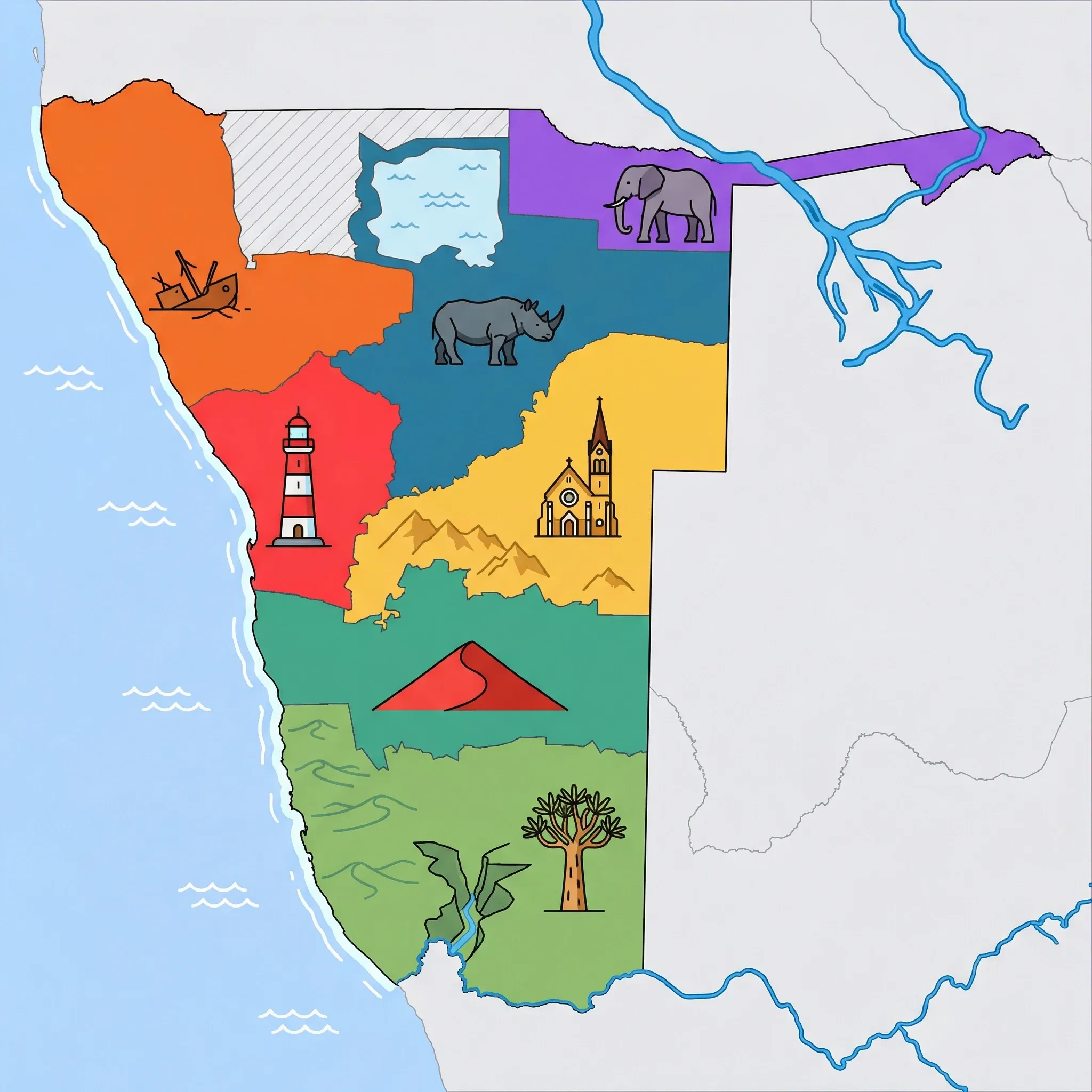
7 Regions
Caprivi Strip (Zambezi Region)
Namibia’s wild, green oasis where elephants swim 🐘🌿
Etosha National Park
The Great White Place where the safari comes to you 🦁🦓
Fish River Canyon & South
Ancient canyons, wild horses, and cities in the sand 🏜️💎
Skeleton Coast
The land God made in anger ☠️🌊
Sossusvlei & Namib Desert
Climb the world's highest sand dunes 🏜️☀️
Swakopmund & Coast
Where the dunes meet the ocean 🌊🏖️
Windhoek & Central Plateau
The heartbeat of Namibia 🏙️🇳🇦
Click on a region marker to explore details. Use the dropdown to color regions by activity suitability.

Getting There & Around
Getting There
- By Air – Hosea Kutako International Airport (WDH) in Windhoek & Central Plateau is the main gateway. Direct flights arrive from Frankfurt and regional hubs like Johannesburg and Cape Town.
- By Land – Major border posts include Ariamsvlei and Noordoewer (from South Africa) and Buitepos (from Botswana). Roads are generally good tarmac up to the borders.
- Entry Requirements – As of April 2025, visitors from the US, UK, Canada, and many EU countries require a visa to enter Namibia. Visas may be available on arrival or online depending on nationality. Check your government website for the latest visa requirements, or use the IATA Travel Centre entry-requirements checker.
Getting Around
- Car Hire – The only practical way for families to explore. A high-clearance vehicle or 4x4 is essential for gravel roads in places like Fish River Canyon & South. Rental agencies often provide camping equipment.
- Domestic Flights – FlyNamibia connects Windhoek & Central Plateau to key tourist hubs like Ondangwa (near Etosha) and Oranjemund, though they are expensive and miss the scenic drives.
- Shuttles – Private transfers are available between major lodges and Windhoek but offer less flexibility than self-driving.

Packing List
Fine desert sand gets everywhere; essential for protecting cameras, phones, and snacks.
The air is incredibly dry and can cause skin to crack and bleed within days.
Namibia uses the old 'large 3-pin' South African plugs which most universal adapters do not fit.
Stops arguments during wildlife viewing in Etosha; animals are often at a distance.
Campsites and even some lodges have limited lighting; essential for navigating at night.
Sand can hide scorpions and thorns; flip-flops are not safe for walking in the bush.
Desert temperatures drop drastically at night, often reaching freezing even after hot days.

Activities & Best Times

Adventure & Nature
ExcellentHiking, wildlife, outdoor exploration, ecotourism
Home to the world's second-largest canyon and unique quiver tree forests, this region offers peerless desert wilderness and geological wonders. The peak season is strictly limited to cooler winter months when the famous Fish River Canyon hiking trail is open and temperatures are safe for exploration.
A world-class destination where the towering Namib Desert dunes meet the Atlantic, offering unique experiences like Sandwich Harbour and the Cape Cross seal colony. Peak season aligns with the Namibian dry season when clear skies and moderate coastal temperatures provide ideal conditions for desert exploration.
A globally unique wilderness where massive sand dunes meet the Atlantic, featuring desert-adapted wildlife and the Skeleton Coast National Park. Peak season aligns with the dry winter months when temperatures are cooler for trekking and wildlife is more easily spotted near riverbeds.

City & Cultural
Very GoodUrban tourism, museums, historical sites, architecture
The ghost town of Kolmanskop and the colonial German architecture of Luderitz provide a surreal, world-class cultural experience. Best visited during the cooler months to explore the sand-filled interiors of Kolmanskop comfortably, as summer heat in the Namib desert can be oppressive.
Swakopmund offers a surreal and authentic blend of German colonial architecture and African culture, featuring iconic landmarks like the Woermannhaus and the Jetty. The atmosphere is best experienced during the cooler, drier months or the festive December period, while February and March can be uncomfortably humid.
Windhoek features a distinctive blend of German colonial heritage and modern African identity, with major sites like the Independence Memorial Museum and Christuskirche. Peak visitation occurs during the dry season when the city's outdoor cafes and heritage walks are most enjoyable.

Beach & Sea
GoodBeach resorts, marine activities: diving, snorkelling, kite surfing, wind surfing, sailing
Focused on dramatic coastal scenery and major wildlife spectacles like the Cape Cross Seal Reserve rather than traditional swimming. Summer months offer the most comfortable air temperatures for coastal recreation before the arrival of heavy winter Atlantic winds.
While the Atlantic is too cold for traditional swimming, the region excels in marine recreation including lagoon kayaking and boat tours to see dolphins and seals. These activities are most pleasant during the southern summer when air temperatures are warmest, though winter months often suffer from heavy coastal fog.
Luderitz offers dramatic Atlantic coastal scenery and marine life, but the Benguela current makes the water too cold for swimming. It serves as a scenic coastal stop rather than a traditional beach destination, with peak visits during the slightly warmer summer months.

Road Trips & Scenic
GoodScenic drives, countryside tours, route-based travel
Includes the D707, often called Namibia's most scenic drive, alongside the dramatic Trans-Oranje Corridor. Winter offers the best visibility and comfortable driving conditions, whereas summer heat can make the long, unpaved stretches taxing for both vehicles and families.
The Trans-Caprivi Highway and Chobe River Route are significant scenic drives through unique wetland wilderness. This should be rated 'good' for consistency with other regions featuring major scenic routes.
Home to iconic routes like the Skeleton Coast Salt Road and the dramatic C14 through the Namib-Naukluft, offering some of the world's most desolate and beautiful driving landscapes. The winter months provide stable road conditions and the best visibility, whereas the rare summer rains can occasionally impact desert tracks.

Sports & Active
GoodSport tourism, fitness activities, active recreation
Offers world-class sandboarding, quad biking, and unique desert cycling routes through the Messum Crater and Ugab River. The cooler months are preferred to avoid the extreme heat and humidity that can occur during the Namibian summer.
Features iconic multi-day trekking in the canyon and river adventures on the Orange River border. These activities are highly seasonal, requiring cooler temperatures for hiking and specific water levels for paddling, making winter the only viable time for active families.
Provides specialized hiking and walking trails such as the Impalila Island treks and routes around Popa Falls. Activity is best during the mild winter months to avoid the extreme tropical heat and high humidity of the summer rainfall period.

Educational & Exploratory
MarginalLearning experiences, scientific sites, historical education
Features the National Marine Aquarium of Namibia and significant historic sites at Cape Cross. These facilities offer valuable insights into the Benguela Current ecosystem and maritime history during the primary tourism windows.
The National Marine Aquarium and Kristall Galerie offer interesting insights into local marine life and geology, though they are modest in size for international standards. These facilities are year-round attractions but see the most engagement during the primary tourism seasons when guided tours are most frequent.
Offers specialized interest through the National Earth Science Museum and the Gibeon Meteorite display. These facilities provide unique geological insights but are secondary draws compared to the region's cultural and natural highlights.

Theme Park & Entertainment
MarginalAmusement parks, family entertainment venues
Includes several regional recreation resorts and water parks that serve domestic travelers and families well but lack the scale of international theme park destinations. Visitation peaks during school holiday windows in August and December when local facilities are most active.
The water park at Gross Barmen Resort serves as a regional family attraction for aquatic recreation. It is best during warmer months but loses appeal during the high-altitude winter nights and cool days of June and July.

Relaxation & Wellness
MarginalSpa retreats, wellness centers, peaceful getaways

Public Holidays & Calendar Next 12 months
Public holidays, festivals, cultural celebrations, and seasonal natural phenomena coming up in Namibia over the next 12 months.
Loading holidays and events...
Climate & Weather
Caprivi Strip (Zambezi Region)
Show Details
| Month | Temp °C | Rain | Humidity |
|---|
Etosha National Park
Show Details
| Month | Temp °C | Rain | Humidity |
|---|
Fish River Canyon & South
Show Details
| Month | Temp °C | Rain | Humidity |
|---|
Skeleton Coast
Show Details
| Month | Temp °C | Rain | Humidity |
|---|
Sossusvlei & Namib Desert
Show Details
| Month | Temp °C | Rain | Humidity |
|---|
Swakopmund & Coast
Show Details
| Month | Temp °C | Rain | Humidity |
|---|

Travel Advisory
The majority of international agencies consider Namibia safe for travel under standard safety awareness, although North American agencies advise elevated caution due to urban crime rates.
Safety Topics
Traveller Advice (4 groups)

A new visa requirement for many nationalities, including those from the UK, USA, and Australia, took effect on April 1, 2025. Ensure your passport has at least six months of validity and three blank pages.

Exercise extra caution when moving about, particularly after dark. Avoid walking alone in isolated areas or quiet city streets.

Societal attitudes remain conservative, especially in rural areas. While same-sex relationships are not illegal, certain sexual acts remain technically prohibited by law, though prosecutions are rare.

Immigration officials may request unabridged birth certificates or parental consent affidavits for minors travelling with one parent or without their legal guardians.
Agency Summaries
Travellers should remain extremely vigilant due to significant crime rates across the country, particularly in urban centres like Windhoek.
Namibia is generally safe, but travellers should follow common sense safety measures. An ongoing Mpox outbreak has been noted in the region.
While no specific travel restrictions are in place, visitors are warned of street crime in the capital and hazardous driving conditions on unpaved roads.
No specific security warning is currently issued for the country, though comprehensive travel insurance is strongly recommended.
Visitors should maintain standard safety awareness and be informed of new visa requirements implemented in 2025.
Increased vigilance is recommended because of prevalent crime and health concerns. Violent incidents such as muggings and home invasions occur in major towns.
Information is provided for general guidance only and does not constitute travel, safety, medical, or legal advice. Conditions may change. Users are responsible for independently verifying information before travel.