
Caprivi Strip (Zambezi Region)
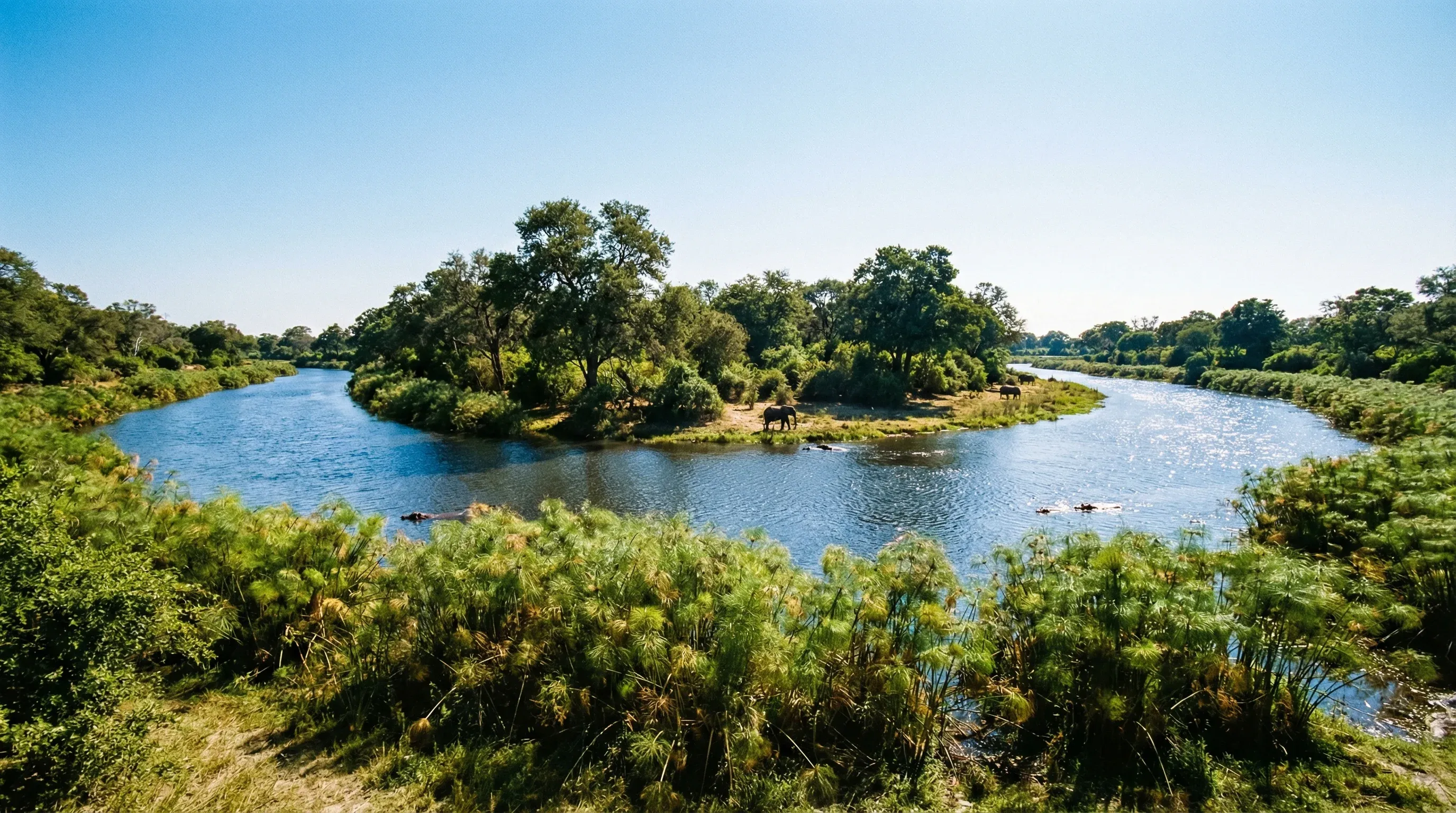
Namibia’s wild, green oasis where elephants swim 🐘🌿
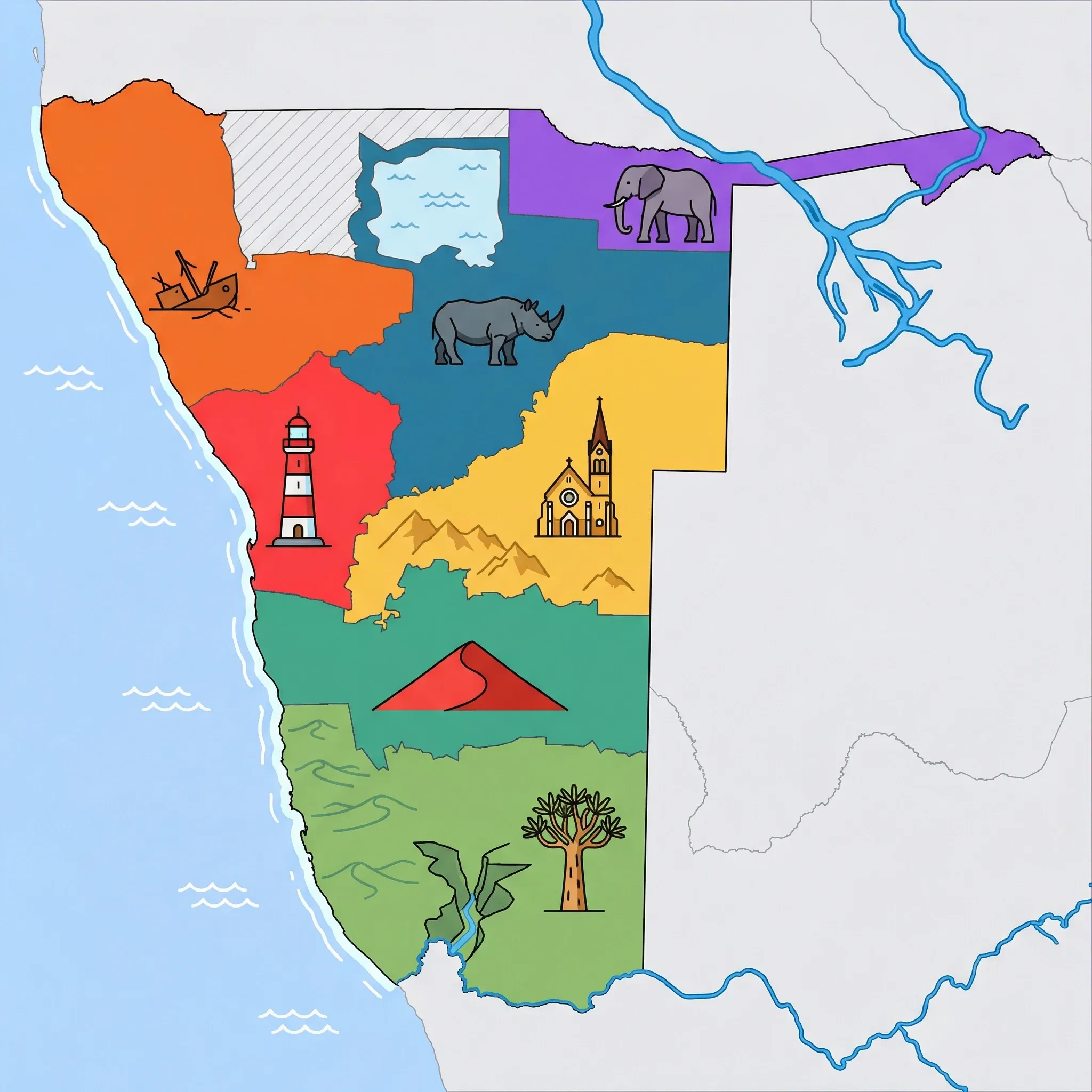
Click a region to explore
The Zambezi Region, widely known as the Caprivi Strip, offers a startling contrast to the rest of Namibia. Where the south is defined by orange dunes and ancient rocks, this narrow finger of land is a lush, subtropical corridor fed by four mighty rivers: the Zambezi, Chobe, Kwando, and Linyanti. For families, this is the place to trade dusty 4x4 trails for serene boat cruises and see Africa’s wildlife from a completely different perspective. The region serves as a vital migration route for elephants moving between Botswana and Angola, meaning wildlife sightings are frequent and spectacular, often right from the deck of your river lodge. Culturally, it is vibrant and populous, with villages dotting the roadsides and local markets selling woven baskets and fresh river fish, offering children a friendly introduction to rural Namibian life.
Visiting the Caprivi is about slowing down. The heat here is humid rather than dry, and the pace of life follows the flow of the rivers. Families can stay in unfenced lodges where hippos graze on the lawns at night (safely viewed from raised walkways) and wake up to the cry of fish eagles. It acts as a perfect bridge for travelers combining Namibia with a trip to Victoria Falls or the Chobe National Park, breaking up the long desert drives with water-based activities that kids adore.
Key Attractions
The star of the show is Bwabwata National Park. Unlike traditional fenced parks, Bwabwata is a unique 'people and parks' area where community campsites and wildlife coexist. Families can take guided game drives to see large herds of buffalo and elephant, or arguably the best activity for children: a boat safari. Drifting past crocodiles sunning themselves on the banks and watching pods of hippos yawning in the water is far more engaging for younger travelers than sitting in a car. The main artery of the region is the Trans-Caprivi Highway (B8), a paved road that makes traversing this wild area surprisingly easy and safe. Driving this route often yields sightings of elephants crossing the tarmac, a thrilling experience that requires caution but offers unforgettable memories.
Practical Advice
The best time to visit is during the dry winter months (May to October) when wildlife congregates around the rivers and the risk of malaria is lower, though prophylactics are essential year-round as this is a malaria zone. The wet season (November to April) brings lush greenery and birdlife but higher humidity and mosquitoes. Road conditions on the B8 are excellent, but secondary roads can be sandy. Always carry cash, as card machines in remote lodges or fuel stations can be unreliable.
Food & Drink
Typical meal times: Breakfast is served early, from 6:30 am to 9:00 am, often before morning activities. Lunch is typically 12:00 pm to 2:00 pm, and dinner is enjoyed from 7:00 pm to 9:00 pm.
Typical meal costs: Restaurant meals in lodges are mid-range, costing around N$150–250 (approx. $8–14 USD / €7.50–12.50 EUR). Street food in Katima Mulilo is cheaper, around N$40–80 (approx. $2–4.50 USD / €2–4 EUR).
Dietary requirements: Lodges are well-versed in handling international tourists and can cater to vegetarian and gluten-free diets if notified in advance. Local village food is simple but meat and maize-heavy.
Signature dishes:
- Zambezi Bream – Fresh freshwater fish caught locally, usually grilled or fried whole and served with chips or salad.
- Pap and Vleis – A stiff maize porridge served with stewed meat (often goat or beef) and spinach relish; the staple meal of the region.
- Magungu – An adventurous seasonal delicacy (mopane worms) often sold at roadside markets, dried or fried with chili.
Why this score?
This region offers a more traditional 'wild' African experience with lush wetlands, river-based predators like hippos and crocodiles, and seasonal flooding. The remote location and proximity to multiple borders add an element of logistical challenge and ruggedness.
Why this score?
Medical facilities in Katima Mulilo are basic and often ill-equipped for complex emergencies. While regional clinics exist, travelers usually require medical evacuation to Windhoek for any serious health concerns or specialized care.
Why this score?
While a key corridor for travelers heading to Victoria Falls, it remains a niche destination compared to Namibia's desert icons. It attracts specialized birdwatchers and safari enthusiasts but lacks the high-volume international footfall of Etosha.

Accommodation ranges from affordable community campsites at N$200–300 (approx. $11–16 USD / €10–15 EUR) per person to luxury river lodges costing N$4,000–8,000 (approx. $220–440 USD / €200–400 EUR) per night. Fuel and supplies in Katima Mulilo are standard Namibian prices.
Family Travel Notice
Immigration officials may request unabridged birth certificates or parental consent affidavits for minors travelling with one parent or without their legal guardians.

Getting Here & Around
Getting Here
- Airports – Katima Mulilo Airport (MPA) has flights from Windhoek, though schedules can be seasonal.
- Driving – The Trans-Caprivi Highway (B8) connects the region to the rest of Namibia. It is a long drive (approx. 12 hours) from Windhoek, so most families stop over near Rundu.
- Border Crossings – Easy access from Botswana (Ngoma or Mohembo) and Zambia (Wenela), making it a hub for multi-country trips.
Getting Around
- Car – A rental car (preferably an SUV or 4x4) is the best way to explore. The main road is tarred, but accessing river lodges often requires driving on sand tracks.
- Boat Transfers – Many lodges in the wetlands, particularly near Bwabwata National Park, offer boat transfers from secure parking areas if the access roads are flooded or too sandy.
Nearby Airports (2 airports)
Mpacha
MPAMpacha
Rundu
NDURundu
View full flight map for Namibia →
Official Links

Packing List
This is a high-risk malaria zone, unlike the rest of arid Namibia.
Essential for keeping cameras and phones dry during boat safaris.
Mosquitoes and tsetse flies can be prevalent near the water.
Birdlife here is exceptional and best viewed from a distance on boats.
Fine desert sand gets everywhere; essential for protecting cameras, phones, and snacks.
The air is incredibly dry and can cause skin to crack and bleed within days.
Namibia uses the old 'large 3-pin' South African plugs which most universal adapters do not fit.
Stops arguments during wildlife viewing in Etosha; animals are often at a distance.
Campsites and even some lodges have limited lighting; essential for navigating at night.
Sand can hide scorpions and thorns; flip-flops are not safe for walking in the bush.
Desert temperatures drop drastically at night, often reaching freezing even after hot days.

Activities & Best Times

Hiking, wildlife, outdoor exploration, ecotourism
A world-class wetland wilderness featuring major river systems and parks like Bwabwata and Mudumu that provide exceptional wildlife immersion. Peak season aligns with the dry winter months when animals congregate at permanent water sources, while the wet summer makes many tracks impassable.

Urban tourism, museums, historical sites, architecture
Distinctive for its 'Living Museums' and traditional villages that offer authentic, sophisticated cultural engagement with the Mafwe and Lozi peoples. Seasonal timing is primarily driven by accessibility to rural areas, which is best during the cooler, dry months.

Scenic drives, countryside tours, route-based travel
The Trans-Caprivi Highway and Chobe River Route are significant scenic drives through unique wetland wilderness. This should be rated 'good' for consistency with other regions featuring major scenic routes.

Sport tourism, fitness activities, active recreation
Provides specialized hiking and walking trails such as the Impalila Island treks and routes around Popa Falls. Activity is best during the mild winter months to avoid the extreme tropical heat and high humidity of the summer rainfall period.




Public Holidays & Calendar Next 12 months
Public holidays, festivals, cultural celebrations, and seasonal natural phenomena coming up in Caprivi Strip (Zambezi Region) over the next 12 months.
Loading holidays and events...

Travel Advisory
The majority of international agencies consider Namibia safe for travel under standard safety awareness, although North American agencies advise elevated caution due to urban crime rates.
Safety Topics
Traveller Advice (4 groups)

A new visa requirement for many nationalities, including those from the UK, USA, and Australia, took effect on April 1, 2025. Ensure your passport has at least six months of validity and three blank pages.

Exercise extra caution when moving about, particularly after dark. Avoid walking alone in isolated areas or quiet city streets.

Societal attitudes remain conservative, especially in rural areas. While same-sex relationships are not illegal, certain sexual acts remain technically prohibited by law, though prosecutions are rare.

Immigration officials may request unabridged birth certificates or parental consent affidavits for minors travelling with one parent or without their legal guardians.
Agency Summaries
Travellers should remain extremely vigilant due to significant crime rates across the country, particularly in urban centres like Windhoek.
Namibia is generally safe, but travellers should follow common sense safety measures. An ongoing Mpox outbreak has been noted in the region.
While no specific travel restrictions are in place, visitors are warned of street crime in the capital and hazardous driving conditions on unpaved roads.
No specific security warning is currently issued for the country, though comprehensive travel insurance is strongly recommended.
Visitors should maintain standard safety awareness and be informed of new visa requirements implemented in 2025.
Increased vigilance is recommended because of prevalent crime and health concerns. Violent incidents such as muggings and home invasions occur in major towns.
Information is provided for general guidance only and does not constitute travel, safety, medical, or legal advice. Conditions may change. Users are responsible for independently verifying information before travel.