
Fish River Canyon & South
Ancient canyons, wild horses, and cities in the sand 🏜️💎
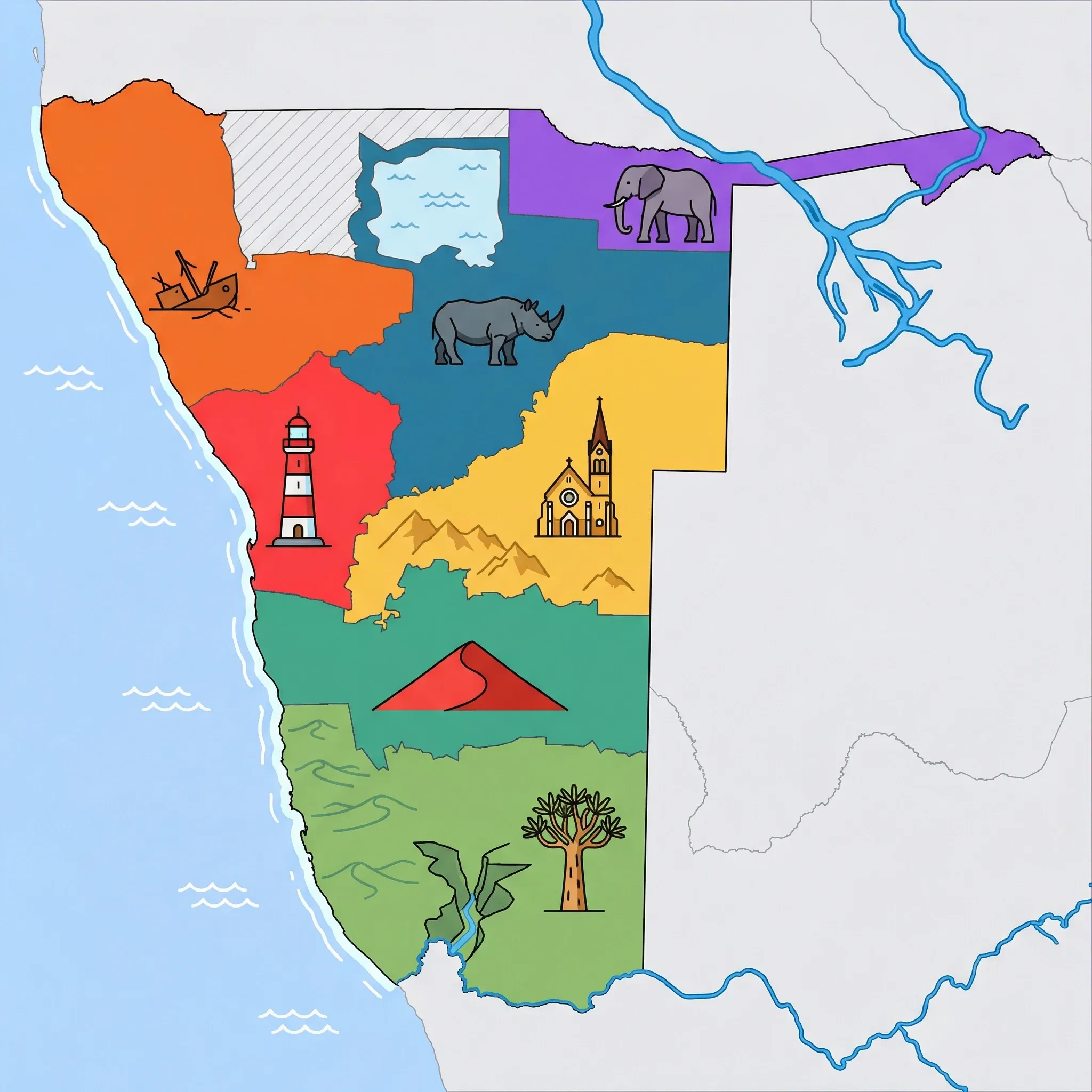
Click a region to explore
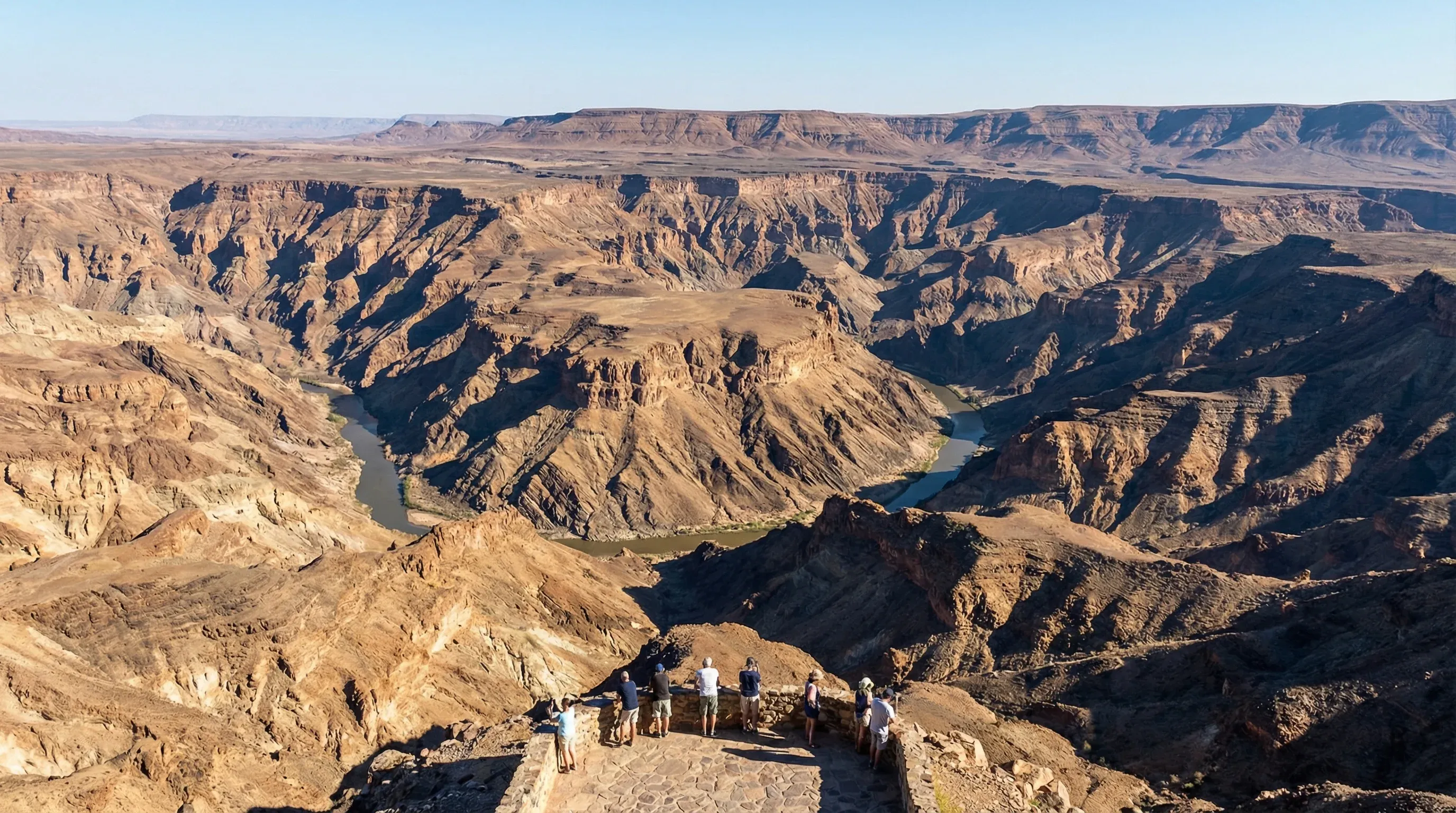
The South of Namibia is a region of dramatic geology and forgotten history. It feels vast, empty, and ancient, offering a true sense of adventure for families willing to drive the extra mile. The landscape is dominated by the Fish River Canyon, a spectacle that rivals the Grand Canyon in grandeur but surpasses it in silence and solitude. Standing on the edge of this jagged abyss is a humbling experience for all ages. Beyond the canyon, the region holds stories of diamond fevers and wild horses. The coastal town of Luderitz offers a surreal slice of German Bavaria sandwiched between the freezing Atlantic and the burning Namib Desert, while the interior is dotted with quiver trees that look like they belong in a Dr. Seuss book.
This region is ideal for families with older children interested in history and photography. The ghost towns provide a tangible, eerie history lesson, while the open spaces offer unmatched stargazing opportunities. The roads here are long and straight, traversing vast plains where you might spot the famous feral horses of the Namib near Aus. While the environment is harsh, the hospitality is warm, with guest farms offering a chance to see working sheep farming in a desert environment.
Key Attractions
The headline act is undeniably the Fish River Canyon. The main viewpoint at Hobas offers spectacular vistas particularly at sunset. While the multi-day hike is only for fit adults/teens (16+), families can enjoy gentle walks along the rim. After a dusty day, the Ai-Ais Hot Springs Resort at the canyon's base is a perfect family stop; the resort has large outdoor and indoor thermal pools where kids can swim while parents soak in the healing waters. Further west, Kolmanskop Ghost Town is a must-visit. Once a wealthy diamond mining town, it was abandoned to the sand dunes which have now burst through doors and filled bedrooms. It is a photographer's dream and a fascinating playground for children to explore (safely). Near Keetmanshoop, the Quiver Tree Forest and Cheetah Park allows families to walk among these distinctive aloe trees and, at the adjacent farm, often see cheetahs being fed, offering a close-up wildlife encounter.
Practical Advice
Distances in the south are huge. Ensure your vehicle is stocked with water and snacks. The best time to visit is winter (May–September); summer temperatures in the canyon can exceed 45°C (113°F), which is dangerous for small children. Luderitz can be very windy and cold even in summer, so pack layers.
Food & Drink
Typical meal times: Breakfast 7:00 am to 9:00 am. Lunch 12:00 pm to 2:00 pm. Dinner 6:30 pm to 8:30 pm. In Luderitz, restaurants may close early (around 9:00 pm).
Typical meal costs: Meals in Luderitz are great value, with fresh seafood platters costing N$200–300 (approx. $11–16 USD / €10–15 EUR). Farm stall lunches are around N$120 (approx. $6.50 USD / €6 EUR).
Dietary requirements: Options can be limited in remote areas. Luderitz has good variety, but in the interior, expect meat-heavy menus. Vegetarians should notify lodges in advance.
Signature dishes:
- Luderitz Crayfish – World-famous rock lobster caught in the cold Atlantic waters, best eaten fresh in Luderitz.
- Apple Pie – The tiny settlement of Solitaire (and others in the south like Helmeringhausen) is legendary for its German-style apple crumble.
- Bockwurst & Sauerkraut – A legacy of the German colonial influence, widely available in Luderitz and Aus.
Why this score?
Home to one of the world's most grueling multi-day hiking trails, the region is characterized by extreme heat and vast, desolate landscapes. The sheer scale and isolation of the canyon provide a profound sense of wilderness and physical challenge.
Why this score?
The region is sparsely populated with only basic medical services available in Keetmanshoop or Lüderitz. For international tourists, the lack of private trauma facilities nearby means any major accident requires a long-distance transfer to Windhoek or South Africa.
Why this score?
The extreme southern location makes it a secondary stop for many international visitors who focus on the central and northern circuits. It primarily sees a mix of dedicated hikers and South African overland travelers rather than mass international tourism.

Luderitz offers good value accommodation around N$1,200–1,800 (approx. $65–100 USD / €60–90 EUR) for a family room. Lodges near the Canyon are pricier, often N$3,000+ ($165 USD). Camping is a popular budget option at N$250–350 ($14–19 USD) per person.
Family Travel Notice
Immigration officials may request unabridged birth certificates or parental consent affidavits for minors travelling with one parent or without their legal guardians.

Getting Here & Around
Getting Here
- Driving – The B1 highway runs north-south from Windhoek to South Africa. The turnoff to Fish River Canyon is at Keetmanshoop. It is a long drive (7-8 hours) from Windhoek.
- Airports – Luderitz (LUD) has flights from Windhoek, but renting a car there can be limited. Most families drive.
Getting Around
- Car – Essential. The roads to Kolmanskop Ghost Town are paved, but the road to the canyon viewpoints is gravel. A crossover or SUV is recommended for comfort.
- Walking – The only way to explore the ghost town and the canyon rim is on foot.
Nearby Airports (1 airport)
Luderitz Airport
LUDLuderitz
View full flight map for Namibia →

Packing List
Luderitz and Diaz Point are notorious for strong, cold Atlantic winds.
Essential for the rocky terrain around the Canyon and walking through glass-littered ghost towns.
Shade is almost non-existent in the Canyon area.
The driving distances between attractions in the South are the longest in the country.
Fine desert sand gets everywhere; essential for protecting cameras, phones, and snacks.
The air is incredibly dry and can cause skin to crack and bleed within days.
Namibia uses the old 'large 3-pin' South African plugs which most universal adapters do not fit.
Stops arguments during wildlife viewing in Etosha; animals are often at a distance.
Campsites and even some lodges have limited lighting; essential for navigating at night.
Sand can hide scorpions and thorns; flip-flops are not safe for walking in the bush.
Desert temperatures drop drastically at night, often reaching freezing even after hot days.

Activities & Best Times

Hiking, wildlife, outdoor exploration, ecotourism
Home to the world's second-largest canyon and unique quiver tree forests, this region offers peerless desert wilderness and geological wonders. The peak season is strictly limited to cooler winter months when the famous Fish River Canyon hiking trail is open and temperatures are safe for exploration.

Urban tourism, museums, historical sites, architecture
The ghost town of Kolmanskop and the colonial German architecture of Luderitz provide a surreal, world-class cultural experience. Best visited during the cooler months to explore the sand-filled interiors of Kolmanskop comfortably, as summer heat in the Namib desert can be oppressive.

Scenic drives, countryside tours, route-based travel
Includes the D707, often called Namibia's most scenic drive, alongside the dramatic Trans-Oranje Corridor. Winter offers the best visibility and comfortable driving conditions, whereas summer heat can make the long, unpaved stretches taxing for both vehicles and families.

Sport tourism, fitness activities, active recreation
Features iconic multi-day trekking in the canyon and river adventures on the Orange River border. These activities are highly seasonal, requiring cooler temperatures for hiking and specific water levels for paddling, making winter the only viable time for active families.
Beach resorts, marine activities: diving, snorkelling, kite surfing, wind surfing, sailing
Luderitz offers dramatic Atlantic coastal scenery and marine life, but the Benguela current makes the water too cold for swimming. It serves as a scenic coastal stop rather than a traditional beach destination, with peak visits during the slightly warmer summer months.




Public Holidays & Calendar Next 12 months
Public holidays, festivals, cultural celebrations, and seasonal natural phenomena coming up in Fish River Canyon & South over the next 12 months.
Loading holidays and events...

Travel Advisory
The majority of international agencies consider Namibia safe for travel under standard safety awareness, although North American agencies advise elevated caution due to urban crime rates.
Safety Topics
Traveller Advice (4 groups)

A new visa requirement for many nationalities, including those from the UK, USA, and Australia, took effect on April 1, 2025. Ensure your passport has at least six months of validity and three blank pages.

Exercise extra caution when moving about, particularly after dark. Avoid walking alone in isolated areas or quiet city streets.

Societal attitudes remain conservative, especially in rural areas. While same-sex relationships are not illegal, certain sexual acts remain technically prohibited by law, though prosecutions are rare.

Immigration officials may request unabridged birth certificates or parental consent affidavits for minors travelling with one parent or without their legal guardians.
Agency Summaries
Travellers should remain extremely vigilant due to significant crime rates across the country, particularly in urban centres like Windhoek.
Namibia is generally safe, but travellers should follow common sense safety measures. An ongoing Mpox outbreak has been noted in the region.
While no specific travel restrictions are in place, visitors are warned of street crime in the capital and hazardous driving conditions on unpaved roads.
No specific security warning is currently issued for the country, though comprehensive travel insurance is strongly recommended.
Visitors should maintain standard safety awareness and be informed of new visa requirements implemented in 2025.
Increased vigilance is recommended because of prevalent crime and health concerns. Violent incidents such as muggings and home invasions occur in major towns.
Information is provided for general guidance only and does not constitute travel, safety, medical, or legal advice. Conditions may change. Users are responsible for independently verifying information before travel.