
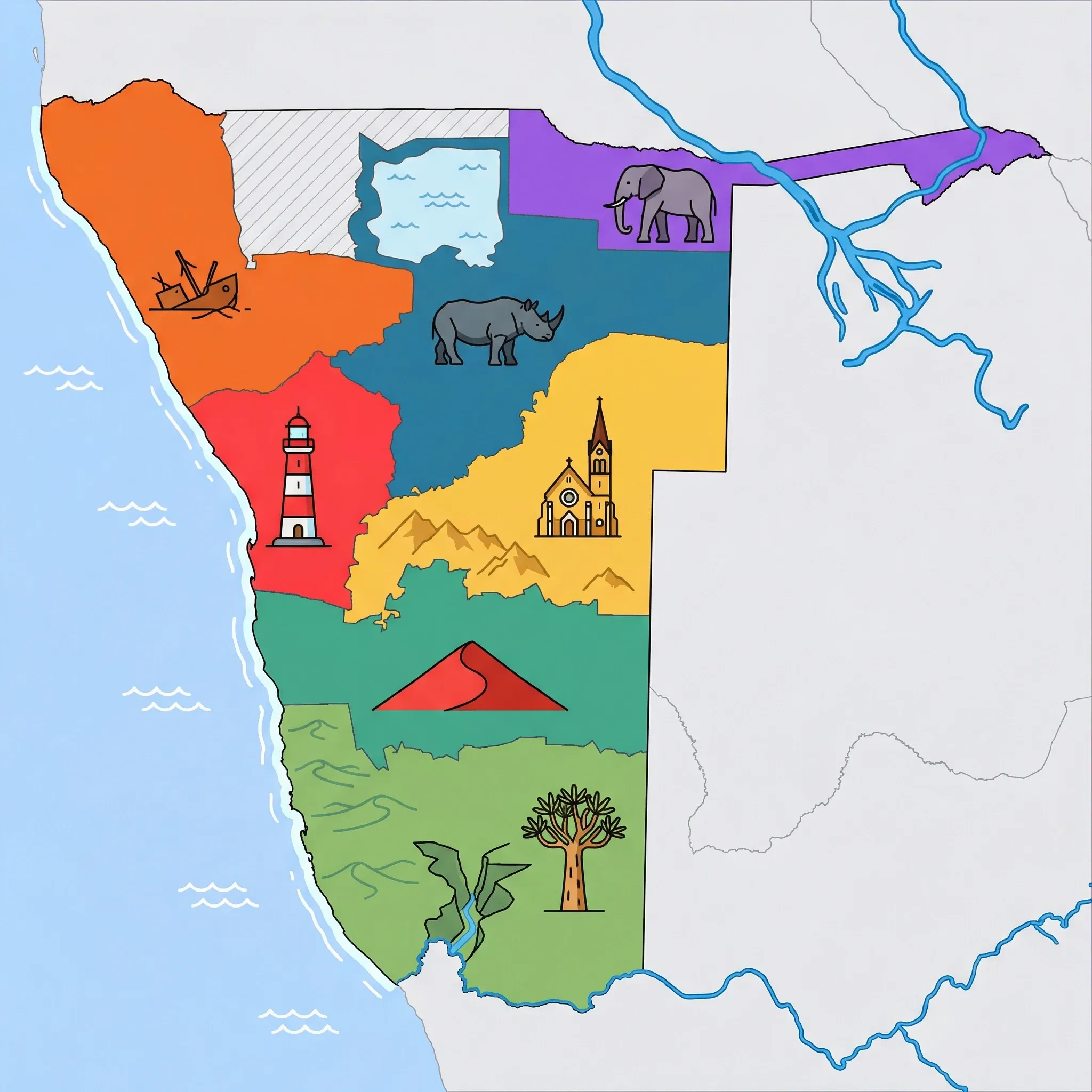
Click a region to explore
Windhoek is likely your family's first and last stop in Namibia. Far from being a chaotic African metropolis, it is a small, tidy, and relaxed city with a distinct continental feel. German castles sit alongside modern glass high-rises, and women in traditional Herero Victorian-style dresses walk the pavements. For families, it is the perfect place to acclimatize. You can pick up your rental vehicle, stock up on supplies at world-class supermarkets, and recover from jet lag in a comfortable guesthouse before hitting the dusty roads.
While not a major wildlife destination compared to Etosha, the surrounding Central Plateau is beautiful, with golden grass and acacia trees. It’s a great area for a 'soft start' safari at a local game farm where you can see giraffes and antelopes without driving far. The city itself has interesting museums and botanical gardens perfect for a picnic. It is safe to walk around the main independence avenue during the day, where you can buy wooden giraffes and beaded keychains from local artisans—a hit with kids looking for souvenirs.
Key Attractions
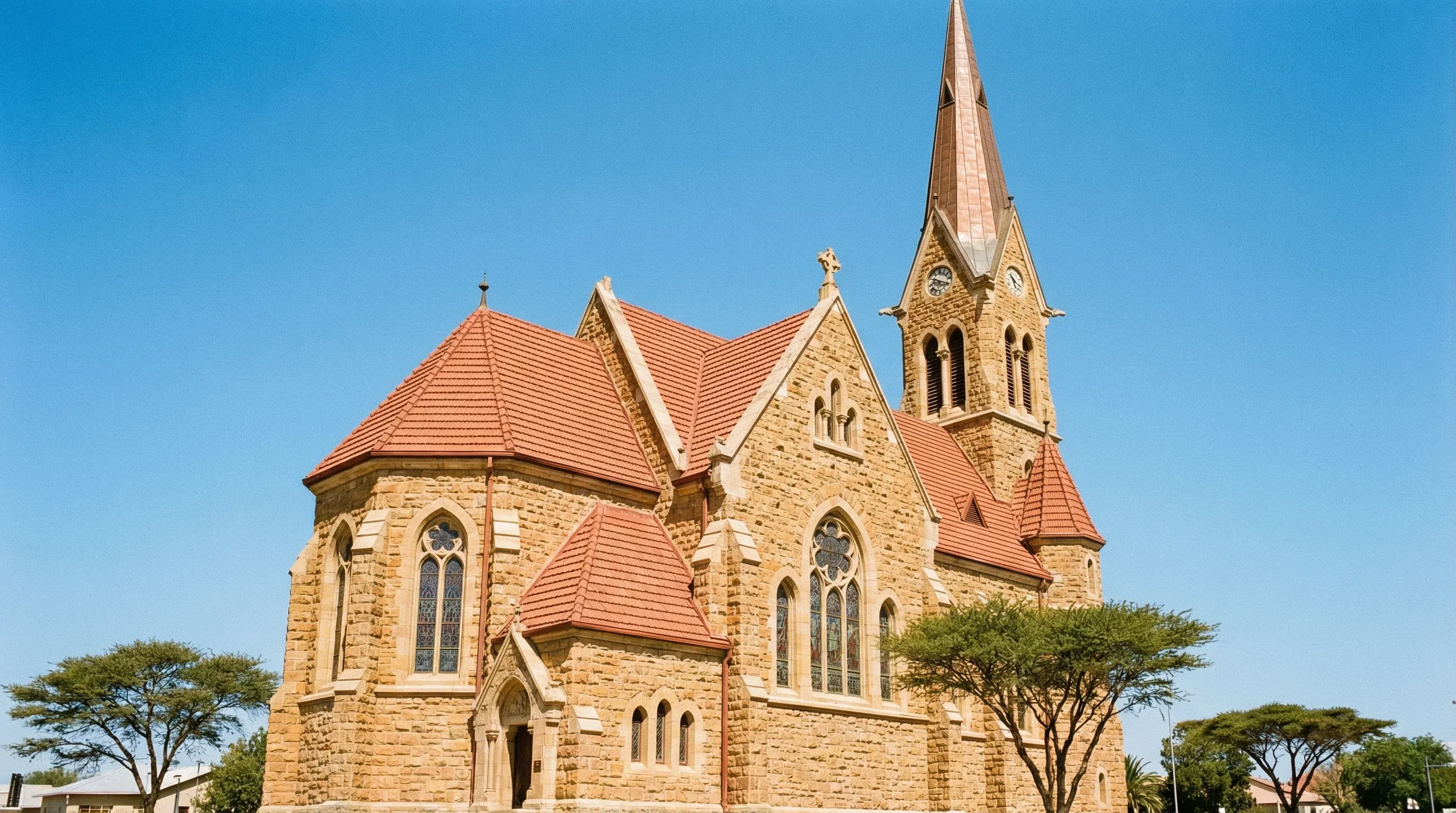
While in the region, a trip to Gross Barmen Hot Springs (about 1 hour north near Okahandja) is a fantastic day out. It features large thermal pools and a modern spa complex where children can splash while parents relax. In Windhoek, Christuskirche is the iconic photo stop—a fairytale-like Lutheran church. Visit the National Museum of Namibia (in the old fort) to see rock art displays and learn about the independence struggle. Nearby, the Daan Viljoen Game Reserve offers walking safaris where families can hike safely among harmless game like zebras and wildebeest, as there are no large predators.
Practical Advice
Windhoek is the logistics hub. This is the place to buy a SIM card (MTC is best coverage), rent a satellite phone if needed, and buy bulk water and snacks. Most shops are closed on Sunday afternoons. Taxis are shared and can be confusing; ask your hotel to call a private transfer or use a shuttle service.
Food & Drink
Typical meal times: Standard urban hours. Breakfast 7:00 am–9:00 am. Lunch 12:00 pm–2:00 pm. Dinner 6:00 pm–9:30 pm.
Typical meal costs: A good steak dinner costs N$180–250 (approx. $10–14 USD / €9–12.50 EUR). Joe’s Beerhouse (famous tourist spot) meals are around N$200 ($11 USD).
Dietary requirements: Excellent. Windhoek has the widest range of options in the country, including dedicated health food shops, vegan restaurants, and supermarkets stocking gluten-free products.
Signature dishes:
- Kapana – Namibian street food consisting of strips of beef grilled over open fire, served with chili spice and salsa. Best tried at Soweto Market (with a guide) or modernised versions in restaurants.
- Biltong – Cured, dried meat (like beef jerky but better). Windhoek has specialist biltong shops; it's the ultimate road trip snack.
- Windhoek Lager – The country's premier beer, brewed locally according to the German purity law.
Why this score?
The region is the most developed and urbanized part of Namibia, featuring paved highways and modern shopping centers. While there are nearby guest farms and hiking trails, the experience is largely focused on comfort and logistics rather than rugged exploration.
Why this score?
Windhoek hosts the country's best private hospitals, such as Lady Pohamba and Mediclinic, which have English-speaking staff and modern equipment. While adequate for most procedures, it still lacks the specialized depth of global medical hubs like Singapore or London.
Why this score?
As the main international gateway, Windhoek sees almost all of Namibia's 864,000 annual visitors. While it is a necessary transit point with good amenities, it is rarely the primary destination for international travelers compared to the national parks.

Accommodation is generally good value. Family guesthouses with pools cost N$1,500–2,500 (approx. $80–140 USD / €75–125 EUR) per night. Luxury hotels like the Hilton or Heinitzburg are upwards of N$4,000 ($220 USD).
Family Travel Notice
Immigration officials may request unabridged birth certificates or parental consent affidavits for minors travelling with one parent or without their legal guardians.

Getting Here & Around
Getting Here
- Airports – Hosea Kutako International Airport (WDH) is 45km east of the city. It is the main entry point for international flights.
- Shuttles – Airport shuttles to the city take about 45 minutes.
Getting Around
- Car – Essential for leaving the city. Inside Windhoek, you can use hotel shuttles or reputable dial-a-cab services. Driving in the city is easy with light traffic compared to other capitals.
- Walking – The city center (Independence Avenue) is walkable during the day.
Nearby Airports (2 airports)
Eros Airport
ERSWindhoek
Windhoek Hosea Kutako International Airport
WDHWindhoek
View full flight map for Namibia →

Packing List
Namibia uses the large 3-pin South African plugs; standard EU/US adapters won't fit.
The air in Windhoek is extremely dry after a long flight.
Windhoek has some upscale restaurants where safari gear feels out of place.
Fine desert sand gets everywhere; essential for protecting cameras, phones, and snacks.
The air is incredibly dry and can cause skin to crack and bleed within days.
Namibia uses the old 'large 3-pin' South African plugs which most universal adapters do not fit.
Stops arguments during wildlife viewing in Etosha; animals are often at a distance.
Campsites and even some lodges have limited lighting; essential for navigating at night.
Sand can hide scorpions and thorns; flip-flops are not safe for walking in the bush.
Desert temperatures drop drastically at night, often reaching freezing even after hot days.

Activities & Best Times

Hiking, wildlife, outdoor exploration, ecotourism
Home to major wildlife sanctuaries like Na'ankuse and Daan Viljoen, offering high-quality wilderness immersion and hiking trails. The dry winter months (May-Sept) provide optimal conditions for wildlife viewing and comfortable trekking temperatures.

Urban tourism, museums, historical sites, architecture
Windhoek features a distinctive blend of German colonial heritage and modern African identity, with major sites like the Independence Memorial Museum and Christuskirche. Peak visitation occurs during the dry season when the city's outdoor cafes and heritage walks are most enjoyable.

Scenic drives, countryside tours, route-based travel
Features internationally acclaimed scenic gravel routes like the Gamsberg and Spreetshoogte passes that offer dramatic escarpment views. Travel is best during the dry season when road conditions are stable and visibility across the plateau is excellent.

Sport tourism, fitness activities, active recreation
Boasts high-quality mountain biking and hiking networks like the IJG Trails and Rooibos Trail. The cool winter months (May-Aug) are ideal for high-exertion sports, while the summer heat and thunderstorms make peak summer unsuitable.

Learning experiences, scientific sites, historical education
Offers specialized interest through the National Earth Science Museum and the Gibeon Meteorite display. These facilities provide unique geological insights but are secondary draws compared to the region's cultural and natural highlights.

Spa retreats, wellness centers, peaceful getaways
Centered on the Gross Barmen Hot Springs, offering thermal bath experiences in a resort setting. The experience is most restorative during the crisp plateau winters (May-Aug), as the high summer temperatures make hot springs less appealing.

Amusement parks, family entertainment venues
The water park at Gross Barmen Resort serves as a regional family attraction for aquatic recreation. It is best during warmer months but loses appeal during the high-altitude winter nights and cool days of June and July.




Public Holidays & Calendar Next 12 months
Public holidays, festivals, cultural celebrations, and seasonal natural phenomena coming up in Windhoek & Central Plateau over the next 12 months.
Loading holidays and events...

Travel Advisory
The majority of international agencies consider Namibia safe for travel under standard safety awareness, although North American agencies advise elevated caution due to urban crime rates.
Safety Topics
Traveller Advice (4 groups)

A new visa requirement for many nationalities, including those from the UK, USA, and Australia, took effect on April 1, 2025. Ensure your passport has at least six months of validity and three blank pages.

Exercise extra caution when moving about, particularly after dark. Avoid walking alone in isolated areas or quiet city streets.

Societal attitudes remain conservative, especially in rural areas. While same-sex relationships are not illegal, certain sexual acts remain technically prohibited by law, though prosecutions are rare.

Immigration officials may request unabridged birth certificates or parental consent affidavits for minors travelling with one parent or without their legal guardians.
Agency Summaries
Travellers should remain extremely vigilant due to significant crime rates across the country, particularly in urban centres like Windhoek.
Namibia is generally safe, but travellers should follow common sense safety measures. An ongoing Mpox outbreak has been noted in the region.
While no specific travel restrictions are in place, visitors are warned of street crime in the capital and hazardous driving conditions on unpaved roads.
No specific security warning is currently issued for the country, though comprehensive travel insurance is strongly recommended.
Visitors should maintain standard safety awareness and be informed of new visa requirements implemented in 2025.
Increased vigilance is recommended because of prevalent crime and health concerns. Violent incidents such as muggings and home invasions occur in major towns.
Information is provided for general guidance only and does not constitute travel, safety, medical, or legal advice. Conditions may change. Users are responsible for independently verifying information before travel.