

Overview
Nauru is not your standard family holiday destination; it is a travel badge of honour and a fascinating educational experience for older children and teenagers. As the world's smallest independent republic, this single raised coral island sits just south of the equator and offers a landscape unlike anywhere else on Earth. The interior, known locally as "Topside," is a maze of jagged limestone pinnacles left behind by a century of phosphate mining, creating a stark, moon-like terrain that is visually arresting and historically significant. While it lacks the polished resorts of Fiji or Hawaii, Nauru rewards the curious with its raw history, from the visible scars of mining to the rusted artillery of World War II.
For families who love geography and history, Nauru provides a tangible lesson in 20th-century economics and warfare. The island is incredibly small-you can drive the entire ring road in under 30 minutes-meaning nothing is ever far away. Life here is slow-paced and community-focused. Visitors are rare, so families will find themselves warmly welcomed by locals who are often surprised to see tourists. While the infrastructure is basic, the opportunity to snorkel pristine reefs, explore the green oasis of Buada, and stand on the highest point of such a remote nation creates unforgettable memories for adventurous travellers.
Key Attractions
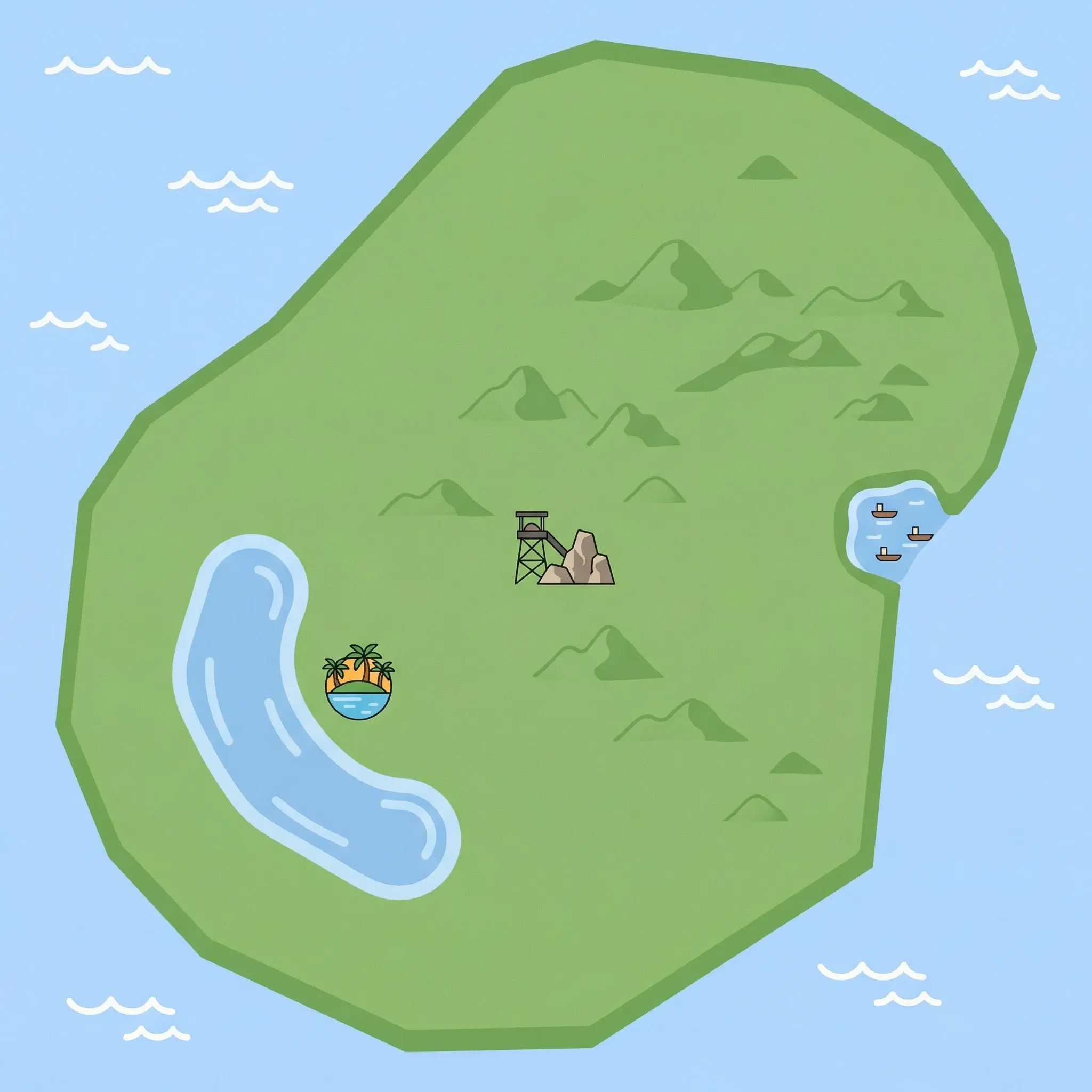
Despite its size, Nauru packs in several unique sights. The most scenic spot is undoubtedly Anibare Bay on the east coast. This sweeping arc of white sand and coral pinnacles offers the best swimming on the island, particularly at the Anibare Community Boat Harbour, which is sheltered from the ocean's strong currents. It is a perfect spot for a family picnic and a dip in the turquoise water. Just inland lies the Buada Lagoon, a landlocked freshwater lake surrounded by lush vegetation and palm trees-a stark contrast to the mined plateau above. It is a peaceful place to walk and observe local life, though swimming is generally not recommended here.
History enthusiasts must visit Command Ridge, the island's highest point. A short hike takes you to a vantage point littered with rusted WWII Japanese guns and bunkers that have remained in place for decades. Kids will be fascinated by the tangible history-you can physically touch the artillery and explore the old communications outposts while enjoying panoramic views over the ocean. Nearby, the phosphate cantilevers along the coast stand as giant industrial sculptures, defining the island's skyline and offering a powerful visual story of the nation's economic past.
Practical Advice
Nauru is hot and humid year-round, so pack breathable clothing and high-SPF sunscreen. The Australian Dollar (AUD) is the official currency, and cash is king. While there are a few ATMs, they are frequently out of order or empty; families should bring enough cash for their entire stay. Dress modest is important here; locals generally swim in shorts and t-shirts, and bikinis are frowned upon outside of private areas. Internet access is available but can be slow and expensive. Medical facilities are basic, so comprehensive travel insurance that includes medical evacuation is absolutely essential.
Food & Drink
Typical meal times: 12:00 pm to 2:00 pm for lunch and 6:30 pm to 9:00 pm for dinner. Cafés may open earlier for breakfast.
Typical meal costs: $20–40 AUD (approx. $13–26 USD / €12–25 EUR) per main dish. Imported ingredients make dining relatively expensive compared to other Pacific nations.
Dietary requirements: Fresh vegetables can be scarce as almost all food is imported. Vegetarians may struggle and rely on fried rice or noodle dishes. Gluten-free options are virtually non-existent; travellers with strict allergies should pack their own staple snacks.
Family-friendly dining: Most restaurants are Chinese-run and offer family-style sharing platters which are great for kids. The atmosphere is casual and children are welcome everywhere.
Signature dishes:
- Coconut Fish – Fresh raw tuna marinated in lime juice and coconut milk, a refreshing staple similar to ceviche.
- Fresh Tuna Sashimi – With the ocean just steps away, the tuna here is world-class and often served raw with soy sauce.
- Coconut Crusted Fish – White fish fillets coated in grated coconut and fried, a kid-friendly favourite.
- Fried Rice – A ubiquitous staple in Nauru due to the strong influence of Chinese cuisine and the reliance on non-perishable imports.
Safety
Nauru is generally safe for tourists, but two specific hazards exist. First, ocean currents outside the boat harbours are extremely strong and dangerous; do not swim on the reef edge or in open water without local advice. Stick to the Anibare Harbour for swimming. Second, stray dogs are common and can be aggressive. It is advisable to not walk alone in residential areas at night and to carry a stick or 'dog dazer' if walking on side roads. The equatorial sun is also fierce, so dehydration and sunburn are real risks for children.

Due to its remote location and reliance on imports, daily costs are high. A family can expect to spend $300–450 AUD (approx. $195–290 USD / €180–270 EUR) per day. Accommodation is the biggest expense, with basic rooms starting around $150 AUD. Car hire costs approx. $80–120 AUD per day.
Age Suitability




Why this score?
The island's interior, known as Topside, offers a rugged and surreal landscape of jagged phosphate pinnacles and abandoned mining infrastructure that feels like another planet. While the island is small and possesses a paved ring road, the adventure lies in the logistical challenge of arrival and the exploration of uncurated WWII relics and bunkers hidden in the brush.
Why this score?
Medical services are centered at the Republic of Nauru Hospital, which provides basic emergency and outpatient care but lacks specialized facilities and advanced surgical capabilities. For serious medical issues or pediatric emergencies, travelers would require a costly medical evacuation to Australia, making comprehensive travel insurance essential.
Why this score?
Nauru is frequently cited as the least-visited country in the world, receiving only a few hundred international tourists annually. With only two primary hotels and a lack of traditional tourism infrastructure, it remains a destination for niche collectors and those seeking extreme isolation rather than a mainstream audience.
Nauru is an expensive destination due to its remote location and reliance on imported goods. Hotel rooms are basic but priced at a premium, typically costing $150–250 AUD (approx. $100–165 USD / €90–150 EUR) per night. Car hire is usually around $80–120 AUD (approx. $53–80 USD / €48–72 EUR) per day. Groceries and restaurant meals are priced higher than in Australia due to freight costs.

Getting There & Around
Getting There
- By Air – Nauru Airlines is the sole carrier, flying from Brisbane (BNE) and Nadi (NAN). Flights are infrequent, so schedules must be checked carefully. The airport is located in the Yaren district of Nauru.
- Entry Requirements – Visas are required for almost all visitors and can be difficult to obtain. You must typically email Nauru Immigration directly to apply. You will need proof of hotel booking and return flights. Check your government website for the latest visa requirements, or use the IATA Travel Centre entry-requirements checker.
Getting Around
- Car Hire – Essential for families. There is no reliable public transport system for tourists. Cars can be hired from hotels or local businesses; ask your accommodation to arrange this before arrival. Driving is on the left.
- Walking – The island is small, but the intense equatorial heat and humidity make walking long distances difficult for children. Beware of stray dogs when walking in residential areas.
- Cycling – It is possible to cycle the 19km ring road in a few hours. Bikes can sometimes be rented from the Menen Hotel or Capelle & Partner.
Official Links

Packing List
Essential for swimming as the seabed is covered in sharp coral and jagged limestone pinnacles.
ATMs are scarce and frequently empty or broken; credit cards are rarely accepted.
Locals swim in t-shirts and shorts; bikinis are culturally inappropriate in public areas.
Equipment rental is virtually non-existent, so bring your own masks and fins.
Shops stock limited imported goods which can be very expensive and stale.

Activities & Best Times

Adventure & Nature
GoodHiking, wildlife, outdoor exploration, ecotourism
The unique jagged limestone Pinnacles on the central plateau and the Moqua Well offer distinct geological exploration for intrepid families. The driest months from June to October provide the most comfortable conditions for trekking the interior's rugged, unshaded terrain.

City & Cultural
GoodUrban tourism, museums, historical sites, architecture
Nauru offers a unique cultural landscape defined by its phosphate mining history and WWII relics like Command Ridge. Visitors benefit from traveling mid-year when humidity and precipitation are slightly lower, making the exploration of outdoor historic sites more feasible.

Beach & Sea
MarginalBeach resorts, marine activities: diving, snorkelling, kite surfing, wind surfing, sailing
Anibare Bay and Gabab Channel provide natural coastal beauty, though international-standard resort facilities and marine infrastructure are limited. Peak visiting occurs during the slightly drier months to avoid heavy equatorial rainfall and maximize sea visibility.

Road Trips & Scenic
MarginalScenic drives, countryside tours, route-based travel
The Island Ring Road and the drive across the central plateau allow for a complete circumnavigation of the nation in a single afternoon. These drives are best enjoyed when skies are clear and roads are dry, avoiding the peak monsoonal rains of December and January.

Sports & Active
MarginalSport tourism, fitness activities, active recreation
The 19km Island Perimeter Loop is a recognized route for walking and cycling enthusiasts seeking a unique geographic challenge. Participation is most common during the cooler, drier period of the year to mitigate the intense equatorial heat and humidity.

Attractions (3 total)



Public Holidays & Calendar Next 12 months
Public holidays, festivals, cultural celebrations, and seasonal natural phenomena coming up in Nauru over the next 12 months.
Loading holidays and events...

Travel Advisory
All major reporting agencies agree that Nauru is a low-risk destination where standard safety practices are sufficient for most travellers. Primary concerns are related to healthcare access and seasonal weather rather than security.
Safety Topics
Traveller Advice (2 groups)

While same-sex relationships are legal, Nauruan society is socially conservative. Discretion regarding public displays of affection is recommended to avoid unwanted attention or cultural friction.

Ensure you have comprehensive medical insurance that covers the significant costs of air evacuation, as local treatment facilities are only equipped for basic care.
Agency Summaries
No specific travel restrictions are in place. British citizens are encouraged to obtain comprehensive insurance and check entry requirements, as visas are mandatory for all visitors.
The U.S. government recommends standard safety awareness while visiting Nauru. Travellers should plan for limited local infrastructure and monitor weather reports during the cyclone season from November to April.
Nauru is generally safe for travellers, with low crime rates. Visitors are advised to stay aware of their surroundings and secure personal belongings. Medical facilities are limited, and cyclone season presents occasional risks.
Australia maintains its lowest risk level for Nauru. Key advice focuses on health preparedness, the need for medical evacuation insurance, and respecting local laws and customs.
Irish citizens should exercise standard vigilance. Because there is no Irish embassy in Nauru, consular assistance is provided through the mission in Canberra, Australia.
New Zealanders are advised to maintain typical safety standards. It is crucial to have insurance that covers emergency air transport to nearby countries for serious medical issues.
Information is provided for general guidance only and does not constitute travel, safety, medical, or legal advice. Conditions may change. Users are responsible for independently verifying information before travel.