

Overview
Nepal is often imagined as a destination solely for rugged mountaineers, but for families, it unfolds as a magical storybook of nature and culture. Geographically, the country is a dramatic staircase, rising from the humid, jungle-clad plains of the Chitwan & Terai lowlands to the frozen heights of the Everest Region (Solu Khumbu). Between these extremes lie emerald valleys, terraced rice paddies, and rushing rivers that make for a stunning travel backdrop. The climate varies wildly by altitude; while the mountains are freezing, the lowlands can be tropical and balmy. For children, the culture is incredibly welcoming-the greeting "Namaste" (I bow to the god within you) is learned quickly and used often, opening doors to friendly interactions with locals who genuinely adore kids.
Traveling here is an adventure in itself. The roads can be bumpy and winding, and the cities are a sensory overload of bells, incense, and color. However, the payoff is immense. Families can swap screen time for real-life adventures: spotting wild rhinos, spinning prayer wheels at ancient stupas, or boating on a mirror-calm lake reflecting 8,000-meter peaks. It is a place that teaches resilience and wonder, offering a safe yet exotic step outside the comfort zone. Whether you are exploring the medieval alleyways of Bhaktapur or watching the sunrise turn the Himalayas gold, Nepal leaves a mark on the soul.
Key Attractions
Start your journey in the capital, where the Swayambhunath Stupa (Monkey Temple) offers a thrilling mix of panoramic city views and cheeky resident macaques that children love watching. Just a short drive away is Boudhanath Stupa, one of the largest spherical stupas in the world; walking around it (clockwise!) while lighting butter lamps is a mesmerizing experience. For a break from the bustle, the Garden of Dreams provides a safe, walled neo-classical oasis perfect for a family picnic in the heart of Thamel.
Head west to the Pokhara, Annapurna & Mustang region, the country's adventure capital. Here, you can visit the International Mountain Museum to learn about yeti legends and mountaineering history without the frostbite. A boat ride on Phewa Lake offers stunning views of Machhapuchhre (Fishtail Mountain). For wildlife lovers, a trip south to Chitwan National Park is non-negotiable. Families can go on jeep safaris to spot one-horned rhinoceroses, deer, and potentially even Bengal tigers in the wild. Finally, engage with living history at Bhaktapur Durbar Square, a car-free zone where kids can watch potters spinning clay in the open squares.
Practical Advice
Best time to visit: The ideal windows are autumn (late September to November) and spring (March to May) when skies are clear and temperatures are moderate. Winter can be cold without central heating, and the summer monsoon brings leeches and flight cancellations.
Visa basics: Tourist visas are available on arrival at Kathmandu airport for most nationalities (including US, UK, EU). Uniquely, children under 10 years old from most countries receive a gratis (free) visa, though they still need the sticker. Note that US citizens are a notable exception and typically must pay the standard fee regardless of age.
Health & Logistics: Dust and pollution in Kathmandu can be challenging; N95 masks are recommended. Stomach bugs are common, so stick to bottled or treated water and cooked foods. "Load shedding" (power cuts) is less frequent now but still happens, so carry a torch.
Food & Drink
Typical meal times: 12:00 pm to 2:00 pm for lunch and 7:00 pm to 9:00 pm for dinner. (Note: Locals traditionally eat a large meal at 9:00 am - 10:00 am and dinner around 7:00 pm - 8:00 pm).
Typical meal costs: NPR 300–600 for local eateries (approx. $2.25–4.50 USD / €2–4 EUR); NPR 800–1,500 for tourist restaurants (approx. $6–11 USD / €5.50–10 EUR).
Dietary requirements: Excellent for vegetarians. The national dish, Dal Bhat, is vegetarian by default. Vegan options are plentiful. Gluten-free travelers must avoid momo wrappers and chow mein but can rely on rice dishes. Nut allergies are rare in main savory dishes but always check.
Family-friendly dining: Nepalese culture is very tolerant of children. While highchairs are rare outside top hotels, staff will often go out of their way to entertain little ones. Momos (dumplings) are universally loved by kids.
Signature dishes:
- Dal Bhat – The national staple of lentil soup, rice, and vegetable curry. It is mild, healthy, and usually comes with unlimited refills.
- Momo – Steamed or fried dumplings filled with veggies, chicken, or buffalo meat. The ultimate Nepali comfort food that kids adore.
- Sel Roti – A ring-shaped, sweet rice-flour bread, deep-fried like a doughnut. Chewy, sweet, and perfect for breakfast or snacks.
- Thukpa – A warming noodle soup with vegetables and meat, influenced by Tibetan cuisine and great for colder evenings.
- Juju Dhau – The "King of Yogurt," a rich, creamy curd sweetened with honey and spices, famous in Bhaktapur.
Safety
Road travel can be hazardous due to poor conditions and mountain terrain; avoid overnight buses and opt for tourist buses or private jeeps where possible. Altitude sickness (AMS) is a real risk on treks above 2,500m-ascend slowly and watch children closely for symptoms. Air pollution in Kathmandu is high, so minimize strenuous outdoor activity in the city center on smoggy days. Stray dogs are common; teach children not to pet them to avoid rabies risk.
Family Travel Notice
Verify entry requirements for minors; children under five may be subject to different health screening protocols than adults.

Nepal is very affordable for families. A family of four can travel comfortably for NPR 15,000–25,000 (approx. $110–185 USD / €100–170 EUR) per day, covering mid-range hotels, private transport, and meals. Local food is incredibly cheap, while western comforts and organized adventure activities will be your biggest expenses.
Age Suitability





Did you know? Nepal welcomes approximately 615,000 international visitors per year. Most visitors come from South Asia.
Explore Regions
4 Regions
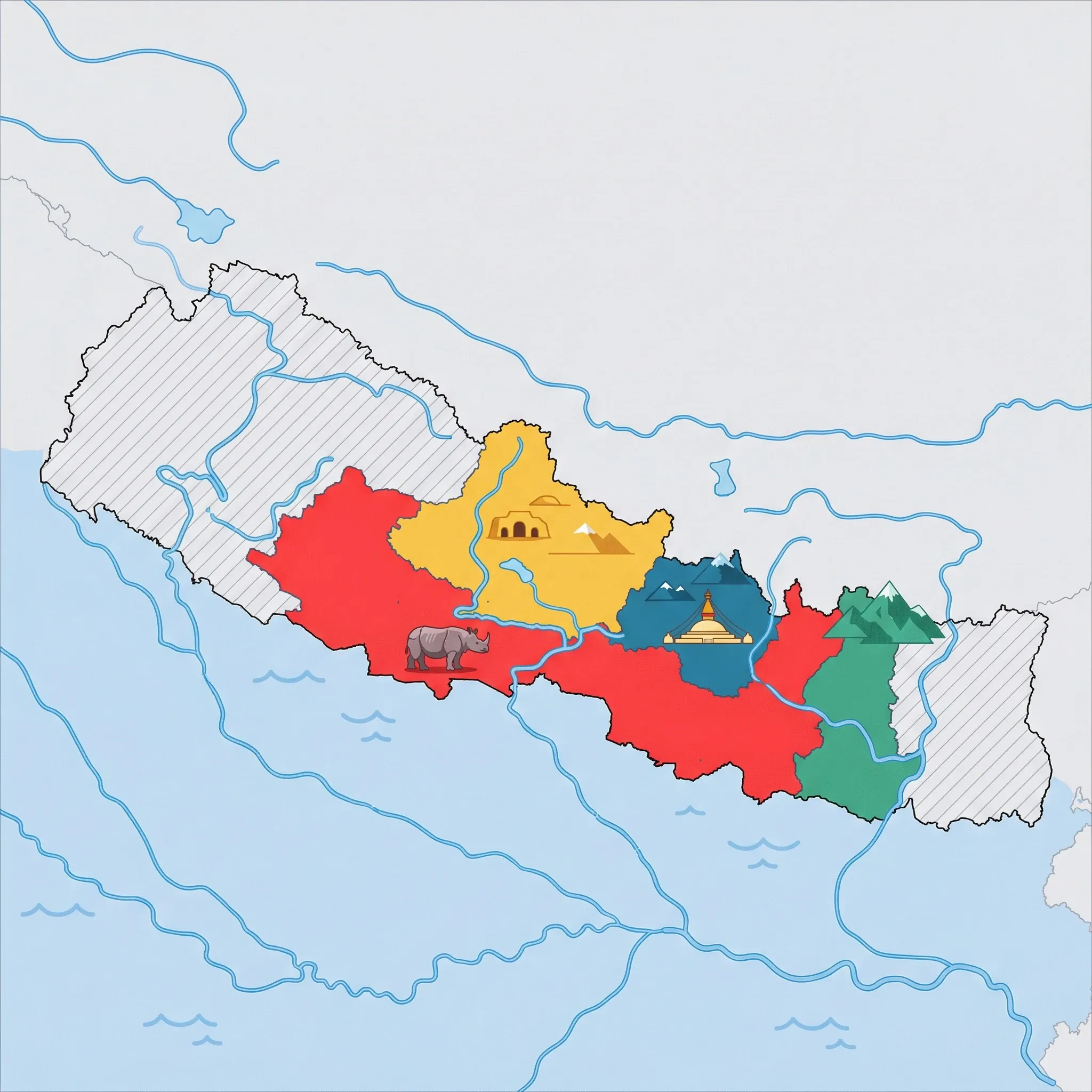
Chitwan & Terai
Where the jungle meets the plains 🦏🌿
Everest Region (Solu Khumbu)
Adventure on the roof of the world 🏔️🇳🇵
Kathmandu Valley & Langtang
City of temples and gateway to the mountains 🏯🐒
Pokhara, Annapurna & Mustang
Lakeside chill and mountain thrills 🚣🏔️
Click on a region marker to explore details. Use the dropdown to color regions by activity suitability.

Getting There & Around
Getting There
- By Air – Tribhuvan International Airport (KTM) in Kathmandu is the only functional international hub. Major connections come via Doha, Dubai, Istanbul, and Delhi.
- By Land – Several border crossings exist with India, including Sunauli (near Lumbini) and Kakarbhitta. These can be chaotic and are best suited for adventurous families.
- Entry Requirements – Visas are available on arrival for US, UK, EU, and Australian citizens. Bring exact cash (USD/EUR) and passport photos. Check your government website for the latest visa requirements, or use the IATA Travel Centre entry-requirements checker.
Getting Around
- Domestic Flights – The fastest way to reach distant regions like the Everest Region (Solu Khumbu) or Pokhara. Carriers like Buddha Air and Yeti Airlines are reliable.
- Tourist Buses – Comfortable, air-conditioned buses connect Kathmandu, Pokhara, and Chitwan. They are safer and more spacious than local buses.
- Private Car/Jeep – The most flexible option for families. Hiring a car with a driver is surprisingly affordable and allows you to stop for breaks whenever the kids need.
- Taxis – Plentiful in Kathmandu. Always negotiate the fare before getting in, as meters are rarely used for tourists.
Official Links

Packing List
Kathmandu's air quality can be very poor due to dust and vehicle emissions.
Hotel room gas heaters can sometimes be poorly ventilated; this adds a safety layer.
Street lighting is sporadic and power cuts still occur; essential for safety at night.
Tap water is unsafe. A filter bottle saves money and plastic waste compared to buying bottled water.
You must remove shoes at every temple and many restaurants; laces become tedious quickly.
Protects against dust on bumpy road trips and keeps you warm on morning treks.

Activities & Best Times

Adventure & Nature
ExcellentHiking, wildlife, outdoor exploration, ecotourism
World-class Himalayan trekking and the Langtang Valley offer profound wilderness experiences with high authenticity for active families. Peak visibility and trail conditions occur in the clear post-monsoon and pre-monsoon windows, while the monsoon (June-August) brings safety risks and poor visibility.
As home to Mount Everest and Sagarmatha National Park, the region offers the world's most iconic high-altitude wilderness and trekking experiences. Peak months provide the stable weather and clear Himalayan views required for safe exploration, while the monsoon (June-Sept) brings significant visibility issues and safety risks.
Globally iconic trekking in the Annapurna range combined with the unique high-altitude desert landscapes of Upper Mustang. Peak seasons offer unparalleled Himalayan visibility and stable trail conditions, while the summer monsoon presents significant risks of landslides and leeches.

City & Cultural
ExcellentUrban tourism, museums, historical sites, architecture
The three UNESCO Durbar Squares and major stupas provide an unrivaled concentration of living medieval history and world-class architectural heritage. Optimal conditions for walking tours are during the dry, temperate months of spring and autumn, with the heavy summer rains making urban exploration difficult.
The region features unique high-altitude Sherpa culture centered around historic villages like Namche Bazaar and significant monastic sites such as Tengboche. These cultural experiences are most vibrant during the main trekking seasons when community life is active and monastery rituals are frequently accessible to international visitors.
Features the uniquely preserved medieval walled city of Lo Manthang and the culturally significant Muktinath pilgrimage site. Visitation peaks when clear skies allow for mountain photography and cultural exploration without monsoon rain or extreme winter snow blockages.

Sports & Active
Very GoodSport tourism, fitness activities, active recreation
Significant infrastructure for high-altitude trekking and adventure sports like paragliding and ziplining across the valley rim. Activity is most reliable during stable weather windows; the monsoon months are avoided due to trail conditions and clouds.
A premier global destination for paragliding in Pokhara and home to world-class adventure infrastructure like the Cliff bungee. Optimal conditions occur during stable post-monsoon and spring windows; heavy monsoon clouds and winds generally halt aerial and high-adventure activities.
Offers world-renowned trekking routes and mountaineering infrastructure, including internationally recognized base camps and organized trail systems. Activity is strictly seasonal due to high-altitude hazards; monsoon rain makes trails treacherous while deep winter temperatures in January are unsuitable for most family-oriented active travel.

Educational & Exploratory
GoodLearning experiences, scientific sites, historical education
Home to the International Mountain Museum, a major institution dedicated to Himalayan culture and mountaineering history. These facilities are best visited during peak trekking seasons when families are already in the region for exploration, as monsoon access can be difficult.
While the Natural History Museum and Planetarium offer local context, they are not destination-level educational draws for experienced travelers. Most educational engagement is secondary to the primary cultural sites and is best visited during the main tourist seasons.
Dedicated facilities like Sagarmatha Next and the National Park Visitor Center provide high-quality insights into Himalayan ecology and sustainable tourism. These educational sites serve as meaningful secondary draws during the primary visiting windows but are difficult to access or have limited staffing during the off-season.

Relaxation & Wellness
GoodSpa retreats, wellness centers, peaceful getaways
Traditional hot springs like Tatopani and a strong spiritual retreat culture provide authentic wellness options. These experiences are most rewarding during the crisp, cooler winter months, while the hot, humid monsoon period is less conducive to thermal bathing.
Known for natural hot springs along trekking routes like Tatopani and a growing sophisticated yoga scene in Pokhara. These restorative experiences are highly sought after post-trek during the clear, cool autumn and spring months, whereas the monsoon heat and rain diminish the appeal.

Road Trips & Scenic
GoodScenic drives, countryside tours, route-based travel
The journey from Pokhara to Jomsom and into Upper Mustang offers one of the world's most dramatic high-altitude driving experiences. Travel is strictly seasonal, as the monsoon frequently washes out mountain roads and winter snow can close high-altitude passes.
While scenic routes exist, the compact valley geography and traffic congestion make this less of a road trip destination than other Nepalese regions. 'Marginal' better reflects the limited scale of driving routes compared to Pokhara-Mustang.
The Mahendra Highway and Buddhist Circuit offer routes through the Terai's unique landscape, though road quality and safety standards are inconsistent for self-drive international families. Driving is most pleasant in winter; heat and monsoon rains create significant road hazards and poor visibility.

Festivals & Seasonal
MarginalEvents, celebrations, seasonal attractions
Internationally recognized events like Holi and Maha Shivaratri offer intense cultural immersion, though they are limited to specific calendar dates. Peak visitation for these festivals occurs in February and March, providing a unique draw for families seeking authentic local traditions.
The internationally significant Mani Rimdu Festival at Tengboche Monastery is a major cultural event usually occurring in October or November. Other smaller cultural events like Buddha Jayanti in May provide additional seasonal interest, but the region lacks a year-round festival calendar.
Features the Tiji Festival in Mustang and Holi, which offer authentic but highly time-specific cultural immersions. These events are primary motivators for international visits during their specific calendar windows in spring, offering rare glimpses into Tibetan Buddhist traditions.

Theme Park & Entertainment
MarginalAmusement parks, family entertainment venues
Regional amusement and water parks exist but lack the international standards or unique character sought by sophisticated global travelers. Visitation peaks during warmer, dry months, avoiding the heavy precipitation of the monsoon.
Local water and amusement parks in Pokhara provide regional entertainment but lack the scale and polish of global theme park destinations. They are primarily utilized by domestic tourists and families visiting during the warmer, drier months.
Contains several regional water and amusement parks like Ocean Park that serve local families and regional tourists. While significant within Nepal, they lack the world-class infrastructure or unique themes required to be a primary motivator for international families.

Public Holidays & Calendar Next 12 months
Public holidays, festivals, cultural celebrations, and seasonal natural phenomena coming up in Nepal over the next 12 months.
Loading holidays and events...
Climate & Weather
Chitwan & Terai
Show Details
| Month | Temp °C | Rain | Humidity |
|---|
Everest Region (Solu Khumbu)
Show Details
| Month | Temp °C | Rain | Humidity |
|---|
Kathmandu Valley & Langtang
Show Details
| Month | Temp °C | Rain | Humidity |
|---|
Pokhara, Annapurna & Mustang
Show Details
| Month | Temp °C | Rain | Humidity |
|---|

Travel Advisory
The majority of monitoring agencies advise travellers to exercise a high degree of caution or increased vigilance. While some agencies suggest reconsidering travel due to specific periods of unrest, the general consensus points to elevated risk requiring significant safety awareness.
Safety Topics
Traveller Advice (6 groups)

Monitor local news closely and maintain a high level of situational awareness. Avoid all political gatherings and ensure you have a comprehensive emergency departure plan.

Accessibility infrastructure is extremely limited in Nepal, especially in rural areas and mountainous terrain. Plan for significant mobility challenges.

Always trek with a reputable guide and never go alone. Ensure your insurance specifically covers high-altitude rescue and medical evacuation by helicopter.

Verify entry requirements for minors; children under five may be subject to different health screening protocols than adults.

While legal, public displays of affection may be met with disapproval due to traditional social values. Discretion is recommended.

Exercise significant caution as incidents of sexual harassment and assault have occurred. Avoid walking alone, especially after dark, and be cautious of unwanted attention.
Agency Summaries
While no general travel restriction is in place, visitors are warned of risks related to political protests and disruptions near the 2026 elections.
Avoid non-essential travel due to ongoing civil unrest and the substantial threat posed by natural disasters.
Travellers should remain highly vigilant due to an unstable political environment and security concerns that may shift rapidly.
Travel plans should be reconsidered because of potential civil unrest and violent demonstrations that have resulted in casualties.
High vigilance is recommended, particularly regarding personal safety, monsoon hazards, and the lack of a local Irish embassy.
Heightened safety awareness is necessary due to unpredictable security conditions and the potential for civil disturbance.
Information is provided for general guidance only and does not constitute travel, safety, medical, or legal advice. Conditions may change. Users are responsible for independently verifying information before travel.