
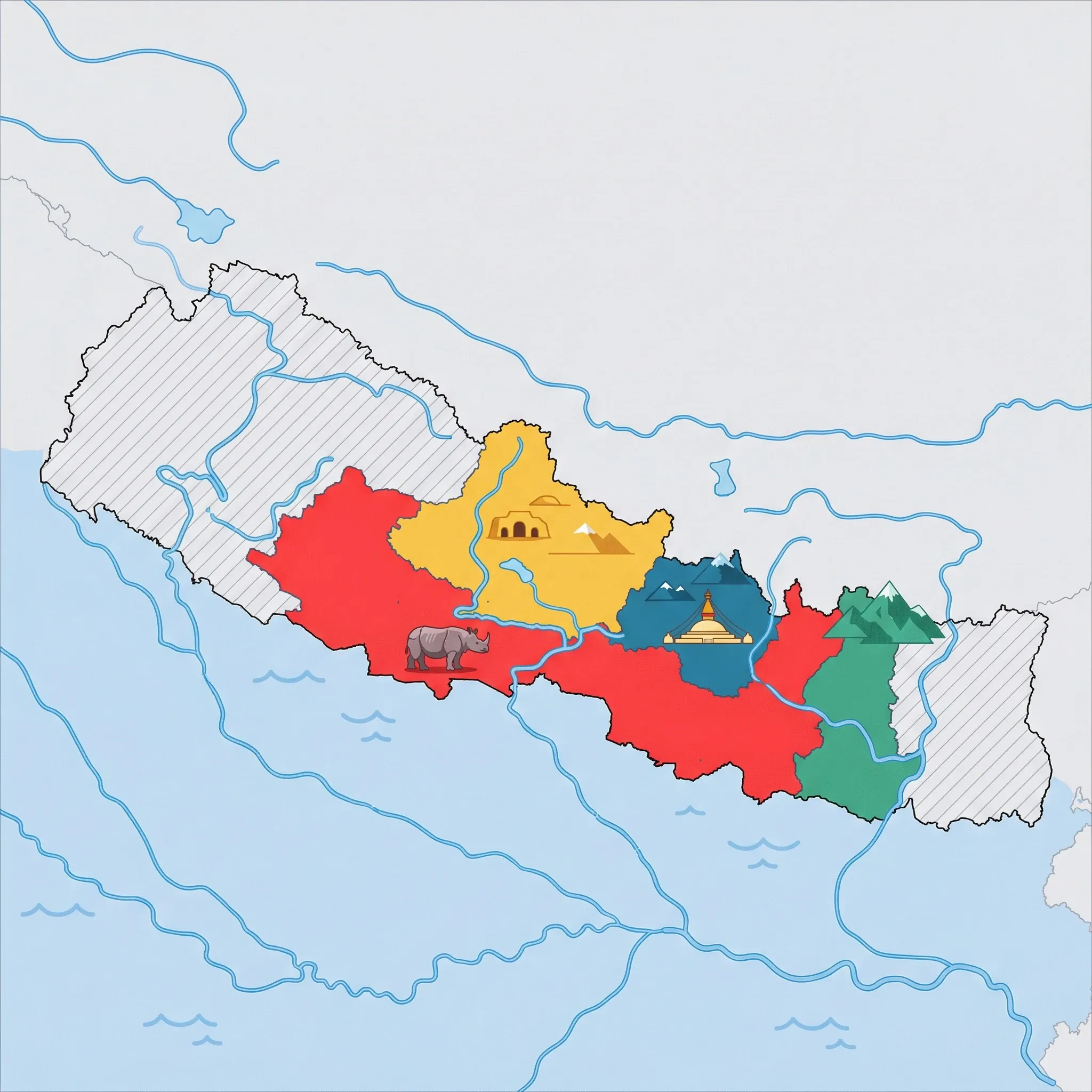
Click a region to explore
⚠️ SAFETY WARNING: Due to potential political volatility and security concerns in border regions, government agencies (including CA, USA, UK, and AU) advise travelers to reconsider travel to parts of the Terai. The region can experience rapid shifts in security, particularly near the Indian border and during political demonstrations. Visitors should stick to established tourist zones like Chitwan National Park and Lumbini, avoid night travel on highways, and remain vigilant. Families are strongly urged to consult their own government's official travel advisory before considering a trip, as circumstances and risk assessments vary.
Overview
The Terai region stretches across the southern belt of Nepal, offering a landscape that feels worlds apart from the icy peaks of the north. Here, the air is thick, warm, and humid, supporting a rich biodiversity that transforms the area into a real-life Jungle Book for visiting families. The flat terrain makes it physically easier for younger children and grandparents to navigate compared to the steep hill regions. The pace of life here is defined by the rhythm of the jungle and the ancient traditions of the Tharu people, whose mud-walled villages and colorful attire add a vibrant cultural layer to the natural beauty.
For families, the primary draw is the wildlife. Seeing a greater one-horned rhinoceros lumbering through the elephant grass or spotting a gharial crocodile sunning itself on a riverbank creates unforgettable childhood memories. Beyond the safari thrills, the region holds immense spiritual significance. From the birthplace of Lord Buddha in the west to the mythological wedding place of Goddess Sita in the east, the Terai serves as a living classroom for history and religion. While the heat can be intense, the winter months offer perfect temperatures for outdoor exploration, making it a compelling winter sun destination for adventurous families.
Key Attractions
The crown jewel of the region is undoubtedly Chitwan National Park. For families, the best way to explore is via a jeep safari, which covers more ground than walking and is safer for children. Inside the park, you have a high probability of spotting rhinos, deer, monkeys, and peacocks. The park also creates a fantastic educational opportunity at the vulture breeding center or the gharial conservation project. Canoe rides down the Rapti River are calm and mesmerizing, allowing kids to spot colorful kingfishers and mugger crocodiles from a safe distance.
Further west, the Lumbini Sacred Garden offers a vastly different experience. As the birthplace of Siddhartha Gautama (the Buddha), it is a massive complex of monasteries built by nations from around the world. Families can hire rickshaws to travel between the German, Chinese, and Thai monasteries, each with unique architecture that fascinates children. The central Maya Devi Temple marks the exact spot of the birth and is surrounded by a peaceful pond and ancient Bodhi trees.
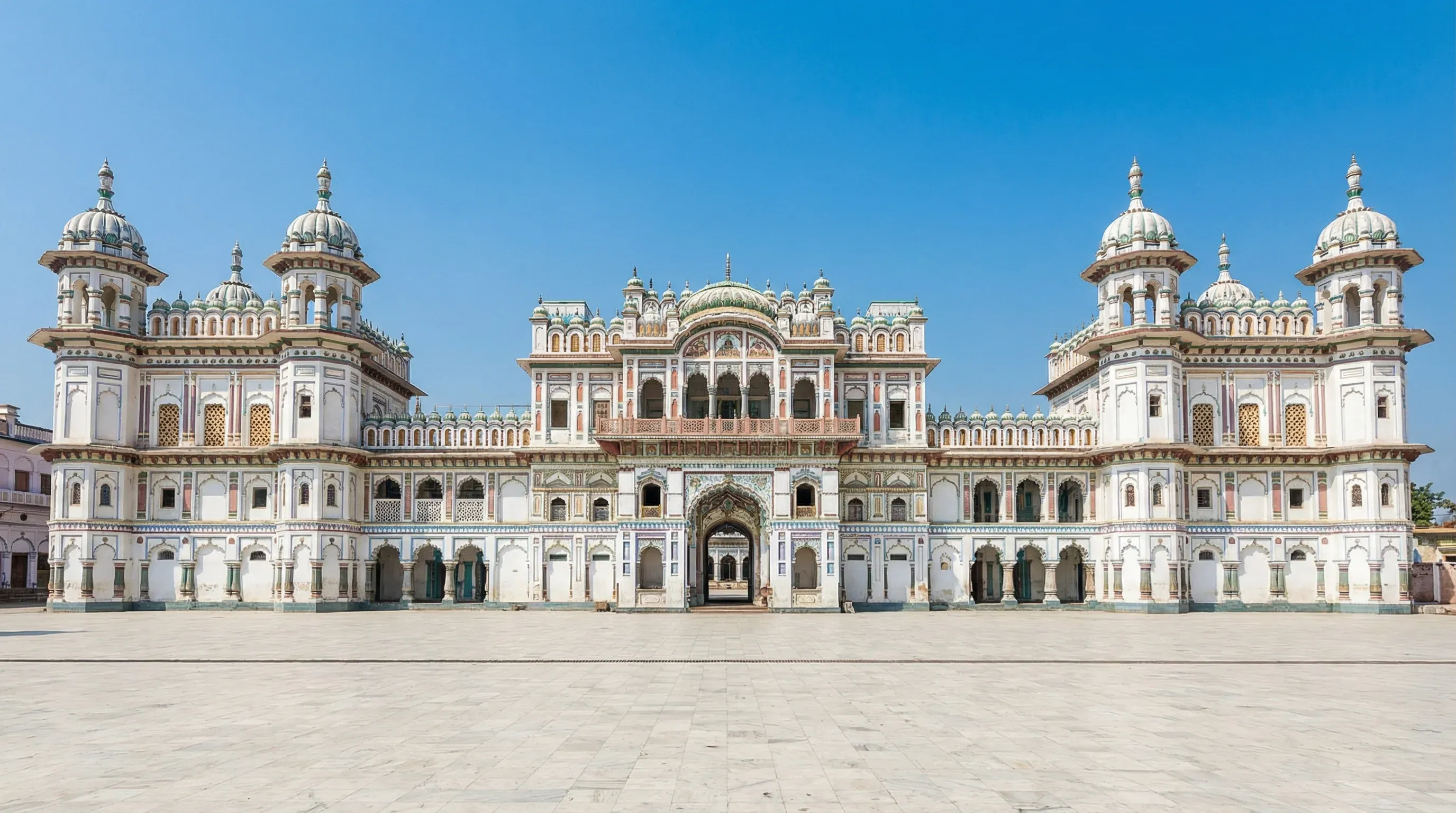
In the eastern Terai, the Janaki Mandir in Janakpur is a marvel of Mughal and Rajput architecture. Known as the Taj Mahal of Nepal, this bright white palace-temple is dedicated to Goddess Sita. The vibrant atmosphere, filled with pilgrims and chanting, is intense but captivating for older children interested in culture. If visiting in spring, the Holi (Festival of Colors) is celebrated here with extraordinary fervor, though families should participate with caution in crowds.
Practical Advice
The best time to visit is October to March when the weather is pleasant (60°F–75°F / 15°C–24°C). The summer months (April–June) are scorching hot, often exceeding 100°F (38°C), and the monsoon (July–September) brings leeches and floods. Malaria prophylaxis is generally recommended for the Terai; consult a travel doctor. Pack potent insect repellent and light, long-sleeved clothing.
Food & Drink
Typical meal times: Lunch is typically eaten between 11:00 am and 1:30 pm. Dinner is served early in safari lodges, usually from 7:00 pm to 9:00 pm.
Typical meal costs: A meal in a tourist lodge or decent restaurant costs NPR 600–1,200 (approx. $4.50–9.00 USD / €4.15–8.30 EUR). Local eateries are cheaper but require caution with hygiene.
Dietary requirements: Vegetarian food is the norm in many parts of the Terai. Dal Bhat (rice and lentils) is available everywhere. Safari lodges are well-versed in handling western palates and allergies.
Signature dishes:
- Tharu Snails (Ghonghi) – A traditional delicacy of the indigenous Tharu people, these water snails are cooked in flaxseed and spices.
- Bagiya – A steamed dumpling made of rice flour, filled with lentils and spices, distinct to the Tharu community.
- Tass – Spicy fried goat meat served with puffed rice and radish pickle, a popular snack in Chitwan towns.
Why this score?
Safaris in Chitwan and Bardia offer exciting wildlife encounters with rhinos and crocodiles, though the flat Terai terrain is less physically demanding than the Himalayas. Activities like dugout canoeing and jungle walks provide a moderate adventure level suitable for active families.
Why this score?
Medical facilities in the southern plains are limited to basic local hospitals in Bharatpur or small clinics near tourist hubs like Sauraha. Foreigners usually require transport back to Kathmandu for any specialized care or serious emergency procedures.
Why this score?
While it hosts the most popular national park in Nepal, visitor numbers are modest compared to global wildlife hubs. It attracts a mix of international safari-goers and significant numbers of regional pilgrims visiting Lumbini, the birthplace of Buddha.

The Terai is generally cheaper than Kathmandu or the trekking regions. A good quality family room in a safari lodge with a pool costs NPR 5,000–12,000 (approx. $37–90 USD / €35–85 EUR) per night. Safari packages including meals and activities offer great value. Local transport like rickshaws costs NPR 100–300 (approx. $0.75–2.25 USD / €0.70–2.10 EUR).
Family Travel Notice
Verify entry requirements for minors; children under five may be subject to different health screening protocols than adults.

Getting Here & Around
Getting Here
- Airports – Bharatpur Airport (BHR) serves Chitwan, while Gautam Buddha International Airport (BWA) in Bhairahawa serves Lumbini. Flights from Kathmandu take just 20–25 minutes.
- Bus – Tourist buses run daily from Kathmandu to Chitwan (Sauraha) and Lumbini. The journey is long, taking 6–9 hours due to road conditions, but follows the scenic Mahendra Highway (East-West Highway) for parts of the route.
- Private Car – Hiring a car with a driver is the most comfortable option for families, allowing stops for breaks and motion sickness management.
Getting Around
- Rickshaws – In towns like Sauraha and within the Lumbini Sacred Garden, cycle rickshaws are the standard and fun mode of transport for short distances.
- Jeep – Essential for entering Chitwan National Park. These must be booked through lodges or authorized operators.
- Walking – The flat terrain makes walking easy in towns, though not recommended in the deep jungle without a guide due to wildlife risks.
Nearby Airports (4 airports)
Bharatpur Airport
BHRBharatpur
Bhairahawa
BWABhairawa
Janakpur
JKRJanakpur
Simara
SIFSimara
View full flight map for Nepal →
Official Links

Packing List
Essential for spotting rhinos and birds from the back of a safari jeep.
The jungle lowlands have a high density of mosquitoes; dengue and malaria are risks.
Bright colors can startle wildlife during safaris; greens and browns are best.
Open-top jeep rides can be extremely dusty on dry dirt tracks.
Kathmandu's air quality can be very poor due to dust and vehicle emissions.
Hotel room gas heaters can sometimes be poorly ventilated; this adds a safety layer.
Street lighting is sporadic and power cuts still occur; essential for safety at night.
Tap water is unsafe. A filter bottle saves money and plastic waste compared to buying bottled water.
You must remove shoes at every temple and many restaurants; laces become tedious quickly.
Protects against dust on bumpy road trips and keeps you warm on morning treks.

Activities & Best Times

Hiking, wildlife, outdoor exploration, ecotourism
Home to world-class wildlife experiences in Chitwan and Bardia National Parks, famous for One-horned Rhinos and Bengal Tigers. Peak season occurs during the dry months when grass is cut (Jan-Mar) for optimal visibility, while the monsoon (Jun-Aug) brings flooding and limited park access.

Urban tourism, museums, historical sites, architecture
Features UNESCO World Heritage sites like Lumbini, the birthplace of Buddha, and the unique architecture of Janaki Mandir. Best visited in the cooler dry season; the summer heat (Apr-May) can be oppressive and the monsoon (Jun-Sep) disrupts travel and outdoor temple exploration.

Sport tourism, fitness activities, active recreation
Offers specialized active tourism including jungle trekking, canoeing on the Rapti River, and cycling loops through the Monastic Zone. Conditions are ideal when temperatures are moderate; high humidity and rain during the monsoon make active pursuits difficult and often hazardous.

Learning experiences, scientific sites, historical education
Notable for specialized conservation centers such as the Gharial and Crocodile Breeding Centers which provide unique scientific insights into Himalayan reptile conservation. These are typically secondary educational stops rather than standalone destination-level attractions for international travelers.

Events, celebrations, seasonal attractions
Host to significant cultural events like Holi in March and Buddha Jayanti in May, which attract spiritual and cultural travelers. While authentic and vibrant, the festival calendar is concentrated, and international family appeal is limited to specific high-event windows.

Scenic drives, countryside tours, route-based travel
The Mahendra Highway and Buddhist Circuit offer routes through the Terai's unique landscape, though road quality and safety standards are inconsistent for self-drive international families. Driving is most pleasant in winter; heat and monsoon rains create significant road hazards and poor visibility.

Amusement parks, family entertainment venues
Contains several regional water and amusement parks like Ocean Park that serve local families and regional tourists. While significant within Nepal, they lack the world-class infrastructure or unique themes required to be a primary motivator for international families.

Attractions (11 total)



Public Holidays & Calendar Next 12 months
Public holidays, festivals, cultural celebrations, and seasonal natural phenomena coming up in Chitwan & Terai over the next 12 months.
Loading holidays and events...

Travel Advisory
The majority of monitoring agencies advise travellers to exercise a high degree of caution or increased vigilance. While some agencies suggest reconsidering travel due to specific periods of unrest, the general consensus points to elevated risk requiring significant safety awareness.
Safety Topics
Traveller Advice (6 groups)

Monitor local news closely and maintain a high level of situational awareness. Avoid all political gatherings and ensure you have a comprehensive emergency departure plan.

Accessibility infrastructure is extremely limited in Nepal, especially in rural areas and mountainous terrain. Plan for significant mobility challenges.

Always trek with a reputable guide and never go alone. Ensure your insurance specifically covers high-altitude rescue and medical evacuation by helicopter.

Verify entry requirements for minors; children under five may be subject to different health screening protocols than adults.

While legal, public displays of affection may be met with disapproval due to traditional social values. Discretion is recommended.

Exercise significant caution as incidents of sexual harassment and assault have occurred. Avoid walking alone, especially after dark, and be cautious of unwanted attention.
Agency Summaries
While no general travel restriction is in place, visitors are warned of risks related to political protests and disruptions near the 2026 elections.
Avoid non-essential travel due to ongoing civil unrest and the substantial threat posed by natural disasters.
Travellers should remain highly vigilant due to an unstable political environment and security concerns that may shift rapidly.
Travel plans should be reconsidered because of potential civil unrest and violent demonstrations that have resulted in casualties.
High vigilance is recommended, particularly regarding personal safety, monsoon hazards, and the lack of a local Irish embassy.
Heightened safety awareness is necessary due to unpredictable security conditions and the potential for civil disturbance.
Information is provided for general guidance only and does not constitute travel, safety, medical, or legal advice. Conditions may change. Users are responsible for independently verifying information before travel.