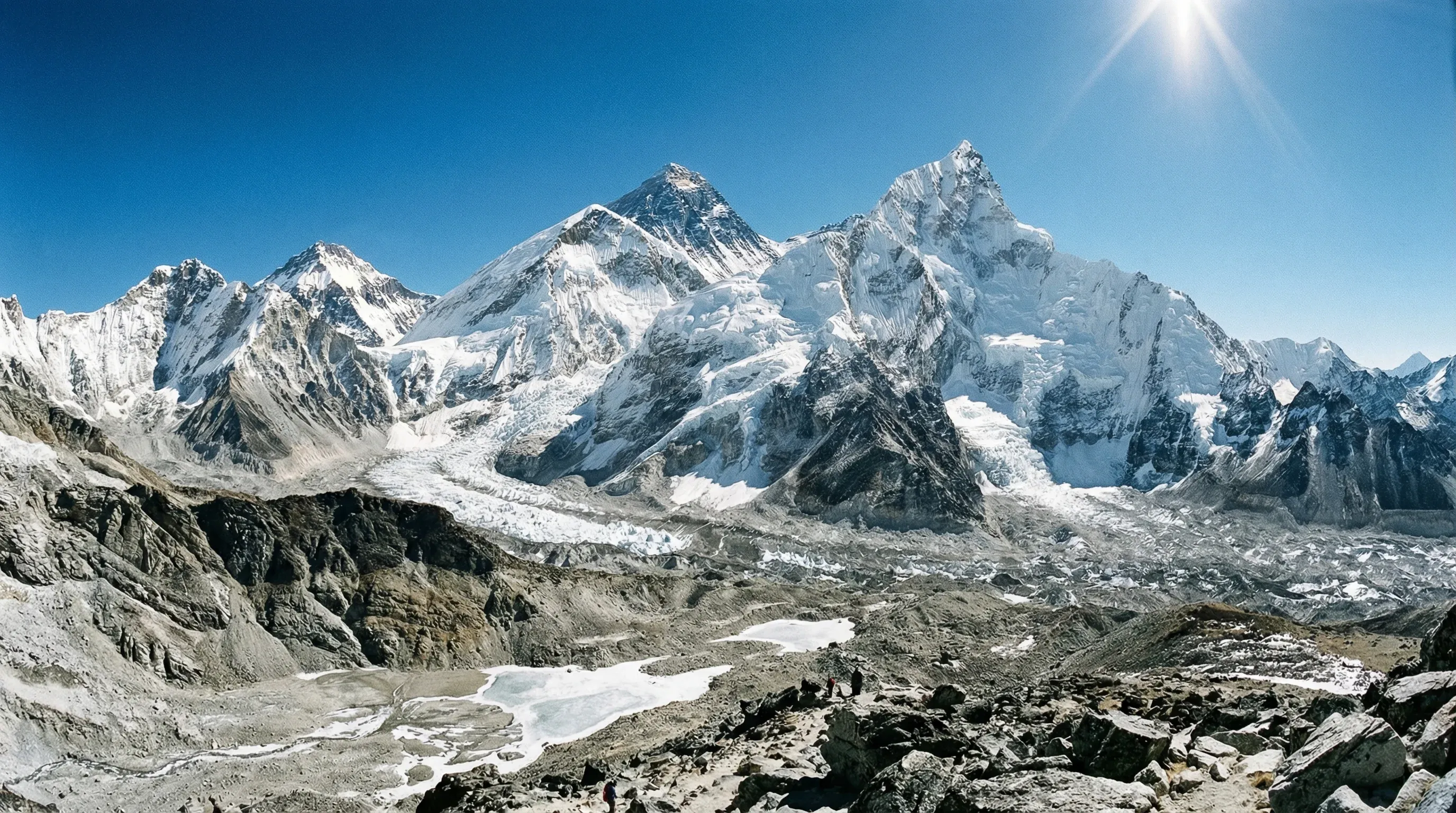

Everest Region (Solu Khumbu)
Adventure on the roof of the world 🏔️🇳🇵
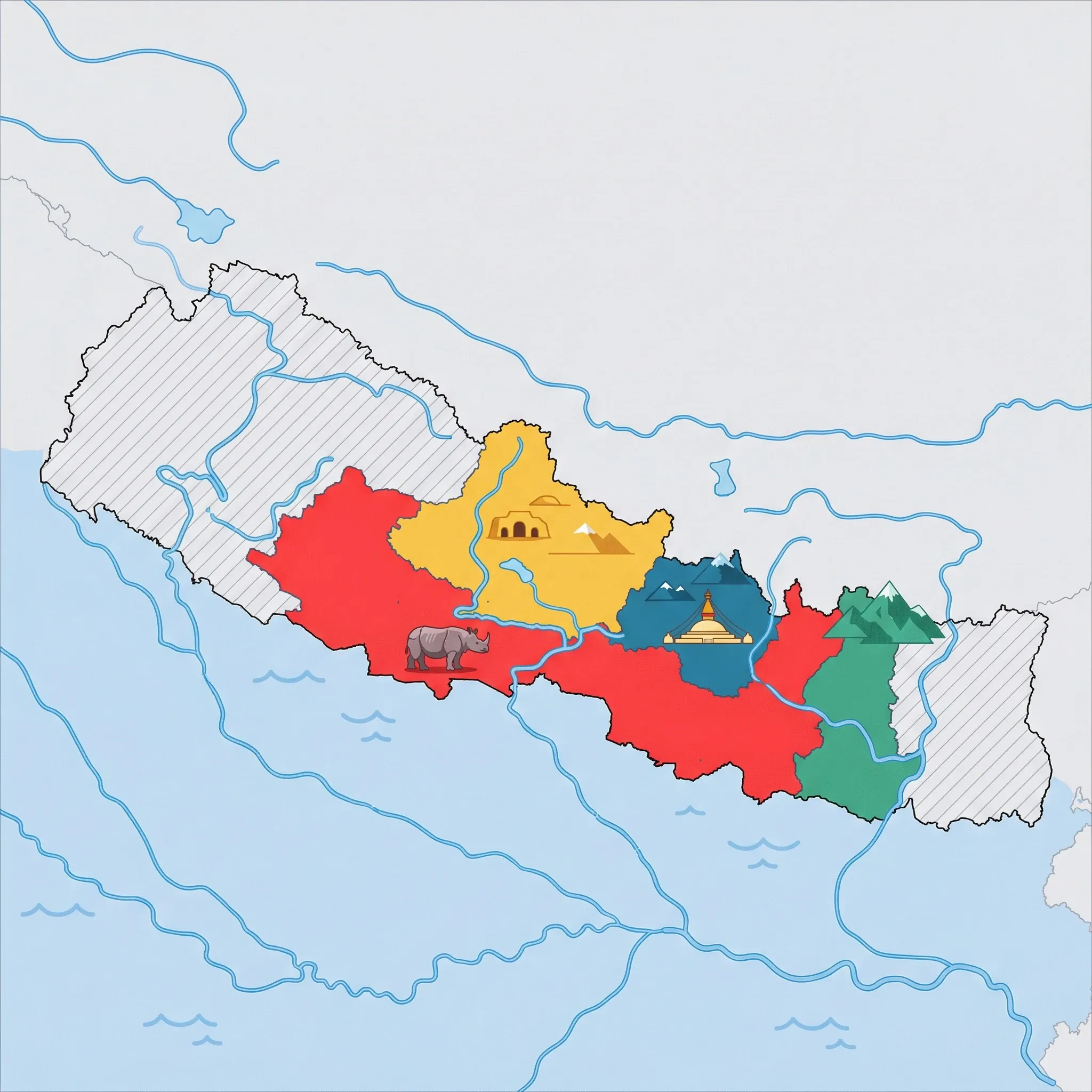
Click a region to explore
Overview
The Everest Region, or Solu Khumbu, is legendary not just for its peaks but for the vibrant Sherpa culture that thrives in this harsh environment. For active families, this is the ultimate classroom of geography and resilience. The air is crisp, the sky is often a piercing blue, and the landscape is dominated by snow-capped giants that make everything else feel small. While the famous Everest Base Camp Trek is strenuous and often too high for young children, the lower Khumbu valley offers incredible alternatives. Villages are connected by suspension bridges draped in prayer flags, and the sound of yak bells is the region's soundtrack.
Visiting here with children requires a shift in mindset. It isn't about conquering a summit; it's about the journey. The trail culture is warm and welcoming; teahouses (lodges) serve as communal living rooms where travelers from around the globe gather around yak-dung stoves. Children are treated with immense affection by local Sherpa families. The region allows families to disconnect from screens and reconnect with nature, spotting iridescent national birds, musk deer, and perhaps even hearing tales of the Yeti from a local monk.
Key Attractions
The journey often begins with the flight to Lukla, but the real heart of the region for families is Namche Bazaar. Shaped like a horseshoe bowl carved into the mountainside, this bustling market town is the capital of the Khumbu. It has bakeries, museums, and markets that delight kids. A short hike above the town offers the first clear view of Mount Everest and Lhotse.
Within the Sagarmatha National Park, families can take easier hikes to villages like Khumjung, home to a school founded by Sir Edmund Hillary and a monastery that claims to house a Yeti scalp. For fit families with older children (10+), the trek to Tengboche Monastery is a spiritual highlight. Seeing the monks blow traditional horns against the backdrop of Ama Dablam peak is a mesmerizing experience. The monastery is the spiritual center of the region and welcomes respectful visitors to observe ceremonies.
Practical Advice
Acclimatization is critical. Children are less able to communicate altitude sickness symptoms. It is generally advised not to take children under 7–8 above 3,500m (Namche altitude). The best seasons are pre-monsoon (March–May) for rhododendrons and post-monsoon (October–November) for clear views. Winter (December–February) is clear but dangerously cold for kids. Hiring a porter is essential to carry gear and occasionally carry tired younger children.
Food & Drink
Typical meal times: Trekkers eat early. Lunch is often 11:00 am to 12:30 pm during a trek stop. Dinner is strictly 6:30 pm to 7:30 pm, as everyone sleeps early.
Typical meal costs: Prices rise with altitude. A meal at Namche costs NPR 800–1,500 (approx. $6–11 USD / €5.50–10.50 EUR). Hot water and charging devices also cost extra.
Dietary requirements: Vegetarianism is widely practiced in the mountains. Meat is often carried up without refrigeration, so sticking to vegetarian options like Dal Bhat, pasta, and potatoes is safer and fresher.
Signature dishes:
- Sherpa Stew (Shakpa) – A hearty, thick soup with potato dumplings, radish, and vegetables, perfect for warming up after a hike.
- Riki Kur – A traditional Sherpa potato pancake served with yak butter and a spicy cheese sauce (somal).
- Yak Cheese – Locally produced hard cheese, often eaten as a high-energy snack on the trails.
Why this score?
This is one of the world's premier high-altitude adventure destinations, featuring extreme terrain and significant physical challenges like altitude sickness. Families must navigate steep trails, suspension bridges, and basic teahouse accommodations in a remote mountain environment.
Why this score?
Beyond small rescue clinics in Namche Bazaar and Pheriche, there is virtually no medical infrastructure in the high Khumbu valley. Critical illness or injury almost always necessitates expensive and weather-dependent helicopter evacuation to the capital for treatment.
Why this score?
Despite its status as a global icon, the region's annual visitor numbers are constrained by physical difficulty and the flight capacity of Lukla airport. It remains a niche destination for serious trekkers rather than a mass-market site like the Alps or Rockies.

Everything must be flown or carried up, making this the most expensive region in Nepal. Budget NPR 8,000–15,000 (approx. $60–115 USD / €55–105 EUR) per person per day. A cup of tea that costs NPR 50 in Kathmandu might cost NPR 250 in Namche. Flights to Lukla are approx. NPR 24,000–28,000 ($180–210 USD) per person each way.
Family Travel Notice
Verify entry requirements for minors; children under five may be subject to different health screening protocols than adults.

Getting Here & Around
Getting Here
- Airports – The flight from Kathmandu (KTM) or Ramechhap to Tenzing-Hillary Airport (LUA) in Lukla takes 30 minutes. It is a thrilling mountain flight essential for accessing the region quickly.
- Helicopter – For families with higher budgets or time constraints, chartering a helicopter to Shyangboche (above Namche) bypasses the hard walk up from Lukla.
- Driving – It is possible to drive to Phaplu or Salleri (8–10 hours from Kathmandu) and trek into the region, which helps with acclimatization but adds days to the trip.
Getting Around
- Walking – This is a vehicle-free zone. Your feet are the main transport. Trails are well-marked but can be steep and rocky.
- Animals – Zopkios (yak-cow hybrids) and horses are used for transport. Families can hire a horse for children who get tired on the uphill sections to Namche Bazaar.
- Porters – Hiring a local porter is standard practice; they carry your heavy bags (up to 20kg), leaving you free to walk with just a day pack.
Nearby Airports (3 airports)
Biratnagar
BIRBiratnagar
Rajbiraj Airport
RJBRajbiraj
Tumling Tar Airport
TMITumling Tar
View full flight map for Nepal →

Packing List
Crucial for monitoring oxygen levels in children to detect altitude sickness early.
Electricity is expensive and unreliable at high altitudes; charge devices by day.
Showers are expensive and cold; 'wet wipe showers' are the norm for days.
Evenings in teahouses are long with no TV/WiFi; classic games are essential for kids.
Kathmandu's air quality can be very poor due to dust and vehicle emissions.
Hotel room gas heaters can sometimes be poorly ventilated; this adds a safety layer.
Street lighting is sporadic and power cuts still occur; essential for safety at night.
Tap water is unsafe. A filter bottle saves money and plastic waste compared to buying bottled water.
You must remove shoes at every temple and many restaurants; laces become tedious quickly.
Protects against dust on bumpy road trips and keeps you warm on morning treks.

Activities & Best Times

Hiking, wildlife, outdoor exploration, ecotourism
As home to Mount Everest and Sagarmatha National Park, the region offers the world's most iconic high-altitude wilderness and trekking experiences. Peak months provide the stable weather and clear Himalayan views required for safe exploration, while the monsoon (June-Sept) brings significant visibility issues and safety risks.

Urban tourism, museums, historical sites, architecture
The region features unique high-altitude Sherpa culture centered around historic villages like Namche Bazaar and significant monastic sites such as Tengboche. These cultural experiences are most vibrant during the main trekking seasons when community life is active and monastery rituals are frequently accessible to international visitors.

Sport tourism, fitness activities, active recreation
Offers world-renowned trekking routes and mountaineering infrastructure, including internationally recognized base camps and organized trail systems. Activity is strictly seasonal due to high-altitude hazards; monsoon rain makes trails treacherous while deep winter temperatures in January are unsuitable for most family-oriented active travel.

Learning experiences, scientific sites, historical education
Dedicated facilities like Sagarmatha Next and the National Park Visitor Center provide high-quality insights into Himalayan ecology and sustainable tourism. These educational sites serve as meaningful secondary draws during the primary visiting windows but are difficult to access or have limited staffing during the off-season.

Events, celebrations, seasonal attractions
The internationally significant Mani Rimdu Festival at Tengboche Monastery is a major cultural event usually occurring in October or November. Other smaller cultural events like Buddha Jayanti in May provide additional seasonal interest, but the region lacks a year-round festival calendar.



Public Holidays & Calendar Next 12 months
Public holidays, festivals, cultural celebrations, and seasonal natural phenomena coming up in Everest Region (Solu Khumbu) over the next 12 months.
Loading holidays and events...

Travel Advisory
The majority of monitoring agencies advise travellers to exercise a high degree of caution or increased vigilance. While some agencies suggest reconsidering travel due to specific periods of unrest, the general consensus points to elevated risk requiring significant safety awareness.
Safety Topics
Traveller Advice (6 groups)

Monitor local news closely and maintain a high level of situational awareness. Avoid all political gatherings and ensure you have a comprehensive emergency departure plan.
Accessibility infrastructure is extremely limited in Nepal, especially in rural areas and mountainous terrain. Plan for significant mobility challenges.

Always trek with a reputable guide and never go alone. Ensure your insurance specifically covers high-altitude rescue and medical evacuation by helicopter.

Verify entry requirements for minors; children under five may be subject to different health screening protocols than adults.

While legal, public displays of affection may be met with disapproval due to traditional social values. Discretion is recommended.

Exercise significant caution as incidents of sexual harassment and assault have occurred. Avoid walking alone, especially after dark, and be cautious of unwanted attention.
Agency Summaries
While no general travel restriction is in place, visitors are warned of risks related to political protests and disruptions near the 2026 elections.
Avoid non-essential travel due to ongoing civil unrest and the substantial threat posed by natural disasters.
Travellers should remain highly vigilant due to an unstable political environment and security concerns that may shift rapidly.
Travel plans should be reconsidered because of potential civil unrest and violent demonstrations that have resulted in casualties.
High vigilance is recommended, particularly regarding personal safety, monsoon hazards, and the lack of a local Irish embassy.
Heightened safety awareness is necessary due to unpredictable security conditions and the potential for civil disturbance.
Information is provided for general guidance only and does not constitute travel, safety, medical, or legal advice. Conditions may change. Users are responsible for independently verifying information before travel.