
Kathmandu Valley & Langtang
City of temples and gateway to the mountains 🏯🐒
Click a region to explore
⚠️ SAFETY WARNING: Due to potential civil unrest and political volatility, government agencies (including CA, USA, UK, and AU) advise travelers to reconsider travel to the Kathmandu Valley during periods of instability. Demonstrations can occur near government buildings and can turn unpredictable. Travelers should exercise high vigilance in crowded tourist areas like Thamel and Durbar Squares due to pickpocketing. Families are strongly urged to consult their own government's official travel advisory before considering a trip, as circumstances and risk assessments vary.
Overview
The Kathmandu Valley is a living museum, a chaotic yet magical blend of medieval history and modern hustle. For families, it can be an intense sensory experience—the smell of incense, the sound of temple bells, and the vivid colors of street markets. It is a place where history isn't behind glass; kids can climb on ancient temple plinths, spin prayer wheels, and watch artisans carve wood just as they did centuries ago. The valley encompasses three royal cities: Kathmandu, Patan, and Bhaktapur, each with its own distinct character and Durbar Square (palace plaza).
Just a day's drive north lies Langtang, often called 'the valley of glaciers.' It offers a completely different vibe—serene, natural, and majestic. For families who want to experience the Himalayas without the dangerous flights or extreme altitudes of Everest, Langtang is the perfect compromise. The Tamang heritage trails here are culturally rich and geographically stunning, offering chances to spot red pandas and yaks in the wild.
Key Attractions
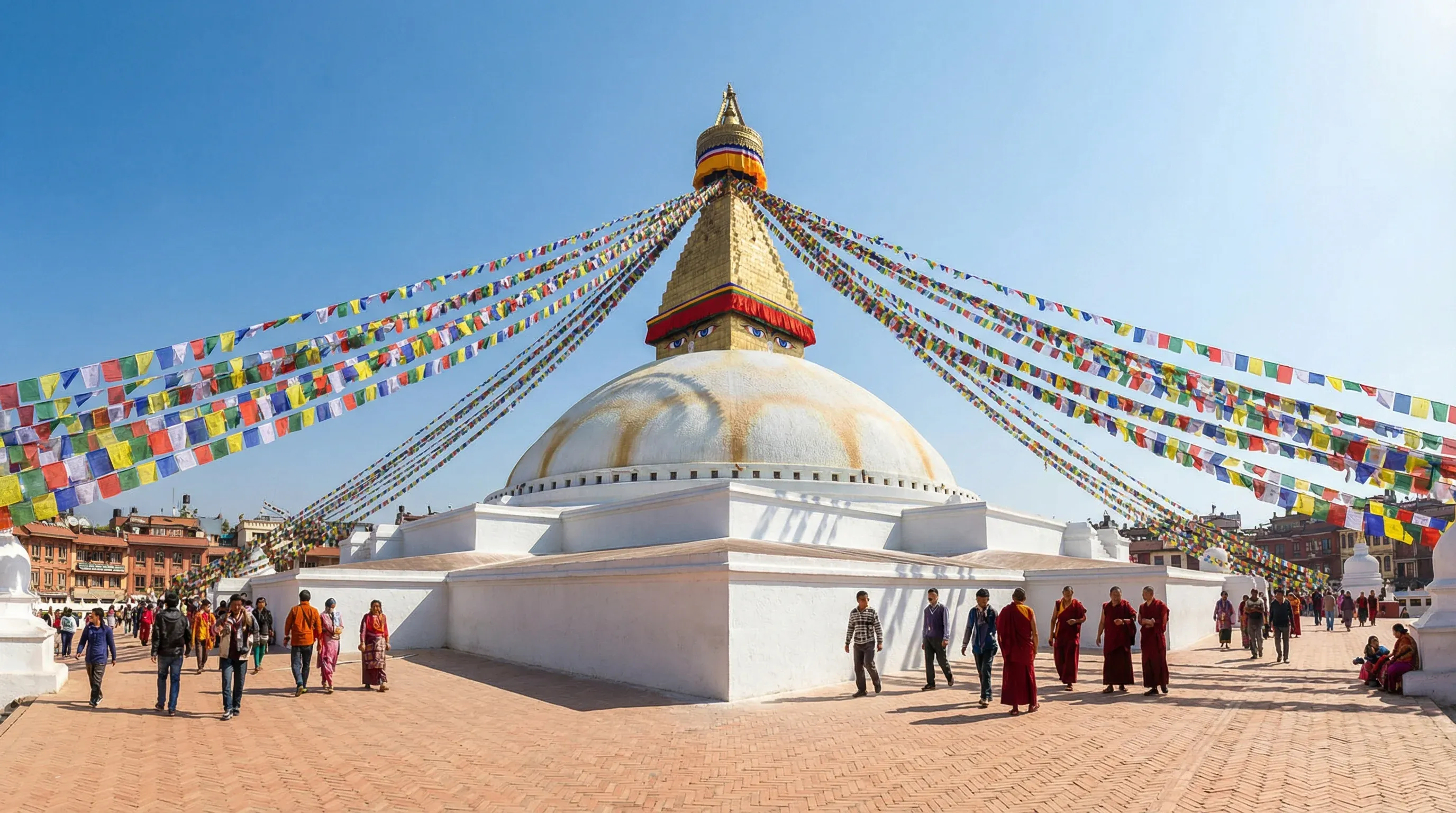
Within the city, Swayambhunath Stupa (Monkey Temple) is a guaranteed hit with children. Perched on a hill with panoramic views, it is home to hundreds of monkeys—fun to watch, but keep food hidden! Boudhanath Stupa is another icon; its massive white dome and watching eyes are mesmerizing. Families can join pilgrims circling the stupa at dusk when thousands of butter lamps are lit. For a break from the history, the Chandragiri Hills cable car offers a thrilling ride to a viewpoint where, on a clear day, you can see a panoramic sweep of the Himalayas.
In the medieval city of Bhaktapur, the Bhaktapur Durbar Square is a pedestrian-friendly zone (rare in Nepal) where kids can run relatively freely among temples and potters' squares. Nearby, the Central Zoo in Lalitpur, though simple, is the only place to see Nepal's wildlife if you aren't visiting the jungle regions. For nature lovers, Langtang National Park offers the chance to trek through rhododendron forests and eat locally made yak cheese.
Practical Advice
Pollution in Kathmandu can be severe. Bring N95 masks for the whole family, especially for auto-rickshaw rides. Traffic is chaotic; crossing streets requires confidence—hold hands tight. The best time for views is October–December. April is great for the Nepali New Year festivities. Tap water is unsafe; use bottled or treated water even for brushing teeth.
Food & Drink
Typical meal times: Lunch is 12:00 pm to 2:00 pm. Dinner is generally 7:00 pm to 9:00 pm, though tourist areas in Thamel serve until 10:00 pm.
Typical meal costs: A mid-range family meal in a nice restaurant costs NPR 2,000–4,000 (approx. $15–30 USD / €14–28 EUR). Street food is very cheap but risky for sensitive tummies.
Dietary requirements: Kathmandu is incredibly vegan/vegetarian friendly. You can find gluten-free options in Thamel cafes, but it's less understood in local eateries. Nut allergies should be clearly communicated.
Signature dishes:
- Momo – Steamed or fried dumplings filled with buffalo, chicken, or veggies. The unofficial national dish and a favorite for kids.
- Juju Dhau – "King Curd," a rich, creamy sweetened yogurt set in clay pots, famous in Bhaktapur.
- Yomari – A fish-shaped steamed dumpling made of rice flour with a sweet filling of molasses (chaku) or sesame, a Newari festival treat.
Why this score?
The region offers a mix of urban exploration and rugged mountain trekking in Langtang National Park. While the valley itself is densely developed, the nearby trails involve significant elevation gain and remote wilderness experiences through rhododendron forests.
Why this score?
Kathmandu hosts the country's most advanced medical facilities, including specialized clinics like CIWEC that cater specifically to the needs of international travelers. However, compared to global standards, these facilities remain basic and can be limited in terms of advanced technology and capacity.
Why this score?
As the primary international gateway, the valley receives the vast majority of Nepal's foreign visitors who come for its seven UNESCO World Heritage sites. The combination of cultural density in Bhaktapur and accessible trekking in Langtang makes it the country's most visited region.

Kathmandu fits all budgets. You can stay in a hostel for NPR 1,500 or a luxury heritage hotel for NPR 30,000. A comfortable family stay averages NPR 6,000–10,000 (approx. $45–75 USD / €42–70 EUR) per night. Entry fees for UNESCO sites like <a data-attraction-id="52860">Bhaktapur Durbar Square</a> are high for foreigners (approx. NPR 1,500–1,800 per person).
Family Travel Notice
Verify entry requirements for minors; children under five may be subject to different health screening protocols than adults.

Getting Here & Around
Getting Here
- Airports – Tribhuvan International Airport (KTM) is the country's only functional long-haul international hub. It is located just 20 minutes (without traffic) from the city center.
- Bus – Tourist buses connect Kathmandu to Pokhara and Chitwan. The main bus station is Gongabu, but tourist buses usually depart from Sorhakhutte near Thamel.
- Driving – The valley is the central hub of Nepal's road network. Private jeeps can be hired to reach the Langtang National Park trailhead at Syabrubesi (7–9 hours drive).
Getting Around
- Taxis & Ride-Sharing – Taxis are everywhere but require haggling. Apps like Pathao or InDrive are safer and cheaper options for families to get around the city.
- Walking – The old quarters of Asan and the Durbar Squares (Kathmandu Durbar Square, Patan Durbar Square) are best explored on foot, though sidewalks are often non-existent.
- Cable Car – The Chandragiri Hills cable car is a transport mode that doubles as a major attraction.
Nearby Airports (1 airport)
Tribhuvan International
KTMKathmandu
View full flight map for Nepal →
Official Links

Packing List
Kathmandu's dust and vehicle emissions are very high; essential for protecting children's lungs.
Water for washing is scarce in public areas; dusty railings and temples require frequent cleaning.
Street noise, barking dogs, and early morning temple bells can disturb sleep in the city.
You must remove shoes to enter any temple or monastery; laces become a hassle.
Kathmandu's air quality can be very poor due to dust and vehicle emissions.
Hotel room gas heaters can sometimes be poorly ventilated; this adds a safety layer.
Street lighting is sporadic and power cuts still occur; essential for safety at night.
Tap water is unsafe. A filter bottle saves money and plastic waste compared to buying bottled water.
Protects against dust on bumpy road trips and keeps you warm on morning treks.

Activities & Best Times

Hiking, wildlife, outdoor exploration, ecotourism
World-class Himalayan trekking and the Langtang Valley offer profound wilderness experiences with high authenticity for active families. Peak visibility and trail conditions occur in the clear post-monsoon and pre-monsoon windows, while the monsoon (June-August) brings safety risks and poor visibility.

Urban tourism, museums, historical sites, architecture
The three UNESCO Durbar Squares and major stupas provide an unrivaled concentration of living medieval history and world-class architectural heritage. Optimal conditions for walking tours are during the dry, temperate months of spring and autumn, with the heavy summer rains making urban exploration difficult.

Sport tourism, fitness activities, active recreation
Significant infrastructure for high-altitude trekking and adventure sports like paragliding and ziplining across the valley rim. Activity is most reliable during stable weather windows; the monsoon months are avoided due to trail conditions and clouds.

Spa retreats, wellness centers, peaceful getaways
Traditional hot springs like Tatopani and a strong spiritual retreat culture provide authentic wellness options. These experiences are most rewarding during the crisp, cooler winter months, while the hot, humid monsoon period is less conducive to thermal bathing.

Learning experiences, scientific sites, historical education
While the Natural History Museum and Planetarium offer local context, they are not destination-level educational draws for experienced travelers. Most educational engagement is secondary to the primary cultural sites and is best visited during the main tourist seasons.

Events, celebrations, seasonal attractions
Internationally recognized events like Holi and Maha Shivaratri offer intense cultural immersion, though they are limited to specific calendar dates. Peak visitation for these festivals occurs in February and March, providing a unique draw for families seeking authentic local traditions.

Scenic drives, countryside tours, route-based travel
While scenic routes exist, the compact valley geography and traffic congestion make this less of a road trip destination than other Nepalese regions. 'Marginal' better reflects the limited scale of driving routes compared to Pokhara-Mustang.

Amusement parks, family entertainment venues
Regional amusement and water parks exist but lack the international standards or unique character sought by sophisticated global travelers. Visitation peaks during warmer, dry months, avoiding the heavy precipitation of the monsoon.

Attractions (19 total)



Public Holidays & Calendar Next 12 months
Public holidays, festivals, cultural celebrations, and seasonal natural phenomena coming up in Kathmandu Valley & Langtang over the next 12 months.
Loading holidays and events...

Travel Advisory
The majority of monitoring agencies advise travellers to exercise a high degree of caution or increased vigilance. While some agencies suggest reconsidering travel due to specific periods of unrest, the general consensus points to elevated risk requiring significant safety awareness.
Safety Topics
Traveller Advice (6 groups)

Monitor local news closely and maintain a high level of situational awareness. Avoid all political gatherings and ensure you have a comprehensive emergency departure plan.

Accessibility infrastructure is extremely limited in Nepal, especially in rural areas and mountainous terrain. Plan for significant mobility challenges.

Always trek with a reputable guide and never go alone. Ensure your insurance specifically covers high-altitude rescue and medical evacuation by helicopter.

Verify entry requirements for minors; children under five may be subject to different health screening protocols than adults.

While legal, public displays of affection may be met with disapproval due to traditional social values. Discretion is recommended.

Exercise significant caution as incidents of sexual harassment and assault have occurred. Avoid walking alone, especially after dark, and be cautious of unwanted attention.
Agency Summaries
While no general travel restriction is in place, visitors are warned of risks related to political protests and disruptions near the 2026 elections.
Avoid non-essential travel due to ongoing civil unrest and the substantial threat posed by natural disasters.
Travellers should remain highly vigilant due to an unstable political environment and security concerns that may shift rapidly.
Travel plans should be reconsidered because of potential civil unrest and violent demonstrations that have resulted in casualties.
High vigilance is recommended, particularly regarding personal safety, monsoon hazards, and the lack of a local Irish embassy.
Heightened safety awareness is necessary due to unpredictable security conditions and the potential for civil disturbance.
Information is provided for general guidance only and does not constitute travel, safety, medical, or legal advice. Conditions may change. Users are responsible for independently verifying information before travel.