
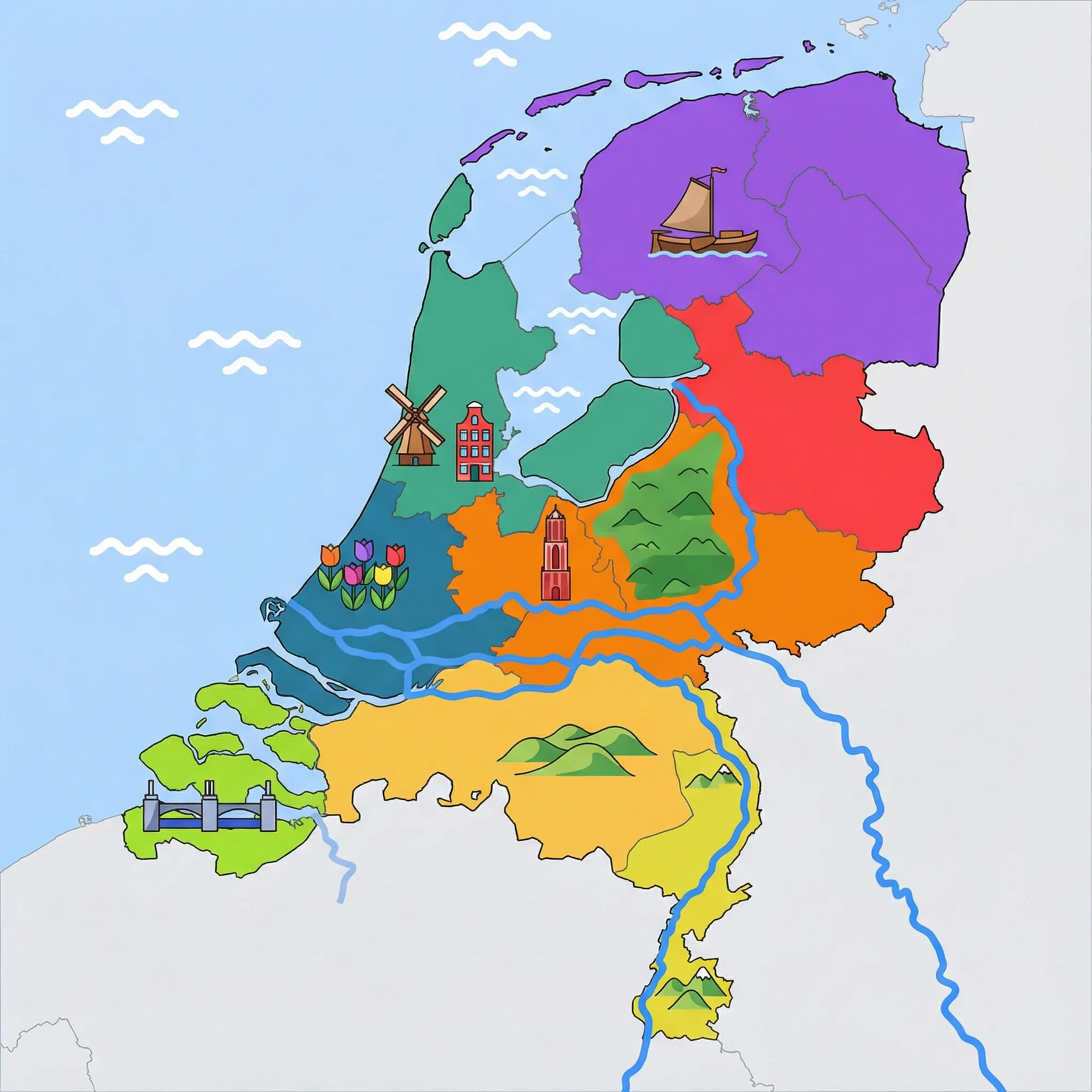
Click a region to explore
Overview
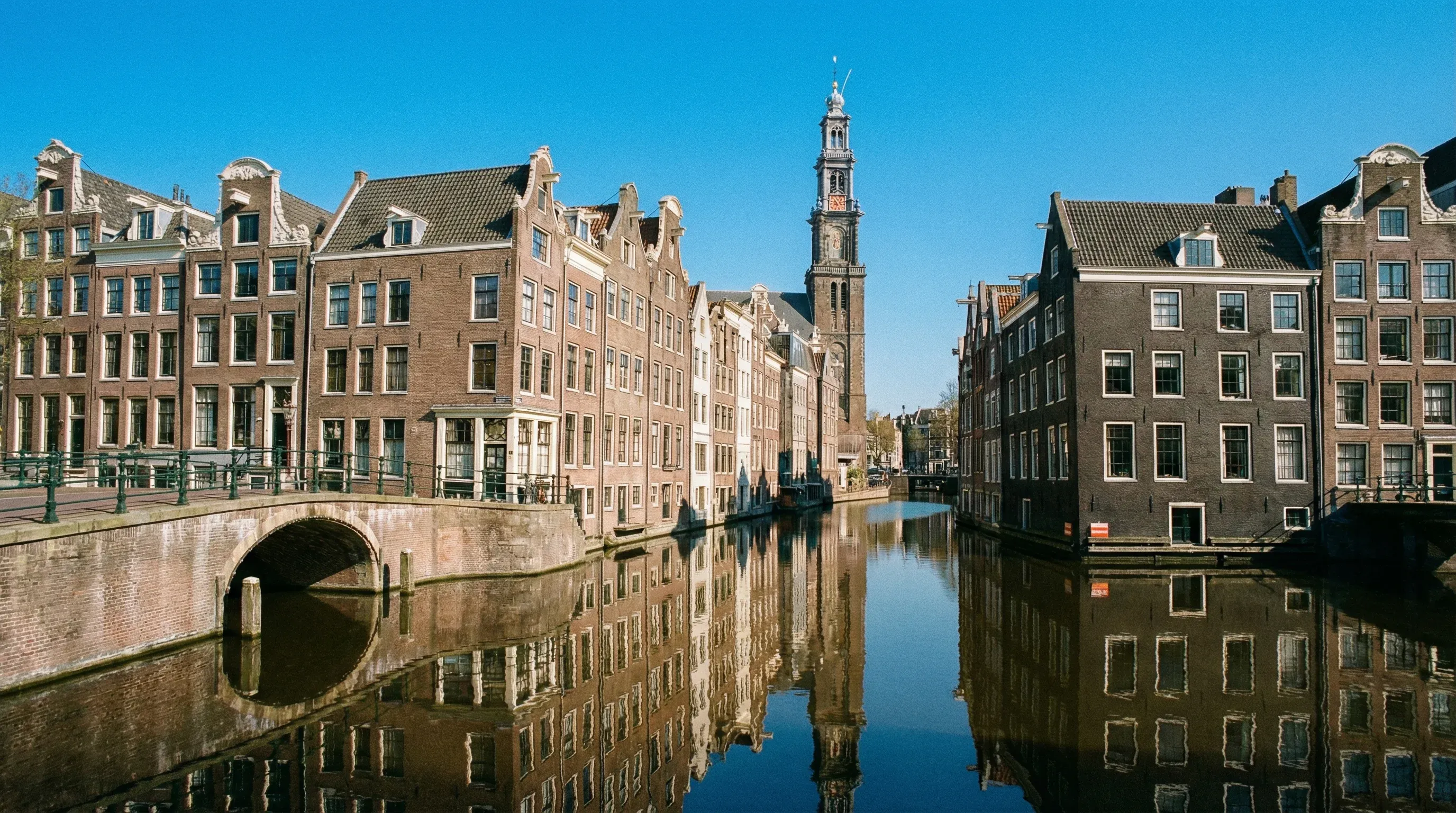
Amsterdam is often perceived as an adult playground, but scratch the surface and you find one of Europe's most child-friendly cities. Defined by its UNESCO-listed Canal Ring, the city is a compact, walkable (and bikeable) maze of narrow streets, humpback bridges, and gabled houses that look like they've been lifted from a storybook. For families, the geography of the city is an attraction in itself; taking a boat tour through the waterways offers a unique perspective that keeps children engaged without the fatigue of walking. The climate is maritime, meaning weather can change rapidly from bright sunshine to showers, but the city is well-equipped with world-class indoor attractions to handle the rain.
Beyond the historic center, the city opens up into green spaces and modern districts. The vibe here is gezellig—a Dutch quality translating to cozy, social, and pleasant. You'll see locals cargo-biking their children to school and picnicking in the parks. While the city center can be crowded with tourists, areas like the Plantage district (home to the zoo) or the Vondelpark offer breathing room. It is a city that balances profound history—visible in every brick—with a modern, playful spirit that welcomes young explorers. Whether you are navigating the Amstel River or exploring the quieter streets of the Jordaan, the city feels alive and accessible.
Key Attractions
Amsterdam boasts a density of museums and attractions that is hard to rival. For families, the absolute highlight is often the NEMO Science Museum. Rising like a green ship hull out of the water near Central Station, it is a hands-on wonderland where kids are encouraged to touch everything, exploring chemistry, physics, and engineering. Just a short tram ride away is ARTIS Amsterdam Royal Zoo, the oldest zoo in the Netherlands. It feels like a 19th-century park with its heritage buildings and ancient trees, yet it houses modern enclosures, a planetarium, and an aquarium that provide a full day of entertainment.
For a dose of history that resonates with older children and teens, the Anne Frank House is an essential, moving pilgrimage. It offers a tangible connection to the past that textbooks cannot match (booking weeks in advance is mandatory). If your family prefers art, the Rijksmuseum is surprisingly accessible, with special family quests that help kids hunt for details in the masterpieces. For outdoor energy burning, the Amsterdamse Bos on the city's edge is three times the size of New York's Central Park, featuring a goat farm where toddlers can feed animals, tree-top adventure courses, and miles of canoeing water.
Practical Advice
The best time to visit is late April to September, though accommodation prices peak then. April offers the chance to see tulips and experience King's Day (Koningsdag), a chaotic but fun city-wide street party. Avoid bringing a car into the city center; parking is extortionate and driving is stressful due to trams and cyclists. Instead, rely on the excellent public transport network.
Food & Drink
Typical meal times: Lunch is typically 12:00 pm to 2:00 pm. Dinner is eaten earlier than in southern Europe, usually 6:00 pm to 8:00 pm.
Typical meal costs: A mid-range dinner for a family of four costs approximately €80–130 (approx. $85–140 USD / £70–110 GBP).
Dietary requirements: Excellent. Amsterdam is very progressive regarding food; vegan, vegetarian, and gluten-free options are standard in most cafes and restaurants. Nut allergies are well-understood.
Signature dishes:
- Pannenkoeken – Large Dutch pancakes, similar to crêpes but thicker, topped with anything from bacon and cheese to apples and syrup.
- Stroopwafel – Two thin waffle cookies joined by a caramel filling, best eaten warm from a street market.
- Patatje Oorlog – "War fries," a cone of thick-cut fries topped with peanut satay sauce, mayonnaise, and raw onions.
- Haring (Herring) – Raw herring served with onions and pickles, a traditional snack often eaten by holding the fish by the tail (though served in a bun for beginners).
Why this score?
The city is an entirely flat, densely developed urban environment where the primary activities are walking, cycling on paved paths, and boat tours. It offers high-quality infrastructure and comfort, providing almost no rugged or off-the-beaten-path experiences for families.
Why this score?
Amsterdam features multiple world-class academic hospitals and specialized clinics with highly multilingual staff who are accustomed to treating international patients. Emergency services are extremely efficient, and the city's medical infrastructure is among the best in Western Europe.
Why this score?
As a top-tier international destination, Amsterdam attracts millions of visitors annually to its UNESCO-listed canal ring and world-renowned museums like the Rijksmuseum. It serves as the primary gateway to the Netherlands, consistently ranking alongside major global capitals for traveler interest.

Amsterdam is significantly more expensive than the rest of the Netherlands. Accommodation is the main budget-breaker, with family rooms often exceeding €250–350 (approx. $270–380 USD / £215–300 GBP) per night in peak season. Museum entry is also pricey, though the 'I amsterdam City Card' can offer savings if you visit multiple sites like <a data-attraction-id="45968">NEMO Science Museum</a>. Street food provides good value.

Getting Here & Around
Getting Here
- Airports – Amsterdam Airport Schiphol (AMS) is one of Europe's main hubs, located just 20 minutes by train from the city center.
- Train – Amsterdam Centraal Station is a major rail hub connecting directly to London (Eurostar), Paris, Brussels, and Berlin.
- Ferry – DFDS Seaways runs overnight ferries from Newcastle (UK) to IJmuiden, with a bus transfer to Amsterdam.
Getting Around
- Public Transport – The GVB network of trams, buses, and metros is excellent. Trams are the best way to see the city with kids; they are stroller-accessible and frequent.
- Cycling – The locals' preferred method. You can rent cargo bikes (bakfiets) to transport small children, but be aware that bike traffic is fast and aggressive in the center.
- Canal Boat – The "Canal Bus" hop-on-hop-off service stops near major museums like the Rijksmuseum and provides a scenic way to move between districts.
No airports in this region. See the country flight map for nearby connections.
Official Links

Packing List
Essential for securing strollers outside small shops or museums where buggies aren't allowed inside.
The city center can be surprisingly loud with tram bells, sirens, and construction noise.
If you plan to cycle, standard umbrellas are useless; rainlegs protect your thighs while riding.
Cobblestones in the historic center can be hard on feet and thin soles.
Locals cycle in all weather; these slip over regular clothes to keep you dry during sudden showers.
Some smaller grocery stores (Albert Heijn) and shops still do not accept non-EU credit cards.
Public toilets in train stations and department stores almost always charge a small entry fee.
Essential if renting a bike to keep the seat dry when parked outside in the damp Dutch climate.
Plastic bags are never free; shops charge for them and locals always carry their own shoppers.

Activities & Best Times

Urban tourism, museums, historical sites, architecture
Home to world-class institutions like the Rijksmuseum and Van Gogh Museum, Amsterdam offers an authentic canal-district heritage that is globally unique. Peak months coincide with tulip season, summer festivals, and December's light festival, while winter months can be damp and grey.

Hiking, wildlife, outdoor exploration, ecotourism
Extensive accessible nature reserves like Amsterdamse Bos and proximity to Zuid-Kennemerland NP provide high-quality family exploration on well-maintained trails. Optimal conditions occur during the milder, drier months from May to September, while winter weather limits outdoor immersion.

Events, celebrations, seasonal attractions
King's Day draws 1M+ visitors to Amsterdam annually and is internationally recognized. Canal Parade is a world-class LGBTQ+ event. Rating of 'marginal' is inconsistent with evidence citing 'world-class cultural events'.

Sport tourism, fitness activities, active recreation
The region features world-leading cycling infrastructure and high-quality adventure parks like Fun Forest, catering perfectly to active families. Visitation peaks in summer when daylight is long and conditions are dry, with many outdoor facilities scaling back in late autumn.

Learning experiences, scientific sites, historical education
NEMO Science Museum and Micropia are world-class, purpose-built educational facilities that serve as major standalone draws for families. As primary indoor activities, they are accessible year-round, with peak demand aligning with international school holiday windows.

Scenic drives, countryside tours, route-based travel
The Bollenstreek (Flower Route) is an internationally celebrated scenic drive, specifically for the spring tulip blooms. Outside of the peak spring window, the Waterland and Zuiderzee routes offer pleasant but less unique countryside touring.

Beach resorts, marine activities: diving, snorkelling, kite surfing, wind surfing, sailing
Urban beaches like Strand IJburg offer managed coastal recreation for locals, but lack the natural biodiversity and scale of international beach destinations. They are strictly summer-only locations, remaining largely inactive during the cold and windy Dutch winter.

Amusement parks, family entertainment venues
While featuring unique experiences like 'This is Holland', the region lacks a destination-level theme park that would motivate international travel on its own. These facilities are best enjoyed during peak summer when outdoor water parks and attractions are fully operational.

Attractions (21 total)



Public Holidays & Calendar Next 12 months
Public holidays, festivals, cultural celebrations, and seasonal natural phenomena coming up in Amsterdam over the next 12 months.
Loading holidays and events...

Travel Advisory
While the Netherlands is a safe destination, international agencies are split between standard precautions and elevated caution, primarily due to regional concerns regarding terrorism and urban petty crime.
Safety Topics
Traveller Advice (3 groups)

The Netherlands is highly progressive with strong legal protections; however, standard safety awareness is recommended as in any major international destination.

Personal safety risks are generally low, but travelers should exercise standard caution, especially when traveling alone at night or in less populated areas.

Maintain awareness of your surroundings in crowded tourist areas and on public transport. Always carry valid government-issued identification if you are over 14 years old.
Agency Summaries
While there are no travel restrictions, visitors should be aware of a high threat of terrorism and the risk of petty theft in major cities like Amsterdam.
Increased vigilance is recommended because terrorist organizations continue to plan potential attacks in the country targeting public areas and transportation hubs.
Travelers should remain very vigilant due to the persistent threat of terrorism. Petty crime like pickpocketing is a concern in urban centers and crowded areas.
Heightened vigilance is advised due to the security environment and the threat of terrorist activity. Petty crime is also frequently reported in public spaces.
The country is generally safe, though travelers should be alert to terrorism risks and safeguard belongings against common street crime in tourist hotspots.
Visitors should follow standard safety procedures as they would in any European destination. Be mindful of pickpockets in busy urban environments.
Information is provided for general guidance only and does not constitute travel, safety, medical, or legal advice. Conditions may change. Users are responsible for independently verifying information before travel.