
Limburg & South
Hills, caves, and three-country adventures ⛰️🏰🎢
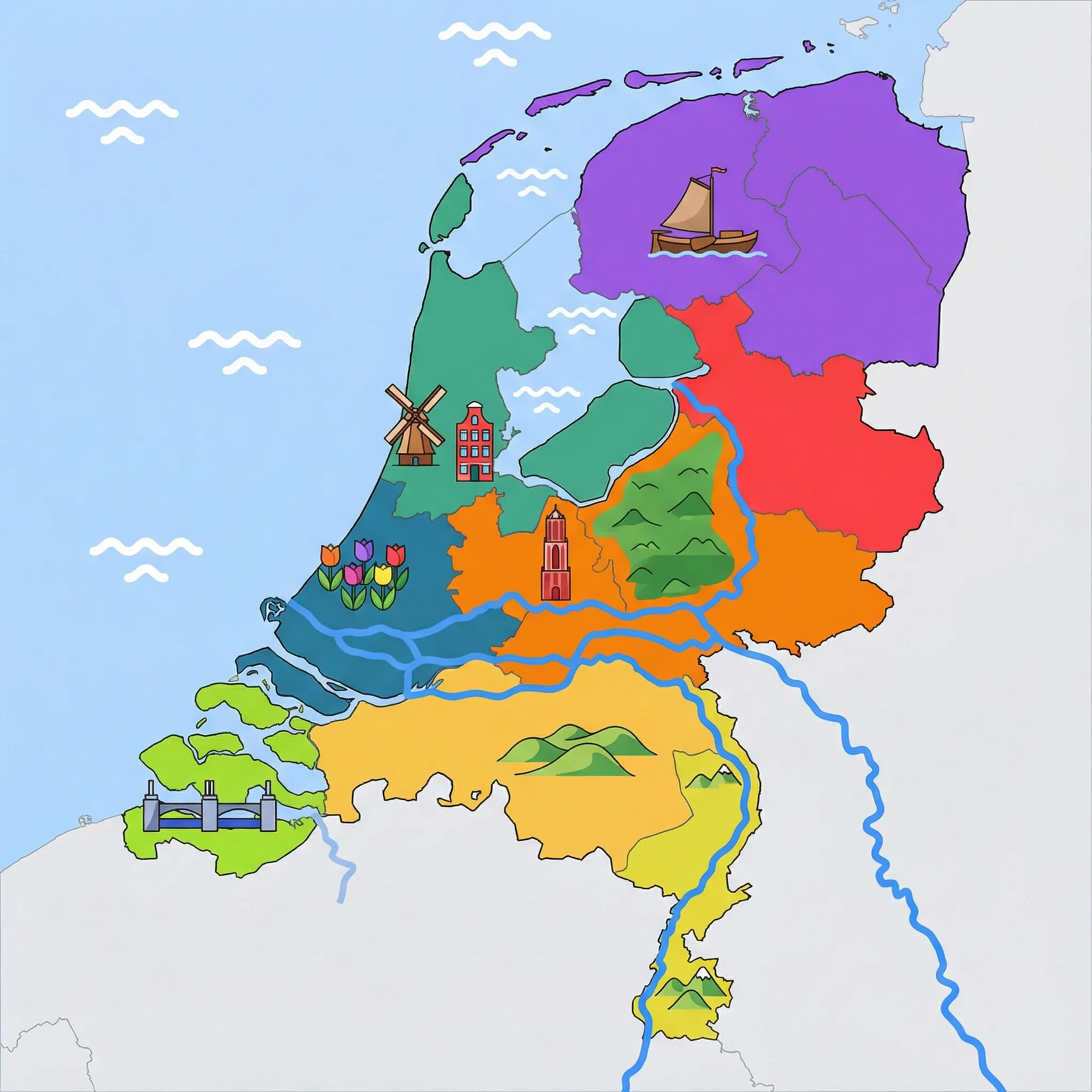
Click a region to explore
Overview
Limburg is the un-Dutch province. As you travel south, the flat polders give way to rolling green hills, timber-framed houses, and a landscape that feels more like the Ardennes or Eifel. For Dutch families, this is a holiday destination within their own country because it feels so different. The region revolves around the Meuse (Maas) river and is famous for its 'Burgundian' lifestyle—a love of good food, relaxation, and hospitality. For tourists, it offers a blend of outdoor activity and historical depth. The hills (though modest by global standards) provide excellent mountain biking and hiking challenges that you can't find elsewhere in the Netherlands.
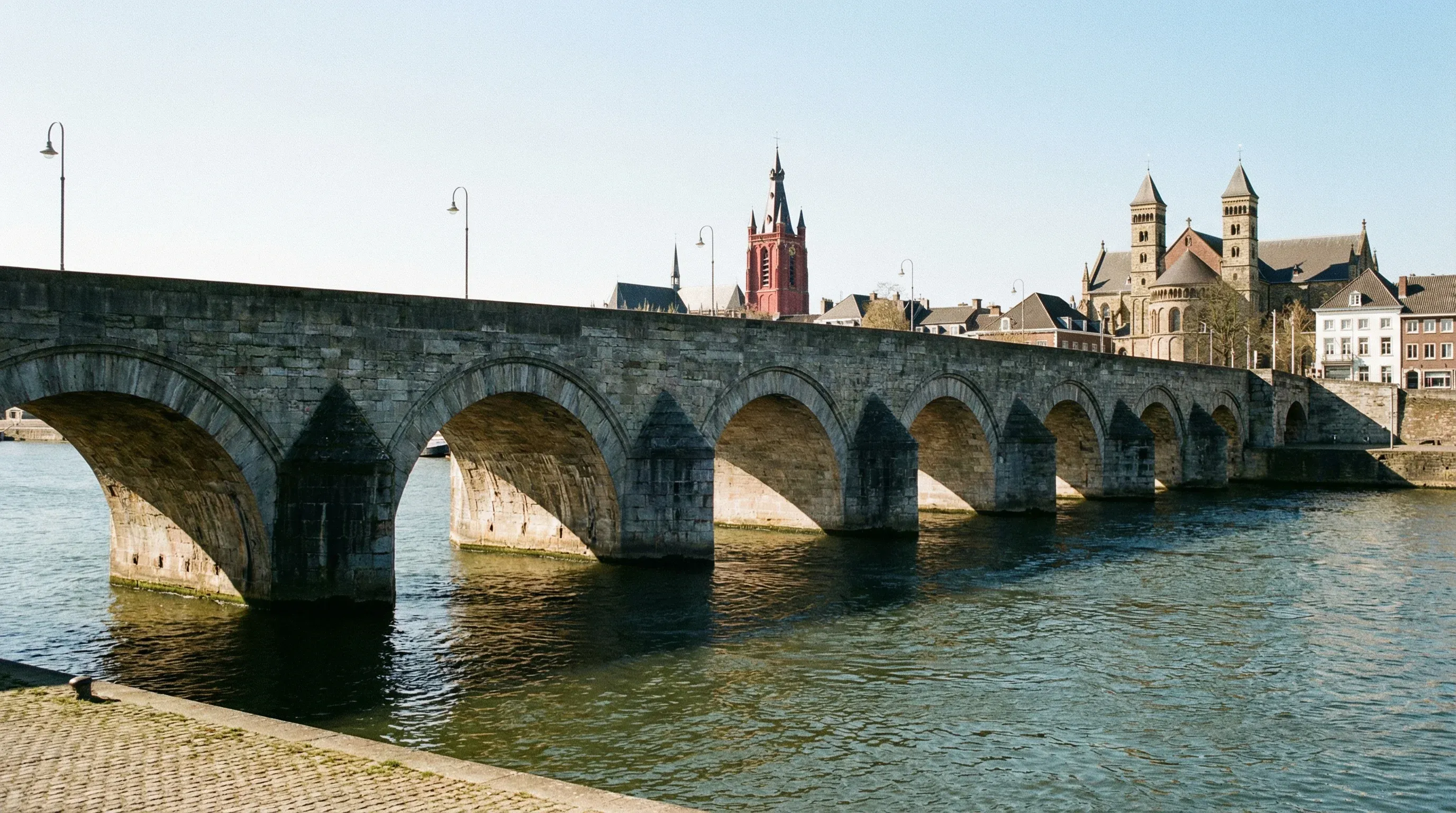
The south is also famous for its marlstone caves. Beneath towns like Valkenburg, miles of tunnels have been carved out over centuries, serving as mines, hideouts, and now attractions. This underground world is thrilling for children. Culturally, the influence of neighbors Belgium and Germany is strong, making it a true cross-border experience. You can cycle into Belgium for lunch and be back for dinner. The capital, Maastricht, is one of the oldest and most beautiful cities in the country, with cobbled streets and a vibrant atmosphere, yet small enough to be manageable with kids.
Key Attractions
The top draw for thrill-seeking families is undoubtedly Toverland. Unlike generic amusement parks, it is beautifully themed around magic and myths, with both massive indoor halls for rainy days and exciting outdoor coasters. For a literal high point, head to the Vaalserberg (Drielandenpunt). It is the highest point in the Netherlands and the spot where the Netherlands, Belgium, and Germany meet. Kids love the novelty of hopping between three countries in seconds, and there is a large labyrinth and playground right next to the marker.
History comes alive at Kasteel Hoensbroek, one of the largest castles in the country. It is exceptionally kid-friendly, with scavenger hunts and opportunities to dress up. For nature lovers, the National Park De Meinweg offers a chance to see vipers and boars in a terraced landscape. If you need relaxation, the Kasteeltuinen Arcen (Castle Gardens) are stunning, featuring a minigolf course and exciting events like elf fantasies that appeal to imaginative children.
Practical Advice
Limburg is a year-round destination. Valkenburg is famous for its Christmas markets held inside the caves, which is a magical family experience in December. The hills mean this is the one part of the Netherlands where cycling requires gears or an e-bike; it's not the flat pedaling found in Amsterdam.
Food & Drink
Typical meal times: Lunch 12:00 pm to 2:00 pm. Dinner is a lingering affair here, usually 6:00 pm to 8:30 pm.
Typical meal costs: Mid-to-high. Maastricht is chic and pricey. A family meal costs €70–110 (approx. $75–120 USD / £60–95 GBP).
Dietary requirements: Generally good, but the local cuisine is meat-heavy. In Maastricht, options are endless; in rural villages, check ahead for vegan options.
Signature dishes:
- Limburgse Vlaai – A fruit flan with a soft yeast dough base (not pastry), filled with cherries, apricots, or rice custard. A mandatory snack.
- Zoervleis – A sweet and sour beef (or horse) stew, traditionally marinated in vinegar and sweetened with apple syrup/gingerbread, served with fries.
- Asperges (White Gold) – In spring, white asparagus is the obsession here, usually served with ham, egg, and butter.
Why this score?
Limburg offers the most varied terrain in the country, featuring rolling hills, extensive cave networks in Valkenburg, and the highest peaks in the mainland. These features provide opportunities for mountain biking and underground exploration that are unique within the otherwise flat Dutch landscape.
Why this score?
The region is well-served by the Maastricht University Medical Center (MUMC+), which offers high-quality specialized care with a strong international focus. Medical facilities are modern and easily accessible, though response times in the more rural hilly areas can be slightly longer than in the major urban hubs.
Why this score?
Maastricht and the surrounding hills attract a steady flow of international visitors, particularly from neighboring Belgium and Germany. The region is well-recognized for its distinct culture and history, although it does not reach the massive global visitor counts of the coastal cities.

Prices vary. Maastricht is comparable to Amsterdam (expensive), but rural Limburg is good value. Hotel prices range from €100–160 (approx. $108–173 USD / £85–136 GBP). The region has many high-quality holiday parks (bungalow parks) which offer budget-friendly self-catering options for families.

Getting Here & Around
Getting Here
- Airports – Maastricht Aachen Airport (MST) is small. Most travelers fly to Brussels (BRU) or Düsseldorf (DUS), both less than an hour away by car.
- Train – Maastricht has excellent rail connections. The journey from Amsterdam takes about 2.5 hours.
- Driving – The A2 motorway runs top-to-bottom through the country, ending in Limburg. It's the main artery for reaching Kasteel Hoensbroek and the hills.
Getting Around
- Car – Recommended for exploring the countryside and reaching the Drielandenpunt easily.
- Train & Bus – Arriva operates the regional transport. The 'Heuvelland' buses wind through the scenic villages.
- Cycling – Challenging but rewarding. The Dutch Mountain Trail is a hiking route that showcases the steepest parts, but family cycling routes exist in the valleys.
Nearby Airports (2 airports)
Eindhoven Airport
EINEindhoven
Maastricht
MSTMaastricht
View full flight map for Netherlands →
Official Links

Packing List
The marl caves (Valkenburg) stay at a constant 12°C (53°F) year-round; it's cold underground even in summer.
Unlike the rest of NL, you will encounter actual mud, slopes, and rocky paths here.
If driving into Belgium or Germany (which you likely will), safety kit requirements differ from NL.
Locals cycle in all weather; these slip over regular clothes to keep you dry during sudden showers.
Some smaller grocery stores (Albert Heijn) and shops still do not accept non-EU credit cards.
Public toilets in train stations and department stores almost always charge a small entry fee.
Essential if renting a bike to keep the seat dry when parked outside in the damp Dutch climate.
Plastic bags are never free; shops charge for them and locals always carry their own shoppers.

Activities & Best Times

Hiking, wildlife, outdoor exploration, ecotourism
Featuring the Heuvelland and multiple National Parks, the region offers unique landscapes for the Netherlands, ideal for high-quality hiking and nature exploration. Trails are at their most beautiful and accessible from late spring through early autumn.

Urban tourism, museums, historical sites, architecture
Maastricht is a sophisticated cultural hub with world-class museums like the Bonnefanten and a historic atmosphere that appeals to refined travelers. The peak season includes the mild summer months and the unique festive atmosphere of Valkenburg's Christmas period.

Events, celebrations, seasonal attractions
TEFAF Maastricht is the world's leading art fair, and Pinkpop is one of Europe's oldest rock festivals with 60k+ visitors. Both draw international audiences. Evidence states they 'draw international audiences' - clearly 'very_good' not 'marginal'.

Sport tourism, fitness activities, active recreation
With specialized infrastructure like the Dutch Mountain Trail and world-class climbing facilities, the region is a premier destination for active families. The best conditions for cycling and outdoor adventure activities occur during the stable, warmer weather of the late spring and summer.
Amusement parks, family entertainment venues
Toverland is an award-winning, internationally recognized theme park that offers immersive experiences for all ages. Peak visitation correlates with major European school holiday windows and the summer season when outdoor attractions are most enjoyable.

Learning experiences, scientific sites, historical education
Leading institutions like the Discovery Museum offer internationally significant interactive learning, serving as primary destinations for curious families. Peak visitation aligns with school holiday periods throughout the year, providing high-quality indoor engagement.

Spa retreats, wellness centers, peaceful getaways
Valkenburg is an established center for spa culture with major thermal complexes like Thermae 2000 utilizing local mineral springs. The wellness season peaks during the colder months when thermal treatments are most restorative for international visitors.

Scenic drives, countryside tours, route-based travel
The Mergellandroute is a celebrated scenic drive through rolling hills and orchards, unique to the Dutch landscape. The route is best experienced from May to September for optimal visibility and picturesque scenery.
Beach resorts, marine activities: diving, snorkelling, kite surfing, wind surfing, sailing
Inland leisure beaches and lake resorts provide regional recreation during the height of summer, though they lack the scale and biodiversity of international coastal destinations. The experience is limited to the warmest months when water temperatures are suitable for swimming.

Attractions (26 total)



Public Holidays & Calendar Next 12 months
Public holidays, festivals, cultural celebrations, and seasonal natural phenomena coming up in Limburg & South over the next 12 months.
Loading holidays and events...

Travel Advisory
While the Netherlands is a safe destination, international agencies are split between standard precautions and elevated caution, primarily due to regional concerns regarding terrorism and urban petty crime.
Safety Topics
Traveller Advice (3 groups)

The Netherlands is highly progressive with strong legal protections; however, standard safety awareness is recommended as in any major international destination.

Personal safety risks are generally low, but travelers should exercise standard caution, especially when traveling alone at night or in less populated areas.

Maintain awareness of your surroundings in crowded tourist areas and on public transport. Always carry valid government-issued identification if you are over 14 years old.
Agency Summaries
While there are no travel restrictions, visitors should be aware of a high threat of terrorism and the risk of petty theft in major cities like Amsterdam.
Increased vigilance is recommended because terrorist organizations continue to plan potential attacks in the country targeting public areas and transportation hubs.
Travelers should remain very vigilant due to the persistent threat of terrorism. Petty crime like pickpocketing is a concern in urban centers and crowded areas.
Heightened vigilance is advised due to the security environment and the threat of terrorist activity. Petty crime is also frequently reported in public spaces.
The country is generally safe, though travelers should be alert to terrorism risks and safeguard belongings against common street crime in tourist hotspots.
Visitors should follow standard safety procedures as they would in any European destination. Be mindful of pickpockets in busy urban environments.
Information is provided for general guidance only and does not constitute travel, safety, medical, or legal advice. Conditions may change. Users are responsible for independently verifying information before travel.