

Overview
New Caledonia is a striking mosaic of cultures and landscapes, floating in the Coral Sea. For families, it offers a fascinating duality: you can eat fresh croissants and speak French in the morning, then immerse yourself in ancient Kanak tribal traditions by the afternoon. The main island, Grande Terre, is anchored by the cosmopolitan capital, Nouméa, often called the "Paris of the Pacific." Beyond the city, the landscape shifts from red earth outback to lush rainforests, all encircled by a UNESCO World Heritage-listed lagoon that is teeming with gentle marine life perfect for young snorkellers.
The pace of life here is relaxed but structured, heavily influenced by metropolitan France. Families will appreciate the high standards of hygiene, modern infrastructure, and excellent healthcare, which make travelling with children less stressful than in more rugged Pacific destinations. However, the cultural experience is distinctively Oceanic. Children will love the warm hospitality of the Kanak people, the thrill of boat trips to tiny islets, and the endless opportunities to swim in calm, turquoise waters that feel like a giant natural swimming pool.
Key Attractions
Most family adventures begin in Nouméa & Grande Terre South. A mandatory stop for kids is the Aquarium des Lagons Nouvelle-Calédonie, renowned for its fluorescent corals and outdoor turtle pool. Just a short boat ride away lies the Amedee Islet, a protected marine reserve where families can swim alongside green sea turtles in shallow water. The islet is dominated by the historic Amédée Lighthouse; climbing its cast-iron spiral staircase rewards you with panoramic views of the reef.
For a dose of culture, the Jean-Marie Tjibaou Cultural Centre is visually spectacular and educational. Its soaring wooden structures, designed by Renzo Piano, house interactive exhibits explaining Kanak myths and traditions in a way that engages younger visitors. Venturing further afield to Grande Terre North offers wilder landscapes. The iconic Heart of Voh (Cœur de Voh)-a natural heart shape formed in the mangroves-is best seen by a scenic microlight flight, a thrilling treat for older children.
Beyond the main island, the Isle of Pines is famous for its "natural swimming pool" (Piscine Naturelle), a calm, fish-filled enclosure perfect for toddlers. Meanwhile, the Loyalty Islands (Lifou, Maré, Ouvéa) offer pristine white sands and opportunities to stay in traditional tribal huts for a deeper cultural immersion.
Practical Advice
Best time to visit: The cooler, drier months from May to October are ideal for families, avoiding the hot, humid cyclone season (November to April). September and October offer a sweet spot of pleasant warmth and lower rainfall.
Language: French is the official language. While English is spoken in major tourist hubs, it is less common in rural areas. Learning a few basic phrases like bonjour (hello) and merci (thank you) is polite and appreciated.
Safety
Due to the 2024 civil unrest, safety situations can change. Stick to main tourist routes and avoid the outskirts of Nouméa (such as Saint-Louis) where road blockades have occurred. Monitor local media for curfew announcements, which may restrict movement after 8:00 pm or 10:00 pm. Petty crime can occur; never leave valuables in rental cars.
Food & Drink
Typical meal times: Lunch is strictly 11:30 am to 1:30 pm, and many kitchens close promptly. Dinner is typically 7:00 pm to 9:00 pm.
Typical meal costs: Main dishes range from 2,500–4,500 XPF (approx. $23–41 USD / €21–38 EUR). A casual bakery lunch might cost 800–1,500 XPF (approx. $7–14 USD / €6.50–12.50 EUR).
Dietary requirements: Vegetarian options are available in Nouméa but can be limited in rural tribal stays. Gluten-free awareness is growing but not ubiquitous; "sans gluten" is the phrase to use. Seafood is a staple, so shellfish allergy sufferers must be vigilant.
Family-friendly dining: French culture welcomes children, but expects well-behaved dining. Highchairs are common in resorts but rare in small local eateries. Snacks (roadside stalls) offer affordable burgers and toasted sandwiches (croque-monsieurs) that kids usually enjoy.
Signature dishes:
- Bougna – A traditional Kanak feast of chicken, fish, or lobster wrapped in banana leaves with yams, taro, and coconut milk, then slow-cooked in an earth oven.
- Crevettes Bleues (Blue Prawns) – A local delicacy known for its sweet, delicate flavour, often served grilled or in a tartare.
- Civet de Cerf (Venison Stew) – Wild deer is abundant here; this rich, hearty stew is a countryside staple that tastes similar to beef.
- Poé – A sweet, sticky pudding made from pumpkin or banana and tapioca, served with coconut cream-a hit with children.

New Caledonia is an expensive destination, comparable to France or Australia. A family of four should budget roughly 50,000–70,000 XPF (approx. $450–630 USD / €415–580 EUR) per day for mid-range accommodation, car hire, and restaurant meals. Supermarket food is pricey due to imports, but baguettes and cheeses offer a cheaper lunch option.
Age Suitability




Did you know? New Caledonia welcomes approximately 59,000 international visitors per year. Most visitors come from East Asia and the Pacific.
Explore Regions
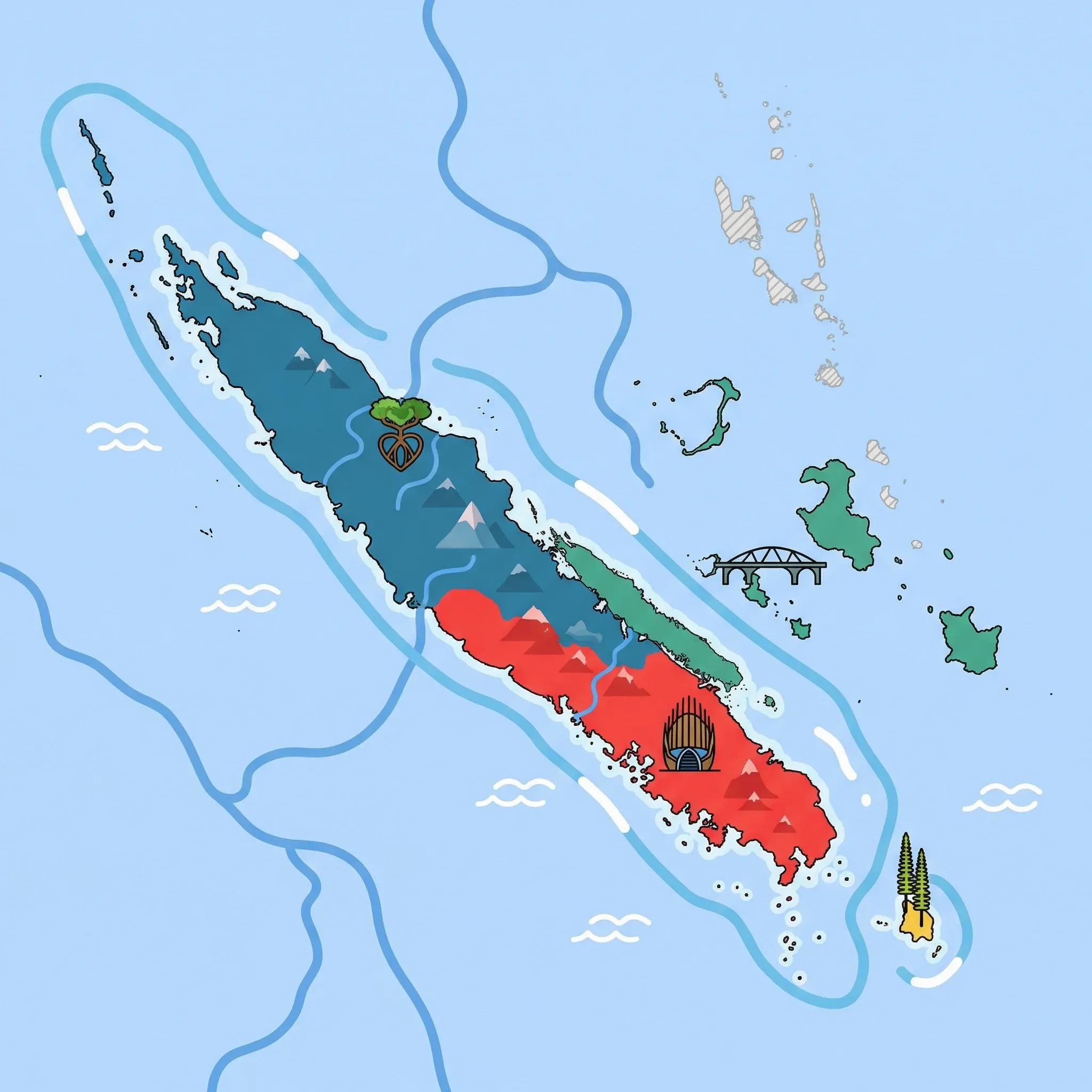
4 Regions
Grande Terre North
Cowboys, red earth, and emerald lagoons 🤠🌿
Isle of Pines
Turquoise waters meets ancient pines 🌲💎
Loyalty Islands (Lifou, Maré, Ouvéa)
Tribal culture on pristine atolls 🌺🐚
Nouméa & Grande Terre South
A slice of France in the tropics 🥐🏝️
Click on a region marker to explore details. Use the dropdown to color regions by activity suitability.

Getting There & Around
Getting There
- By Air – La Tontouta International Airport (NOU) is the main gateway, located 45 minutes from Nouméa. Aircalin and Qantas operate direct flights from Australia, New Zealand, Japan, and Singapore.
- By Sea – Cruise ships frequently dock in Nouméa, offering day trips to attractions like Amedee Islet.
- Entry Requirements – New Caledonia is a French overseas territory. EU citizens can enter freely. Citizens of the US, Australia, NZ, and Canada generally do not need a visa for stays up to 90 days. Check your government website for the latest visa requirements, or use the IATA Travel Centre entry-requirements checker.
Getting Around
- Car Hire – Essential for exploring Nouméa & Grande Terre South and the north. Driving is on the right-hand side. Roads are generally good, but caution is needed on winding mountain passes.
- Domestic Flights – Air Calédonie connects the mainland to the Isle of Pines and Loyalty Islands. Flights are short (20–40 mins) but can be expensive; book well in advance.
- Ferries – The Betico high-speed ferry is a more affordable family option for reaching the islands. It takes 2.5 hours to the Isle of Pines. Sea sickness tablets are recommended for children.
- Tchou Tchou Train – In Nouméa, this tourist road-train is a fun, stress-free way for younger children to see the city bays without walking too far.

Packing List
Essential for protecting feet from sharp coral and stonefish in the lagoon.
Outlets differ from Australia/NZ/US; a multi-plug strip is useful for charging family devices.
Strictly required to protect the delicate coral ecosystems in the marine reserves.
Dengue fever is a risk; strong repellent is necessary for evenings.
Keep electronics and clothes dry during frequent small boat transfers to islets.
Required for 'Coutume' (customary small gifts) if visiting tribal areas or local markets.

Activities & Best Times

Adventure & Nature
Very GoodHiking, wildlife, outdoor exploration, ecotourism
Home to the GR Nord and the iconic Heart of Voh, this region offers rugged, authentic wilderness and endemic biodiversity in the Mont Panié range. Peak months provide the cool, dry conditions necessary for multi-day trekking and safe exploration of the Koumac Caves.
Features the unique red-earth landscapes of the South and Blue River Provincial Park, home to the endemic Cagou bird and the iconic drowned forest. The dry, cool season from July to October is essential for exploring wilderness trails safely and comfortably.
Features unique endemic Araucaria pines and the iconic Pic N'Ga volcanic peak. The cooler, drier months from May to November provide ideal conditions for exploring forest trails and the natural aquarium.
Beach & Sea
Very GoodBeach resorts, marine activities: diving, snorkelling, kite surfing, wind surfing, sailing
Kuto and Kanumera are internationally renowned white sand beaches featured in global travel media. This is a signature beach destination of New Caledonia and deserves 'very_good' rating.
Description states 'some of the world's most pristine white sands' - this language indicates internationally outstanding beach quality. Mouly Beach is globally recognized. Rating should be 'very_good'.
Hienghène's spectacular limestone formations and the Tiéti coastline provide stunning, uncrowded marine experiences for families. Late year offers the best balance of warm water and high visibility, while the cyclone season (Jan-Mar) poses significant weather risks for coastal activities.

City & Cultural
Very GoodUrban tourism, museums, historical sites, architecture
A sophisticated blend of French 'art de vivre' and indigenous Kanak heritage, headlined by the world-class Renzo Piano-designed Tjibaou Cultural Centre. The cooler mid-year months are ideal for exploring Nouméa's museums, waterfront, and colonial history on foot.
Tjibaou Centre is located in Nouméa (South region), not North. Mining villages and Kanak cultural sites are culturally significant but not 'very_good' by international standards without major museums or UNESCO sites.
19th-century convict prison ruins are historically interesting but not internationally outstanding compared to global heritage sites. 'Good' is more appropriate for this level of cultural significance.

Sports & Active
Very GoodSport tourism, fitness activities, active recreation
Features the challenging GR NC1 long-distance trail and world-renowned windsurfing and kitesurfing conditions within the lagoon. The cooler, drier months from July to October provide the optimal physical environment for strenuous hiking and cycling.
Offers established infrastructure for active travelers, including the GR Nord hiking network and adventure centers in Hienghène for kayaking and climbing. The mid-year period provides the comfortable temperatures required for high-exertion sports in a tropical environment.
Offers specialized scuba diving centers and recognized hiking routes up Pic N'Ga. Activity is best in the austral spring when visibility is maximized and heat is manageable.

Road Trips & Scenic
GoodScenic drives, countryside tours, route-based travel
The Koné-Tiwaka cross-island road and the remote Far North route offer spectacular scenic driving through diverse landscapes. Peak season ensures dry, safe road conditions and clear vistas of the lagoon and mountain ranges.
The Route du Grand Sud offers a spectacular drive through prehistoric landscapes and coastal vistas unique to New Caledonia. Driving is most reliable and scenic during the dry season when unsealed sections are easily traversable and visibility is at its peak.
Scenic coastal drives, particularly the dramatic narrow causeway of the Pont de Mouli, offer spectacular lagoon views. Road conditions and visibility for scenic touring are best during the months of lower precipitation and manageable humidity.

Educational & Exploratory
GoodLearning experiences, scientific sites, historical education
Boasts an internationally recognized Aquarium and the Tjibaou Centre which provide profound insights into Melanesian culture and Pacific biodiversity. These sites offer world-class learning experiences that are best accessed during the stable weather of the dry season.
The 'Piscine Naturelle' serves as a remarkable natural aquarium for observing marine ecosystems in a protected environment. Optimal during drier months when water clarity is highest for observation.
Natural aquariums provide unique ecological learning opportunities in a wild setting, though facilities are modest compared to global standards. Clear water visibility in the dry season is essential for the full educational value of observing marine biodiversity.

Theme Park & Entertainment
GoodAmusement parks, family entertainment venues

Public Holidays & Calendar Next 12 months
Public holidays, festivals, cultural celebrations, and seasonal natural phenomena coming up in New Caledonia over the next 12 months.
Loading holidays and events...
Climate & Weather
Grande Terre North
Show Details
| Month | Temp °C | Rain | Humidity |
|---|
Isle of Pines
Show Details
| Month | Temp °C | Rain | Humidity |
|---|
Loyalty Islands (Lifou, Maré, Ouvéa)
Show Details
| Month | Temp °C | Rain | Humidity |
|---|
Nouméa & Grande Terre South
Show Details
| Month | Temp °C | Rain | Humidity |
|---|

Travel Advisory
A majority of international agencies recommend exercising a high degree of caution. While the territory is generally accessible, travelers must remain alert to civil unrest, potential roadblocks, and volatile political conditions following the significant riots of 2024.
Safety Topics
Traveller Advice (4 groups)

Stay informed through local media and follow the instructions of security forces. Avoid all large public gatherings and demonstrations, which can escalate into violence without notice. Be prepared for sudden changes in commercial transportation schedules.

New Caledonia follows French law, which is generally liberal regarding sexual orientation; however, travelers should be aware of local cultural sensitivities in rural areas.

Be cautious of drink spiking in social venues; never leave beverages unattended. Avoid walking alone or travelling in isolated areas, particularly after dark.

Public infrastructure for accessibility may be limited outside of major tourist zones. Consult with travel providers regarding specific needs before departure.
Agency Summaries
There are continuing safety concerns following the 2024 unrest. Visitors should avoid all rallies and protests, as they can become violent quickly. Travel via main roads, especially those leading to the international airport, requires particular care.
While no travel is completely safe, the current guidance focuses on monitoring local conditions for potential protests. Significant unrest occurred in early 2024, and though tensions have eased, visitors should remain alert to sudden demonstrations or roadblocks.
Irish citizens are encouraged to be mindful of their surroundings and monitor local news. The advice highlights the risks of political instability and advises registering with the embassy before travel.
The advisory recommends reconsidering travel plans due to persistent civil unrest and criminal activity. Security incidents, including roadblocks and violent protests, occur unpredictably, and the government's ability to provide emergency services is limited.
Travellers are advised to be highly vigilant due to ongoing political tensions following significant civil disturbances in 2024. While the situation has stabilized, it remains unpredictable and could change rapidly.
Vigilance is required because of the potential for civil disorder and violence. Security forces maintain a high presence across the territory. International flights may be disrupted without warning during periods of instability.
Information is provided for general guidance only and does not constitute travel, safety, medical, or legal advice. Conditions may change. Users are responsible for independently verifying information before travel.