
Nouméa & Grande Terre South
A slice of France in the tropics 🥐🏝️
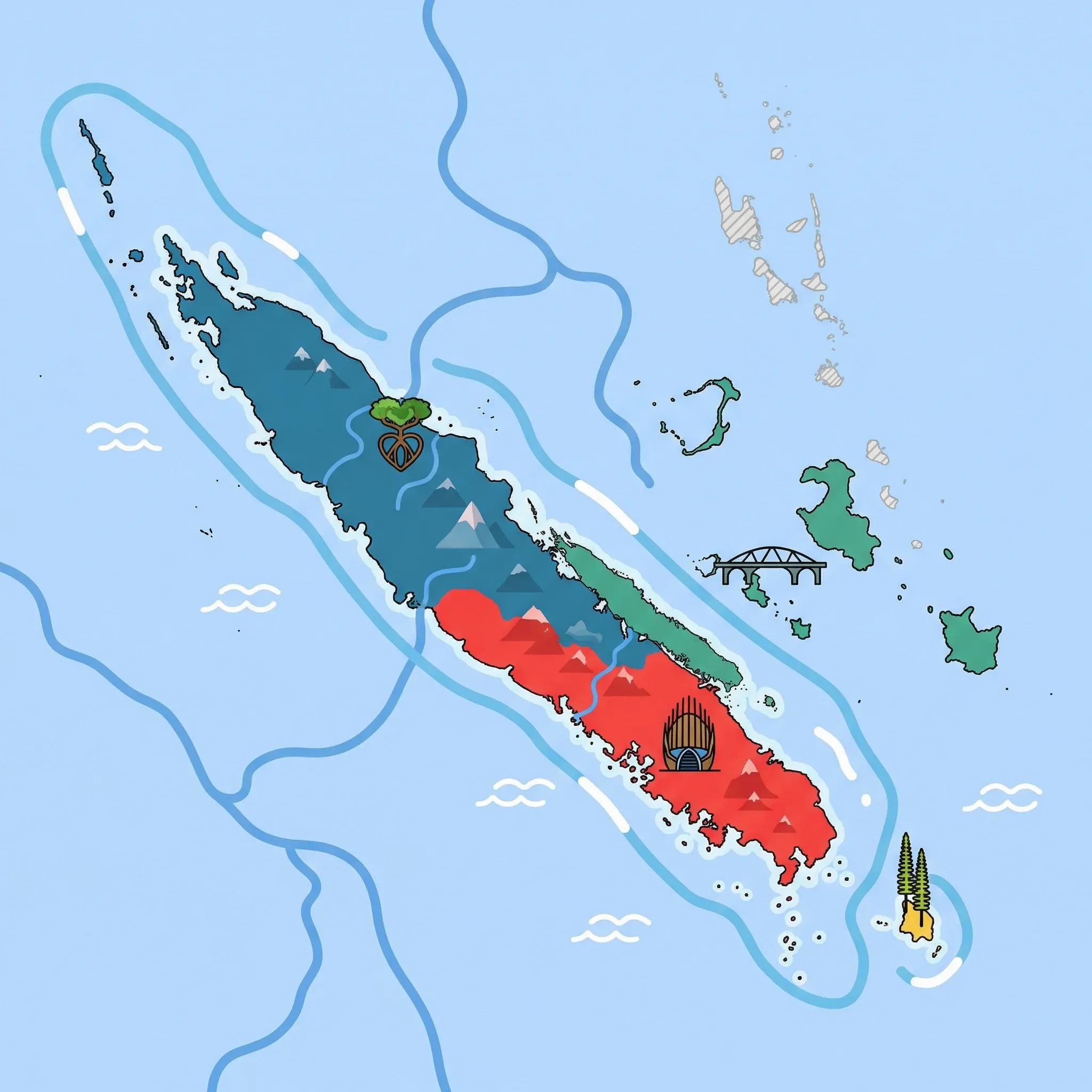
Click a region to explore
⚠️ SAFETY WARNING: Due to the risk of civil disorder and unpredictable security incidents, government agencies (including USA, AU, and NZ) advise travelers to reconsider travel or exercise increased caution in Nouméa and the surrounding area. While tourist zones like Anse Vata are generally calm, the security situation can change rapidly. Families are strongly urged to consult their own government's official travel advisory before considering a trip, as individual circumstances and risk assessments vary.
Nouméa and the South offer the most accessible and varied experience for families in New Caledonia. The capital city is a unique blend of Melanesian warmth and Parisian chic. Families can start the day with fresh croissants from a bakery, spend the midday snorkeling off a taxi-boat islet, and finish with a sunset walk along the Baie des Citrons. The infrastructure here is modern, with excellent hospitals, supermarkets, and paved roads, making it the least stressful region for those traveling with babies or young children.
Just outside the city limits, the landscape transforms dramatically into the "Grand Sud" (Great South). This is a land of red earth, blue rivers, and drowned forests. It looks prehistoric and offers incredible outdoor activities that are easily accessible by car. The contrast between the yacht-filled marinas of Nouméa and the raw, silent wilderness of the Blue River Park is striking. Whether you are exploring the Jean-Marie Tjibaou Cultural Centre to understand Kanak architecture or taking a day trip to the Amedee Islet to swim with turtles, the South packs a massive variety of experiences into a relatively small area.
Key Attractions
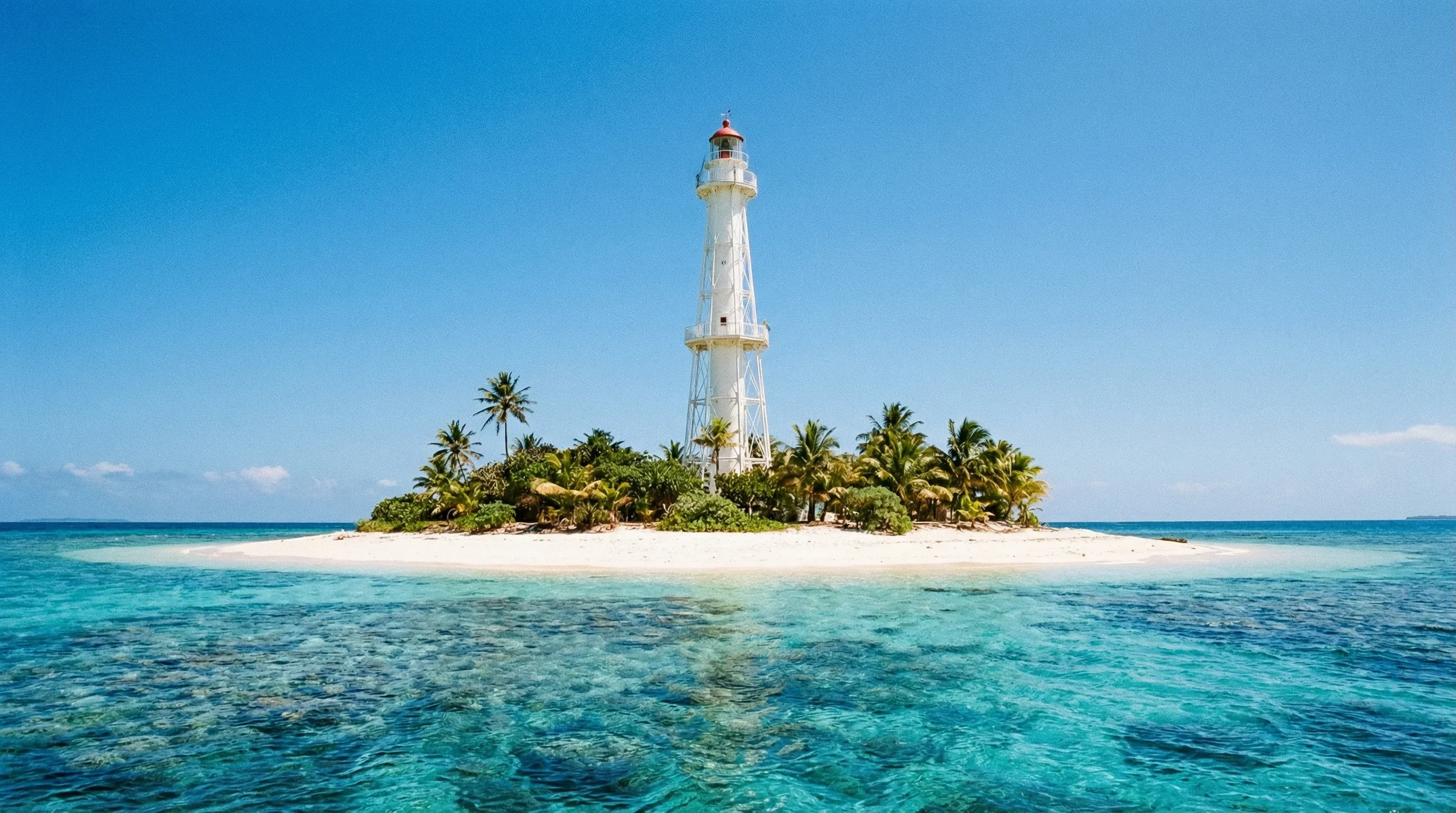
For animal-loving children, the Aquarium des Lagons Nouvelle-Calédonie in Anse Vata is world-class. It is famous for its glowing fluorescent corals and the outdoor turtle pool. It’s compact enough to do in two hours but captivating enough to return to. Afterwards, a short taxi-boat ride can take you to Amedee Islet, home to the towering white Amédée Lighthouse. Families can climb the lighthouse for a panorama of the world’s largest lagoon and then snorkel in the marine reserve directly off the beach.
On land, the Jean-Marie Tjibaou Cultural Centre is an architectural masterpiece designed by Renzo Piano. While it is a cultural museum, the expansive grounds, traditional huts, and mangrove path make it a great space for kids to run around while parents appreciate the art and history. Active families might explore sections of the GR NC1 (Southern Province Great Hiking Trail) in the Blue River Park, specifically the path to the Drowned Forest (Forêt Noyée), where bleached trunks rise eerily from the water.
Practical Advice
Nouméa is the transport hub for the country. Visit mid-week to avoid the weekend crowds when locals head to the beaches and parks. Shops often close on Sunday afternoons and Monday mornings. The sun is extremely strong here; seek shade between 11:00 am and 2:00 pm.
Food & Drink
Typical meal times: Lunch 11:30 am to 2:00 pm. Dinner 7:00 pm to 9:30 pm. You can find food later in Nouméa than elsewhere, but kitchens still close earlier than in Europe.
Typical meal costs: Sit-down dinner 3,500–5,500 XPF (approx. $31–49 USD / €29–46 EUR). French bakery lunch (sandwich + pastry) 1,200 XPF (approx. $11 USD / €10 EUR).
Dietary requirements: Good. Nouméa has supermarkets with gluten-free and bio (organic) sections. Vegetarian options are common in city restaurants, though vegan requires asking for modifications.
Signature dishes:
- Number One – Not a dish, but the local lager beer. For kids, the local syrups (Menthe or Grenadine) mixed with water are the standard drink.
- Crevettes de la Ouenghi – Local freshwater prawns, often served flambéed with pastis or in a coconut curry.
- French Pastries – The macarons, éclairs, and baguettes in Nouméa rival those in Paris. Don't miss the bakeries in the Quartier Latin.
Why this score?
Adventure is accessible via the Blue River Provincial Park, which offers mountain biking and kayaking in a unique drowned forest. While the 'Great South' features wild red-earth landscapes, the proximity to the capital and well-organized tour operators keeps the adventure level moderate.
Why this score?
Nouméa is home to the Médipôle de Nouvelle-Calédonie, a world-class hospital facility that meets French national standards. It is the premier medical hub for the South Pacific islands, offering high-quality emergency services and specialized care that is accessible to foreigners.
Why this score?
As the main international gateway and cruise port, this region captures the vast majority of New Caledonia's 60,000 annual tourists. However, on a global scale, it remains a niche destination far below the visitor volumes of even secondary European or Asian hubs.

Nouméa offers the widest range of budgets, but is generally pricey. A family apartment costs 15,000–25,000 XPF (approx. $135–225 USD / €125–210 EUR) per night. You can save money by self-catering with supermarket items, though imported cheese and wine remain expensive luxuries.

Getting Here & Around
Getting Here
- Airports – La Tontouta International Airport (NOU) is the main entry point, located 45 minutes drive from Nouméa. Shuttles must be booked in advance. Magenta Airport (GEA) in the city center serves domestic flights.
- Bus – The Tanéo bus network connects the airport and the greater Nouméa area, though a private shuttle is far easier with luggage and kids.
Getting Around
- Public Transport – The Tanéo bus system is modern and clean. It connects the city center, beaches (Anse Vata/Baie des Citrons), and the Jean-Marie Tjibaou Cultural Centre.
- Car – Useful if you want to leave the city to explore the Blue River Park or the wildly colored earth of the South. Traffic in Nouméa can be heavy at rush hour.
- Taxi Boat – Fun and essential for reaching nearby islets like Duck Island (Île aux Canards) or Amedee Islet for day trips.
Nearby Airports (2 airports)
Noumea Magenta
GEANoumea
La Tontouta
NOUNoumea
View full flight map for New Caledonia →
Official Links

Packing List
Outlets are Type F (European 2-pin); Australian/US plugs will not fit.
Nouméa has a dress code; beachwear is not acceptable in city shops or restaurants.
The ozone layer is thin here; UV index hits extreme levels quickly.
Plastic bags are banned or charged for; essential for bakery runs.
Essential for protecting feet from sharp coral and stonefish in the lagoon.
Outlets differ from Australia/NZ/US; a multi-plug strip is useful for charging family devices.
Strictly required to protect the delicate coral ecosystems in the marine reserves.
Dengue fever is a risk; strong repellent is necessary for evenings.
Keep electronics and clothes dry during frequent small boat transfers to islets.
Required for 'Coutume' (customary small gifts) if visiting tribal areas or local markets.

Activities & Best Times

Hiking, wildlife, outdoor exploration, ecotourism
Features the unique red-earth landscapes of the South and Blue River Provincial Park, home to the endemic Cagou bird and the iconic drowned forest. The dry, cool season from July to October is essential for exploring wilderness trails safely and comfortably.

Urban tourism, museums, historical sites, architecture
A sophisticated blend of French 'art de vivre' and indigenous Kanak heritage, headlined by the world-class Renzo Piano-designed Tjibaou Cultural Centre. The cooler mid-year months are ideal for exploring Nouméa's museums, waterfront, and colonial history on foot.

Sport tourism, fitness activities, active recreation
Features the challenging GR NC1 long-distance trail and world-renowned windsurfing and kitesurfing conditions within the lagoon. The cooler, drier months from July to October provide the optimal physical environment for strenuous hiking and cycling.
Beach resorts, marine activities: diving, snorkelling, kite surfing, wind surfing, sailing
Home to the world's largest lagoon and protected islets like Amedee, offering high-quality snorkeling and wind-sports infrastructure. Conditions are best in late spring when water temperatures rise but the heavy humidity and rains of the cyclone season have not yet arrived.

Learning experiences, scientific sites, historical education
Boasts an internationally recognized Aquarium and the Tjibaou Centre which provide profound insights into Melanesian culture and Pacific biodiversity. These sites offer world-class learning experiences that are best accessed during the stable weather of the dry season.

Scenic drives, countryside tours, route-based travel
The Route du Grand Sud offers a spectacular drive through prehistoric landscapes and coastal vistas unique to New Caledonia. Driving is most reliable and scenic during the dry season when unsealed sections are easily traversable and visibility is at its peak.
Amusement parks, family entertainment venues
Offers high-quality regional aquatic centers and forest adventure parks like Koghi, which appeal to active families seeking structured entertainment. Visitation is most pleasant during the warmer spring months before heavy summer rains begin in January.

Attractions (13 total)



Public Holidays & Calendar Next 12 months
Public holidays, festivals, cultural celebrations, and seasonal natural phenomena coming up in Nouméa & Grande Terre South over the next 12 months.
Loading holidays and events...

Travel Advisory
A majority of international agencies recommend exercising a high degree of caution. While the territory is generally accessible, travelers must remain alert to civil unrest, potential roadblocks, and volatile political conditions following the significant riots of 2024.
Safety Topics
Traveller Advice (4 groups)

Stay informed through local media and follow the instructions of security forces. Avoid all large public gatherings and demonstrations, which can escalate into violence without notice. Be prepared for sudden changes in commercial transportation schedules.

New Caledonia follows French law, which is generally liberal regarding sexual orientation; however, travelers should be aware of local cultural sensitivities in rural areas.

Be cautious of drink spiking in social venues; never leave beverages unattended. Avoid walking alone or travelling in isolated areas, particularly after dark.
Public infrastructure for accessibility may be limited outside of major tourist zones. Consult with travel providers regarding specific needs before departure.
Agency Summaries
There are continuing safety concerns following the 2024 unrest. Visitors should avoid all rallies and protests, as they can become violent quickly. Travel via main roads, especially those leading to the international airport, requires particular care.
While no travel is completely safe, the current guidance focuses on monitoring local conditions for potential protests. Significant unrest occurred in early 2024, and though tensions have eased, visitors should remain alert to sudden demonstrations or roadblocks.
Irish citizens are encouraged to be mindful of their surroundings and monitor local news. The advice highlights the risks of political instability and advises registering with the embassy before travel.
The advisory recommends reconsidering travel plans due to persistent civil unrest and criminal activity. Security incidents, including roadblocks and violent protests, occur unpredictably, and the government's ability to provide emergency services is limited.
Travellers are advised to be highly vigilant due to ongoing political tensions following significant civil disturbances in 2024. While the situation has stabilized, it remains unpredictable and could change rapidly.
Vigilance is required because of the potential for civil disorder and violence. Security forces maintain a high presence across the territory. International flights may be disrupted without warning during periods of instability.
Information is provided for general guidance only and does not constitute travel, safety, medical, or legal advice. Conditions may change. Users are responsible for independently verifying information before travel.