

New Zealand (Aotearoa) is frequently voted one of the world's best family destinations, and for good reason. Separated into two main islands, this country packs an entire planet's worth of geology into a manageable area. The North Island is defined by volcanic heat, golden beaches, and rich Maori culture, while the South Island offers dramatic alpine scenery, glaciers, and deep fiords. For families, the "Kiwi" lifestyle is incredibly relaxed, safe, and child-focused, with world-class playgrounds, clean facilities, and a deep respect for nature (kaitiakitanga) that resonates with young travellers.
Travelling here is a road-trip dream. The scenery changes around every bend-from rolling green farmland to rainforests and snow-capped peaks. While the distances can be deceivingly long due to winding roads, the journey is always part of the adventure. Whether you are exploring the urban waterfront of Auckland & Northland or the wild coastlines of the south, you will find a culture that welcomes children with open arms and a "sweet as" attitude.
Key Attractions
No family trip to New Zealand is complete without visiting Hobbiton Movie Set in Matamata. Even if the kids haven't seen the films, exploring the immaculately kept Shire with its colourful hobbit holes is a magical experience. Nearby in Rotorua, the Agrodome offers a hands-on farm show where children can feed lambs and watch sheepdogs in action, while Skyline Rotorua provides luge rides that are fun for all ages. For wildlife lovers, the Auckland Zoo is world-class, but seeing native birds in the wild is even better.
Heading south, the adventure intensifies. Queenstown & Southern Lakes is the adrenaline capital, where families can take the gondola to Cardrona Alpine Resort Mountain Park for carting or skiing in winter. A cruise on Milford Sound (Piopiotahi) is non-negotiable; its waterfalls and seals will leave children awe-struck. For active families, the Christchurch Adventure Park offers massive ziplines and mountain biking, while a walk to the face of Franz Josef Glacier reveals the raw power of nature. In the north of the South Island, Abel Tasman National Park offers golden sands and kayaking with seals.
Practical Advice
Best time to visit: Summer (December to February) is warmest but busiest. Shoulder seasons (March–April and October–November) offer settled weather and fewer crowds. Be prepared for "four seasons in one day"-the weather changes rapidly.
Sun Safety: The sun in New Zealand is far harsher than in Europe or North America due to the thinner ozone layer. Burn times can be as short as 10–15 minutes. High SPF sunscreen and hats are mandatory for children, even on cloudy days.
Driving: We drive on the left. Roads are often narrow, winding, and hilly. Allow 30% more time than your GPS suggests.
Food & Drink
Typical meal times: 12:00 pm to 2:00 pm for lunch; 5:30 pm to 8:00 pm for dinner. Kiwi dining is notoriously early-many kitchens in smaller towns close by 8:30 pm.
Typical meal costs: Main dishes $30–45 NZD (approx. $18–27 USD / €17–25 EUR). A full family dinner often costs $120–160 NZD (approx. $72–96 USD / €66–88 EUR).
Dietary requirements: Excellent. New Zealand is very allergy-aware. Gluten-free (GF), dairy-free (DF), vegetarian, and vegan options are standard in almost every cafe and restaurant.
Family-friendly dining: Most pubs and cafes have "kids' corners" with toys, highchairs, and dedicated children's menus. Casual dining is the norm; it is perfectly acceptable to take children to nice bistros early in the evening.
Signature dishes:
- Meat Pie – A hand-sized pastry filled with minced meat and gravy (often cheese), found in every bakery and petrol station.
- Fish and Chips – Freshly caught snapper or tarakihi, deep-fried and eaten out of paper on the beach.
- Hokey Pokey Ice Cream – Vanilla ice cream packed with small lumps of crunchy honeycomb toffee.
- Hāngī – A traditional Maori feast cooked in an earth oven, usually experienced at cultural centres in Rotorua.
- Pavlova – A meringue-based dessert with a crisp crust and soft inside, topped with whipped cream and kiwifruit.

New Zealand is a premium destination. A family of four should budget $500–700 NZD (approx. $300–420 USD / €275–385 EUR) per day for mid-range car hire, motel accommodation, attractions, and meals. Fuel is expensive, often exceeding $2.80 NZD per litre. To save money, many families buy groceries ($250–350 NZD per week) and picnic in the stunning free parks.
Age Suitability



Did you know? New Zealand welcomes approximately 3.2 million international visitors per year. Most visitors come from East Asia and the Pacific.
Explore Regions
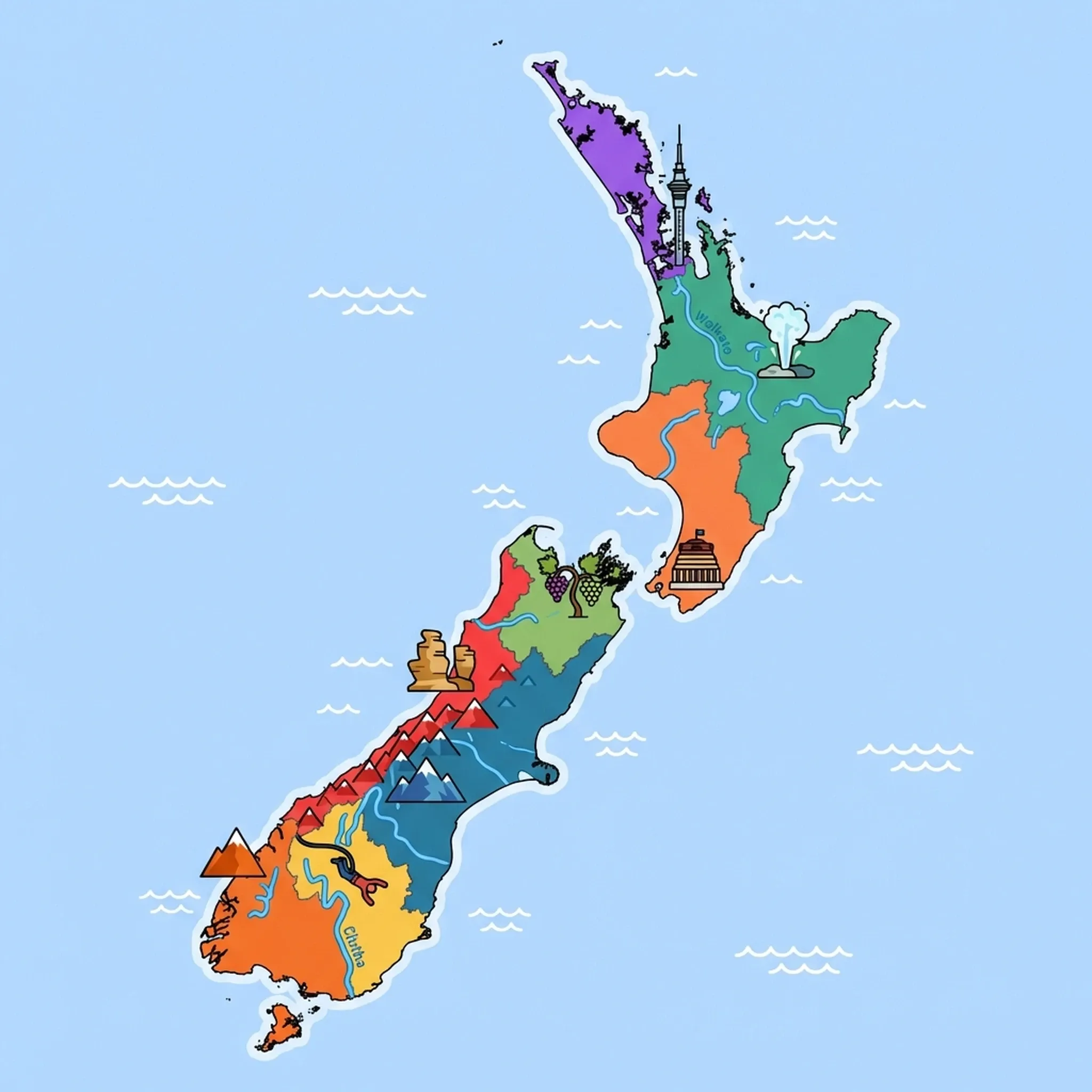
8 Regions
Auckland & Northland
Volcanic cityscapes meet subtropical island adventures ⛵🌿
Canterbury & Christchurch
vast plains, alpine peaks, and starry skies 🏔️✨
Fiordland (Milford Sound)
Where waterfalls tumble from the clouds 🌧️🏔️
Marlborough & Nelson
Sun, golden sands, and creative culture ☀️🎨
Queenstown & Southern Lakes
Adventure, alpine lakes, and world-class fun 🚤🏔️
Rotorua & Central North Island
Geothermal wonders and Middle-earth magic 🌋🧙♂️
South Island West Coast (glaciers)
Wild coastlines, ancient glaciers, and greenstone trails 🌊❄️
Wellington & Lower North Island
Coolest little capital with a wild wind 🌬️☕
Click on a region marker to explore details. Use the dropdown to color regions by activity suitability.

Getting There & Around
Getting There
- By Air – Auckland Airport (AKL) is the main gateway, serving Auckland & Northland. Direct flights arrive from LA, San Francisco, Vancouver, Singapore, and Australia. Christchurch (CHC) also receives international flights.
- Entry Requirements – Most visitors (US, UK, EU, CA) need an NZeTA (New Zealand Electronic Travel Authority) before flying. This costs approx $17–23 NZD plus a $100 NZD International Visitor Levy (IVL). Check your government website for the latest visa requirements, or use the IATA Travel Centre entry-requirements checker.
- Biosecurity – NZ has some of the strictest border controls in the world. Declare ALL food, hiking boots, and camping gear, or face an instant $400 NZD fine.
Getting Around
- Car Hire – The most popular way to explore. Essential for reaching remote spots like South Island West Coast (glaciers). Roads are winding; book an automatic if you are not used to manual gears.
- Campervans – A legendary Kiwi experience allowing you to sleep amidst nature. Book 6–12 months ahead for summer travel.
- Domestic Flights – Air New Zealand connects major hubs like Canterbury & Christchurch with regional towns efficiently.
- Interislander Ferry – The scenic 3.5-hour ferry connects the North and South Islands between Wellington and Picton.
Official Links

Packing List
Essential for 'sandflies' (biting midges) in the South Island, which are immune to natural repellents.
The ozone layer is thin here; burn times are 10-15 mins. European/US sunscreens often aren't strong enough.
Single-use plastic bags are banned in all supermarkets and shops. Bring lightweight foldable ones.
Roads are exceptionally winding and hilly, often causing car sickness even in those who rarely suffer from it.
Weather changes instantly ('four seasons in one day'). A light rain shell is vital even in summer.

Activities & Best Times

Adventure & Nature
ExcellentHiking, wildlife, outdoor exploration, ecotourism
Home to the world-renowned Tongariro Alpine Crossing and unique geothermal reserves like Te Puia, this region provides rare volcanic immersion. The summer months offer optimal conditions for exploring high-altitude craters and wilderness trails before winter snow limits access.
Home to the world-renowned Franz Josef and Fox Glaciers and the Paparoa Great Walk, this region offers unparalleled immersion in UNESCO-protected wilderness. Summer provides the most reliable access for families exploring these ecosystems, though high annual rainfall is a constant factor regardless of the season.
A world-class hub for wilderness immersion, ranging from whale watching in Kaikoura to the alpine grandeur of the Mackenzie Basin. Peak season offers optimal visibility and accessible trails for exploring diverse ecosystems.

City & Cultural
ExcellentUrban tourism, museums, historical sites, architecture
Rotorua is the global epicenter for authentic Maori heritage and living culture, complemented by the world-class Hobbiton Movie Set. While cultural centers operate year-round, the outdoor village settings are best experienced during the warmer, drier months.
Combines Auckland's vibrant urban food and art scenes with the deep historical significance of the Waitangi Treaty Grounds. Summer hosts the most cultural events and festivals, though museums and heritage sites remain open throughout the wetter winter shoulder.
The region preserves significant colonial heritage at Shantytown Heritage Park and iconic natural landmarks that serve as cultural touchstones for New Zealand. Peak tourism months allow families to soak in the authentic frontier atmosphere of small coastal towns with full access to historical sites.

Road Trips & Scenic
Very GoodScenic drives, countryside tours, route-based travel
Notes describe Milford Road as 'one of the world's most spectacular alpine drives' - this is internationally famous and deserves very_good despite being a single route. The rating should reflect quality, not quantity.
Crown Range and Glenorchy roads are internationally iconic drives featured in major films. The region offers multiple world-class scenic routes.
The Thermal Explorer Highway and Desert Road offer dramatic landscapes ranging from steaming vents to alpine plateaus. Winter travel can be restricted by snow and ice on high-altitude passes, making the summer and autumn months ideal for scenic touring.

Sports & Active
Very GoodSport tourism, fitness activities, active recreation
Features world-class mountain biking in Whakarewarewa Forest and unique activities like ZORB and Skyline luging. While the volcanic soil allows for great drainage, the shoulder months are preferred by athletes to avoid the mid-summer heat and winter rains.
World-class facilities for urban adventure sports and established cycling routes like the Twin Coast Cycle Trail cater to active families. Summer provides the most reliable weather for these infrastructure-dependent activities.
Boasts world-class cycling and hiking infrastructure including the West Coast Wilderness Trail and the Paparoa Track. These purpose-built routes are best experienced in the warmer, longer days of the southern summer, as winter conditions can be prohibitively wet and cold for active children.

Educational & Exploratory
GoodLearning experiences, scientific sites, historical education
Boasts major facilities like the Auckland War Memorial Museum and Kelly Tarlton's Aquarium that provide high-quality scientific and historical insights. These are excellent rainy-day options, though they are most vibrant during the peak international tourism season.
Features high-quality conservation centers where families can interact with the rare Rowi Kiwi and learn about unique glacial geology. These facilities are primary travel motivators that offer engaging, world-class scientific learning opportunities primarily during the main tourism window.
Features globally significant facilities like the International Antarctic Centre and the Dark Sky Project in Tekapo. These offer unique scientific insights that are standalone motivators for sophisticated families.

Relaxation & Wellness
GoodSpa retreats, wellness centers, peaceful getaways
Rotorua's historic Polynesian Spa and Hell's Gate offer globally recognized thermal bathing experiences. Winter is particularly atmospheric for hot spring visits, while the summer tourism peak ensures all luxury spa facilities are fully operational.
Natural thermal springs in the Northland area offer a rustic restorative experience for families. Unlike most other categories, these are most appealing in the cool of winter, providing a cozy alternative to the summer heat.
Natural hot springs and glacier-village spa facilities provide restorative experiences in a wilderness setting. These are best utilized as a complement to outdoor adventures during the warmer months when the remote locations are most easily reached.

Ski & Snow
GoodWinter sports, ski resorts, snow activities
Whakapapa and Turoa on Mt Ruapehu provide the North Island's premier alpine sports experience with a long season that often stretches into October. Conditions are most reliable in late winter, though the terrain is more rugged than southern counterparts.
Home to major commercial fields like Mt Hutt and authentic club fields, offering a unique but rugged alpine experience. The season is relatively short, with peak snow reliability in mid-winter.
The Southern Hemisphere's premier ski hub, featuring multiple major resorts with high-quality infrastructure. The core season is July and August, with September often providing excellent spring skiing conditions.

Theme Park & Entertainment
GoodAmusement parks, family entertainment venues
Centred on the Hanmer Springs Thermal Pools complex, which provides a high-quality, family-oriented entertainment experience. High demand occurs during summer and winter school holiday periods.
While lacking traditional mega-parks, the region offers specialized entertainment like Agrodome and geothermal water parks like DeBretts. These provide high-quality family engagement but are best visited during school holidays when all interactive shows and splash zones are active.
Notes mention 'whitewater facilities' and aquariums - these are specialized single attractions, not theme parks. Theme parks require multiple rides/shows in one venue.

Beach & Sea
GoodBeach resorts, marine activities: diving, snorkelling, kite surfing, wind surfing, sailing
The region offers iconic surf beaches like Piha and the pristine waters of the Bay of Islands, ideal for maritime exploration. Peak season provides the only window for comfortable swimming and diving, while the cool, wet winters are unsuitable for beach activities.
Focuses on fjord cruises and sea kayaking in Milford and Doubtful Sounds rather than traditional resorts. Peak summer months offer the most manageable water temperatures and calmer conditions for marine exploration.
Described as 'rugged coastal scenery' and 'geological wonders' - this is scenic/geological tourism, not beach holiday tourism. Cold, wild coast unsuitable for swimming.

Festivals & Seasonal
MarginalEvents, celebrations, seasonal attractions

Public Holidays & Calendar Next 12 months
Public holidays, festivals, cultural celebrations, and seasonal natural phenomena coming up in New Zealand over the next 12 months.
Loading holidays and events...
Climate & Weather
Auckland & Northland
Show Details
| Month | Temp °C | Rain | Humidity |
|---|
Canterbury & Christchurch
Show Details
| Month | Temp °C | Rain | Humidity |
|---|
Fiordland (Milford Sound)
Show Details
| Month | Temp °C | Rain | Humidity |
|---|
Marlborough & Nelson
Show Details
| Month | Temp °C | Rain | Humidity |
|---|
Queenstown & Southern Lakes
Show Details
| Month | Temp °C | Rain | Humidity |
|---|
Rotorua & Central North Island
Show Details
| Month | Temp °C | Rain | Humidity |
|---|

Travel Advisory
All major international agencies categorize New Zealand as a low-risk destination where standard safety awareness is sufficient for travellers.
Safety Topics
Traveller Advice (4 groups)

Outdoor conditions and alpine weather can change violently and without warning. Hikers (trampers) should register their plans with the Department of Conservation and carry a Personal Locator Beacon (PLB) when heading into remote areas.

Ensure you have a valid NZeTA or visa before departure. Complete the digital New Zealand Traveller Declaration (NZTD) prior to arrival. Comprehensive travel insurance is highly recommended even with reciprocal healthcare agreements.

The social and legal environment is highly inclusive, with no specific safety warnings for sexual or gender minorities.

While generally safe, solo female travellers should follow standard safety protocols and remain vigilant when out at night in less populated urban areas.
Agency Summaries
Safety conditions are comparable to Australia. Travellers must complete the mandatory New Zealand Traveller Declaration (NZTD) before arrival. There is a noted increased risk of measles, and visitors are encouraged to be up-to-date on vaccinations.
Standard vigilance is recommended. Visitors must obtain a New Zealand Electronic Travel Authority (NZeTA) before arriving. Practical advice focuses on emergency contacts and precautions against petty theft.
Travellers should maintain standard safety awareness. Key concerns include petty crime like pickpocketing in urban and tourist areas, as well as natural hazards such as seismic and volcanic activity. The terrorism threat level is monitored but considered a general risk.
The country is considered safe for travel with standard precautions. Information is provided regarding volcanic hazards, specifically at Whakaari/White Island, and geological monitoring through local services like GeoNet.
No major travel warnings are in place. The advice highlights environmental risks such as tsunamis and earthquakes, alongside strict biosecurity regulations and entry requirements for British nationals.
Information is provided for general guidance only and does not constitute travel, safety, medical, or legal advice. Conditions may change. Users are responsible for independently verifying information before travel.