
Auckland & Northland
Volcanic cityscapes meet subtropical island adventures ⛵🌿
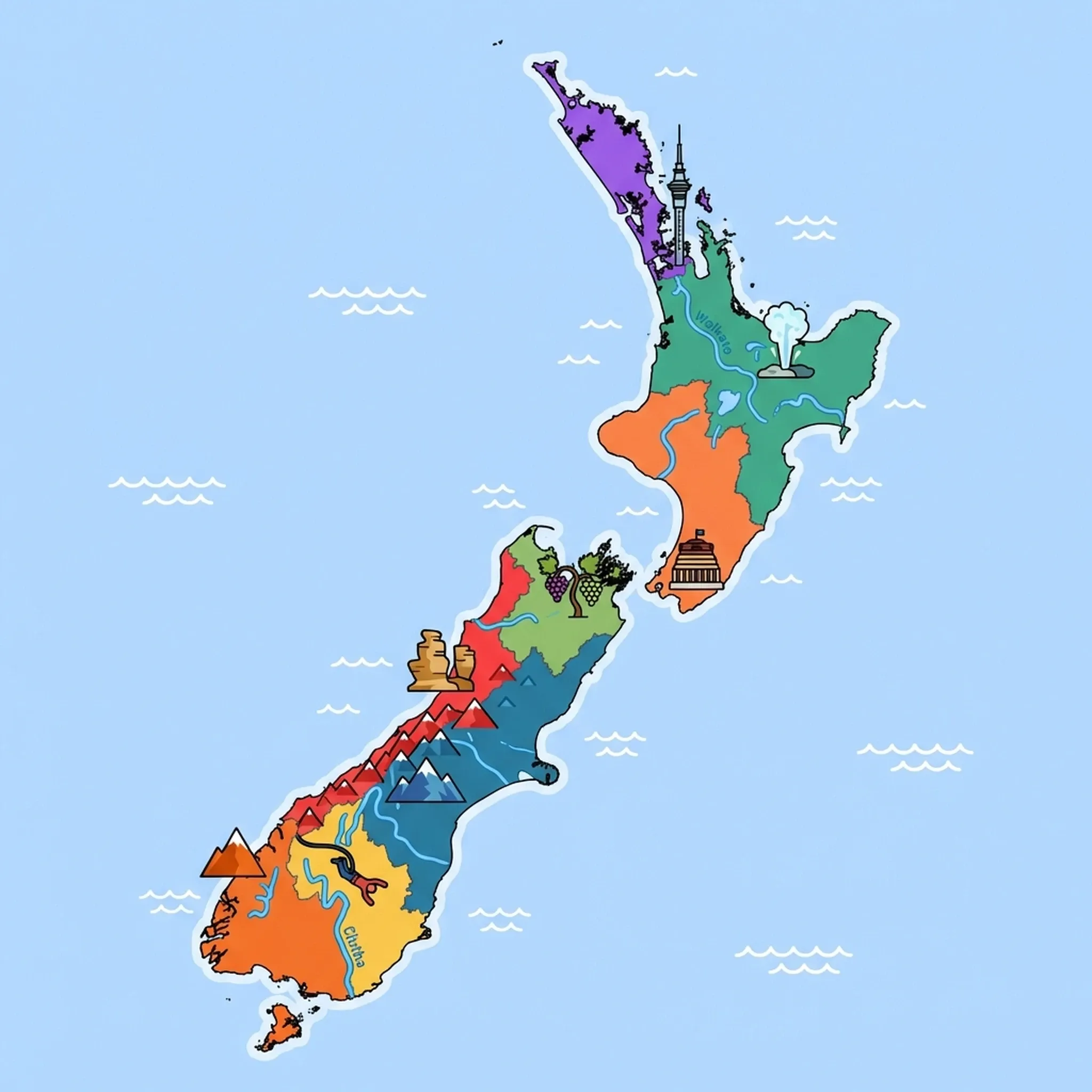
Click a region to explore
Auckland and Northland offer a striking contrast that defines the New Zealand experience: a sophisticated, water-loving metropolis sitting on the doorstep of a subtropical wilderness. Auckland, known as Tāmaki Makaurau, is built across a volcanic field, meaning the landscape is dotted with grassy green cones that serve as perfect viewpoints. It is a city defined by its two harbours, where the love of sailing is evident in the thousands of masts bobbing in the marinas. For families, this means a holiday can seamlessly blend museum visits and theme parks with island hopping. Just a short ferry ride away lies Rangitoto Island, a dormant volcano that offers adventurous but accessible hiking trails through pohutukawa forests, providing children with a sense of exploration without straying too far from civilisation.
Heading north from the city, the landscape shifts to the "Winterless North," a region of rolling hills, giant sand dunes, and warmer waters. Northland is the birthplace of the nation, rich in Māori culture and early colonial history. The pace here slows down significantly. Families can drive along the Twin Coast Discovery Highway, stopping at golden beaches that feel undiscovered. The west coast offers the wild, black-sand drama of Ninety Mile Beach, while the east coast features sheltered bays and calm waters ideal for swimming with dolphins or kayaking. It is a region that rewards curiosity, offering everything from cavernous sea caves to ancient kauri trees like Tāne Mahuta, the Lord of the Forest, which leaves children awestruck by its sheer scale.
Key Attractions
The region is packed with world-class facilities designed for children. Auckland Zoo is a standout, offering immersive environments where kids can see kiwi birds in the dark and watch orangutans traverse high wires above the park. For a rainy day, the Auckland War Memorial Museum is magnificent, housed in a heritage building with interactive galleries that explain New Zealand's natural history and wartime legacy in a way that engages young minds. Nature lovers should not miss SEA LIFE Kelly Tarlton's Aquarium, famous for its shark tunnel and Antarctic penguin enclosure.
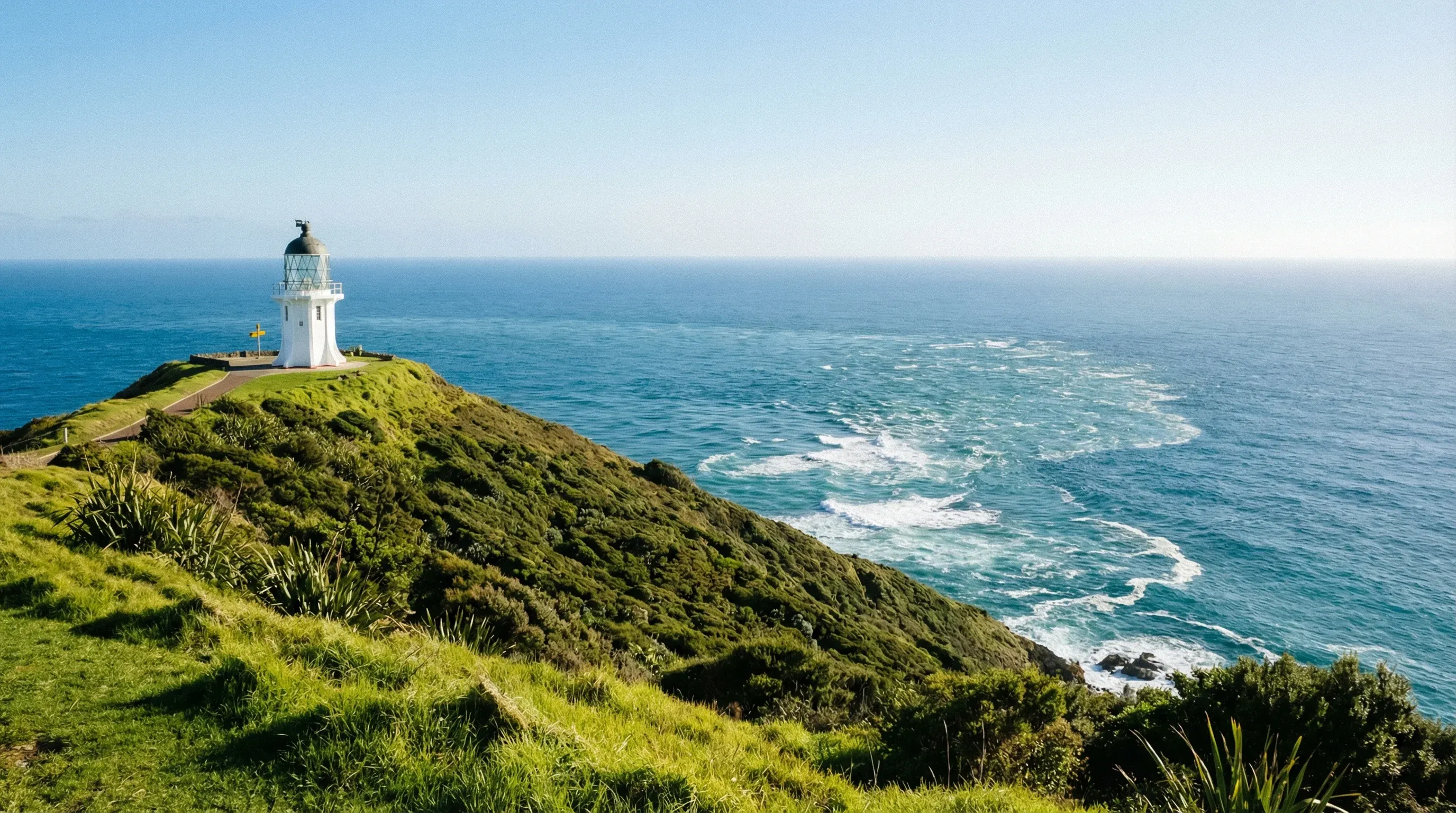
Further north, the attractions become more elemental. The journey to the very top of the country culminates at the Cape Reinga Lighthouse. It is a spiritual place for Māori, marking the point where spirits depart, and geographically stunning as the Tasman Sea crashes into the Pacific Ocean in a swirl of currents. On the way back down, a stop at the Hundertwasser Art Centre with Wairau Māori Art Gallery in Whangarei offers a whimsical, colourful architectural experience that feels like stepping into a fairytale, fascinating for children interested in art and design.
Practical Advice
The climate here is the warmest in the country, but weather can change quickly. The best time to visit is between December and March for beach weather, though February is often the most stable. Traffic in Auckland can be heavy, comparable to major US or European cities, so plan travel times accordingly, especially crossing the Harbour Bridge.
Food & Drink
Typical meal times: Lunch is usually 12:00 pm to 2:00 pm. Dinner is served from 5:30 pm, with families often eating earlier around 6:00 pm to 7:00 pm.
Typical meal costs: A casual family dinner costs NZ$80–120 (approx. $48–72 USD / €45–65 EUR). High-end dining will be NZ$180+ (approx. $110 USD / €100 EUR).
Dietary requirements: Auckland is incredibly diverse; finding vegan, gluten-free, or halal food is very easy. In rural Northland, options may be more limited to standard pub fare, but most places accommodate basic allergies.
Signature dishes:
- Fish and Chips – Fresh snapper or tarakihi, battered and deep-fried, best eaten on a beach out of the paper wrapping.
- Rewena Bread – A traditional Māori sourdough bread made with potato starter, often found at weekend markets.
- Manuka Honey ice cream – A rich, floral ice cream made with the famous local honey, popular in specialty shops.
Why this score?
While Northland offers rugged coastlines and ancient forests like Waipoua, the region is highly developed with excellent roading and luxury resorts. Adventure activities like sailing and EcoZip are curated and family-friendly rather than truly remote. Most tourists stick to well-marked trails and commercial boat tours, resulting in a lower ruggedness score compared to the South Island.
Why this score?
Auckland is New Zealand's healthcare hub, containing the country's largest and most specialized tertiary hospitals with extensive international experience. Families have immediate access to 24-hour emergency care, multilingual staff, and a high density of private clinics. Even in Northland, regional centers like Whangarei provide reliable medical services for travelers.
Why this score?
As the primary international gateway, Auckland receives the vast majority of foreign arrivals, supported by a world-class airport and high-density hotel infrastructure. Northland's Bay of Islands is a top-tier draw for international cruise ships and historical tourism at Waitangi. The region consistently ranks as New Zealand's most visited due to its mix of urban amenities and iconic coastal landscapes.

Auckland is the most expensive city in NZ. Accommodation averages NZ$250–400 (approx. $150–240 USD / €140–220 EUR) per night. Northland is slightly cheaper, but peak summer rates apply. Attractions are pricey; family passes for places like the zoo cost around NZ$85–110 (approx. $50–65 USD / €45–60 EUR).

Getting Here & Around
Getting Here
- Airports – Auckland Airport (AKL) is the main international gateway. Whangarei Airport (WRE) and Bay of Islands Airport (KKE) serve the north via domestic links.
- Driving – State Highway 1 is the main artery running from Cape Reinga Lighthouse down through Auckland.
- Train – The Te Huia service connects Hamilton to Auckland, but there are no passenger trains running north of Auckland.
Getting Around
- Car – Essential for exploring Northland and the beaches. Auckland traffic is notoriously heavy; avoid rush hours (7:00 am–9:00 am and 4:00 pm–6:00 pm).
- Public Transport – Auckland has a decent network of buses and trains. The AT HOP card is required. Ferries are a fun way to reach Rangitoto Island or Waiheke.
- Walking – Central Auckland is walkable, but attractions like the Auckland Zoo require transport.
Nearby Airports (3 airports)
Auckland International Airport
AKLAuckland
Kerikeri
KKEKerikeri
Whangarei
WREWhangarei
View full flight map for New Zealand →
Official Links

Packing List
Volcanic beaches and rock shelves in the north can be sharp on little feet.
UV levels in Northland are extreme; sunscreen alone often isn't enough for water play.
Subtropical weather means sudden, heavy downpours are common even in summer.
Essential for ferry trips to islands or dolphin watching cruises in the Bay of Islands.
Essential for 'sandflies' (biting midges) in the South Island, which are immune to natural repellents.
The ozone layer is thin here; burn times are 10-15 mins. European/US sunscreens often aren't strong enough.
Single-use plastic bags are banned in all supermarkets and shops. Bring lightweight foldable ones.
Roads are exceptionally winding and hilly, often causing car sickness even in those who rarely suffer from it.
Weather changes instantly ('four seasons in one day'). A light rain shell is vital even in summer.

Activities & Best Times

Hiking, wildlife, outdoor exploration, ecotourism
Features a stunning variety of volcanic landscapes, ancient kauri forests, and the dramatic coastline of Cape Reinga. The summer months offer the best visibility and trail conditions, whereas high winter rainfall can impede access to wilderness areas.

Urban tourism, museums, historical sites, architecture
Combines Auckland's vibrant urban food and art scenes with the deep historical significance of the Waitangi Treaty Grounds. Summer hosts the most cultural events and festivals, though museums and heritage sites remain open throughout the wetter winter shoulder.

Sport tourism, fitness activities, active recreation
World-class facilities for urban adventure sports and established cycling routes like the Twin Coast Cycle Trail cater to active families. Summer provides the most reliable weather for these infrastructure-dependent activities.

Beach resorts, marine activities: diving, snorkelling, kite surfing, wind surfing, sailing
The region offers iconic surf beaches like Piha and the pristine waters of the Bay of Islands, ideal for maritime exploration. Peak season provides the only window for comfortable swimming and diving, while the cool, wet winters are unsuitable for beach activities.

Learning experiences, scientific sites, historical education
Boasts major facilities like the Auckland War Memorial Museum and Kelly Tarlton's Aquarium that provide high-quality scientific and historical insights. These are excellent rainy-day options, though they are most vibrant during the peak international tourism season.

Scenic drives, countryside tours, route-based travel
The Twin Coast Discovery Highway provides a well-signposted route through stunning coastal scenery and rural townships. Driving is safest and most scenic during the summer months with maximum daylight and clear conditions.

Spa retreats, wellness centers, peaceful getaways
Natural thermal springs in the Northland area offer a rustic restorative experience for families. Unlike most other categories, these are most appealing in the cool of winter, providing a cozy alternative to the summer heat.
Amusement parks, family entertainment venues
Notes mention 'whitewater facilities' and aquariums - these are specialized single attractions, not theme parks. Theme parks require multiple rides/shows in one venue.

Attractions (27 total)



Public Holidays & Calendar Next 12 months
Public holidays, festivals, cultural celebrations, and seasonal natural phenomena coming up in Auckland & Northland over the next 12 months.
Loading holidays and events...

Travel Advisory
All major international agencies categorize New Zealand as a low-risk destination where standard safety awareness is sufficient for travellers.
Safety Topics
Traveller Advice (4 groups)

Outdoor conditions and alpine weather can change violently and without warning. Hikers (trampers) should register their plans with the Department of Conservation and carry a Personal Locator Beacon (PLB) when heading into remote areas.

Ensure you have a valid NZeTA or visa before departure. Complete the digital New Zealand Traveller Declaration (NZTD) prior to arrival. Comprehensive travel insurance is highly recommended even with reciprocal healthcare agreements.

The social and legal environment is highly inclusive, with no specific safety warnings for sexual or gender minorities.

While generally safe, solo female travellers should follow standard safety protocols and remain vigilant when out at night in less populated urban areas.
Agency Summaries
Safety conditions are comparable to Australia. Travellers must complete the mandatory New Zealand Traveller Declaration (NZTD) before arrival. There is a noted increased risk of measles, and visitors are encouraged to be up-to-date on vaccinations.
Standard vigilance is recommended. Visitors must obtain a New Zealand Electronic Travel Authority (NZeTA) before arriving. Practical advice focuses on emergency contacts and precautions against petty theft.
Travellers should maintain standard safety awareness. Key concerns include petty crime like pickpocketing in urban and tourist areas, as well as natural hazards such as seismic and volcanic activity. The terrorism threat level is monitored but considered a general risk.
The country is considered safe for travel with standard precautions. Information is provided regarding volcanic hazards, specifically at Whakaari/White Island, and geological monitoring through local services like GeoNet.
No major travel warnings are in place. The advice highlights environmental risks such as tsunamis and earthquakes, alongside strict biosecurity regulations and entry requirements for British nationals.
Information is provided for general guidance only and does not constitute travel, safety, medical, or legal advice. Conditions may change. Users are responsible for independently verifying information before travel.