
Marlborough & Nelson
Sun, golden sands, and creative culture ☀️🎨
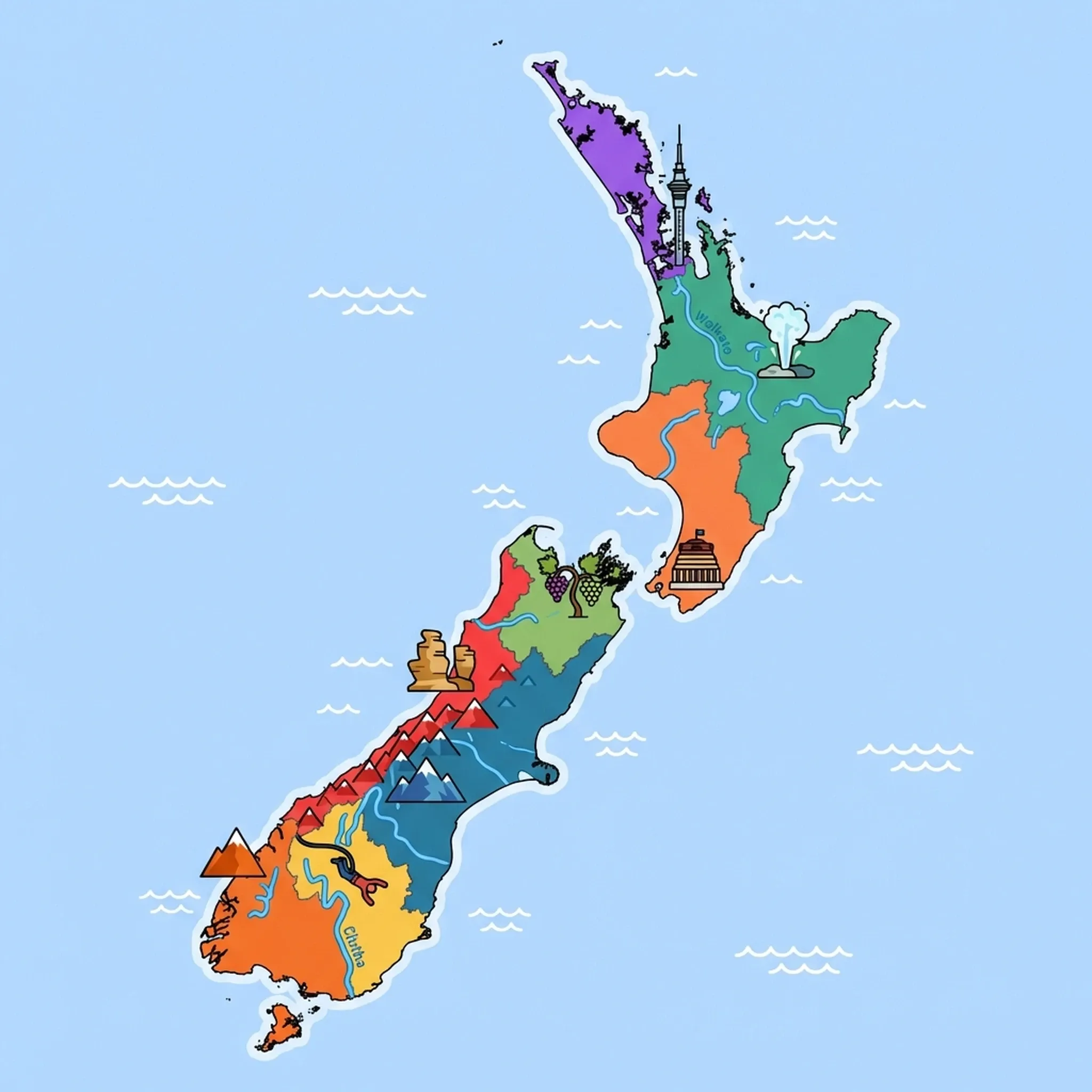
Click a region to explore
Sitting at the top of the South Island, the Nelson and Marlborough regions are blessed with New Zealand's highest sunshine hours, making them a magnet for families seeking a classic beach holiday. The vibe here is noticeably slower and more creative than elsewhere. Nelson is a hub for artists and craftspeople, filled with galleries and markets, while Marlborough is a world-renowned wine region that manages to remain surprisingly family-friendly. The landscape varies from the intricate, drowned river valleys of the Marlborough Sounds to the sweeping golden crescents of Tasman Bay.
For active families, this is paradise. The ocean here is generally calmer and more sheltered than the rugged west coast, making it safer for swimming and kayaking. You can spend days exploring the inlets of the Sounds by boat, spotting dolphins and fur seals, or hiking the coastal tracks where the bush meets the beach. The region also prides itself on its artisan food culture; roadside stalls selling fresh apples, berries, and hops are a common sight, providing healthy and cheap snacks for the road. It feels civilized yet adventurous—a place where you can hike a remote track in the morning and enjoy a wood-fired pizza at a vineyard in the afternoon.
Key Attractions
The absolute must-do is Abel Tasman National Park. Accessible by boat or foot, it offers New Zealand's finest coastal scenery. Families often take a water taxi into the park, walk a section of the Abel Tasman Coast Track, and then boat back—a perfect day out. The beaches are golden, the water turquoise, and the forest lush.
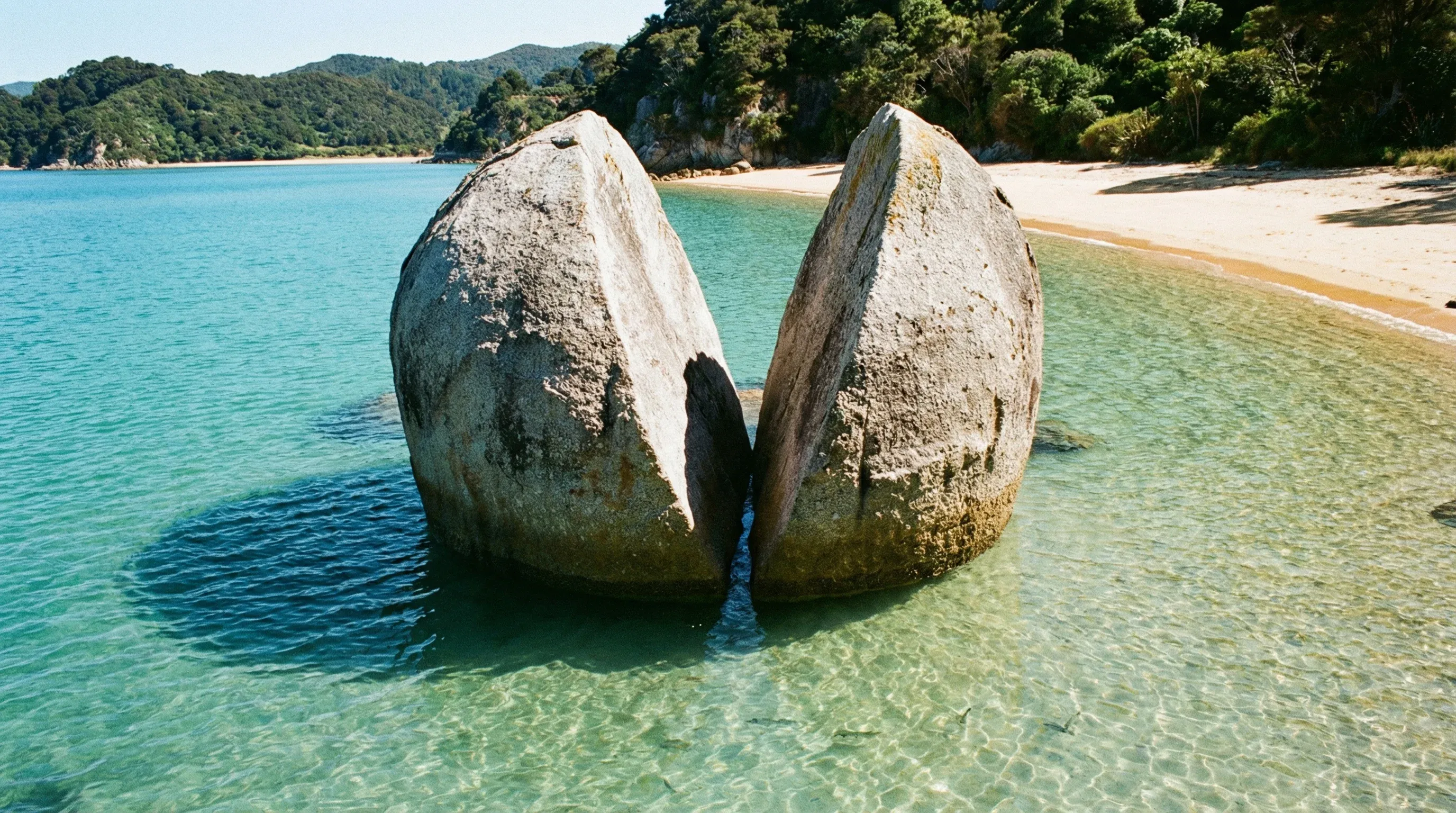
In Blenheim, the Omaka Aviation Heritage Centre is surprisingly gripping for all ages. Created with input from Peter Jackson (Lord of the Rings director), it features theatrical displays of WWI and WWII aircraft that are dramatic and immersive rather than dusty and dry. Near Nelson, the Split Apple Rock (Tokangawhā) is a quirky geological formation that makes for a fun kayak destination or photo opportunity. For a relaxing afternoon, Lake Rotoiti in Nelson Lakes National Park offers stunning alpine scenery with easy lakeside walks and a jetty famous for jumping off.
Practical Advice
Summer (December to March) is peak season and accommodation books out months in advance. The shoulder seasons (November and April) are fantastic—still sunny but less crowded. If driving from Picton, be prepared for winding roads, especially through the Sounds.
Food & Drink
Typical meal times: Lunch 11:30 am to 2:00 pm. Dinner 5:30 pm to 8:30 pm. Cafes open early (7:30 am) for breakfast.
Typical meal costs: Vineyard lunches are popular, costing NZ$30–50 (approx. $18–30 USD / €16–28 EUR) per main. Pub meals are standard NZ$25–35 (approx. $15–21 USD / €14–19 EUR).
Dietary requirements: Extremely high awareness. Nelson has a strong health-food and hippy culture; organic, vegan, and gluten-free food is everywhere.
Signature dishes:
- Green-lipped Mussels – Marlborough is the mussel capital; try them steamed in white wine and garlic in the town of Havelock.
- Scallops – Nelson scallops are a seasonal treat (winter/spring), sweet and rich.
- Real Fruit Ice Cream – A swirl of vanilla ice cream and frozen local berries (boysenberries are a local specialty) blended to order.
Why this score?
The Abel Tasman Coast Track and the Marlborough Sounds offer excellent sea kayaking and hiking opportunities that are adventurous yet accessible for families. Kahurangi and Nelson Lakes national parks provide more rugged, off-the-beaten-path options for experienced trekkers. The balance of well-maintained trails and safe coastal waters makes it a 'soft adventure' stronghold.
Why this score?
Nelson and Blenheim both host capable regional hospitals that are well-accustomed to treating international tourists, particularly during the summer peak. The infrastructure is modern, and English-speaking staff are the standard, making it very accessible for families. While not as specialized as Auckland, the level of care is very good for most common travel-related medical needs.
Why this score?
This region is highly popular with domestic travelers and niche international groups interested in the Marlborough wine industry and Abel Tasman National Park. While it receives a steady stream of hikers and wine enthusiasts, it lacks the global 'bucket list' intensity of Queenstown or Rotorua. It functions primarily as a high-quality lifestyle and coastal leisure destination.

Accommodation is moderately priced, though beachfront baches (holiday homes) in summer can be expensive. Expect to pay NZ$180–250 (approx. $110–150 USD / €100–140 EUR) for a family motel. Food is great value, especially fresh produce from roadside stalls.

Getting Here & Around
Getting Here
- Ferry – The Interislander and Bluebridge ferries connect Wellington (North Island) to Picton in the Marlborough Sounds. The 3.5-hour journey is scenic.
- Airports – Nelson Airport (NSN) and Marlborough Airport (BHE) in Blenheim have frequent domestic connections.
- Driving – Nelson is a 2-hour drive from Picton or 4 hours from Christchurch via the scenic coastal SH1 (check for roadworks).
Getting Around
- Car – Essential. The region is spread out. The drive over Takaka Hill Scenic Drive (State Highway 60) to Golden Bay is steep and winding.
- Water Taxi – The primary transport within Abel Tasman National Park. Reliable and fun for kids.
- Cycling – The Tasman's Great Taste Trail offers flat, safe cycling routes perfect for families.
Nearby Airports (3 airports)
Woodbourne
BHEBlenheim
Nelson
NSNNelson
Picton Aerodrome
PCNPicton
View full flight map for New Zealand →
Official Links

Packing List
Roads are winding (especially Takaka Hill) and the Cook Strait ferry can be choppy.
You will spend a lot of time on golden sand beaches; keeping it out of the car is a challenge.
Sandflies are present in the National Parks and near the lakes, though better than the West Coast.
If you plan to ride the Great Taste Trail, padded shorts make a day in the saddle much happier.
Essential for 'sandflies' (biting midges) in the South Island, which are immune to natural repellents.
The ozone layer is thin here; burn times are 10-15 mins. European/US sunscreens often aren't strong enough.
Single-use plastic bags are banned in all supermarkets and shops. Bring lightweight foldable ones.
Roads are exceptionally winding and hilly, often causing car sickness even in those who rarely suffer from it.
Weather changes instantly ('four seasons in one day'). A light rain shell is vital even in summer.

Activities & Best Times

Hiking, wildlife, outdoor exploration, ecotourism
Home to the Abel Tasman National Park and Marlborough Sounds, providing world-class coastal trekking and marine wildlife encounters. Peak summer (Dec-Mar) offers the stable weather required for multi-day expeditions and kayaking.

Urban tourism, museums, historical sites, architecture
Features unique, world-class museums like the World of WearableArt and Omaka Aviation Heritage Centre that appeal to sophisticated travelers. Summer is the peak season for urban energy and markets, while winter is significantly quieter.

Sport tourism, fitness activities, active recreation
Offers premier 'Great Walks' and high-quality mountain bike parks with world-class infrastructure. The primary season follows the dry, warm summer months; winter rainfall often makes trails muddy and less accessible for families.

Scenic drives, countryside tours, route-based travel
The Marlborough Wine Trail and Queen Charlotte Drive are renowned scenic routes through coastal sounds and world-famous vineyards. Visibility and vineyard activity are optimal in summer, with autumn offering stunning foliage.

Beach resorts, marine activities: diving, snorkelling, kite surfing, wind surfing, sailing
Notes explicitly state 'temperate water temperatures' - while Abel Tasman beaches are beautiful, cold water limits swimming appeal compared to international beach destinations.

Winter sports, ski resorts, snow activities
Rainbow Ski Area provides a boutique alpine experience, but its small scale and short season make it a secondary destination for international skiers. Coverage is only reliable during the core winter months of July and August.

Attractions (21 total)



Public Holidays & Calendar Next 12 months
Public holidays, festivals, cultural celebrations, and seasonal natural phenomena coming up in Marlborough & Nelson over the next 12 months.
Loading holidays and events...

Travel Advisory
All major international agencies categorize New Zealand as a low-risk destination where standard safety awareness is sufficient for travellers.
Safety Topics
Traveller Advice (4 groups)

Outdoor conditions and alpine weather can change violently and without warning. Hikers (trampers) should register their plans with the Department of Conservation and carry a Personal Locator Beacon (PLB) when heading into remote areas.

Ensure you have a valid NZeTA or visa before departure. Complete the digital New Zealand Traveller Declaration (NZTD) prior to arrival. Comprehensive travel insurance is highly recommended even with reciprocal healthcare agreements.

The social and legal environment is highly inclusive, with no specific safety warnings for sexual or gender minorities.

While generally safe, solo female travellers should follow standard safety protocols and remain vigilant when out at night in less populated urban areas.
Agency Summaries
Safety conditions are comparable to Australia. Travellers must complete the mandatory New Zealand Traveller Declaration (NZTD) before arrival. There is a noted increased risk of measles, and visitors are encouraged to be up-to-date on vaccinations.
Standard vigilance is recommended. Visitors must obtain a New Zealand Electronic Travel Authority (NZeTA) before arriving. Practical advice focuses on emergency contacts and precautions against petty theft.
Travellers should maintain standard safety awareness. Key concerns include petty crime like pickpocketing in urban and tourist areas, as well as natural hazards such as seismic and volcanic activity. The terrorism threat level is monitored but considered a general risk.
The country is considered safe for travel with standard precautions. Information is provided regarding volcanic hazards, specifically at Whakaari/White Island, and geological monitoring through local services like GeoNet.
No major travel warnings are in place. The advice highlights environmental risks such as tsunamis and earthquakes, alongside strict biosecurity regulations and entry requirements for British nationals.
Information is provided for general guidance only and does not constitute travel, safety, medical, or legal advice. Conditions may change. Users are responsible for independently verifying information before travel.