
South Island West Coast (glaciers)
Wild coastlines, ancient glaciers, and greenstone trails 🌊❄️
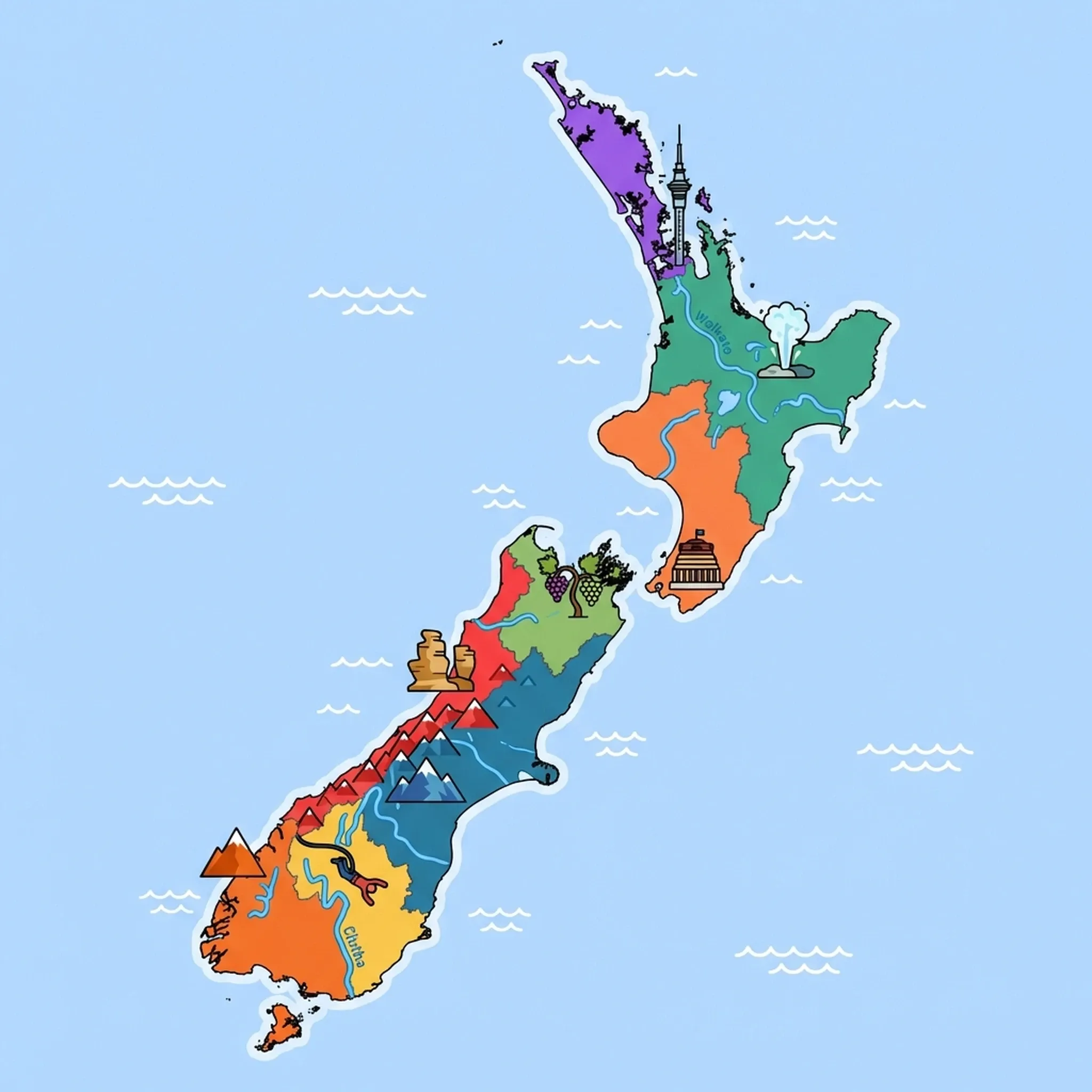
Click a region to explore
The West Coast—or simply "The Coast" to locals—is New Zealand at its most untamed. It is a narrow ribbon of land hemmed in by the crashing Tasman Sea on one side and the towering Southern Alps on the other. This isolation has bred a unique culture of resilience and friendliness among the "Coasters." For families, it is a place of prehistoric beauty where ferns grow the size of trees and rivers run vivid turquoise. It is one of the few places in the world where glaciers descend through rainforest almost to sea level, allowing for incredible scenery without the need for high-altitude mountaineering.
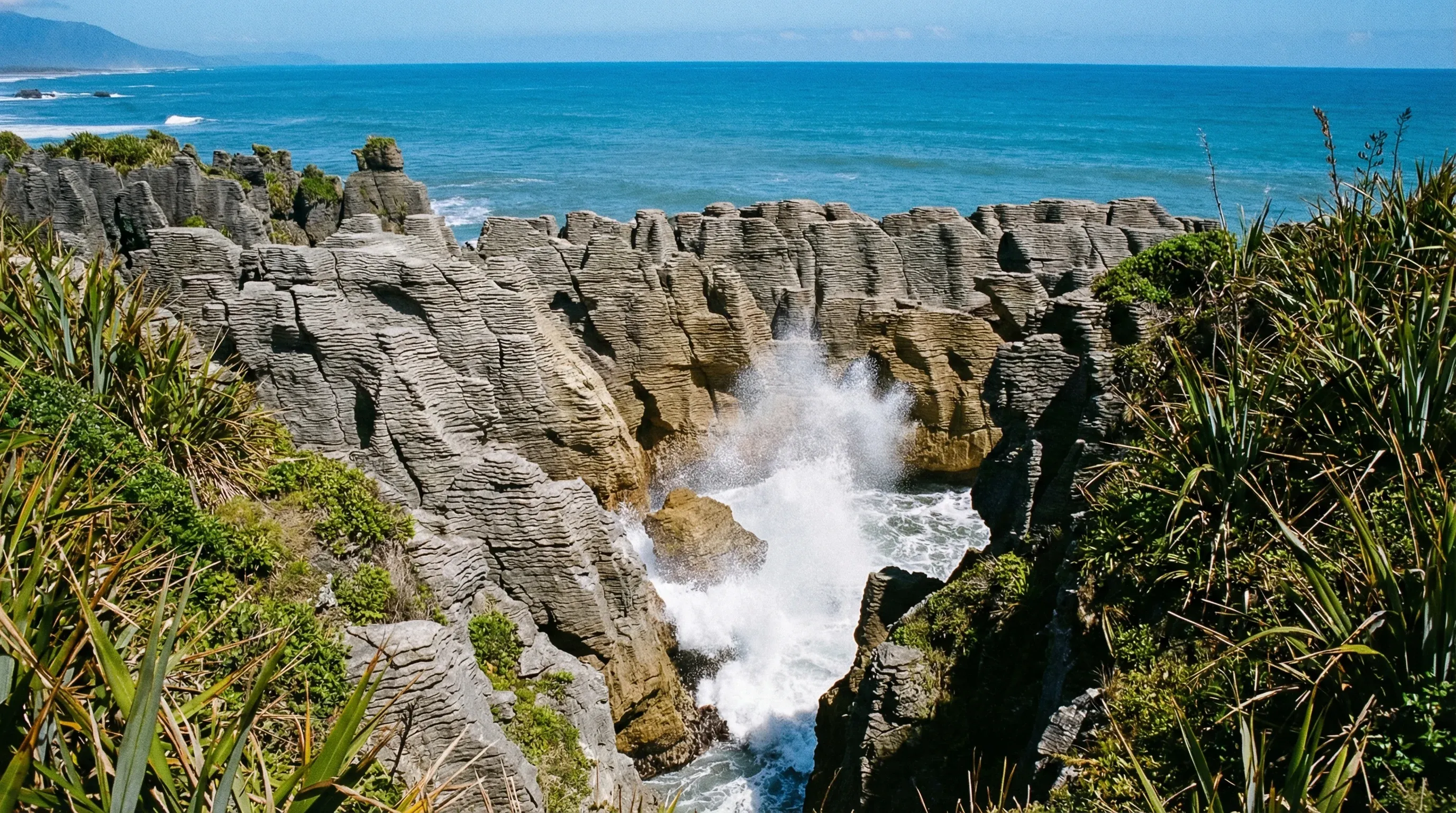
The region is rich in history, particularly gold mining and pounamu (greenstone/jade) hunting. In Hokitika, families can watch carvers turn raw stone into jewellery, or even try finding their own jade on the pebbled beaches (look, but don't take from protected areas). The coastline is dramatic; at Punakaiki, the limestone rocks have been eroded into stacks that look like piles of pancakes, with blowholes that shoot sea spray high into the air at high tide—a guaranteed hit with kids. While the weather is notoriously wet, the rain creates a lush, green Jurassic Park atmosphere that is beautiful in its own right.
Key Attractions
The glaciers are the main draw. Franz Josef Glacier and Fox Glacier are accessible via valley walks that take you near the terminal face. Note that you can no longer walk *onto* the ice without a helicopter tour, but the valley views are still spectacular. Near Punakaiki, the Pancake Rocks and Blowholes are a short, paved loop walk that is stroller-friendly and spectacular at high tide.
For a touch of history, Shantytown Heritage Park near Greymouth is a recreated 19th-century gold rush town. Kids can ride a steam train, pan for real gold (and keep it!), and explore old buildings. Nature lovers shouldn't miss the Hoktiika Gorge, where the water is a startling, milky blue, suspended by swing bridges that offer great views. The West Coast Treetop Walk & Café offers a bird's eye view of the rainforest canopy on secure steel platforms.
Practical Advice
It rains 160+ days a year here. Rainfall is measured in metres, not millimetres. Pack quality rain gear. There are long distances between towns with no fuel or cell service, so tank up in Greymouth, Hokitika, or Franz Josef.
Food & Drink
Typical meal times: Lunch 12:00 pm–1:30 pm. Dinner 6:00 pm–8:00 pm. Options are limited late at night.
Typical meal costs: Standard pub prices. Mains NZ$28–38 (approx. $17–23 USD / €15–21 EUR). Whitebait is a premium dish, often NZ$35+ for a fritter.
Dietary requirements: Basic. Vegetarian options are available, but vegan/gluten-free choices are less common outside main tourist cafes in Franz Josef.
Signature dishes:
- Whitebait Fritters – The West Coast is the heart of whitebaiting. The tiny fish are cooked in an egg batter, usually served between slices of white bread.
- Venison – Wild game is a staple here, often served as burgers or stews.
- Monteith’s Beer – Brewed in Greymouth; the brewery tour is popular, and the taproom serves hearty food.
Why this score?
The region is defined by its ruggedness, featuring ancient glaciers, dense rainforests, and a violent coastline that feels truly wild. Visitors can engage in glacier hiking and navigate the remote Haast Pass, which requires self-sufficiency and planning. The terrain is physically demanding and the environment can be unpredictable, offering a high level of authentic adventure.
Why this score?
Medical services are quite sparse, with small community hospitals in Greymouth and Hokitika serving a massive geographic area. Specialist care is non-existent locally, and the rugged geography can make emergency transport during bad weather challenging. For families, this means basic care is available for minor injuries, but serious conditions will necessitate a long transfer to Christchurch.
Why this score?
The West Coast is a niche destination characterized by its low population and wild weather, resulting in fewer international visitors than the eastern South Island. While the Franz Josef and Fox Glaciers are significant attractions, the region often serves as a transit route rather than a long-stay destination. Its popularity is tempered by its remote location and high rainfall, which can deter casual tourists.

Accommodation is generally reasonably priced (NZ$150–220 / approx. $90–130 USD / €85–125 EUR), though Franz Josef can be pricier in summer due to high demand. Helicopter flights onto the glaciers are a luxury splurge, costing NZ$300+ (approx. $180 USD / €165 EUR) per person.

Getting Here & Around
Getting Here
- Driving – Access via spectacular alpine passes: Haast Pass Highway (SH6) from the south, or The Great Alpine Highway (SH73) (Arthur's Pass) from Christchurch.
- Train – The TranzAlpine train from Christchurch to Greymouth is rated one of the world's most scenic rail journeys.
- Airports – Hokitika (HKK) has flights from Christchurch.
Getting Around
- Car – Absolutely essential. Public transport is virtually non-existent between towns.
- Walking – Short walks like the Lake Matheson reflection walk are the best way to see the scenery.
- Cycling – The West Coast Wilderness Trail is a smooth, scenic trail suitable for active families.
Nearby Airports (1 airport)
Hokitika
HKKHokitika
View full flight map for New Zealand →
Official Links

Packing List
Sandflies are aggressive here; burning these when sitting outside in the evening helps immensely.
Rain is heavy and horizontal; jeans will be useless if you want to see the glaciers in wet weather.
Radio reception and mobile data drop out for hours on the long drives between towns.
Cheap, disposable backup for the kids when their 'water resistant' jacket gives up.
Essential for 'sandflies' (biting midges) in the South Island, which are immune to natural repellents.
The ozone layer is thin here; burn times are 10-15 mins. European/US sunscreens often aren't strong enough.
Single-use plastic bags are banned in all supermarkets and shops. Bring lightweight foldable ones.
Roads are exceptionally winding and hilly, often causing car sickness even in those who rarely suffer from it.
Weather changes instantly ('four seasons in one day'). A light rain shell is vital even in summer.

Activities & Best Times

Hiking, wildlife, outdoor exploration, ecotourism
Home to the world-renowned Franz Josef and Fox Glaciers and the Paparoa Great Walk, this region offers unparalleled immersion in UNESCO-protected wilderness. Summer provides the most reliable access for families exploring these ecosystems, though high annual rainfall is a constant factor regardless of the season.

Urban tourism, museums, historical sites, architecture
The region preserves significant colonial heritage at Shantytown Heritage Park and iconic natural landmarks that serve as cultural touchstones for New Zealand. Peak tourism months allow families to soak in the authentic frontier atmosphere of small coastal towns with full access to historical sites.

Sport tourism, fitness activities, active recreation
Boasts world-class cycling and hiking infrastructure including the West Coast Wilderness Trail and the Paparoa Track. These purpose-built routes are best experienced in the warmer, longer days of the southern summer, as winter conditions can be prohibitively wet and cold for active children.

Learning experiences, scientific sites, historical education
Features high-quality conservation centers where families can interact with the rare Rowi Kiwi and learn about unique glacial geology. These facilities are primary travel motivators that offer engaging, world-class scientific learning opportunities primarily during the main tourism window.

Scenic drives, countryside tours, route-based travel
The Great Coast Road is globally recognized for its dramatic limestone formations and rainforest scenery. Travelers should prioritize the summer and shoulder seasons for optimal visibility and to avoid potential ice or heavy storm closures on the alpine passes.
Beach resorts, marine activities: diving, snorkelling, kite surfing, wind surfing, sailing
Described as 'rugged coastal scenery' and 'geological wonders' - this is scenic/geological tourism, not beach holiday tourism. Cold, wild coast unsuitable for swimming.

Spa retreats, wellness centers, peaceful getaways
Natural hot springs and glacier-village spa facilities provide restorative experiences in a wilderness setting. These are best utilized as a complement to outdoor adventures during the warmer months when the remote locations are most easily reached.
Amusement parks, family entertainment venues
Limited to regional aquatic and recreation centers that provide entertainment for domestic travelers or wet-weather alternatives. While not international destinations themselves, they offer basic recreational facilities for families during the peak summer holiday period.

Attractions (15 total)



Public Holidays & Calendar Next 12 months
Public holidays, festivals, cultural celebrations, and seasonal natural phenomena coming up in South Island West Coast (glaciers) over the next 12 months.
Loading holidays and events...

Travel Advisory
All major international agencies categorize New Zealand as a low-risk destination where standard safety awareness is sufficient for travellers.
Safety Topics
Traveller Advice (4 groups)

Outdoor conditions and alpine weather can change violently and without warning. Hikers (trampers) should register their plans with the Department of Conservation and carry a Personal Locator Beacon (PLB) when heading into remote areas.

Ensure you have a valid NZeTA or visa before departure. Complete the digital New Zealand Traveller Declaration (NZTD) prior to arrival. Comprehensive travel insurance is highly recommended even with reciprocal healthcare agreements.

The social and legal environment is highly inclusive, with no specific safety warnings for sexual or gender minorities.

While generally safe, solo female travellers should follow standard safety protocols and remain vigilant when out at night in less populated urban areas.
Agency Summaries
Safety conditions are comparable to Australia. Travellers must complete the mandatory New Zealand Traveller Declaration (NZTD) before arrival. There is a noted increased risk of measles, and visitors are encouraged to be up-to-date on vaccinations.
Standard vigilance is recommended. Visitors must obtain a New Zealand Electronic Travel Authority (NZeTA) before arriving. Practical advice focuses on emergency contacts and precautions against petty theft.
Travellers should maintain standard safety awareness. Key concerns include petty crime like pickpocketing in urban and tourist areas, as well as natural hazards such as seismic and volcanic activity. The terrorism threat level is monitored but considered a general risk.
The country is considered safe for travel with standard precautions. Information is provided regarding volcanic hazards, specifically at Whakaari/White Island, and geological monitoring through local services like GeoNet.
No major travel warnings are in place. The advice highlights environmental risks such as tsunamis and earthquakes, alongside strict biosecurity regulations and entry requirements for British nationals.
Information is provided for general guidance only and does not constitute travel, safety, medical, or legal advice. Conditions may change. Users are responsible for independently verifying information before travel.