
Wellington & Lower North Island
Coolest little capital with a wild wind 🌬️☕
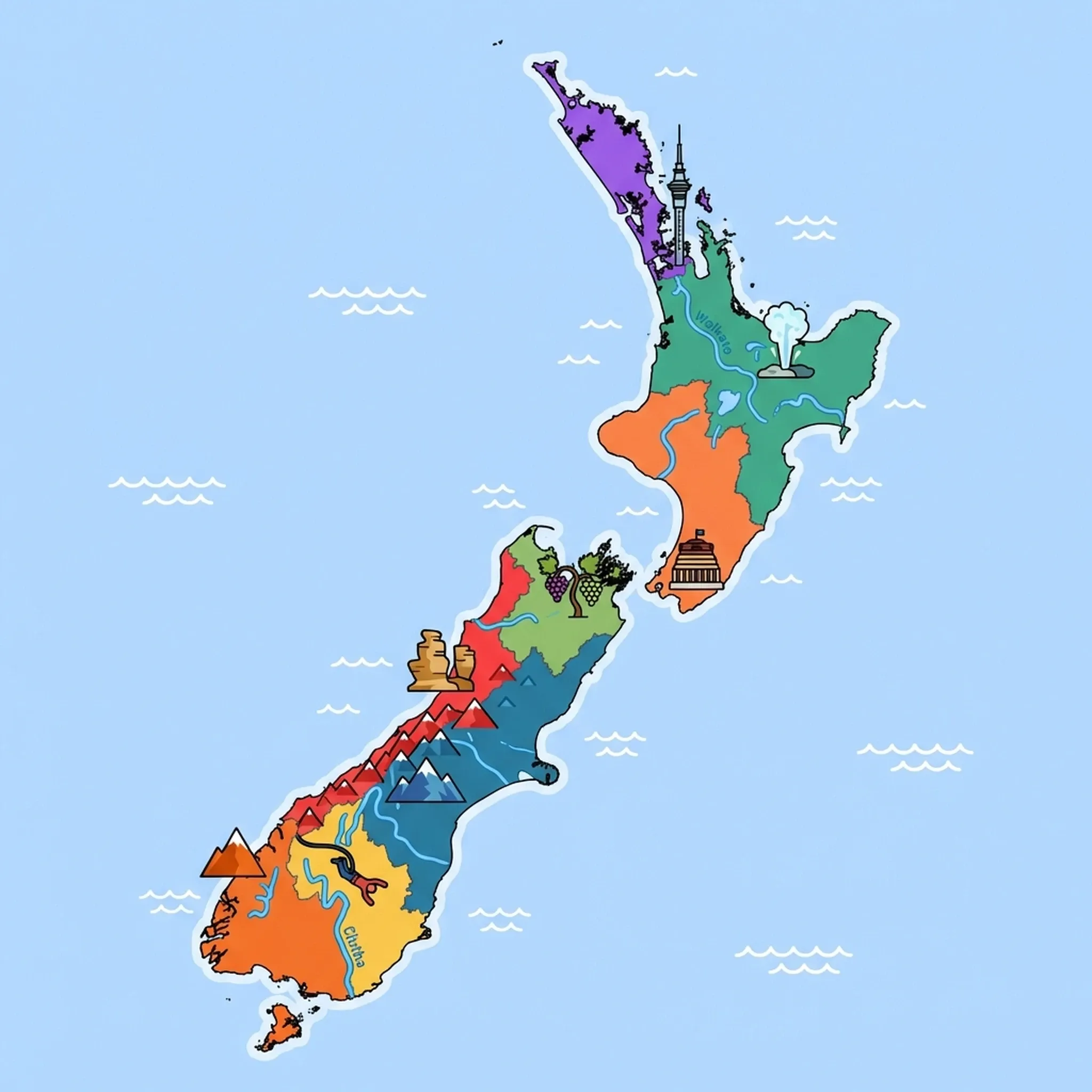
Click a region to explore
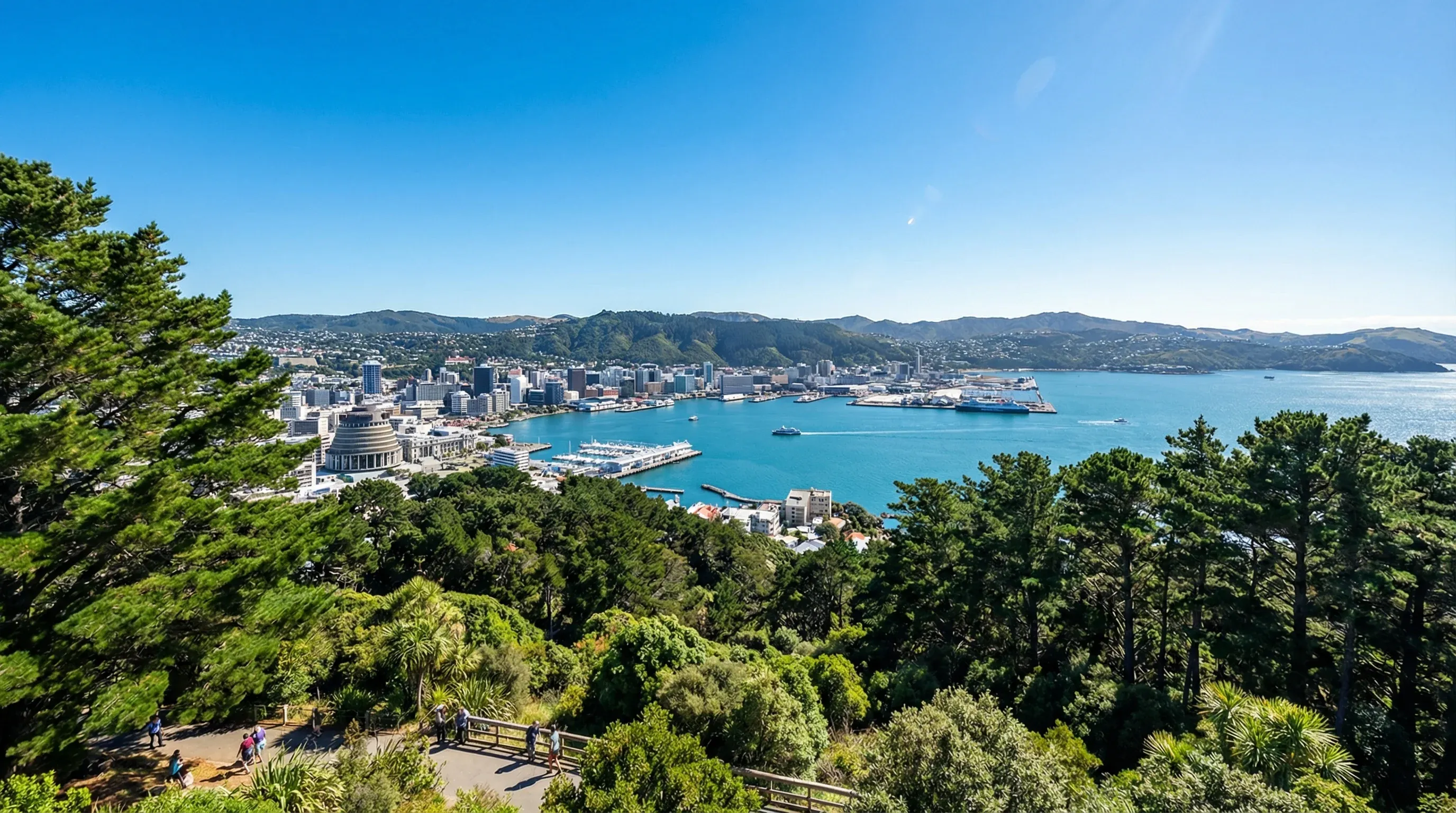
Wellington is often called the "coolest little capital in the world," and it lives up to the hype. It is a city that embraces its geography; houses cling to steep hillsides offering stunning harbour views, and the central city is wrapped around a beautiful, walkable waterfront. For families, Wellington is arguably the best urban destination in the country. It is compact enough to walk everywhere, yet packed with national significance. The culture here is vibrant, fueled by a world-famous coffee scene and the creative energy of the Weta Workshop (creators of Lord of the Rings effects). The wind is a famous character in Wellington—it blows strong and fresh from the Cook Strait, keeping the air clean and the energy high.
Beyond the city centre, the region opens up to diverse experiences. A short drive or train ride north leads to the Kapiti Coast, a relaxed beachy strip with nature reserves like Kāpiti Island Nature Reserve, one of the few places you can see wild kiwi and takahe. To the east lies the Wairarapa, a rural region of vineyards and jagged coastlines. Here, families can visit the Cape Palliser lighthouse and see a massive colony of fur seals basking on the rocks right next to the car park. It's a region that blends sophisticated city culture with raw, accessible nature.
Key Attractions
The crown jewel is Te Papa Tongarewa - Toi Art, the national museum. It is free, massive, and incredibly interactive, with zones specifically designed for children to touch, climb, and explore. The Wellington Cable Car is another icon; the short ride up from Lambton Quay offers panoramic views and leads directly to the Wellington Botanic Garden and the Space Place planetarium.
Wildlife lovers should visit Wellington Zoo, known for its "Meet the Locals" precinct, or take a tour to Kāpiti Island Nature Reserve for a Jurassic-style birdwatching adventure. For a unique spooky history lesson, the Putangirua Pinnacles in Wairarapa (the "Paths of the Dead" in LOTR) are spectacular erosion formations that make for a great, albeit steep, family hike. The New Zealand Parliament Buildings (the Beehive) also offer free tours that are surprisingly engaging for school-aged kids.
Practical Advice
Wellington is known as "Windy Wellington" for a reason. Always carry a windbreaker, even on sunny days. Umbrellas are useless here; the wind destroys them instantly. The city is very hilly, so be prepared for walking up steep slopes if you venture off the main shopping streets.
Food & Drink
Typical meal times: Lunch 12:00 pm–2:00 pm. Dinner 5:30 pm–9:00 pm. Wellington has more cafes per capita than New York, so food is available everywhere.
Typical meal costs: Mid-to-high. Cafe brunch NZ$25–30 (approx. $15–18 USD / €14–17 EUR). Dinner mains NZ$32–45 (approx. $19–27 USD / €18–25 EUR).
Dietary requirements: Exceptional. Wellington is a haven for allergies and preferences; almost every eatery offers gluten-free, dairy-free, and vegan options as standard.
Signature dishes:
- Cheese Scones – A religion in Wellington. The best are heated, savoury, and served with lashings of butter.
- Craft Beer – The craft beer capital of NZ. Many breweries (like Garage Project) are family-friendly with food trucks and sodas.
- Flat White – The quintessential NZ coffee, perfected here.
Why this score?
The region is mostly urbanized or composed of rolling hills and coastal walks, offering the lowest adventure score in the New Zealand context. While there are mountain bike parks like Makara Peak, the activities are generally low-risk and close to urban infrastructure. It lacks the high-alpine or wilderness intensity found in the central and southern parts of the country.
Why this score?
Wellington offers world-class medical facilities, including Wellington Hospital, which is a leading teaching and research institution. Foreign tourists have access to top-tier specialist care, 24-hour emergency services, and a wide array of private practitioners. The urban environment ensures that help is never far away and that international insurance protocols are standard practice.
Why this score?
As the capital, Wellington has a strong flow of domestic business and government travelers, but it attracts fewer international 'leisure-only' tourists than the scenic hubs. Major cultural draws like Te Papa Museum and the Weta Workshop keep it on the international map, though many visitors stay for only 1-2 nights. It is more of a cultural and transit hub than a primary nature destination.

Hotels in the CBD can be pricey during the week due to business travel (NZ$200–300 / approx. $120–180 USD / €110–165 EUR), but often cheaper on weekends. The best thing is that many top attractions, including Te Papa, the Botanic Gardens, and Parliament tours, are completely free.

Getting Here & Around
Getting Here
- Airports – Wellington Airport (WLG) is a major hub, famous for its sometimes bumpy, windy landings.
- Ferry – The Interislander connects Wellington to Picton (South Island). The terminal is a short shuttle ride from the CBD.
- Train – The Northern Explorer connects Auckland to Wellington (long scenic journey).
Getting Around
- Walking – The CBD is very walkable. The waterfront promenade is flat and safe for kids.
- Public Transport – Metlink trains and buses are excellent. Trains run to the Wairarapa and Kapiti Coast.
- Cable Car – Essential for getting from the city up to Kelburn and the Wellington Botanic Garden.
Nearby Airports (4 airports)
New Plymouth
NPLNew Plymouth
Palmerston North
PMRPalmerston North
Wanganui
WAGWanganui
Wellington International
WLGWellington
View full flight map for New Zealand →
Official Links

Packing List
The wind cuts through wool and fleece; you need a windproof shell layer.
Long hair will be constantly whipped in your face without containment.
Wellington footpaths can be steep and slippery when wet; heels or smooth soles are a bad idea.
The wind cools you down so you don't feel the burn, but the UV is still fierce.
Essential for 'sandflies' (biting midges) in the South Island, which are immune to natural repellents.
The ozone layer is thin here; burn times are 10-15 mins. European/US sunscreens often aren't strong enough.
Single-use plastic bags are banned in all supermarkets and shops. Bring lightweight foldable ones.
Roads are exceptionally winding and hilly, often causing car sickness even in those who rarely suffer from it.
Weather changes instantly ('four seasons in one day'). A light rain shell is vital even in summer.

Activities & Best Times

Hiking, wildlife, outdoor exploration, ecotourism
Features Zealandia Te Māra a Tāne, a world-leading ecosanctuary, alongside rugged coastal landscapes and forest parks. Summer provides optimal conditions for wildlife viewing and hiking, while winter brings high rainfall and mud to natural trails.

Urban tourism, museums, historical sites, architecture
Wellington is New Zealand's cultural hub, offering a sophisticated mix of world-class museums like Te Papa and a renowned culinary scene. Peak months offer vibrant street life and outdoor festivals, while winter is best suited for indoor cultural exploration.

Learning experiences, scientific sites, historical education
The region hosts internationally significant facilities like Zealandia and the Space Place, which offer deep engagement with unique island ecology and astronomy. Peak accessibility aligns with summer holidays, though indoor components remain viable in the shoulder seasons.

Scenic drives, countryside tours, route-based travel
The Classic New Zealand Wine Trail provides a sophisticated route through boutique vineyards and scenic rural landscapes. Best experienced in the settled weather of summer and autumn, as winter can bring challenging driving conditions to the Remutaka ranges.

Sport tourism, fitness activities, active recreation
Offers high-quality infrastructure for cycling, including the Remutaka Cycle Trail, and adventure activities like Adrenalin Forest. Peak months provide the dry, calm conditions necessary for these exposed outdoor activities.
Beach resorts, marine activities: diving, snorkelling, kite surfing, wind surfing, sailing
The region features scenic but wild coastal spots like Castlepoint and the iconic Oriental Bay city beach. Due to the temperate climate and frequent high winds, coastal recreation is only recommended during the height of summer.

Events, celebrations, seasonal attractions
Anchored by the internationally acclaimed World of WearableArt (WOW) show in spring, attracting global designers and visitors. The seasonal appeal is highly concentrated around this major event, with limited international-scale festival activity outside this window.

Attractions (22 total)



Public Holidays & Calendar Next 12 months
Public holidays, festivals, cultural celebrations, and seasonal natural phenomena coming up in Wellington & Lower North Island over the next 12 months.
Loading holidays and events...

Travel Advisory
All major international agencies categorize New Zealand as a low-risk destination where standard safety awareness is sufficient for travellers.
Safety Topics
Traveller Advice (4 groups)

Outdoor conditions and alpine weather can change violently and without warning. Hikers (trampers) should register their plans with the Department of Conservation and carry a Personal Locator Beacon (PLB) when heading into remote areas.

Ensure you have a valid NZeTA or visa before departure. Complete the digital New Zealand Traveller Declaration (NZTD) prior to arrival. Comprehensive travel insurance is highly recommended even with reciprocal healthcare agreements.

The social and legal environment is highly inclusive, with no specific safety warnings for sexual or gender minorities.

While generally safe, solo female travellers should follow standard safety protocols and remain vigilant when out at night in less populated urban areas.
Agency Summaries
Safety conditions are comparable to Australia. Travellers must complete the mandatory New Zealand Traveller Declaration (NZTD) before arrival. There is a noted increased risk of measles, and visitors are encouraged to be up-to-date on vaccinations.
Standard vigilance is recommended. Visitors must obtain a New Zealand Electronic Travel Authority (NZeTA) before arriving. Practical advice focuses on emergency contacts and precautions against petty theft.
Travellers should maintain standard safety awareness. Key concerns include petty crime like pickpocketing in urban and tourist areas, as well as natural hazards such as seismic and volcanic activity. The terrorism threat level is monitored but considered a general risk.
The country is considered safe for travel with standard precautions. Information is provided regarding volcanic hazards, specifically at Whakaari/White Island, and geological monitoring through local services like GeoNet.
No major travel warnings are in place. The advice highlights environmental risks such as tsunamis and earthquakes, alongside strict biosecurity regulations and entry requirements for British nationals.
Information is provided for general guidance only and does not constitute travel, safety, medical, or legal advice. Conditions may change. Users are responsible for independently verifying information before travel.