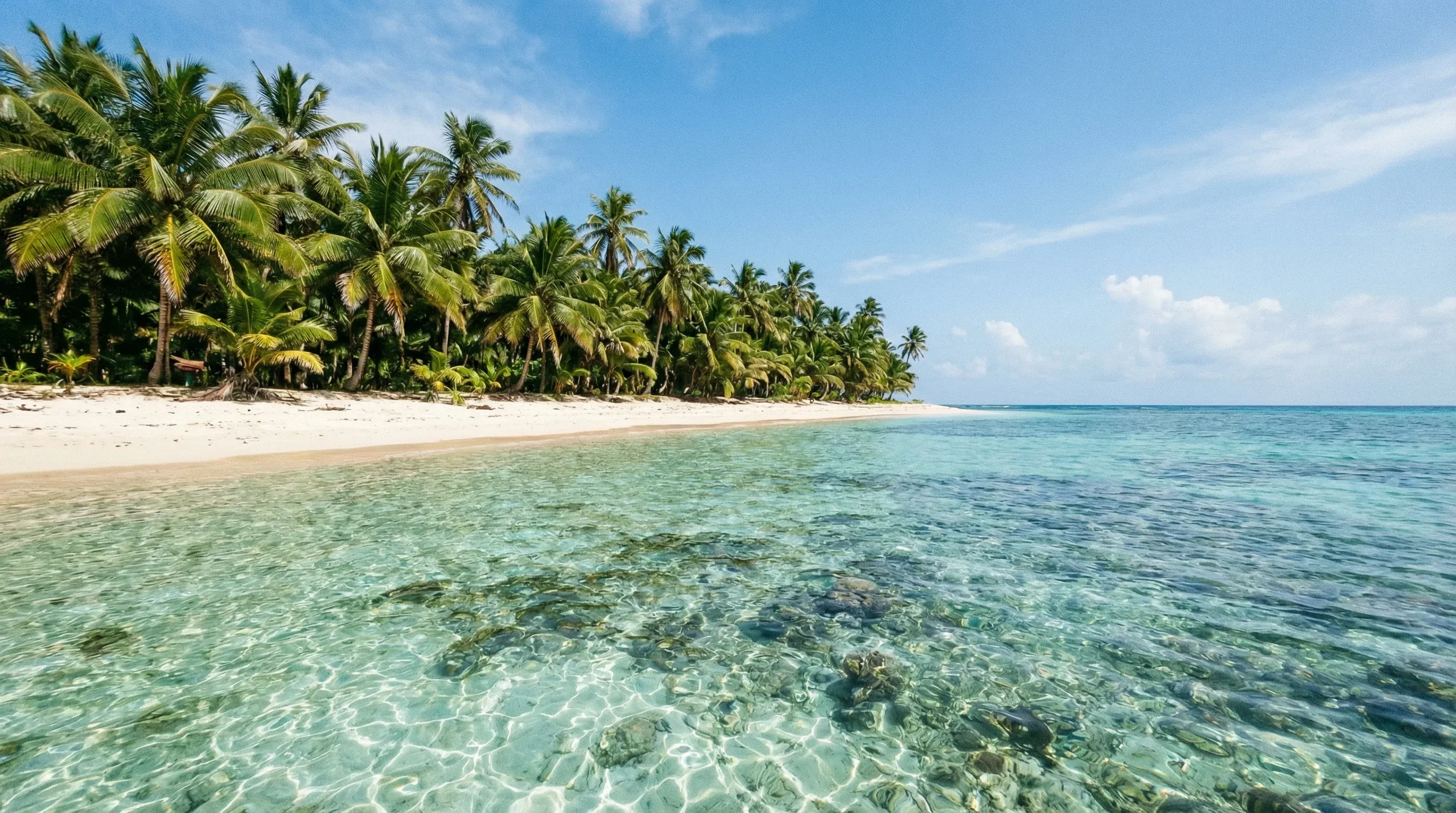

Corn Islands & Caribbean
Turquoise waters, Creole rhythms, and barefoot island life 🏝️
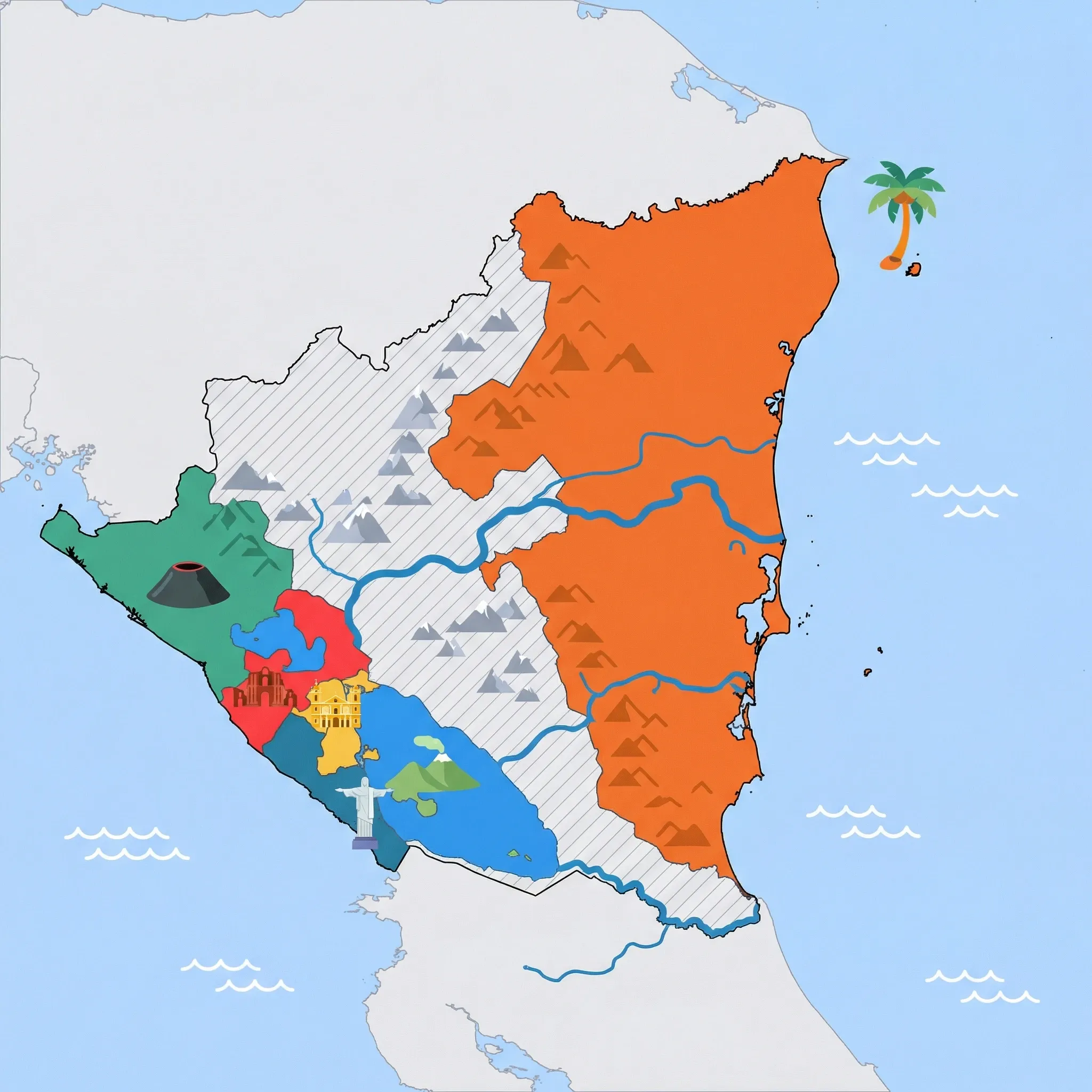
Click a region to explore
The Corn Islands (Las Islas del Maíz) and the Caribbean coast represent a culturally distinct side of Nicaragua that feels more like Jamaica or Belize than Central America. For families, this region offers a dramatic change of pace from the volcanic Pacific. The primary draw consists of two islands: Big Corn, with its taxis and paved roads, and Little Corn, a car-free gem where travel is strictly by foot or bicycle. The atmosphere here is heavily influenced by Afro-Caribbean heritage, meaning English (Creole) is widely spoken, reggae music fills the air, and the pace of life slows to a crawl. The water is warm, calm, and crystal clear on the leeward sides, making it exceptionally safe for children learning to snorkel or swim.
Beyond the beaches, the region offers a chance to disconnect. Little Corn Island, in particular, requires families to walk through jungle paths to reach their cabanas, creating an immediate sense of adventure. The mainland hub of Bluefields and the nearby Pearl Lagoon offer a glimpse into the diverse indigenous and Creole communities of the coast, though most international tourists focus their time on the islands. The biodiversity is stunning; it is not arguably the best place in the country for marine life encounters, with nurse sharks, rays, and sea turtles frequently spotted just offshore. While the journey here requires a flight or a long ferry, the reward is a genuine island paradise that lacks the commercialized polish of other Caribbean destinations, offering a raw, authentic, and memorable family experience.
Key Attractions
The star attraction for any family visiting this region is undoubtedly the ocean. While the beaches on the islands are beautiful, a day trip to the Pearl Cays is widely considered the highlight of the Caribbean coast. These tiny, uninhabited islets feature white sand and shallow turquoise water that looks like a postcard come to life. Families can hire a panga (boat) to spend the day island-hopping, snorkeling in untouched reefs, and eating fresh fish cooked over a fire on the beach. It is a 'Castaway' experience that is manageable even with younger children due to the calm waters.
On the islands themselves, snorkeling is the main activity. On Little Corn, the lack of motorized traffic makes the entire island a playground; families can hike to the lighthouse for panoramic views or walk the jungle trails from the village to the northern beaches without worrying about cars. On Big Corn, renting a golf cart to circle the island allows you to stop at various hidden coves and cultural landmarks at your own pace.
Practical Advice
The best time to visit is during the dry season (February to April), though the Caribbean coast rains year-round. September and October can actually offer some of the calmest seas, known as the 'Little Summer.' Travel between Big and Little Corn is via a small panga boat; this crossing can be rough and wet, so waterproof bags for electronics are essential. If traveling with very small children or those prone to seasickness, consider staying on Big Corn to avoid the inter-island transfer.
Food & Drink
Typical meal times: Breakfast is served early, from 7:00 am to 9:00 am. Lunch runs from 12:00 pm to 2:00 pm, and dinner is typically eaten between 6:30 pm and 8:30 pm.
Typical meal costs: Fresh seafood is the staple here. A lobster dinner costs around C$550–900 (approx. $15–25 USD / €14–23 EUR). Simpler lunch dishes cost C$250–400 (approx. $7–11 USD / €6.50–10 EUR).
Dietary requirements: Vegetarian options are available but limited compared to the mainland; expect plenty of rice, beans, and plantains. Gluten-free travelers will find the focus on corn, seafood, and fresh fruit helpful, though vigilance with sauces is needed. Nut allergies are generally understood, but coconut is ubiquitous.
Signature dishes:
- Rondón – A rich, coconut-milk based stew containing fish, snail, turtle (sometimes), yucca, and plantain. It is the definitive flavor of the coast.
- Coconut Bread – Dense, slightly sweet bread made with fresh coconut milk, often served with breakfast or as a snack.
- Ginger Beer – A spicy, non-alcoholic homemade drink made from fresh ginger roots, far more potent than the commercial soda versions.
Why this score?
Reaching the islands requires navigating small planes or multi-day overland and river boat travel through the RACCS. The lack of cars on Little Corn and the rugged nature of the Pearl Cays provide a high sense of isolation and physical adventure.
Why this score?
Medical facilities on the islands are extremely basic, typically consisting of small clinics with limited supplies and no specialized care. Any serious emergency or surgical requirement necessitates an expensive and time-consuming medevac flight to Managua or the mainland city of Bluefields. This is a significant risk factor for families with underlying health needs or small children. Many residents and visitors rely on traditional remedies or basic first aid for non-critical issues due to the lack of infrastructure. This makes it one of the most medically challenging regions in the country for foreign tourists to navigate comfortably. Access to English-speaking medical professionals is sporadic at best, relying often on the goodwill of local residents or visiting volunteers. Overall, the isolation of the Caribbean coast presents a substantial barrier to high-quality healthcare access for international travelers. Consequently, visitors are strongly advised to carry comprehensive travel insurance and a robust personal medical kit. The regional hospital in Bluefields offers some improvement, but still lacks the standards expected by many international visitors. This creates a reliance on evacuation services that may be delayed by weather or logistical constraints. Therefore, the region earns a low score for medical services catering to foreign tourists. For families, this translates into a high level of self-sufficiency being required at all times. The lack of sophisticated diagnostics and 24-hour emergency care is a critical consideration for any traveler to the Corn Islands. This score reflects the reality of healthcare in one of Nicaragua's most remote and underdeveloped territories. International travelers should plan accordingly for these limitations when visiting this beautiful but isolated region. The presence of a small health outpost on Little Corn provides only the most rudimentary assistance. Thus, medical care is a primary concern for the safety-conscious adventurer in this area. It is vital to recognize that the logistical gap between the islands and modern medical centers is vast. This score emphasizes the primitive state of professional medical infrastructure available to foreign visitors in the Caribbean region of Nicaragua. The region's isolation is its primary draw, but also its greatest medical vulnerability. This makes it an area where health preparedness is paramount for all visitors.
Why this score?
While a bucket-list item for many, the high cost of domestic flights and the remote location keep international visitor numbers relatively low compared to the Pacific side. It remains a niche destination for scuba divers and those seeking an off-beat Caribbean experience away from mass-market resorts.

Prices on the Corn Islands are higher than mainland Nicaragua due to importation costs. Accommodation ranges from C$1,800–3,600 (approx. $50–100 USD / €45–90 EUR) for mid-range family cabins. Restaurant meals are priced similarly to US casual dining. Budget aggressively for the flight from Managua, which is the largest single expense.

Getting Here & Around
Getting Here
- Airports – Big Corn Island Airport (RNI) receives daily flights from Managua. This is the most family-friendly option, taking just over an hour.
- Ferry – A large ferry runs twice a week between Bluefields and Big Corn Island. It takes about 6 hours and is significantly cheaper but can be rough; not recommended for young children.
- Panga – Speedboats connect Bluefields to Pearl Lagoon and the Pearl Cays.
Getting Around
- Walk – On Little Corn Island, walking is the only option. There are no cars or golf carts. Paths are unpaved dirt.
- Taxi – Taxis on Big Corn are cheap and plentiful, charging a flat rate per person to go anywhere on the island.
- Golf Cart – Renting a golf cart is a popular way for families to tour Big Corn Island independently.
- Boat – Water taxis (pangas) are the only way to travel between Big and Little Corn Island (approx. 30-40 minutes).
Nearby Airports (1 airport)
Puerto Cabezas Airport
PUZPuerto Cabezas
View full flight map for Nicaragua →
Official Links

Packing List
The panga boat ride between islands is wet; luggage is covered but hand bags get soaked.
Little Corn has no street lights and paths are pitch black after sunset.
The inter-island crossing is notoriously choppy even in good weather.
ATMs are unreliable (often broken/empty) especially on Little Corn.
Street lighting is poor in towns and power outages are relatively common.
Essential for keeping electronics dry during wet boat rides to Ometepe or the Corn Islands.
Voltage fluctuations can occur and may damage sensitive electronics like tablets or chargers.
English is rarely spoken outside of major hotels; basic Spanish is vital for local interaction.
Tap water is generally not safe to drink; this saves money and reduces plastic waste.

Activities & Best Times

Hiking, wildlife, outdoor exploration, ecotourism
Offers unique tropical island hiking and significant marine and wildlife refuges that appeal to ecotourism-focused families. The dry season provides the only reliable window for exploring jungle trails and marine reserves without the disruption of extreme tropical precipitation.

Beach resorts, marine activities: diving, snorkelling, kite surfing, wind surfing, sailing
Caribbean diving and snorkeling quality rivals Belize/Honduras. The note mentions 'pristine Caribbean waters with high-quality snorkeling and diving' which warrants very_good on international scale. Good should be reserved for standard beach destinations.

Urban tourism, museums, historical sites, architecture
A highly authentic Afro-Caribbean cultural experience centered in Bluefields and Pearl Lagoon, distinct from the Pacific coast. Visitors should prioritize the cooler, drier months to comfortably explore historic churches, museums, and local street life.

Scenic drives, countryside tours, route-based travel
The opening of the highway to Bluefields allows for rare overland access to the Caribbean coast, though the network remains limited. Best experienced during peak dry months to ensure road safety and clear views of the tropical transition landscapes.

Sport tourism, fitness activities, active recreation
Limited to specific island-based cycling and hiking loops that provide active ways to see the archipelago. These unpaved or narrow routes are only recommended during the dry season when they are not impacted by heavy tropical mud or storms.



Public Holidays & Calendar Next 12 months
Public holidays, festivals, cultural celebrations, and seasonal natural phenomena coming up in Corn Islands & Caribbean over the next 12 months.
Loading holidays and events...

Travel Advisory
The majority of international agencies recommend exercising a high degree of caution. While travel is possible, significant risks related to political instability, arbitrary law enforcement, and violent crime require travelers to be more vigilant than usual.
Safety Topics
Traveller Advice (4 groups)

Hiking in remote or volcanic regions is hazardous. Local law requires hiring certified guides for many volcanic trails, particularly on Ometepe Island.

Individuals associated with non-profits or religious organizations face severe risks, as thousands of civil society groups have been shut down and their staff subjected to detention or expulsion.

Media professionals are at high risk of being targeted, arrested, or denied entry for political reasons. Authorities actively monitor social media and professional backgrounds for any perceived anti-government sentiment.

Female travelers should be aware of reports of sexual assault and are advised to avoid walking alone, especially after dark or in isolated areas.
Agency Summaries
While no general travel ban is in place, visitors are warned about significant crime rates and the legal risks associated with political expression or participation in protests.
There are notable security concerns regarding violent crime and political instability. New Zealanders now require a visa to enter or transit through the country as of early 2026.
Travelers should remain extremely vigilant due to a volatile political climate, the potential for sudden civil unrest, and high rates of criminal activity.
It is advised to reconsider visiting because of the unpredictable application of local laws, the threat of being wrongfully detained, and the scarcity of adequate medical services. Violent crime also remains a concern.
A heightened level of awareness is necessary due to the prevalence of violent crime, including robberies and assaults. Police presence is limited outside of major cities.
Visitors can expect higher risks than in Ireland. It is essential to monitor local news and maintain a high level of personal security awareness throughout the trip.
Information is provided for general guidance only and does not constitute travel, safety, medical, or legal advice. Conditions may change. Users are responsible for independently verifying information before travel.