
Managua
The urban heart, historic ruins, and lakeside promenades 🏙️
Click a region to explore
⚠️ SAFETY WARNING: Due to higher crime rates (including opportunistic theft) and political volatility, government agencies (including the CA, USA, UK, and AU) advise travelers to exercise a high degree of caution or reconsider travel to Managua. While most visits are trouble-free, families should stick to well-known areas, avoid walking after dark, and use only registered transport. Families are strongly urged to consult their own government's official travel advisory before considering a trip, as circumstances and risk assessments vary.
Managua is often skipped by tourists rushing to the colonial cities, but the capital has its own chaotic charm and specific family-friendly zones. It is a sprawling, decentralized city that feels more like a collection of neighborhoods than a single urban block. For families, Managua offers the country's best modern infrastructure, including large shopping malls, cinemas, and high-quality private hospitals, making it a good place to stock up on supplies or rest between regions. The climate is tropical and humid, but the city is green, dotted with crater lagoons and trees.
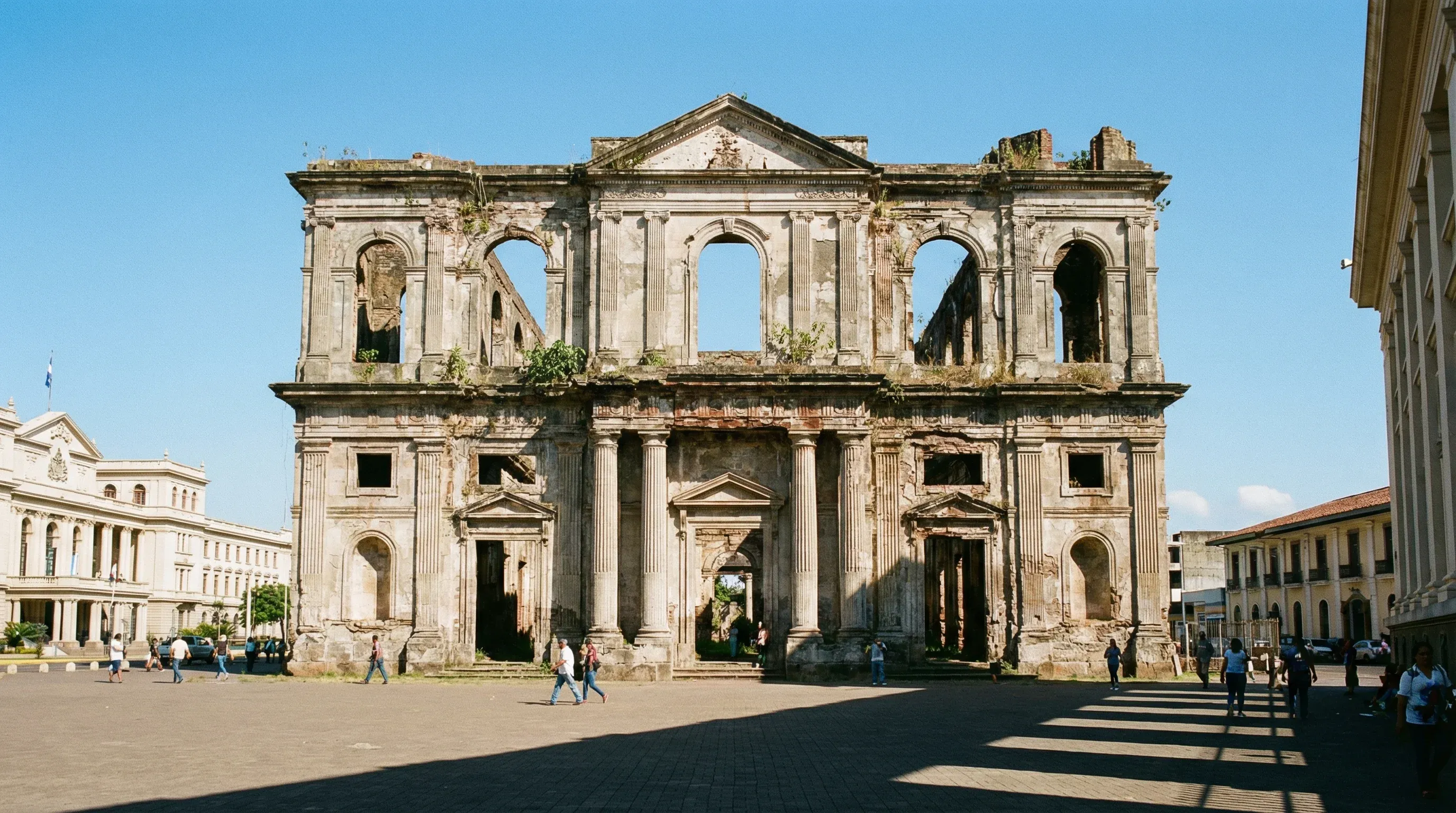
The cultural heart of the city lies near the lakefront. Here, the history of the 1972 earthquake that destroyed the old center is most visible. It is a city of layers—revolutionary monuments stand next to modern light installations. While it lacks the pedestrian-friendly streets of Granada, Managua offers a 'real' look at modern Nicaraguan life. The revitalized port area has become a safe, clean, and vibrant gathering place for local families, offering a secure environment for tourists to enjoy the lake views.
Key Attractions
The most iconic site is the Old Cathedral of Managua (Catedral de Santiago). Though you cannot enter the ruin due to structural instability from the earthquake, viewing its cracked, neoclassical shell from the outside is a powerful experience. Nearby is the Plaza de la Revolución, flanked by the National Palace of Culture, which houses a museum manageable for children.
For a relaxed afternoon, head to Puerto Salvador Allende. This tourist complex on the shores of Lake Managua is extremely secure and filled with restaurants, playgrounds, and kiosks. You can take a small cruise on the lake to view the city skyline and volcanoes. Another unique natural feature is the Tiscapa Lagoon, a crater lake right in the city center. A zipline runs across the lagoon, offering a thrill for teenagers, while the historical park at the top offers panoramic views.
Practical Advice
Navigation in Managua is notoriously difficult as few streets have names; locals use landmarks for directions. Rely heavily on GPS apps (Waze is popular). Taxis do not have meters; you must negotiate the price before getting in. For safety and ease, families should use radio dispatch taxis or hotel cars rather than hailing on the street. Avoid walking between attractions; distances are vast and sidewalks are inconsistent.
Food & Drink
Typical meal times: Lunch 12:00 pm to 2:00 pm. Dinner 6:30 pm to 9:30 pm. Fast food chains are open late.
Typical meal costs: Diverse options. Mall food courts cost C$200–350 (approx. $5.50–10 USD / €5–9 EUR). High-end steakhouses charge C$900–1,500 (approx. $25–40 USD / €23–37 EUR).
Dietary requirements: Managua has the best options for dietary restrictions in the country. Supermarkets carry gluten-free products and soy milk. Vegetarian restaurants are available in the Bolonia and Los Robles neighborhoods.
Signature dishes:
- Churrasco – Nicaraguan steak is world-class. A churrasco is a thin, long cut of beef grilled and served with chimichurri sauce.
- Queso Frito – Blocks of salty, non-melting cheese fried until crispy golden squares, usually served with breakfast or dinner.
- Tiste – A beverage made from ground cacao and corn, similar to Pinolillo but served cold and sweet.
Why this score?
As a sprawling, largely modernized urban area, Managua offers very little in the way of rugged adventure for visiting families. Activities are centered around shopping malls, lakeside promenades, and museums, which are safe and paved rather than wild or challenging.
Why this score?
Managua hosts the country's best healthcare facilities, including the JCI-accredited Hospital Vivian Pellas, which caters specifically to international patients and expats. This is the only region in Nicaragua where world-class diagnostic equipment and English-speaking specialists are consistently available.
Why this score?
The capital serves primarily as a logistical transit point for travelers arriving at the international airport before heading to the coast or colonial cities. Despite recent investments in the lakefront boardwalk, it lacks the concentrated tourist appeal found in Granada or San Juan del Sur.

Managua has the widest price range. You can eat street food for pennies or dine at luxury steakhouses. Business hotels cost C$3,600–5,500 (approx. $100–150 USD / €90–135 EUR). Taxis are cheap by international standards, with most cross-town rides costing C$150–250 (approx. $4–7 USD / €3.75–6.50 EUR).

Getting Here & Around
Getting Here
- Airports – Augusto C. Sandino International Airport (MGA) is the main entry point for the country, located on the eastern edge of the city.
- Bus – Managua is the hub for all national buses. There are different terminals for different destinations (e.g., UCA terminal for León/Granada, Mayoreo for the Caribbean).
- Driving – Traffic is heavy and chaotic. Driving is not recommended for first-time visitors unfamiliar with the 'landmark' address system.
Getting Around
- Taxi – The primary mode of transport. Use authorized taxis (red plates) or apps. Shared taxis are common (the driver may pick up other passengers), but private rides can be negotiated.
- Ride Apps – Apps like Uber are not present, but local alternatives or authorized taxi dispatch services are essential for safety.
- Car – Private drivers are affordable and highly recommended for families to navigate the city safely.
Nearby Airports (1 airport)
Managua International
MGAManagua
View full flight map for Nicaragua →

Packing List
Petty crime is higher here; keep valuables concealed in transit areas.
Long travel days through the Managua hub often mean hours without outlets.
English is spoken less in Managua services than in tourist towns like Granada.
Shorts are less common in the capital for adults; pants help blend in.
Street lighting is poor in towns and power outages are relatively common.
Essential for keeping electronics dry during wet boat rides to Ometepe or the Corn Islands.
Voltage fluctuations can occur and may damage sensitive electronics like tablets or chargers.
English is rarely spoken outside of major hotels; basic Spanish is vital for local interaction.
Tap water is generally not safe to drink; this saves money and reduces plastic waste.

Activities & Best Times

Urban tourism, museums, historical sites, architecture
The city boasts significant heritage sites including the National Palace of Culture and the haunting ruins of the Old Cathedral, reflecting its resilient history. International families find the cultural vibrancy of the Plaza de la Revolución most accessible during the dry months when walking tours are more pleasant.

Hiking, wildlife, outdoor exploration, ecotourism
Urban nature parks (Tiscapa Lagoon) don't warrant very_good on international adventure scale. This is a capital city with nature access, not an adventure destination. Good is more appropriate and creates better differentiation from León, Ometepe, and Corn Islands.

Learning experiences, scientific sites, historical education
The Footprints of Acahualinca offer a rare and internationally significant glimpse into prehistoric human life, supported by the National Museum of Nicaragua. These specialized scientific sites provide high-quality educational value, particularly when accessible during the main tourism window.

Scenic drives, countryside tours, route-based travel
Serving as the starting point for the 'Ruta Colonial y de los Volcanes,' Managua offers excellent connectivity to scenic drives toward León and Granada. Reliable road conditions and high visibility make the dry season the essential time for families to undertake these scenic routes.

Sport tourism, fitness activities, active recreation
Active travelers can enjoy diverse options such as urban canopy zip-lining and hiking the trails around the Apoyeque crater lagoon near the city. These activities require dry weather for safety and comfort, making the peak dry season the recommended period for visit.

Spa retreats, wellness centers, peaceful getaways
Los Termales de Tipitapa offers a traditional thermal bath experience that serves as a rustic wellness getaway, though it does not meet the standards of world-class destination spas. The hot springs are most comfortable during the 'cooler' winter months when ambient air temperatures are slightly lower.

Amusement parks, family entertainment venues
Regional water parks and recreational areas like those at Paseo Xolotlán provide entertainment for children but lack the international scale of major global theme parks. These facilities are primarily a domestic draw and are best visited when the risk of heavy tropical rain is low.

Attractions (4 total)



Public Holidays & Calendar Next 12 months
Public holidays, festivals, cultural celebrations, and seasonal natural phenomena coming up in Managua over the next 12 months.
Loading holidays and events...

Travel Advisory
The majority of international agencies recommend exercising a high degree of caution. While travel is possible, significant risks related to political instability, arbitrary law enforcement, and violent crime require travelers to be more vigilant than usual.
Safety Topics
Traveller Advice (4 groups)

Hiking in remote or volcanic regions is hazardous. Local law requires hiring certified guides for many volcanic trails, particularly on Ometepe Island.

Individuals associated with non-profits or religious organizations face severe risks, as thousands of civil society groups have been shut down and their staff subjected to detention or expulsion.

Media professionals are at high risk of being targeted, arrested, or denied entry for political reasons. Authorities actively monitor social media and professional backgrounds for any perceived anti-government sentiment.

Female travelers should be aware of reports of sexual assault and are advised to avoid walking alone, especially after dark or in isolated areas.
Agency Summaries
While no general travel ban is in place, visitors are warned about significant crime rates and the legal risks associated with political expression or participation in protests.
There are notable security concerns regarding violent crime and political instability. New Zealanders now require a visa to enter or transit through the country as of early 2026.
Travelers should remain extremely vigilant due to a volatile political climate, the potential for sudden civil unrest, and high rates of criminal activity.
It is advised to reconsider visiting because of the unpredictable application of local laws, the threat of being wrongfully detained, and the scarcity of adequate medical services. Violent crime also remains a concern.
A heightened level of awareness is necessary due to the prevalence of violent crime, including robberies and assaults. Police presence is limited outside of major cities.
Visitors can expect higher risks than in Ireland. It is essential to monitor local news and maintain a high level of personal security awareness throughout the trip.
Information is provided for general guidance only and does not constitute travel, safety, medical, or legal advice. Conditions may change. Users are responsible for independently verifying information before travel.