

⚠️ SAFETY WARNING: Due to severe political instability, active terrorism, and a high risk of kidnapping, government agencies (including the USA, UK, Canada, and Australia) advise travelers to avoid all travel to Niger (Level 3/4). The security situation is volatile, with borders subject to closure and limited consular support. Families are strongly urged to consult their own government's official travel advisory before considering a trip, as circumstances and risk assessments vary.
Overview
Niger is a vast, landlocked nation that captures the essence of the Sahel-the transitional zone between the Sahara Desert and the savannahs of the south. Dominated by arid landscapes and shifting sand dunes, it is a country of dramatic scenery and resilient cultures. The mighty Niger River slices through the southwest, bringing life to the region and supporting the capital, Niamey. For those who visit, the country offers a glimpse into ancient trade routes, nomadic Tuareg traditions, and a way of life that has adapted to some of the harshest environments on Earth.
Culturally, Niger is a mosaic of ethnic groups, including the Hausa, Zarma, Fulani, and Tuareg. Music, festivals, and craftsmanship are central to daily life. While the northern deserts are famous for the camel caravans of the salt trade, the south offers bustling markets and wildlife encounters. The people of Niger are known for their hospitality, often welcoming guests with tea ceremonies and warm greetings, although the current political climate has made tourism challenging.
Key Attractions
For families, the undisputed highlight of Niamey & South is the Kouré Giraffe Reserve. Located just an hour from the capital, this reserve allows visitors to walk amongst the last remaining population of West African giraffes. These gentle giants are accustomed to humans, offering a rare and magical wildlife encounter that children will never forget. Back in the capital, the Musée National Boubou Hama is a must-visit. Much more than a typical museum, it is a sprawling cultural park containing a zoo, dinosaur skeletons found in the desert, and pavilions showcasing the architecture and costumes of Niger's diverse tribes.
The northern region of Agadez & Sahara holds legendary status among travelers. The city of Agadez is centered around the towering Agadez Grand Mosque, the tallest mud-brick structure in the world and a UNESCO World Heritage site. It serves as the gateway to the Aïr and Ténéré Natural Reserves, a breathtaking landscape of volcanic mountains rising from the sand dunes. Further out, the Dabous Giraffe Petroglyphs offer a window into the prehistoric past with life-sized rock carvings. Note that accessing these northern sites currently requires military escorts and extreme caution.
Practical Advice
The best time to visit Niger is during the cooler dry season from November to February, when temperatures are manageable for children. The hot season (March to May) sees temperatures soar above 40°C (104°F), making travel exhausting. Visas are required for most nationals and must usually be obtained in advance. Health precautions are vital; a Yellow Fever vaccination is mandatory for entry, and malaria prophylaxis is essential. Medical facilities are very limited, so comprehensive travel insurance including medical evacuation is non-negotiable.
Food & Drink
Typical meal times: Breakfast is eaten early, around 7:00 am to 9:00 am. Lunch is the main meal, served from 12:00 pm to 2:00 pm, while dinner is typically eaten later, from 7:30 pm to 9:00 pm.
Typical meal costs: Street food and simple local meals cost 1,500–4,000 CFA (approx. $2.50–6.50 USD / €2.30–6.10 EUR). A meal at a mid-range restaurant in Niamey runs 10,000–20,000 CFA (approx. $16–33 USD / €15–30 EUR).
Dietary requirements: Vegetarian options are available but limited, often consisting of rice, beans, and vegetable sauces. Peanuts and dairy are common ingredients, so those with allergies should be vigilant and carry translation cards.
Family-friendly dining: Nigerien culture is communal, and children are welcome everywhere. Many dishes are rice-based and mild, which suits young palates. Clean, bottled water is essential.
Signature dishes:
- Djerma Stew – A rich, savory peanut butter stew often cooked with chicken or lamb and served with rice or millet paste.
- Masa – Fermented rice cakes that are fried until golden and fluffy, often eaten as a breakfast treat or snack.
- Kilishi – Thin slices of beef, seasoned with spices and peanut paste, then dried in the hot sun and roasted; a beloved jerky-like snack.
- Moringa (Kopto) – A nutritious dish made from moringa leaves, often boiled and mixed with groundnut cake (kuli-kuli) and spices.
Safety
Safety is the primary concern for any travel to Niger. The risk of kidnapping by terrorist groups is high, particularly in the border regions and the north. Visitors should stay strictly within the capital, Niamey, unless part of a secure convoy. Avoid all travel after dark, even within the city. Crowded places, including markets and Western-style hotels, can be targets. Always maintain a low profile and follow the instructions of local security forces immediately. Register your presence with your embassy upon arrival.

While getting to Niger is expensive, daily costs are relatively low. A family of four can expect to spend around 80,000–120,000 CFA (approx. $130–200 USD / €120–180 EUR) per day for mid-range accommodation, meals, and private taxi transport. High-end hotels in Niamey charge international rates.
Age Suitability





Did you know? Niger welcomes approximately 85,000 international visitors per year. Most visitors come from Africa.
Explore Regions
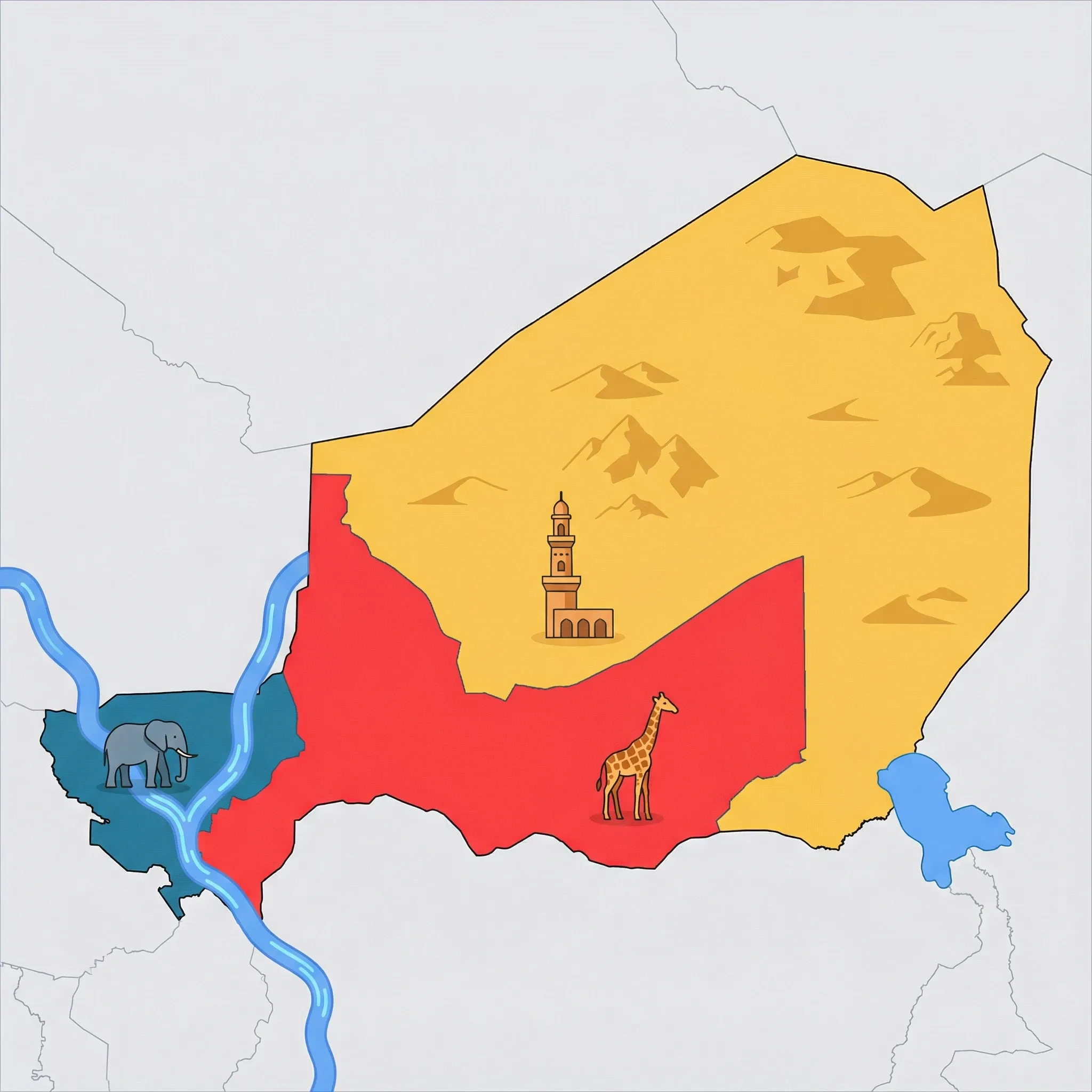
3 Regions
Click on a region marker to explore details. Use the dropdown to color regions by activity suitability.

Getting There & Around
Getting There
- By Air – Diori Hamani International Airport (NIM) in Niamey is the main gateway. It is served by airlines such as Ethiopian Airlines, Turkish Airlines, Royal Air Maroc, and Asky. Flights connect via Addis Ababa, Istanbul, or Casablanca.
- Entry Requirements – A visa is required for almost all visitors and must be obtained from a Nigerien embassy before travel. Proof of Yellow Fever vaccination is mandatory. Check your government website for the latest visa requirements, or use the IATA Travel Centre entry-requirements checker.
- By Land – Land borders with Benin, Nigeria, and Burkina Faso are frequently closed or extremely dangerous due to militant activity. Crossing by land is strongly discouraged for tourists.
Getting Around
- Taxis – In Niamey, taxis are the safest way for families to get around. They are easily identifiable by their orange roofs. Private hires (chartered for the day) are recommended over flagging them down on the street.
- Car Hire – Self-driving is not recommended due to erratic traffic and security checkpoints. Renting a 4x4 with a local driver is essential for visiting Kouré Giraffe Reserve or travelling outside the city center.
- Buses – Intercity buses connect major towns in Niamey & South, but they are often overcrowded, poorly maintained, and prone to accidents or banditry. Families should avoid them.
- Domestic Flights – Niger Airlines occasionally operates flights between Niamey and Agadez, avoiding the dangerous road journey, but schedules are unreliable.

Packing List
The Harmattan wind fills the air with fine desert dust (Dec–Mar), which can irritate lungs.
Power outages are frequent in Niamey and street lighting is inconsistent.
Malaria is a severe risk; hotel nets may be damaged or ill-fitting.
Credit cards are rarely accepted outside top hotels; ATMs often run out of cash.
Extreme heat causes rapid dehydration, especially in children; these are vital for recovery.
English is rarely spoken; basic French is essential for daily interactions.

Activities & Best Times

Adventure & Nature
Very GoodHiking, wildlife, outdoor exploration, ecotourism
As a UNESCO World Heritage site, the park offers authentic West African safari experiences including elephants and rare West African lions. Peak visitation occurs during the cooler dry season when wildlife congregates near the Niger River, while the heavy rains of July-September make many tracks impassable.
Home to the UNESCO-listed Aïr and Ténéré Natural Reserves, this region offers some of the world's most dramatic desert landscapes and mountain trekking. Visitation is strictly limited to the cooler winter months as extreme heat from May to September makes desert travel dangerous.
The last wild giraffe herds in West Africa are a remarkable asset, but 'very_good' implies reliable, well-organized nature tourism. Limited infrastructure, few organized tours, and no editorial attraction evidence supporting this region reduce the practical rating to 'good'.

City & Cultural
Very GoodUrban tourism, museums, historical sites, architecture
Agadez is a legendary Saharan crossroads featuring the iconic mud-brick Grand Mosque and a vibrant Sultanate culture that remains highly authentic. The peak season aligns with cooler weather, which is essential for exploring the historic center's labyrinthine alleys and archaeological sites like the Dabous giraffes.
Features iconic landmarks like the 'W' meander of the Niger River and the Tapoa Gorges, which serve as major cultural and geographic symbols for the region. These sites are best accessed during the dry months when the landscape is most visible and infrastructure is reliable for international visitors.
Niamey offers a deep dive into Sahelian life through its vibrant Grand Marché and the National Museum, which features world-class paleontological and ethnographic exhibits. The experience is highly authentic for experienced travelers, though peak comfort is strictly limited to the coolest winter months before the intense Saharan heat and dust (Harmattan) or summer rains arrive.

Educational & Exploratory
GoodLearning experiences, scientific sites, historical education

Festivals & Seasonal
GoodEvents, celebrations, seasonal attractions
The Cure Salée (Festival of the Nomads) is described as 'globally significant' but rated marginal. While infrastructure challenges exist, the festival is internationally recognized and draws cultural tourism. Rating should be 'good' to reflect its genuine significance.
Occasional nomadic gatherings and the end of the rainy season (Cure Salée period) offer glimpses of unique Wodaabe and Tuareg cultures. While culturally world-class, the logistics for families are complex, and the timing is restricted to the transition period between the rains and the dry heat.

Road Trips & Scenic
GoodScenic drives, countryside tours, route-based travel
The Ténéré desert circuits and routes through the Aïr Mountains represent one of Africa's most challenging and scenic overland journeys. While infrastructure is minimal, this is a regionally significant road trip destination that attracts serious overlanders globally. 'Marginal' undervalues the route's reputation.
Scenic routes to Zinder offer glimpses of rural life and diverse landscapes, though security concerns and infrastructure quality limit its appeal to only the most experienced travelers. Travel is only viable in the cooler months; heavy rains can impact road accessibility during the shoulder season.

Sports & Active
GoodSport tourism, fitness activities, active recreation

Relaxation & Wellness
MarginalSpa retreats, wellness centers, peaceful getaways

Public Holidays & Calendar Next 12 months
Public holidays, festivals, cultural celebrations, and seasonal natural phenomena coming up in Niger over the next 12 months.
Loading holidays and events...

Climate & Weather
Agadez & Sahara
Show Details
| Month | Temp °C | Rain | Humidity |
|---|
Niamey & South
Show Details
| Month | Temp °C | Rain | Humidity |
|---|
W National Park
Show Details
| Month | Temp °C | Rain | Humidity |
|---|

Travel Advisory
All major agencies maintain their highest warning level for Niger, advising against any travel due to extreme risks from terrorism, political instability, and kidnapping. Security is highly volatile following the 2023 coup.
Safety Topics
Traveller Advice (2 groups)

Travellers are strongly discouraged from entering the country and those currently present should consider leaving via commercial means. Maintain emergency evacuation plans and a supply of essential items like water and food.

Aid workers are specifically identified as high-risk targets for kidnapping by extremist groups, particularly in rural and border regions where militant groups operate.
Agency Summaries
Ireland advises against all travel because of the unstable political climate and frequent terrorist activity. Crime levels in Niamey are high, and travelers are warned that they should be prepared to leave the country on short notice if already present.
New Zealand classifies Niger as a highest-risk destination due to the threat of armed militants and an unpredictable security situation. Violent crimes, including home invasions and carjackings, frequently target foreigners.
The FCDO strongly warns against all travel due to an increased frequency of terrorist kidnappings and the high risk of attacks in the capital, Niamey. Political conditions remain volatile, and in-person consular support is unavailable within the country.
The Canadian government advises avoiding all travel to Niger due to significant political instability following the 2023 coup and the extreme risk of terrorism and kidnapping throughout the country. Consular services are severely limited.
U.S. authorities have issued their highest warning level, ordering the departure of non-emergency staff. The advisory cites persistent threats from terrorism, violent crime, civil unrest, and kidnappings, particularly targeting Westerners and transport hubs.
Australia recommends that its citizens avoid all travel to Niger due to a dangerous security environment. There is a critical risk of kidnapping for ransom and terrorism. Foreigners are advised that the government's ability to provide assistance is extremely restricted.
Information is provided for general guidance only and does not constitute travel, safety, medical, or legal advice. Conditions may change. Users are responsible for independently verifying information before travel.