
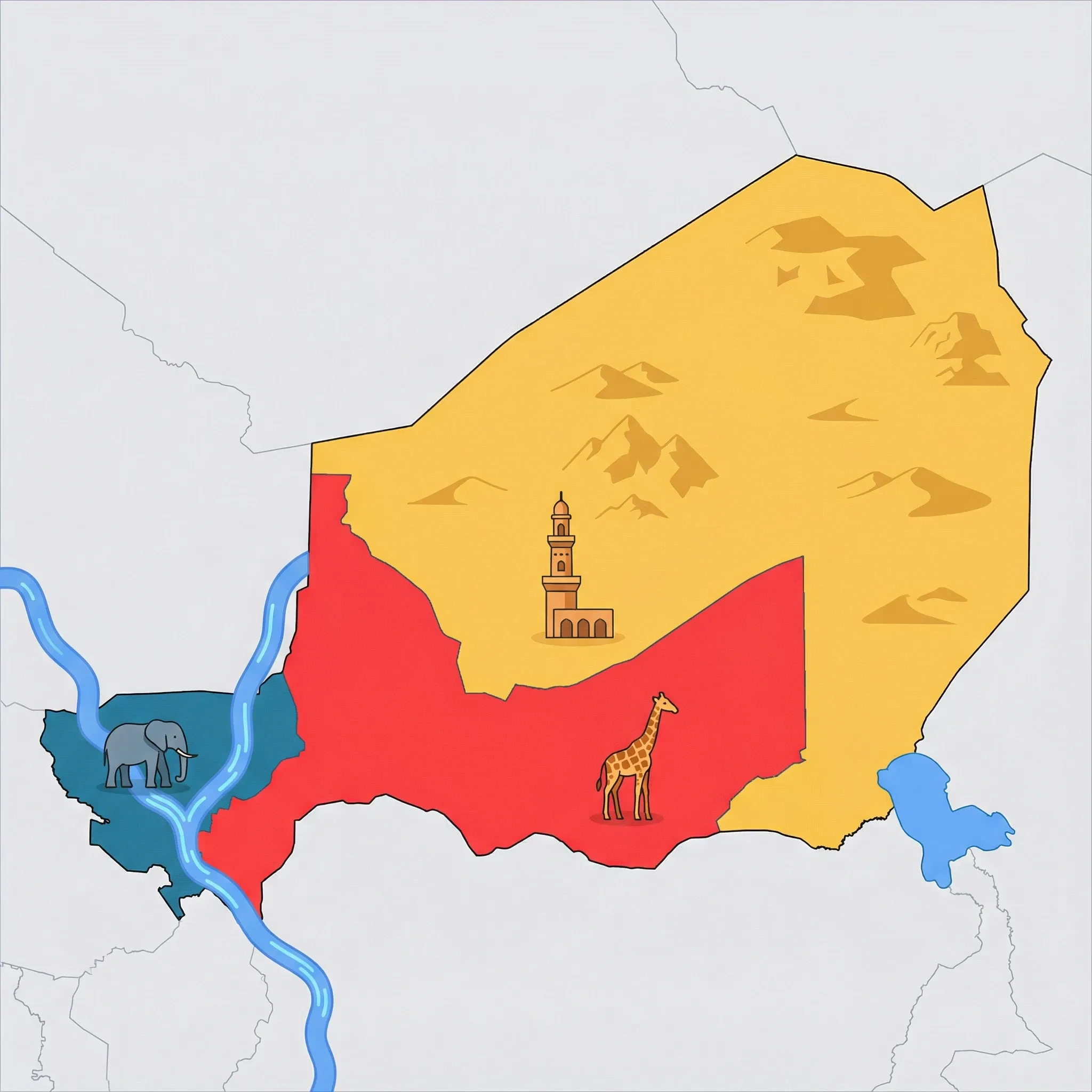
Click a region to explore
⚠️ SAFETY WARNING: Due to political instability and high risks of terrorism and kidnapping, government agencies (including CA, USA, UK, AU, IE, and NZ) advise travelers to reconsider or avoid travel to Niamey and the southern regions. While Niamey has a security presence, the threat of attacks remains high, and rural areas—particularly border zones—are extremely dangerous. Families are strongly urged to consult their own government's official travel advisory before considering a trip, as the security situation is volatile.
Overview
Niamey, situated on the banks of the Niger River, is a city of contrasts where camel caravans share the road with taxis. For families, the capital serves as the primary entry point and cultural hub. The presence of the river brings life to the arid landscape, offering opportunities to see hippos in the wild and watch traditional pirogues (wooden boats) gliding at sunset. It is a place to learn about the diverse ethnic groups of Niger, including the Hausa, Zarma, and Fulani.
South of the capital, the landscape shifts from Sahelian scrub to slightly greener savannahs. This region is critically important for conservationists as the last refuge of the West African Giraffe. Despite the challenges, the region holds deep cultural wealth, from the pottery markets of Boubon to the historic Sultanates in Zinder (though Zinder requires a long, risky journey east). The warmth of the local people is palpable, though current safety restrictions severely limit interaction.
Key Attractions
The absolute highlight for families is the Kouré Giraffe Reserve. Unlike other safaris, there are no predators here, allowing the distinctively light-coloured West African giraffes to roam freely among local villages. It is one of the few places on earth where you can see these majestic creatures living in harmony with farmers.
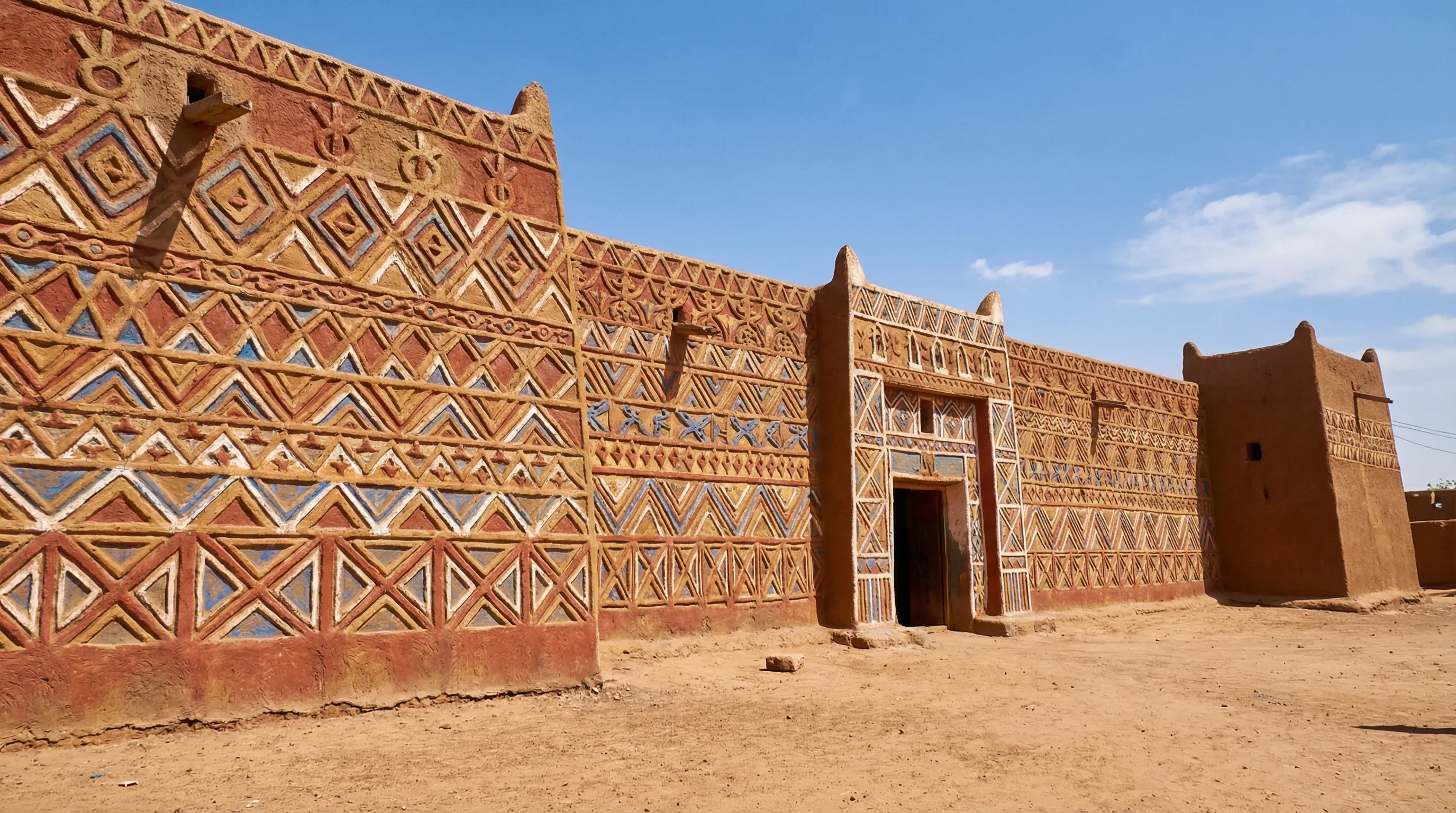
In the capital, the Musée National Boubou Hama is a must-visit. It is a unique open-air complex that combines a zoo, a cultural museum, and an artisanal centre. Children can see dinosaur skeletons unearthed in the Sahara, view traditional costumes, and watch artisans crafting silver jewelry and leather goods. Further east in Zinder, the Sultan's Palace offers a rare glimpse into the traditional leadership structures that still influence the region today.
Practical Advice
When to visit: The cooler dry season (November to February) is best. March to May is the "hot season" with temperatures often exceeding 40°C (104°F).
Health: Malaria prophylaxis is essential for all family members, as the river valley is a high-risk zone.
Food & Drink
Typical meal times: Lunch is the main meal, served 12:00 pm to 2:00 pm. Dinner is typically eaten from 7:30 pm to 9:00 pm.
Typical meal costs: A meal at a mid-range restaurant in Niamey costs 6,000–12,000 XOF (approx. $10–20 USD / €9–18 EUR). Street food is much cheaper, around 1,000–2,000 XOF (approx. $1.65–3.30 USD / €1.50–3 EUR).
Dietary requirements: Rice and couscous are staples. Peanuts (groundnuts) are used heavily in sauces, posing a risk for allergy sufferers. Vegetarian options like spiced rice and beans are available but require specification.
Signature dishes:
- Kilichi – Thin strips of beef, coated in a spicy peanut paste and sun-dried. It's the region's famous jerky and a popular snack.
- Dambou – A dish made from rice flour or cornmeal and moringa leaves, often served at festive occasions.
- Riz Gras – "Fat Rice," a flavorful one-pot dish cooked with oil, tomato paste, vegetables, and usually chicken or fish from the river.
Why this score?
The region offers moderate adventure through river travel on the Niger and wildlife tracking in Kouré. While more accessible than the north, the lack of paved roads in many areas and the general challenges of West African travel provide a significant level of ruggedness for visiting families.
Why this score?
Niamey hosts the country's best healthcare facilities, including several private clinics and the National Hospital, where some English-speaking staff can be found. However, services still fall significantly short of international standards, and serious conditions typically require medical evacuation to Europe or North Africa.
Why this score?
This region is the most visited in Niger, serving as the primary entry point for the country's 85,000 annual arrivals, many of whom are business or NGO travelers. While it hosts the National Museum and the Kouré giraffe reserve, it remains a very niche destination with minimal leisure tourism infrastructure.

Niamey is relatively expensive compared to the countryside due to the reliance on imported goods. A decent hotel with security and a pool costs 80,000–130,000 XOF (approx. $130–215 USD / €120–200 EUR) per night. Supermarket goods (diapers, imported snacks) are priced similarly to or higher than in Europe. Local transport and market food remain very cheap.

Getting Here & Around
Getting Here
- Airports – Diori Hamani International Airport (NIM) in Niamey is the main international gateway, served by flights from Paris, Istanbul, and regional African hubs.
- Driving – The road from Kouré Giraffe Reserve to Niamey is paved and takes about 1 hour, but requires caution due to wandering livestock and erratic traffic.
Getting Around
- Taxi – In Niamey, orange-top taxis are the standard. They are shared ride services; for families, it is best to pay for all seats ('course') for privacy.
- Car Hire – To visit the Musée National Boubou Hama or outlying areas, hiring a private car with a driver is the safest and most comfortable option.
Nearby Airports (1 airport)
Diori Hamani
NIMNiamey
View full flight map for Niger →
Official Links

Packing List
Even in hotels, nets may have holes; essential for malaria protection near the river.
English is rarely spoken outside top hotels; basic French is vital for daily interactions.
Dehydration happens quickly in the dry heat, especially for active children.
Running water and soap can be scarce in public areas and roadside stops.
The Harmattan wind fills the air with fine desert dust (Dec–Mar), which can irritate lungs.
Power outages are frequent in Niamey and street lighting is inconsistent.
Malaria is a severe risk; hotel nets may be damaged or ill-fitting.
Credit cards are rarely accepted outside top hotels; ATMs often run out of cash.

Activities & Best Times

Hiking, wildlife, outdoor exploration, ecotourism
The last wild giraffe herds in West Africa are a remarkable asset, but 'very_good' implies reliable, well-organized nature tourism. Limited infrastructure, few organized tours, and no editorial attraction evidence supporting this region reduce the practical rating to 'good'.

Urban tourism, museums, historical sites, architecture
Niamey offers a deep dive into Sahelian life through its vibrant Grand Marché and the National Museum, which features world-class paleontological and ethnographic exhibits. The experience is highly authentic for experienced travelers, though peak comfort is strictly limited to the coolest winter months before the intense Saharan heat and dust (Harmattan) or summer rains arrive.

Learning experiences, scientific sites, historical education
The region provides significant learning opportunities regarding giraffe conservation and Saharan archaeology, specifically at the Boubou Hama National Museum. The cooler dry season is essential for exploring the outdoor museum pavilions and active conservation sites without the risk of heat exhaustion.

Events, celebrations, seasonal attractions
Occasional nomadic gatherings and the end of the rainy season (Cure Salée period) offer glimpses of unique Wodaabe and Tuareg cultures. While culturally world-class, the logistics for families are complex, and the timing is restricted to the transition period between the rains and the dry heat.

Scenic drives, countryside tours, route-based travel
Scenic routes to Zinder offer glimpses of rural life and diverse landscapes, though security concerns and infrastructure quality limit its appeal to only the most experienced travelers. Travel is only viable in the cooler months; heavy rains can impact road accessibility during the shoulder season.




Public Holidays & Calendar Next 12 months
Public holidays, festivals, cultural celebrations, and seasonal natural phenomena coming up in Niamey & South over the next 12 months.
Loading holidays and events...

Travel Advisory
All major agencies maintain their highest warning level for Niger, advising against any travel due to extreme risks from terrorism, political instability, and kidnapping. Security is highly volatile following the 2023 coup.
Safety Topics
Traveller Advice (2 groups)

Travellers are strongly discouraged from entering the country and those currently present should consider leaving via commercial means. Maintain emergency evacuation plans and a supply of essential items like water and food.

Aid workers are specifically identified as high-risk targets for kidnapping by extremist groups, particularly in rural and border regions where militant groups operate.
Agency Summaries
Ireland advises against all travel because of the unstable political climate and frequent terrorist activity. Crime levels in Niamey are high, and travelers are warned that they should be prepared to leave the country on short notice if already present.
New Zealand classifies Niger as a highest-risk destination due to the threat of armed militants and an unpredictable security situation. Violent crimes, including home invasions and carjackings, frequently target foreigners.
The FCDO strongly warns against all travel due to an increased frequency of terrorist kidnappings and the high risk of attacks in the capital, Niamey. Political conditions remain volatile, and in-person consular support is unavailable within the country.
The Canadian government advises avoiding all travel to Niger due to significant political instability following the 2023 coup and the extreme risk of terrorism and kidnapping throughout the country. Consular services are severely limited.
U.S. authorities have issued their highest warning level, ordering the departure of non-emergency staff. The advisory cites persistent threats from terrorism, violent crime, civil unrest, and kidnappings, particularly targeting Westerners and transport hubs.
Australia recommends that its citizens avoid all travel to Niger due to a dangerous security environment. There is a critical risk of kidnapping for ransom and terrorism. Foreigners are advised that the government's ability to provide assistance is extremely restricted.
Information is provided for general guidance only and does not constitute travel, safety, medical, or legal advice. Conditions may change. Users are responsible for independently verifying information before travel.