

⚠️ SAFETY WARNING: Due to high rates of violent crime, kidnapping, and unpredictable civil unrest, government agencies (including CA, USA, UK, and AU) advise travelers to reconsider or avoid travel to Nigeria. The security situation, particularly in northern states and the Niger Delta, is volatile. Families are strongly urged to consult their own government's official travel advisory before considering a trip, as circumstances and risk assessments vary.
Overview
Nigeria is not a typical holiday destination; it is an intense, vibrant, and multifaceted experience that rewards the bold. As Africa's most populous nation, it offers a cultural richness that is hard to match, from the ancient traditions of the Yoruba and Hausa to the modern, tech-driven pulse of Lagos. For families with a sense of adventure and a desire to educate their children about the roots of West African heritage, Nigeria provides a profound classroom. The landscape shifts dramatically from the humid mangroves of the Niger Delta to the savannahs of the north and the cool mountains of the east.
While the chaotic energy of the cities can be overwhelming, the warmth of the Nigerian people-often voted among the most optimistic in the world-shines through. Families can explore world-class art galleries, witness electrifying festivals, and enjoy nature reserves that are slowly being revitalized. Travel here requires careful planning and local guidance, but the memories of climbing the monolith of Zuma Rock or walking the canopy in Lagos will last a lifetime.
Key Attractions
In the capital, Abuja & Central offers a calmer introduction to the country. Families can picnic in the beautifully manicured Millennium Park or marvel at the sheer scale of Zuma Rock, the "Gateway to Abuja," which towers over the surrounding landscape. For a glimpse of the country's religious harmony and architectural grandeur, the Nigerian National Mosque and National Christian Centre stand as impressive landmarks on the city skyline.
Down south in Lagos, the chaotic heart of the nation beats loudest. A visit to the Nike Art Gallery is essential; this four-story treasure trove of Nigerian art allows children to see (and sometimes try) traditional adire fabric dyeing. For a break from the urban sprawl, the Lekki Conservation Centre offers a famous canopy walkway (check age/height restrictions locally) and a family park where monkeys roam freely. Further east, the Obudu Mountain Resort provides a temperate, high-altitude escape with cable cars and waterfalls, making it one of the country's premier family leisure destinations.
Practical Advice
The best time to visit is during the dry season (November to March), when roads are more passable and humidity is lower. A Yellow Fever vaccination certificate is mandatory for entry, and malaria prophylaxis is essential for all family members. Electricity supply can be erratic, so pack accordingly. Visa processing can be lengthy; apply weeks in advance. English is the official language, making communication easy, though "Pidgin" is widely spoken and fun for kids to listen to.
Food & Drink
Typical meal times: Breakfast is usually 7:00 am to 9:00 am. Lunch is eaten from 1:00 pm to 3:00 pm, and dinner is typically served between 7:00 pm and 9:00 pm.
Typical meal costs: ₦10,000–25,000 (approx. $7–17 USD / €6–16 EUR) per person in a decent mid-range restaurant. Street snacks can cost as little as ₦500 (approx. $0.35 USD).
Dietary requirements: Nigerian food is heavy on meat, fish, and spices (especially chili). Vegetarian options like moin moin (bean pudding) and fried plantain are common, but always ask about stock (crayfish is a common base seasoning). Gluten-free travellers can rely on rice and yam dishes, but cross-contamination is a risk.
Family-friendly dining: Major cities have fast-food chains (like Chicken Republic) that are clean and kid-friendly. In restaurants, ask for "non-spicy" rice for children, as standard Jollof can be hot. Highchairs are available in upscale venues but rare elsewhere.
Signature dishes:
- Jollof Rice – The national obsession. A one-pot rice dish cooked in a rich tomato, onion, and pepper sauce.
- Pounded Yam with Egusi – A soft, dough-like swallow made from yam, dipped into a soup made from ground melon seeds and spinach.
- Suya – Spicy, grilled skewers of beef or chicken dusted with peanut spice (contains nuts).
- Puff-Puff – Sweet, deep-fried dough balls, similar to doughnuts, that children absolutely love.
- Akara – Deep-fried bean cakes, often eaten for breakfast.
Safety
Safety is the primary concern for any visit. The risk of kidnapping and armed robbery is real, even in major cities. Families should use pre-arranged, vetted transport (such as hotel cars) rather than hailing taxis on the street. Avoid all travel after dark. Northern states and the Niger Delta have higher risk levels due to terrorism and militancy; stay within the "safe corridors" of Lagos Island, Abuja Central, and secured resorts. Always stay in hotels with visible armed security and 24-hour power.

While street food is cheap, secure travel for families is expensive. Expect to pay ₦250,000–450,000 (approx. $170–300 USD / €155–280 EUR) per day for a family of four, covering secure hotel accommodation, a private driver (essential for safety), and mid-range meals.
Age Suitability





Did you know? Nigeria welcomes approximately 539,000 international visitors per year. Most visitors come from Africa.
Explore Regions
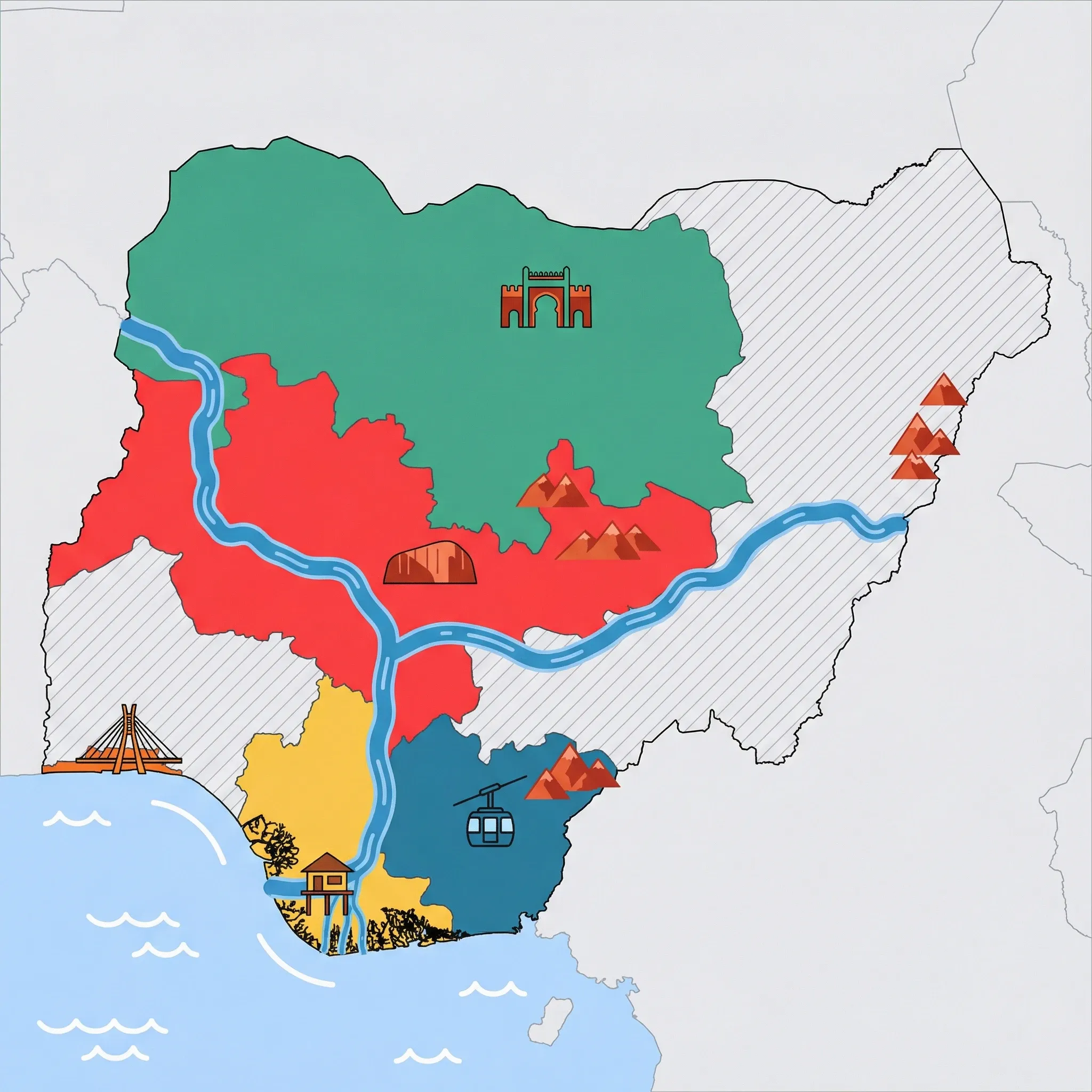
5 Regions
Abuja & Central
The heart of the nation featuring monolithic rocks and modern parks
Lagos
The city that never sleeps, driven by energy, art, and ocean vibes
Niger Delta
The riverine heartland of mangroves and oil
Northern Nigeria (Kano, Kaduna)
Ancient cities and durbar traditions on the edge of the Sahel
Southeast (Calabar)
The nation's paradise of rainforests and mountain mists
Click on a region marker to explore details. Use the dropdown to color regions by activity suitability.

Getting There & Around
Getting There
- By Air – Murtala Muhammed International Airport (LOS) in Lagos and Nnamdi Azikiwe International Airport (ABV) in Abuja are the main gateways. Direct flights arrive from London, Atlanta, and major African hubs.
- Entry Requirements – A valid visa and a Yellow Fever vaccination certificate (Yellow Card) are strictly required for entry. Check your government website for the latest visa requirements, or use the IATA Travel Centre entry-requirements checker.
Getting Around
- Private Driver – The only recommended option for families. Hiring a car with a vetted, local driver ensures safety and navigation aid. Hotel concierges can arrange this.
- Domestic Flights – The safest way to travel between regions like Lagos and Abuja & Central. Carriers like Air Peace and Ibom Air are reliable.
- Ride-Hailing – Uber and Bolt operate in Lagos and Abuja. They are generally safer than street taxis, but ensure the license plate matches the app before entering.

Packing List
Strictly required for entry; you may be refused boarding or entry without this physical yellow card.
Power outages are a daily occurrence; keep phones and fans charged when the grid goes down.
Voltage fluctuations can destroy sensitive electronics when charging in hotels.
Heat and humidity can be stifling, especially if the air conditioning cuts out during a power switch.
Dusty harmattan winds and eating finger foods (swallow) make frequent hand cleaning essential.
POS machines often fail; cash is king for tips and small vendors.

Activities & Best Times

Adventure & Nature
Very GoodHiking, wildlife, outdoor exploration, ecotourism
Home to the unique Obudu Mountain Resort and Afi Mountain Drill Ranch, offering rare highland ecosystems and primate conservation experiences in West Africa. Peak visits occur during the dry harmattan season when visibility is high and mountain trails are accessible, while heavy monsoon rains degrade the experience from May to October.
Features iconic geological monoliths like Zuma and Aso Rocks which offer unique hiking and photography; the dry Harmattan season provides cooler temperatures and the best visibility for wilderness exploration.
The Lekki Conservation Centre features Africa's longest canopy walkway, providing a unique urban wilderness experience for families. Heavy tropical rainfall between May and September makes trail navigation and mangrove exploration difficult and less enjoyable.

City & Cultural
Very GoodUrban tourism, museums, historical sites, architecture
Showcases Nigeria's modernist capital architecture and major religious landmarks like the National Mosque; peak visitation aligns with the festive December period when urban culture and events are most vibrant.
Lagos is the epicenter of African contemporary art and music, anchored by the world-class Nike Art Gallery and the historic Freedom Park. Peak season aligns with the global 'Detty December' period when international culture seekers and the diaspora return for a high-energy urban experience.
Home to the ancient Kano city walls and Gidan Makama Museum, the region offers deep immersion into Hausa history and Islamic architecture. The cool, dry Harmattan season is most comfortable for exploring markets and heritage sites, whereas the extreme pre-monsoon heat makes urban exploration difficult.

Festivals & Seasonal
GoodEvents, celebrations, seasonal attractions
The Calabar Carnival is genuinely internationally recognized (Africa's largest street party) and draws visitors from across West Africa. While a single annual event, its scale and international profile justify 'good' rather than 'marginal'. This aligns with how similar African festivals (e.g., Cape Town Carnival) are rated.
Home to the iconic Felabration in October and Gidi Culture Festival, Lagos offers an authentic but often chaotic festival environment. These events attract global music enthusiasts, though visitors should expect a high-intensity experience rather than polished commercial events.
The world-renowned Kano Durbar is a spectacular display of equestrian skill and Hausa culture, though its timing shifts annually with the lunar calendar. While the event itself is world-class, the region's overall festival classification remains marginal based on the limited number of major international events currently cataloged.

Road Trips & Scenic
GoodScenic drives, countryside tours, route-based travel
The drive to the Niger-Benue confluence and the scenic routes around Zuma Rock offer dramatic landscapes; traveling during the dry months ensures safe road conditions and clear views of the central Nigerian plateau.
The '22 Bends' leading up to the Obudu plateau is one of Africa's most spectacular and engineered scenic drives. Safe and enjoyable driving is strictly limited to the dry season; heavy rains and mountain fog make the steep, winding ascent dangerous for most of the year.
The Badagry Heritage Route provides a profound historical journey, but challenging traffic and road infrastructure limit the appeal for self-drive enthusiasts. Travel is only recommended during the peak dry months when road conditions are most predictable for international visitors.

Sports & Active
GoodSport tourism, fitness activities, active recreation
The region features unique infrastructure like the Obudu canopy walkway and the challenging mountain road for cycling and running enthusiasts. Peak timing aligns with the drier months and the annual Obudu Mountain Race, whereas mountain activities become hazardous during the peak rainy months.
Provides solid infrastructure for hiking and cycling at locations like the Usuma Dam loop and Mount Patti; the dry season is essential for trail accessibility and avoiding the intense heat of late spring.
Upbeat Recreation Centre provides international-standard active facilities, complemented by coastal trekking routes like Tarkwa Bay. Activity is best enjoyed during the dry months to avoid the heat-humidity peak and flooding risks in the rainy season.

Theme Park & Entertainment
GoodAmusement parks, family entertainment venues
Regional-scale amusement parks like Hi-Impact Planet offer reliable family entertainment, though they lack the scale of global mega-parks. Timing visits for the 'August Break' or dry season ensures outdoor rides remain operational and accessible.
Water-based entertainment facilities at Tinapa and Obudu provide family recreation, though they do not reach the scale of global destination theme parks. These facilities are most enjoyable during the sunny, dry months when outdoor water play is most comfortable for families.
The region features modern facilities like Sunrise Waterpark, though these are secondary attractions for international families compared to global entertainment hubs; best visited when rains are minimal.

Beach & Sea
MarginalBeach resorts, marine activities: diving, snorkelling, kite surfing, wind surfing, sailing
Coastal recreation is centered around the Marina Resort and Tinapa, providing riverine views rather than traditional white-sand ocean beaches. International appeal is limited to the drier months when humidity is slightly lower and outdoor waterfront facilities are fully operational.
Beach experiences at Tarkwa Bay and Eleko offer local charm but lack the high-end resort infrastructure typical of global island destinations. Rough Atlantic swells and heavy rains significantly degrade coastal visibility and safety during the extended wet season.
The region offers coastal escapes like Finima Beach, but lacks the high-end resort infrastructure and water clarity of top-tier global beach destinations. Peak visitation is restricted to the dry months of December to February when the Gulf of Guinea is calmest and rainfall is at its minimum.

Educational & Exploratory
MarginalLearning experiences, scientific sites, historical education
The Discovery Museum provides a high-quality, tech-forward look at national history; while internationally significant, it is typically treated as a supplemental activity during the peak urban travel season.
Mindscape Children's Museum offers a targeted educational outlet for families, though it remains a niche regional attraction rather than a primary travel motivator. Peak visitation occurs during school holiday windows when supplementary educational programming is most active.

Relaxation & Wellness
MarginalSpa retreats, wellness centers, peaceful getaways

Public Holidays & Calendar Next 12 months
Public holidays, festivals, cultural celebrations, and seasonal natural phenomena coming up in Nigeria over the next 12 months.
Loading holidays and events...

Climate & Weather
Abuja & Central
Show Details
| Month | Temp °C | Rain | Humidity |
|---|
Lagos
Show Details
| Month | Temp °C | Rain | Humidity |
|---|
Niger Delta
Show Details
| Month | Temp °C | Rain | Humidity |
|---|
Northern Nigeria (Kano, Kaduna)
Show Details
| Month | Temp °C | Rain | Humidity |
|---|
Southeast (Calabar)
Show Details
| Month | Temp °C | Rain | Humidity |
|---|

Travel Advisory
All major agencies maintain a baseline advisory to reconsider travel or avoid non-essential trips to Nigeria. While some major cities have slightly lower warnings, the country-wide assessment is driven by widespread threats of kidnapping, terrorism, and violent crime.
Safety Topics
Traveller Advice (3 groups)

Female travelers should dress conservatively and avoid moving alone, particularly after dark. Street harassment and localized violence are significant risks.

Visitors should maintain a low profile, vary their travel routes and times, and establish proof-of-life protocols with family. Comprehensive medical insurance including emergency evacuation is essential due to unreliable local health services.

Personnel working for aid organizations are frequently targeted for kidnapping in northern states, particularly Borno. Infrastructure and supply convoys may also be subject to armed attack.
Agency Summaries
Australia advises a high degree of caution nationwide, suggesting that travelers reconsider their need to visit due to terrorism, kidnapping, and violent crime. Severe 'Do Not Travel' warnings are in place for 26 states. Consular assistance is extremely limited in high-risk regions.
Irish authorities advise against non-essential travel to Nigeria, citing a high threat of domestic terrorism and unpredictable security. Specific northern and Delta states are under a complete 'Do Not Travel' advisory. Citizens are encouraged to register with the embassy upon arrival.
New Zealand recommends avoiding non-essential travel to Nigeria, with the exception of Abuja, Lagos, and Calabar, where travelers should instead exercise increased caution. The threat from extremist groups and banditry is persistent throughout the country.
The FCDO warns against traveling to 21 states across Nigeria due to escalating insecurity. There is a severe threat of kidnapping and terrorist attacks, particularly in the northeast and northwest. Urban areas like Abuja and Lagos experience rising violent crime and volatile protests.
The Canadian government recommends avoiding all travel to most northern, central, and Niger Delta states due to extreme threats of terrorism and kidnapping. For the rest of the country, including Abuja, non-essential travel should be avoided. Visitors to Lagos and Calabar must exercise high vigilance.
U.S. officials urge travelers to reconsider trips to Nigeria because of widespread crime, terrorism, and civil unrest. Specific states in the north and south carry a 'Do Not Travel' warning due to kidnapping and armed gangs. Healthcare services are noted as being inconsistent and unreliable.
Information is provided for general guidance only and does not constitute travel, safety, medical, or legal advice. Conditions may change. Users are responsible for independently verifying information before travel.