
Abuja & Central
The heart of the nation featuring monolithic rocks and modern parks
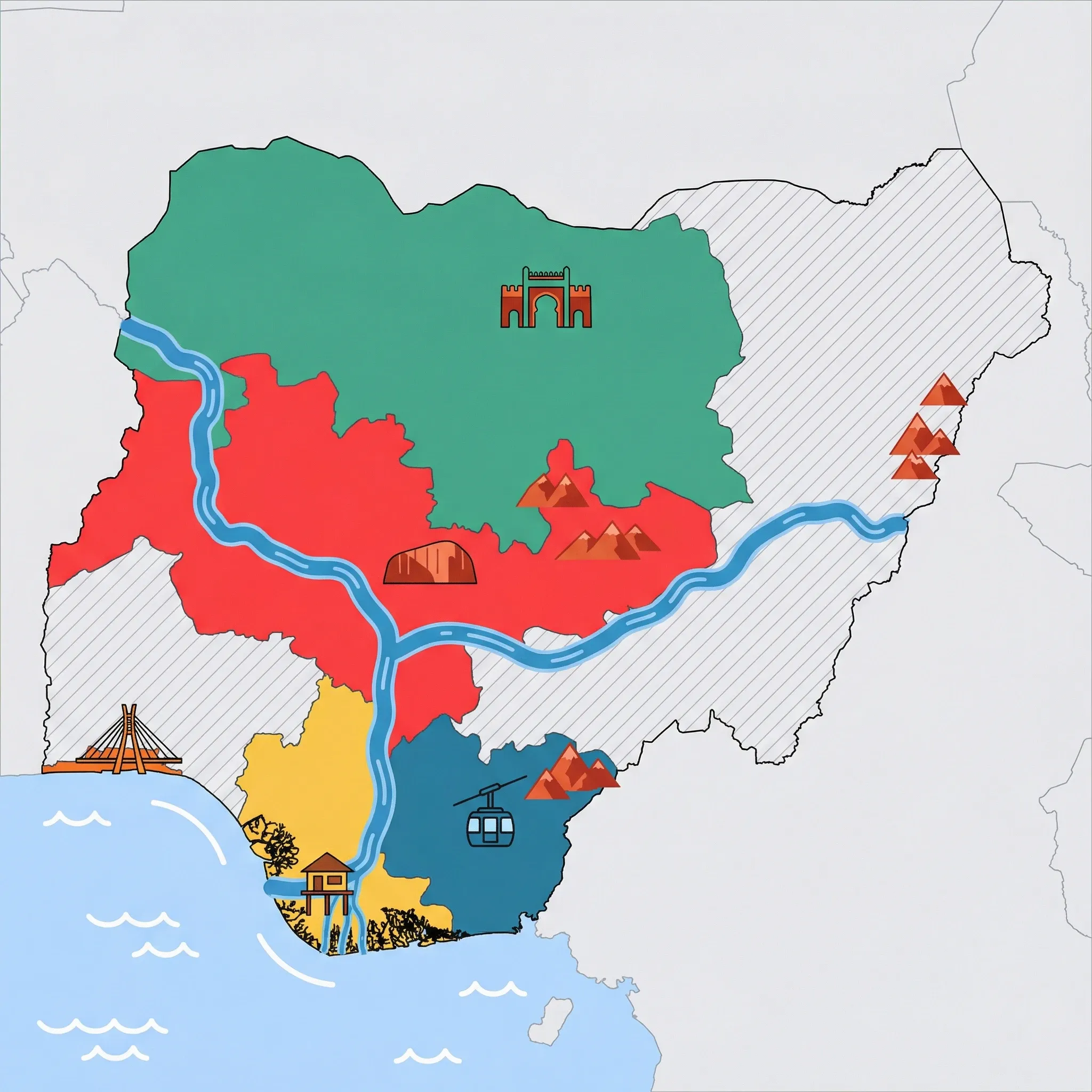
Click a region to explore
⚠️ SAFETY WARNING: Due to the risk of kidnapping and banditry on highways connecting the Federal Capital Territory (FCT) to surrounding states, government agencies (including the UK, USA, and Canada) advise travelers to reconsider travel to this region. While Abuja city center is generally considered one of the safer parts of Nigeria with a strong security presence, travel outside the city limits—particularly towards Kaduna, Niger, or Kogi states—is dangerous. Families should use domestic flights for onward travel and consult their own government's official advisory before booking.
Overview
Abuja is distinct from other Nigerian cities; it is a planned capital defined by wide boulevards, organized districts, and the imposing backdrop of Aso Rock. For families, this offers a more relaxed introduction to the country. The weather here is split between the wet season (April to October) and the dry, dusty Harmattan season. The city is greener and less chaotic than Lagos, making it easier to navigate with children.
Culturally, Abuja is a melting pot, hosting embassies and a diverse population from all over Nigeria. This allows families to experience a blend of Nigerian cultures in a centralized, relatively controlled environment. The city loves its leisure time; weekends see families flocking to parks and gardens for picnics, and the infrastructure for tourism is modern, with good hotels and shopping malls providing respite from the heat.
Key Attractions
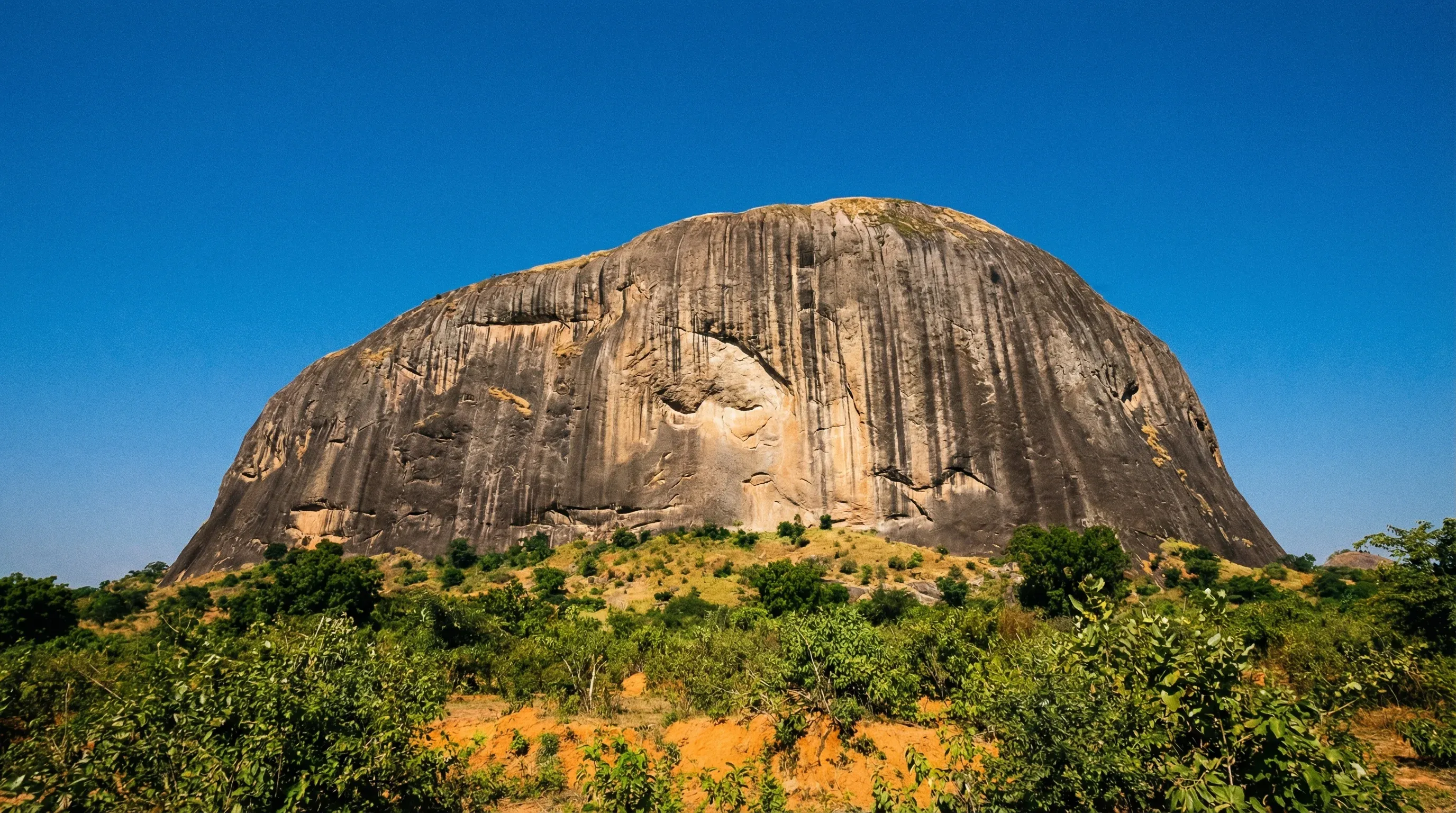
The city's design incorporates significant green space. Millennium Park is the largest public park in Abuja and a favourite for local families; its river crossing and Italian-designed layout provide a safe space for children to play. Dominating the skyline is Aso Rock, a massive monolith that serves as the backdrop to the Presidential Complex. While you cannot climb it, it provides a stunning photo opportunity from the city center.
Just outside the city limits lies the iconic Zuma Rock, often called the "Gateway to Abuja." It is depicted on the 100 Naira note and is famous for the natural contours that look like a human face. For a longer day trip (security permitting), the Gurara Waterfalls offer a spectacular natural setting where families can picnic and watch the river cascade over rocks, though swimming is only for strong swimmers in designated calm seasons.
Practical Advice
The best time to visit is November to February when it is dry and slightly cooler, though the Harmattan dust can be heavy. Taxis are the only viable transport method for tourists; rely on app-based services like Uber or Bolt rather than hailing cabs from the street.
Food & Drink
Typical meal times: Breakfast is 7:00 am to 9:00 am, lunch 12:30 pm to 2:30 pm, and dinner 7:00 pm to 9:00 pm.
Typical meal costs: A mid-range meal for a family of four costs ₦40,000–70,000 (approx. $25–45 USD / €23–40 EUR).
Dietary requirements: Vegetarian options are available but often involve spicy tomato bases. Gluten-free is possible with yam or rice-based dishes, but cross-contamination in kitchens is a risk.
Signature dishes:
- Suya – Spicy skewered meat grilled over an open flame, usually beef or ram, served with onions and cabbage (ask for "no pepper" for kids).
- Kilishi – A dried, jerky-style meat that is a famous souvenir from the north and central regions.
- Pounded Yam and Egusi – Soft yam dough served with a melon-seed soup, a staple comfort food.
Why this score?
The region is characterized by planned urban development and wide boulevards, offering a relatively controlled environment for families. Some light outdoor activity is available at Jabi Lake or hiking near Aso Rock, but it lacks the ruggedness associated with higher adventure scores.
Why this score?
Abuja hosts several of the country's better-equipped private and government hospitals catering to the diplomatic community. While services are basic compared to global hubs, there is a higher concentration of English-speaking staff and modern facilities than in rural Nigeria.
Why this score?
As the capital, Abuja receives a steady flow of international diplomatic and business travelers, but remains a niche destination for pure leisure tourism. While landmarks like Zuma Rock and Millennium Park attract visitors, the infrastructure is primarily designed for administrative functions rather than global tourism.

Abuja is one of Nigeria's more expensive cities, catering to diplomats and politicians. A secure 4-star family hotel room costs ₦150,000–250,000 (approx. $95–160 USD / €85–145 EUR) per night. Restaurant prices vary, but a good buffet lunch is around ₦15,000–20,000 (approx. $9–12 USD / €8–11 EUR) per person.

Getting Here & Around
Getting Here
- Airports – Nnamdi Azikiwe International Airport (ABV) is the main gateway, with direct flights from London, Frankfurt, and major African hubs.
- Train – The Abuja-Kaduna rail link exists but is subject to security disruptions; air travel is strongly preferred for safety.
- Driving – Road travel into Abuja from other states is high-risk due to banditry and is not recommended for tourists.
Getting Around
- Car – Private hire cars or app-based taxis (Uber/Bolt) are the safest and most convenient way to navigate the wide districts.
- Walking – While Millennium Park is walkable, the city itself is designed for cars, and distances between districts are too great for walking.
Nearby Airports (3 airports)
Abuja Nnamdi Azikiwe International
ABVAbuja
Ilorin
ILRIlorin
Jos
JOSJos
View full flight map for Nigeria →
Official Links

Packing List
The Harmattan season (Dec-Feb) brings extremely dry, dusty air that can cause nosebleeds.
Pools are common, but modesty is appreciated in this region compared to the south.
Power fluctuations are common and can damage sensitive electronics charging in hotels.
Essential during Harmattan season to filter out fine desert dust.
Strictly required for entry; you may be refused boarding or entry without this physical yellow card.
Power outages are a daily occurrence; keep phones and fans charged when the grid goes down.
Voltage fluctuations can destroy sensitive electronics when charging in hotels.
Heat and humidity can be stifling, especially if the air conditioning cuts out during a power switch.
Dusty harmattan winds and eating finger foods (swallow) make frequent hand cleaning essential.
POS machines often fail; cash is king for tips and small vendors.

Activities & Best Times

Hiking, wildlife, outdoor exploration, ecotourism
Features iconic geological monoliths like Zuma and Aso Rocks which offer unique hiking and photography; the dry Harmattan season provides cooler temperatures and the best visibility for wilderness exploration.

Urban tourism, museums, historical sites, architecture
Showcases Nigeria's modernist capital architecture and major religious landmarks like the National Mosque; peak visitation aligns with the festive December period when urban culture and events are most vibrant.

Scenic drives, countryside tours, route-based travel
The drive to the Niger-Benue confluence and the scenic routes around Zuma Rock offer dramatic landscapes; traveling during the dry months ensures safe road conditions and clear views of the central Nigerian plateau.

Sport tourism, fitness activities, active recreation
Provides solid infrastructure for hiking and cycling at locations like the Usuma Dam loop and Mount Patti; the dry season is essential for trail accessibility and avoiding the intense heat of late spring.

Learning experiences, scientific sites, historical education
The Discovery Museum provides a high-quality, tech-forward look at national history; while internationally significant, it is typically treated as a supplemental activity during the peak urban travel season.

Spa retreats, wellness centers, peaceful getaways
Natural features like Akiri Warm Spring offer a restorative experience, though facilities are more rustic than international luxury spa standards; the cooler Harmattan months provide the most comfortable environment.

Amusement parks, family entertainment venues
The region features modern facilities like Sunrise Waterpark, though these are secondary attractions for international families compared to global entertainment hubs; best visited when rains are minimal.

Attractions (9 total)



Public Holidays & Calendar Next 12 months
Public holidays, festivals, cultural celebrations, and seasonal natural phenomena coming up in Abuja & Central over the next 12 months.
Loading holidays and events...

Travel Advisory
All major agencies maintain a baseline advisory to reconsider travel or avoid non-essential trips to Nigeria. While some major cities have slightly lower warnings, the country-wide assessment is driven by widespread threats of kidnapping, terrorism, and violent crime.
Safety Topics
Traveller Advice (3 groups)

Female travelers should dress conservatively and avoid moving alone, particularly after dark. Street harassment and localized violence are significant risks.

Visitors should maintain a low profile, vary their travel routes and times, and establish proof-of-life protocols with family. Comprehensive medical insurance including emergency evacuation is essential due to unreliable local health services.

Personnel working for aid organizations are frequently targeted for kidnapping in northern states, particularly Borno. Infrastructure and supply convoys may also be subject to armed attack.
Agency Summaries
Australia advises a high degree of caution nationwide, suggesting that travelers reconsider their need to visit due to terrorism, kidnapping, and violent crime. Severe 'Do Not Travel' warnings are in place for 26 states. Consular assistance is extremely limited in high-risk regions.
Irish authorities advise against non-essential travel to Nigeria, citing a high threat of domestic terrorism and unpredictable security. Specific northern and Delta states are under a complete 'Do Not Travel' advisory. Citizens are encouraged to register with the embassy upon arrival.
New Zealand recommends avoiding non-essential travel to Nigeria, with the exception of Abuja, Lagos, and Calabar, where travelers should instead exercise increased caution. The threat from extremist groups and banditry is persistent throughout the country.
The FCDO warns against traveling to 21 states across Nigeria due to escalating insecurity. There is a severe threat of kidnapping and terrorist attacks, particularly in the northeast and northwest. Urban areas like Abuja and Lagos experience rising violent crime and volatile protests.
The Canadian government recommends avoiding all travel to most northern, central, and Niger Delta states due to extreme threats of terrorism and kidnapping. For the rest of the country, including Abuja, non-essential travel should be avoided. Visitors to Lagos and Calabar must exercise high vigilance.
U.S. officials urge travelers to reconsider trips to Nigeria because of widespread crime, terrorism, and civil unrest. Specific states in the north and south carry a 'Do Not Travel' warning due to kidnapping and armed gangs. Healthcare services are noted as being inconsistent and unreliable.
Information is provided for general guidance only and does not constitute travel, safety, medical, or legal advice. Conditions may change. Users are responsible for independently verifying information before travel.