
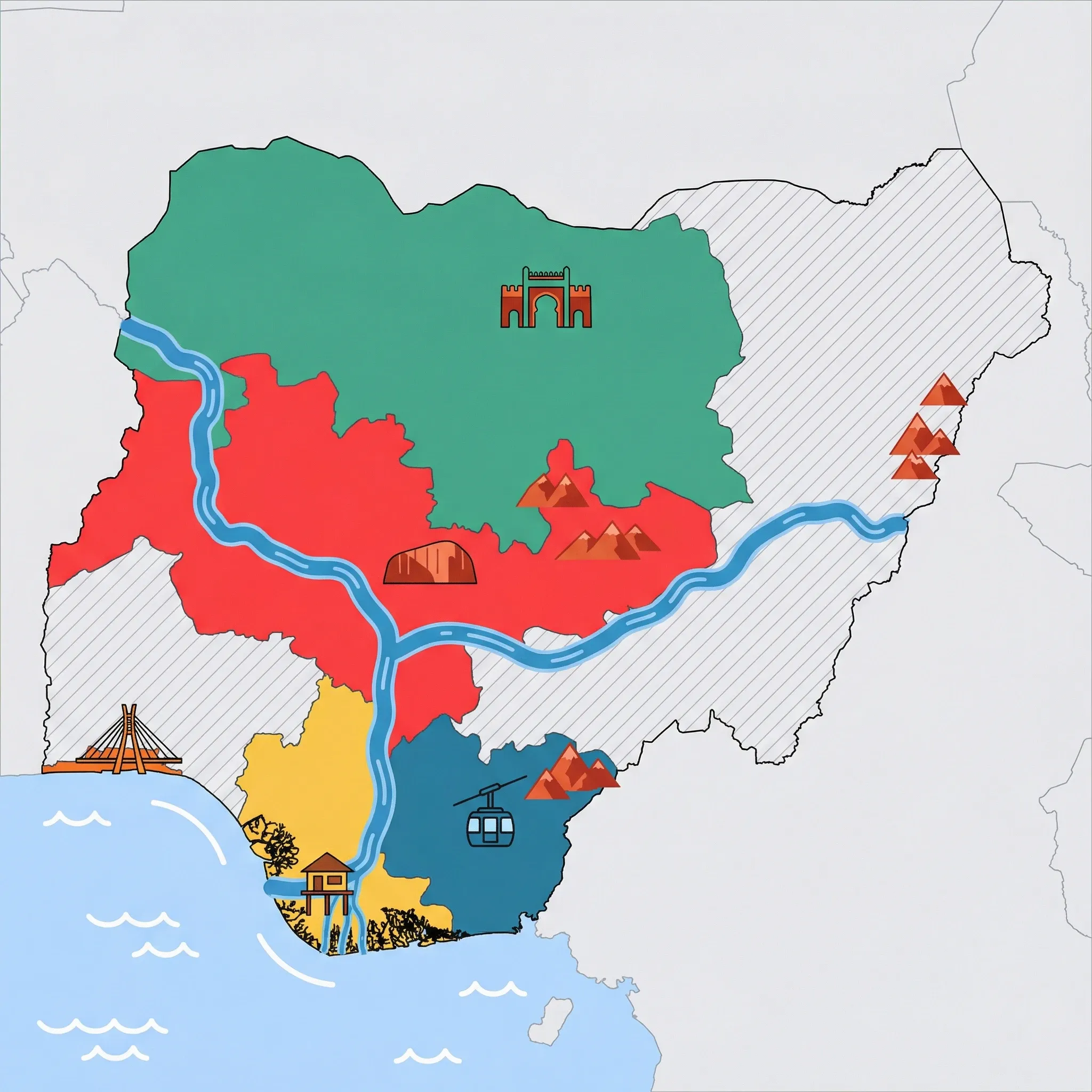
Click a region to explore
⚠️ SAFETY WARNING: Government agencies (including the USA, UK, Australia, and Canada) have issued 'Do Not Travel' (L3) advisories for the Niger Delta states due to a high risk of kidnapping for ransom, armed robbery, and maritime crime. The creeks and riverine areas are particularly dangerous. Travel to this region is strongly discouraged for tourists. If travel to Port Harcourt is absolutely essential, it requires professional security arrangements, heightened situational awareness, and strict adherence to secure zones. Families should consult their government's official advisory immediately.
Overview
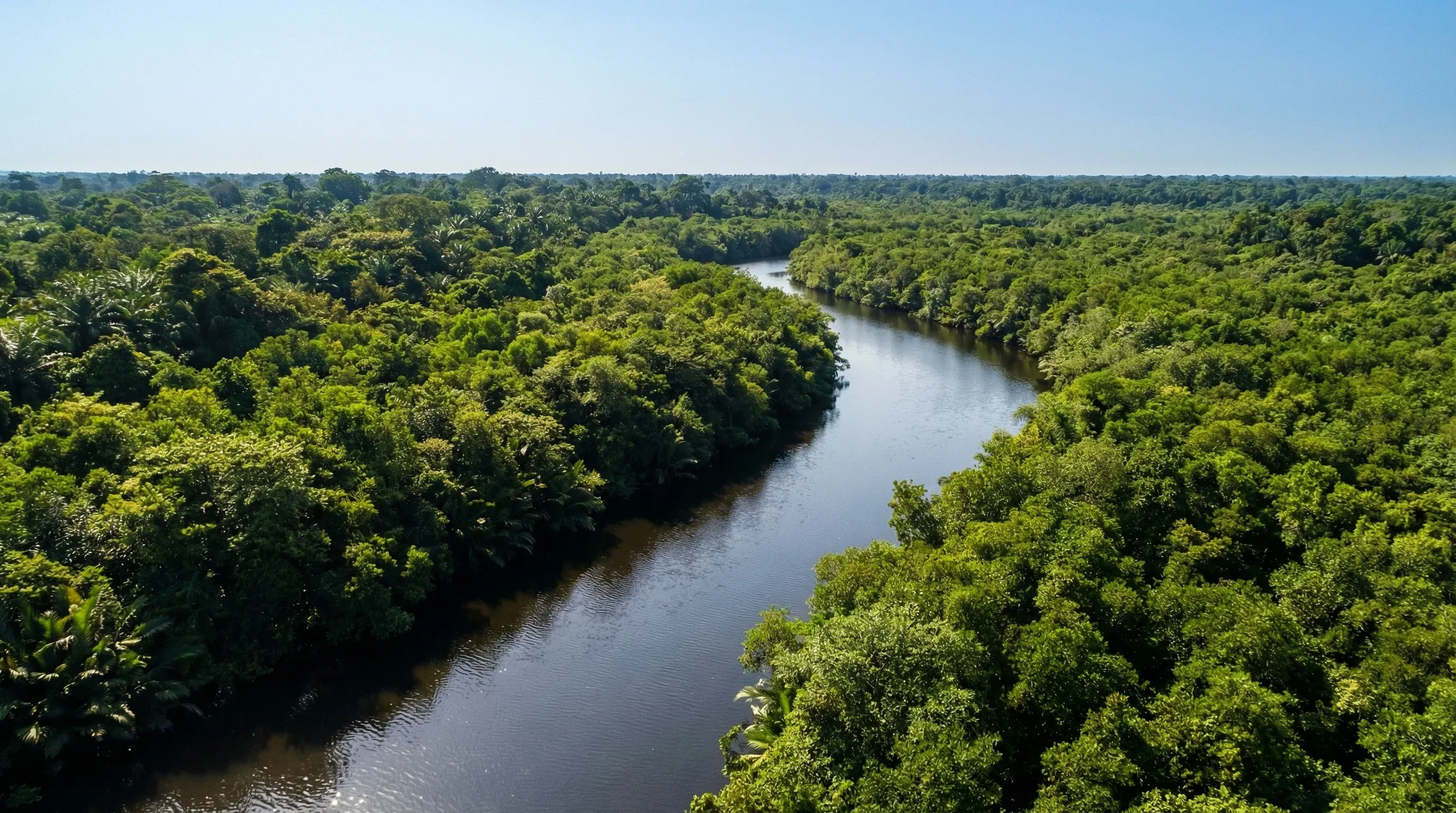
The Niger Delta is one of the world's largest wetlands, a vast network of mangroves, creeks, and rivers that empties into the Atlantic. It is the economic engine of Nigeria due to its oil wealth, but this has come with significant environmental and social challenges. For a casual family tourist, this is not a typical destination. The climate is extremely humid and rainfall is heavy, sustaining the lush vegetation that defines the landscape.
Cultural life here revolves around the water. The local people are known for their colorful aquatic festivals and masquerades, though these are often in areas currently unsafe for tourists. Port Harcourt, the major city, is known as the "Garden City" and serves as the primary hub. It is a city of contrasts, hosting expatriate oil workers and bustling local markets.
Key Attractions
Options for safe tourism are very limited. The standout exception is the Port Harcourt Pleasure Park. This is a secure, enclosed recreational facility designed specifically for families. It features a climbing tower, paddle boats on a small artificial lake, and a mini-golf course. It is one of the few places in the region where children can play openly and safely. The park is well-maintained and serves as a respite from the congestion of the city.
Practical Advice
Rain is frequent and heavy; waterproof gear is non-negotiable. If you must visit, stick to the Government Reserved Areas (GRA) in Port Harcourt and do not venture into the creeks or rural areas without security.
Food & Drink
Typical meal times: Lunch is usually 12:00 pm to 2:00 pm, and dinner 6:00 pm to 8:00 pm.
Typical meal costs: A meal for a family of four in a secure hotel restaurant costs ₦50,000–85,000 (approx. $30–55 USD / €28–48 EUR).
Dietary requirements: Seafood is the staple here. Vegetarians may struggle as even vegetable soups often use crayfish (ground dried shrimp) as a base seasoning.
Signature dishes:
- Banga Soup – A rich, palm nut extract soup often served with fresh fish or catfish, eaten with starch or eba.
- Fisherman's Soup – A spicy broth loaded with fresh seafood (prawns, periwinkles, fish), reflecting the riverine lifestyle.
- Bole and Fish – Roasted plantain served with spicy pepper sauce and grilled fish, a classic Port Harcourt street food (eat only from hygienic vendors).
Why this score?
The vast riverine geography and dense mangrove forests present a naturally rugged and challenging terrain. Navigating the complex network of creeks requires specialized transport and local knowledge, making it a physically demanding environment for any visitor.
Why this score?
Medical facilities in Port Harcourt can provide standard care for routine issues, often supported by the resources of international oil companies. However, rural areas within the delta have very limited infrastructure and poor emergency response times for travelers.
Why this score?
The region is rarely visited by international leisure tourists due to longstanding security concerns and travel advisories. Most foreign arrivals are restricted to business personnel in the oil and gas sector centered around Port Harcourt.

Due to the oil industry presence, costs in safe zones (like Port Harcourt GRA) are inflated. A secure hotel room costs ₦180,000–300,000 (approx. $110–190 USD / €100–170 EUR). Security escorts, if required, add significant cost. Food prices in secure restaurants are similar to Lagos.

Getting Here & Around
Getting Here
- Airports – Port Harcourt International Airport (PHC) is the main hub. Direct flights arrive from Abuja and Lagos.
- Driving – Road travel into the Delta from other regions is dangerous and should be avoided due to kidnapping risks on highways.
Getting Around
- Car – Use only pre-arranged hotel transport or security-vetted drivers. Do not use public taxis or minibuses.
- Boat – While boats are the main transport for locals, tourists should avoid water travel due to piracy risks in the creeks.
Nearby Airports (4 airports)
Asaba International Airport
ABBAsaba
Benin
BNIBenin City
Port Harcourt International
PHCPort Harcourt
Osubi Airstrip
QRWWarri
View full flight map for Nigeria →
Official Links

Packing List
The Delta is one of the wettest places on earth; umbrellas are often useless in the squalls.
Malaria risk is high and the mangrove environment breeds aggressive mosquitoes.
Drainage is poor and puddles can be ankle-deep after frequent rains.
Power outages are frequent and street lighting is inconsistent even in cities.
Strictly required for entry; you may be refused boarding or entry without this physical yellow card.
Power outages are a daily occurrence; keep phones and fans charged when the grid goes down.
Voltage fluctuations can destroy sensitive electronics when charging in hotels.
Heat and humidity can be stifling, especially if the air conditioning cuts out during a power switch.
Dusty harmattan winds and eating finger foods (swallow) make frequent hand cleaning essential.
POS machines often fail; cash is king for tips and small vendors.

Activities & Best Times

Hiking, wildlife, outdoor exploration, ecotourism
Rich mangrove ecosystems and unique riverine sites like the Ethiope Source provide authentic nature immersion, though eco-tourism facilities are still developing internationally. Travel is best during the drier window from December to February to avoid the extreme seasonal flooding and heavy rainfall typical of the Delta region.

Urban tourism, museums, historical sites, architecture
The region holds deep historical significance related to colonial exploration and local monarchies, best explored through urban museums and iconic landmarks in Port Harcourt and Delta State. The December festive season is the peak period for cultural vibrancy, coinciding with the most favorable weather for navigating the cities.

Beach resorts, marine activities: diving, snorkelling, kite surfing, wind surfing, sailing
The region offers coastal escapes like Finima Beach, but lacks the high-end resort infrastructure and water clarity of top-tier global beach destinations. Peak visitation is restricted to the dry months of December to February when the Gulf of Guinea is calmest and rainfall is at its minimum.

Sport tourism, fitness activities, active recreation
Facilities like the Port Harcourt Pleasure Park provide structured outdoor activity, though they cater more to local recreation than professional-grade international sport tourism infrastructure. Optimal conditions for active outdoor pursuits are limited to the dry season when humidity levels are slightly more manageable.

Amusement parks, family entertainment venues
While featuring notable facilities like Park Vega Waterpark, the region lacks the volume of world-class attractions required for a primary international family entertainment destination. Outdoor entertainment is highly seasonal, with peak conditions occurring during the driest months and major year-end holiday periods.




Public Holidays & Calendar Next 12 months
Public holidays, festivals, cultural celebrations, and seasonal natural phenomena coming up in Niger Delta over the next 12 months.
Loading holidays and events...

Travel Advisory
All major agencies maintain a baseline advisory to reconsider travel or avoid non-essential trips to Nigeria. While some major cities have slightly lower warnings, the country-wide assessment is driven by widespread threats of kidnapping, terrorism, and violent crime.
Safety Topics
Traveller Advice (3 groups)

Female travelers should dress conservatively and avoid moving alone, particularly after dark. Street harassment and localized violence are significant risks.

Visitors should maintain a low profile, vary their travel routes and times, and establish proof-of-life protocols with family. Comprehensive medical insurance including emergency evacuation is essential due to unreliable local health services.

Personnel working for aid organizations are frequently targeted for kidnapping in northern states, particularly Borno. Infrastructure and supply convoys may also be subject to armed attack.
Agency Summaries
Australia advises a high degree of caution nationwide, suggesting that travelers reconsider their need to visit due to terrorism, kidnapping, and violent crime. Severe 'Do Not Travel' warnings are in place for 26 states. Consular assistance is extremely limited in high-risk regions.
Irish authorities advise against non-essential travel to Nigeria, citing a high threat of domestic terrorism and unpredictable security. Specific northern and Delta states are under a complete 'Do Not Travel' advisory. Citizens are encouraged to register with the embassy upon arrival.
New Zealand recommends avoiding non-essential travel to Nigeria, with the exception of Abuja, Lagos, and Calabar, where travelers should instead exercise increased caution. The threat from extremist groups and banditry is persistent throughout the country.
The FCDO warns against traveling to 21 states across Nigeria due to escalating insecurity. There is a severe threat of kidnapping and terrorist attacks, particularly in the northeast and northwest. Urban areas like Abuja and Lagos experience rising violent crime and volatile protests.
The Canadian government recommends avoiding all travel to most northern, central, and Niger Delta states due to extreme threats of terrorism and kidnapping. For the rest of the country, including Abuja, non-essential travel should be avoided. Visitors to Lagos and Calabar must exercise high vigilance.
U.S. officials urge travelers to reconsider trips to Nigeria because of widespread crime, terrorism, and civil unrest. Specific states in the north and south carry a 'Do Not Travel' warning due to kidnapping and armed gangs. Healthcare services are noted as being inconsistent and unreliable.
Information is provided for general guidance only and does not constitute travel, safety, medical, or legal advice. Conditions may change. Users are responsible for independently verifying information before travel.