
Southeast (Calabar)
The nation's paradise of rainforests and mountain mists
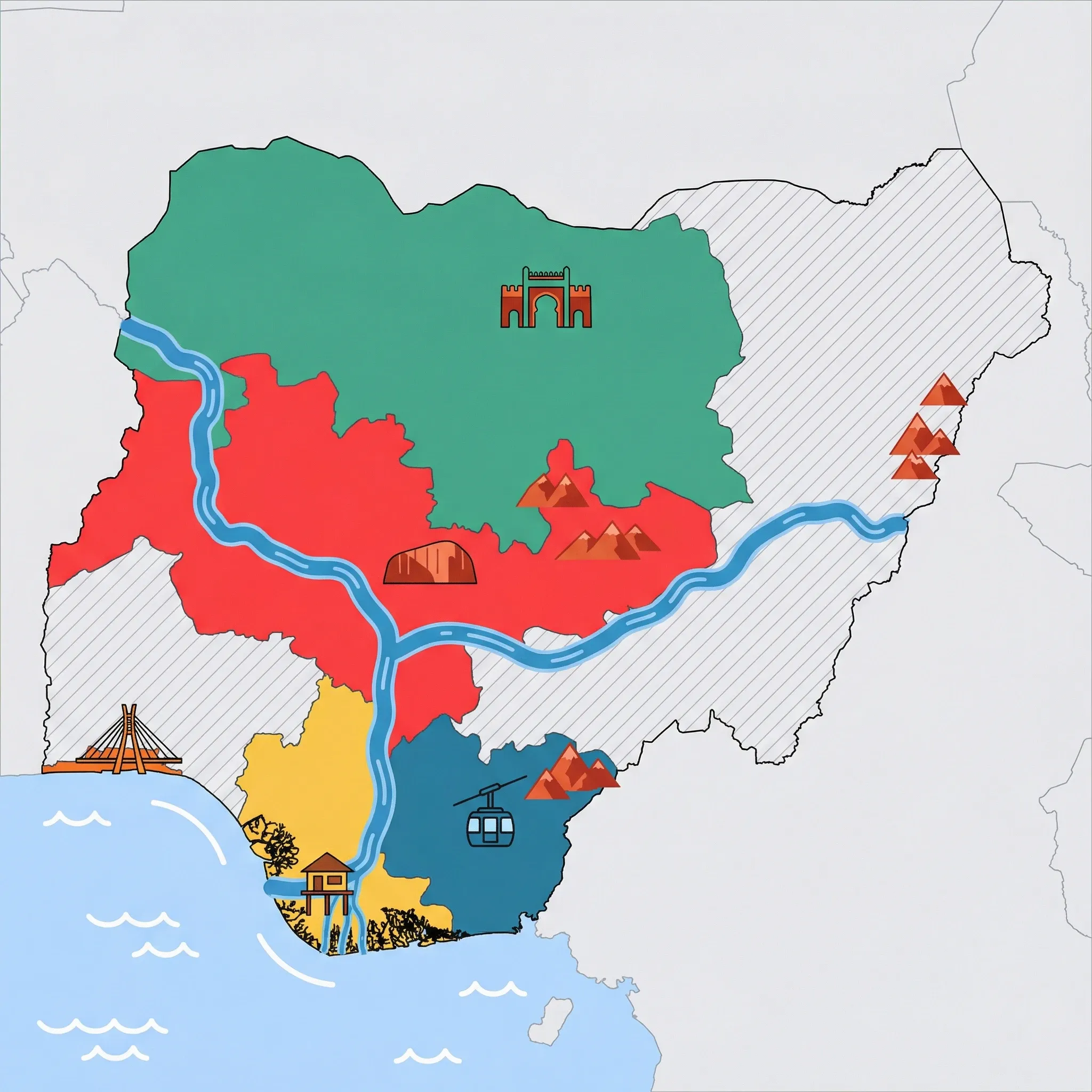
Click a region to explore
⚠️ SAFETY WARNING: Due to separatist agitation and sporadic violence, government agencies (including the UK and Canada) advise travelers to reconsider travel to the Southeast. While Calabar (Cross River State) is generally calmer than neighboring states like Imo or Anambra, caution is still required. Travelers should avoid travel on Mondays due to 'sit-at-home' protests enforced by separatist groups in some areas. Families should consult their government's official travel advisory and stay informed about local security dynamics.
Overview
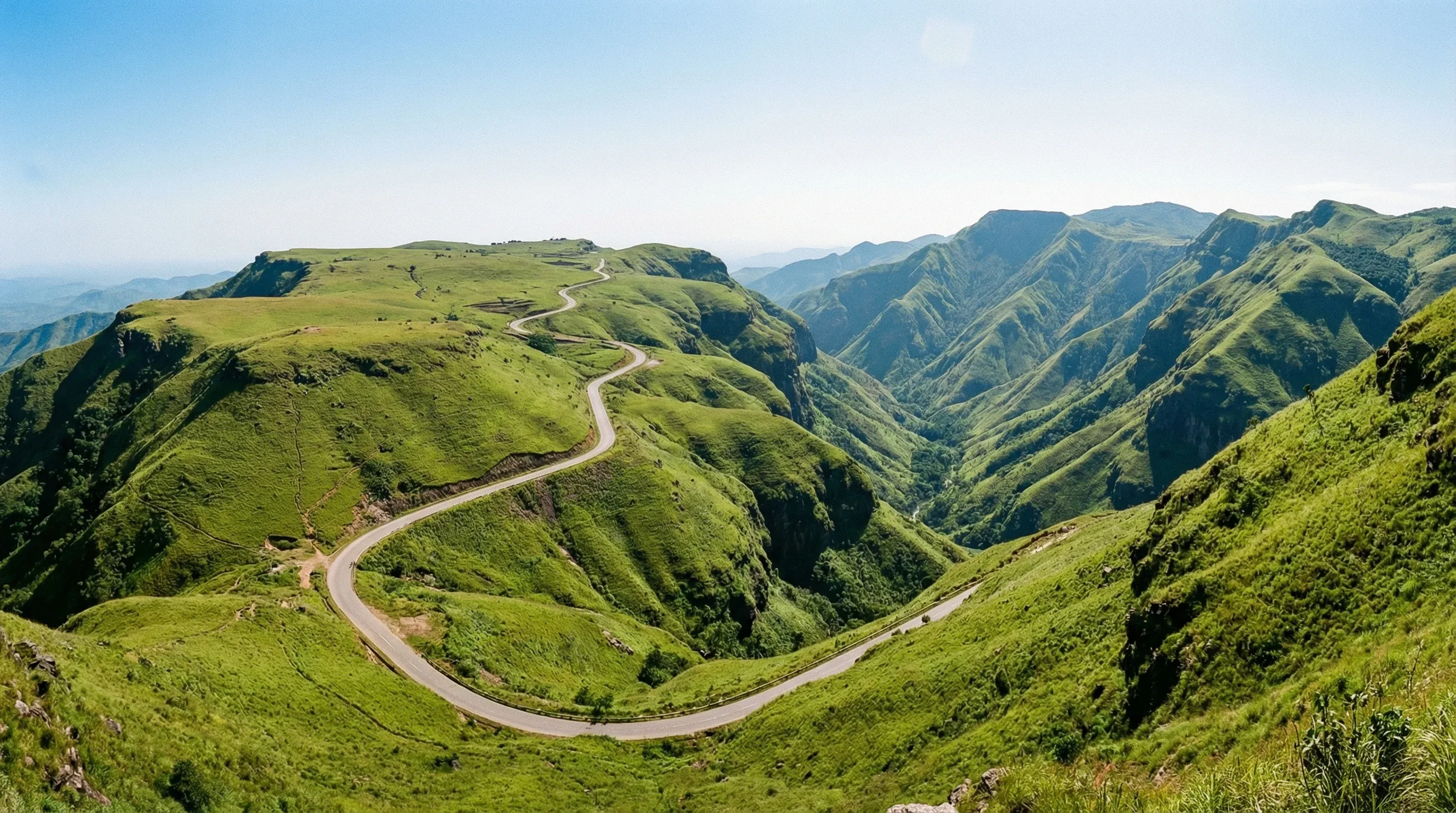
The Southeast, particularly Cross River State, is often called "The People's Paradise." It is the greenest part of Nigeria, characterized by dense rainforests, waterfalls, and mountains near the Cameroon border. Calabar, the regional hub, is cleaner and more organized than many Nigerian cities, with a history as a colonial administration center. The atmosphere here is more laid-back, and the city comes alive every December for the massive Calabar Carnival, Africa's biggest street party.
For families, this region offers the best opportunities for nature-based tourism in the country. The air is cleaner, and the elevation in the north of the state provides a cool respite from the tropical heat. It is an area rich in biodiversity, where conservation efforts to protect drills and gorillas are active.
Key Attractions
The crown jewel is the Obudu Mountain Resort. Located on a plateau, it features a cable car that lifts you from the tropical heat at the base to a temperate climate at the top. It offers swimming pools with slides, hiking trails, and a canopy walkway, making it a complete family holiday spot. Closer to the city, the Cross River National Park is crucial for wildlife education, protecting rare primates in one of the oldest rainforests in Africa.
In Calabar city, the Slave History Museum at the Marina Resort offers a sobering but educational look at the region's history as a major slave trading port. The Marina Resort complex itself also has cinema halls and views of the river, making it a popular weekend spot. For a nature trip without the long drive to Obudu, Agbokim Waterfalls consists of seven streams cascading over a cliff, a stunning sight during the rainy season.
Practical Advice
The drive from Calabar to Obudu is long (5-6 hours) and roads can be rough; consider using the resort's shuttle service if available. The rainy season (May-September) is very wet, which makes waterfalls great but hiking muddy.
Food & Drink
Typical meal times: Lunch 1:00 pm to 3:00 pm, Dinner 7:00 pm to 9:00 pm.
Typical meal costs: A family meal in Calabar costs ₦40,000–65,000 (approx. $25–40 USD / €23–37 EUR).
Dietary requirements: This region has the richest soups in Nigeria, often using periwinkles and crayfish. Vegetarians will find it difficult to avoid fish stock bases.
Signature dishes:
- Edikang Ikong – A nutrient-dense vegetable soup made with pumpkin leaves and waterleaf, usually cooked with various meats and dried fish.
- Afang Soup – Similar to Edikang Ikong but made with the wild Okazi leaf, giving it a fibrous texture and distinct taste.
- White Soup (Ofe Nsala) – A spicy, light-colored soup made without palm oil, often served with pounded yam.
Why this score?
The region offers significant outdoor appeal with the Sankwala Mountains and Cross River National Park. Features like the '22 Bends' road to Obudu and the surrounding rainforest provide a genuine sense of exploration and physical challenge.
Why this score?
Calabar has functional public and private medical facilities that serve the local population and domestic tourists fairly well. However, they lack the high-end international patient services found in Lagos, and specialized care may require evacuation to a larger hub.
Why this score?
Calabar is often cited as Nigeria's cleanest city and attracts domestic tourists for its annual December Carnival and the Obudu Mountain Resort. It maintains a niche international following due to its primate conservation efforts at the Drill Ranch, but it lacks the high volume of a major global destination.

Calabar is moderately priced. A family room in a decent hotel costs ₦80,000–150,000 (approx. $50–95 USD / €45–85 EUR). Obudu Mountain Resort is more expensive due to its exclusivity. Food is generally good value, especially the local soups which are rich and filling.

Getting Here & Around
Getting Here
- Airports – Margaret Ekpo International Airport (CBQ) in Calabar is the safest entry point. Flights connect from Lagos and Abuja.
- Driving – Road travel from the west or north passes through states with higher security risks (delta or separatist areas) and is not recommended.
Getting Around
- Car – Essential. Taxis are available in Calabar (painted blue), but private hire is better for families.
- Cable Car – At Obudu Mountain Resort, the cable car is the primary (and most scenic) way to reach the plateau from the base.
Nearby Airports (4 airports)
Calabar
CBQCalabar
Enugu
ENUEnugu
Sam Mbakwe International Airport
QOWImo
Akwa Ibom Airport
QUOUyo
View full flight map for Nigeria →
Official Links

Packing List
Obudu Mountain Resort has a temperate climate and gets genuinely cold at night (unlike the rest of Nigeria).
Trails in Cross River National Park and Obudu can be slippery and steep.
The road up to Obudu (if the cable car is down) involves the 'Devil's Elbow', a series of 20 hair-pin turns.
This is a prime bird-watching and primate-spotting region.
Strictly required for entry; you may be refused boarding or entry without this physical yellow card.
Power outages are a daily occurrence; keep phones and fans charged when the grid goes down.
Voltage fluctuations can destroy sensitive electronics when charging in hotels.
Heat and humidity can be stifling, especially if the air conditioning cuts out during a power switch.
Dusty harmattan winds and eating finger foods (swallow) make frequent hand cleaning essential.
POS machines often fail; cash is king for tips and small vendors.

Activities & Best Times

Hiking, wildlife, outdoor exploration, ecotourism
Home to the unique Obudu Mountain Resort and Afi Mountain Drill Ranch, offering rare highland ecosystems and primate conservation experiences in West Africa. Peak visits occur during the dry harmattan season when visibility is high and mountain trails are accessible, while heavy monsoon rains degrade the experience from May to October.

Urban tourism, museums, historical sites, architecture
Calabar offers a deep historical narrative through its Old Residency and Slave History Museum, set within a city known for its cleanliness and colonial heritage. December is the undisputed peak due to the high-energy cultural atmosphere, while the wet season brings significant rainfall that limits urban exploration.

Events, celebrations, seasonal attractions
The Calabar Carnival is genuinely internationally recognized (Africa's largest street party) and draws visitors from across West Africa. While a single annual event, its scale and international profile justify 'good' rather than 'marginal'. This aligns with how similar African festivals (e.g., Cape Town Carnival) are rated.

Sport tourism, fitness activities, active recreation
The region features unique infrastructure like the Obudu canopy walkway and the challenging mountain road for cycling and running enthusiasts. Peak timing aligns with the drier months and the annual Obudu Mountain Race, whereas mountain activities become hazardous during the peak rainy months.

Beach resorts, marine activities: diving, snorkelling, kite surfing, wind surfing, sailing
Coastal recreation is centered around the Marina Resort and Tinapa, providing riverine views rather than traditional white-sand ocean beaches. International appeal is limited to the drier months when humidity is slightly lower and outdoor waterfront facilities are fully operational.

Scenic drives, countryside tours, route-based travel
The '22 Bends' leading up to the Obudu plateau is one of Africa's most spectacular and engineered scenic drives. Safe and enjoyable driving is strictly limited to the dry season; heavy rains and mountain fog make the steep, winding ascent dangerous for most of the year.
Amusement parks, family entertainment venues
Water-based entertainment facilities at Tinapa and Obudu provide family recreation, though they do not reach the scale of global destination theme parks. These facilities are most enjoyable during the sunny, dry months when outdoor water play is most comfortable for families.



Public Holidays & Calendar Next 12 months
Public holidays, festivals, cultural celebrations, and seasonal natural phenomena coming up in Southeast (Calabar) over the next 12 months.
Loading holidays and events...

Travel Advisory
All major agencies maintain a baseline advisory to reconsider travel or avoid non-essential trips to Nigeria. While some major cities have slightly lower warnings, the country-wide assessment is driven by widespread threats of kidnapping, terrorism, and violent crime.
Safety Topics
Traveller Advice (3 groups)

Female travelers should dress conservatively and avoid moving alone, particularly after dark. Street harassment and localized violence are significant risks.

Visitors should maintain a low profile, vary their travel routes and times, and establish proof-of-life protocols with family. Comprehensive medical insurance including emergency evacuation is essential due to unreliable local health services.

Personnel working for aid organizations are frequently targeted for kidnapping in northern states, particularly Borno. Infrastructure and supply convoys may also be subject to armed attack.
Agency Summaries
Australia advises a high degree of caution nationwide, suggesting that travelers reconsider their need to visit due to terrorism, kidnapping, and violent crime. Severe 'Do Not Travel' warnings are in place for 26 states. Consular assistance is extremely limited in high-risk regions.
Irish authorities advise against non-essential travel to Nigeria, citing a high threat of domestic terrorism and unpredictable security. Specific northern and Delta states are under a complete 'Do Not Travel' advisory. Citizens are encouraged to register with the embassy upon arrival.
New Zealand recommends avoiding non-essential travel to Nigeria, with the exception of Abuja, Lagos, and Calabar, where travelers should instead exercise increased caution. The threat from extremist groups and banditry is persistent throughout the country.
The FCDO warns against traveling to 21 states across Nigeria due to escalating insecurity. There is a severe threat of kidnapping and terrorist attacks, particularly in the northeast and northwest. Urban areas like Abuja and Lagos experience rising violent crime and volatile protests.
The Canadian government recommends avoiding all travel to most northern, central, and Niger Delta states due to extreme threats of terrorism and kidnapping. For the rest of the country, including Abuja, non-essential travel should be avoided. Visitors to Lagos and Calabar must exercise high vigilance.
U.S. officials urge travelers to reconsider trips to Nigeria because of widespread crime, terrorism, and civil unrest. Specific states in the north and south carry a 'Do Not Travel' warning due to kidnapping and armed gangs. Healthcare services are noted as being inconsistent and unreliable.
Information is provided for general guidance only and does not constitute travel, safety, medical, or legal advice. Conditions may change. Users are responsible for independently verifying information before travel.