

Overview
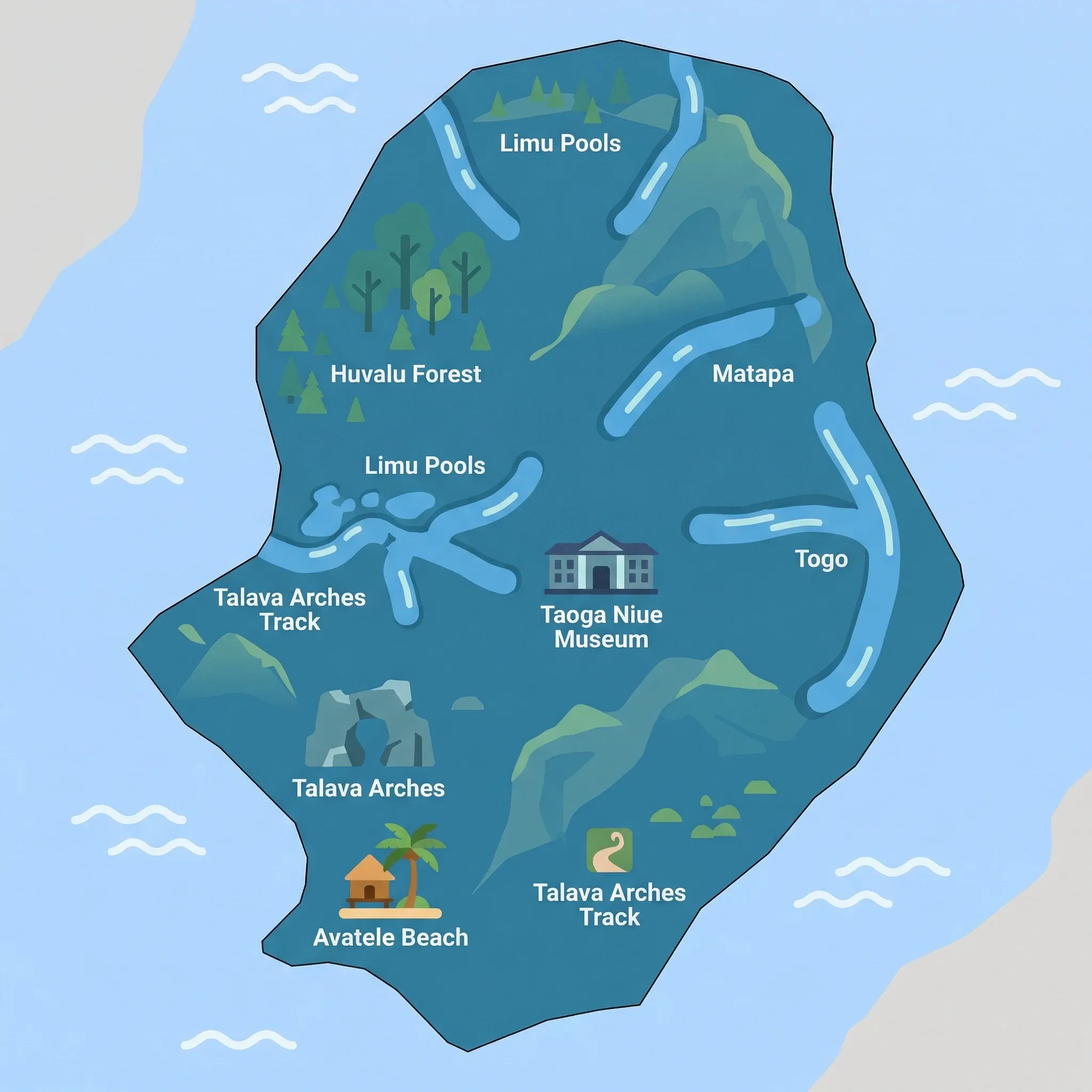
Niue is one of the world's smallest independent nations, but it packs an immense amount of natural wonder into its 260 square kilometres. Known as the "Rock of Polynesia," it is a massive raised coral atoll rather than a volcanic island, meaning there are few long sandy beaches but an abundance of dramatic limestone cliffs, hidden chasms, and crystal-clear swimming pools. For families, this geography creates a unique playground: instead of just building sandcastles, children can snorkel in calm, aquarium-like rock pools protected from the open ocean, explore fossil-studded caves, and walk through rainforests that feel prehistoric. The island is safe, with no dangerous land animals and a crime rate so low that keys are often left in ignitions.
The vibe in Niue is incredibly welcoming and unhurried. There are no traffic lights, no crowds, and the local culture is deeply community-focused. Families will find that children are adored here, and the slow pace allows for genuine connection with nature and locals. While it lacks the kids' clubs of large resorts, it offers something far more memorable: the chance to swim in the "Kings' Bathing Hole," spot humpback whales breaching just metres from the shore (in season), and enjoy a digital detox in a destination where the internet is free but nature is the real attraction.
Key Attractions
Niue's coastline is dotted with sea tracks leading to incredible water features. Limu Pools is arguably the best spot for families; a natural aquarium formed by a mix of fresh and salt water, protected from the waves by a reef wall. The water is impossibly clear, and even young children can float safely while watching colourful fish dart around the rocks. Just as impressive is Matapa Chasm, a majestic swimming hole flanked by towering cliffs that block out the wind and sun. Legend says it was the bathing place of Niuean kings, and its cool, deep waters provide a refreshing escape that feels like a natural cathedral.
For a day by the sea that feels more familiar, head to Avatele Beach. While the sand is coarse and comprised of crushed coral, it is one of the few places with a beach-like atmosphere where families can picnic, swim at low tide, and watch fishermen return with their catch. For active families with older children, Togo Chasm offers an unforgettable adventure. The track leads through a jagged coral landscape that looks like another planet, descending a ladder into an inland sandy oasis surrounded by palms-a true "hidden world" experience that adventurous kids will talk about for years.
Practical Advice
Best time to visit: The dry season (May to October) is ideal, offering pleasant temperatures (20–28°C) and the arrival of migrating humpback whales. The wet season (November to April) is hotter and more humid.
Visa & Entry: Most visitors (including NZ, AU, UK, US, EU citizens) are granted a 30-day tourist permit on arrival. You must show a return ticket and a confirmed accommodation booking.
Health & Safety: There are no poisonous snakes or spiders, but sharp coral is everywhere-reef shoes are mandatory for swimming. Dengue fever can occur, so pack child-friendly insect repellent. The sun is very strong; bring high-SPF rash vests.
Money: The currency is the New Zealand Dollar (NZD). There are NO ATMs on the island. You can withdraw cash at the Kiwibank in Alofi or get cash-out at Swanson Supermarket, but opening hours are limited. Bring plenty of cash.
Food & Drink
Typical meal times: Lunch is usually 11:30 am to 2:00 pm, and dinner is served from 6:00 pm to 8:30 pm. Sunday is a day of rest/church; many places close, though resort restaurants remain open.
Typical meal costs: Mains NZ$25–45 (approx. $15–28 USD / €14–25 EUR). A buffet night might cost NZ$65–80 (approx. $40–50 USD / €36–45 EUR) for adults, half price for kids.
Dietary requirements: Vegetarian options are available but limited. Gluten-free products can be found at the supermarket (Swanson) but are expensive due to import costs. Fresh vegetables depend on the monthly supply ship and local season.
Family-friendly dining: Dining is very casual. Most cafes welcome children, and fish and chips is a staple. Highchairs are available at resorts and larger eateries but rare in small local spots.
Signature dishes:
- Takihi – Thinly sliced taro and pawpaw (papaya) layered with coconut cream and baked-a sweet and savoury favourite kids often love.
- Uga – Coconut crab, a local delicacy often hunted at night. It has a rich, sweet meat but is seasonal and pricey.
- Ota Ika – Raw fish marinated in lemon juice and coconut cream, often served with vegetables.
- Volo – Crispy deep-fried breadfruit chips, a delicious locally grown alternative to potato fries.

Niue uses the New Zealand Dollar (NZD). Costs are comparable to New Zealand but with higher grocery prices due to freight. A family of four should budget NZ$450–600 (approx. $275–365 USD / €255–340 EUR) per day for car hire, mid-range accommodation, and meals. There is no tipping culture.
Age Suitability



Did you know? Niue welcomes approximately 200 international visitors per year. Most visitors come from East Asia and the Pacific.
Why this score?
The island's geography as a raised coral atoll offers a rugged landscape of jagged limestone, hidden sea caves, and dramatic chasms like Togo and Matapa. While these provide excellent opportunities for physical exploration and snorkeling, the presence of a paved ring road and clearly marked walking tracks ensures the environment remains accessible rather than an extreme wilderness.
Why this score?
Healthcare is centered at the Niue Foou Hospital in Alofi, which provides basic medical services and emergency stabilization with English-speaking staff. However, because the island lacks specialized diagnostic equipment and advanced surgical facilities, any serious illness or injury typically requires a high-cost medical evacuation to New Zealand.
Why this score?
With approximately 200 annual international arrivals and a very limited supply of 267 hotel beds, Niue is one of the least visited countries on Earth. Its extreme isolation in the South Pacific and limited flight connectivity from New Zealand keep it as a niche destination for a very small number of intrepid travelers and divers.
Niue uses the New Zealand Dollar. Costs are similar to rural New Zealand but slightly higher for imported groceries. Accommodation ranges from 180–350 NZD (approx. $110–215 USD / €100–195 EUR) per night for a family unit. Car hire is typically 60–90 NZD (approx. $37–55 USD / €33–50 EUR) per day. There is no tipping culture.

Getting There & Around
Getting There
- By Air – Air New Zealand is the sole operator, flying twice weekly (usually Tuesday and Saturday) from Auckland (AKL) to Hanan International Airport (IUE). Flight time is around 3.5 hours.
- Entry Requirements – A passport valid for at least 3 months beyond your departure date is required. Visas are not required for stays under 30 days for major passport holders, but you must have a return ticket and booked accommodation. Check your government website for the latest visa requirements, or use the IATA Travel Centre entry-requirements checker.
- Airport Transfers – Most accommodation providers offer airport pick-up services. Confirm this when booking, as there are no taxis waiting at the airport.
Getting Around
- Car Hire – Essential for families. There is no public transport on Niue. You must pick up a rental car at the airport or Alofi. You need to buy a local Niue driver’s licence from the police station (approx. NZ$23) as a souvenir permit.
- Cycling – The island is relatively flat and encircled by a 64km road. Bikes are available for hire and are a fun way for active families to see nearby villages, though a car is better for reaching chasms.
- Walking – While you cannot walk between villages easily due to distance, the "Sea Tracks" from the road to the coast are short (10–20 mins) and generally well-maintained, though some have steep steps.

Packing List
Crucial for everyone. There are almost no sandy entries; you will be walking on sharp coral and rocks to enter pools.
There are NO ATMs on Niue. You can get cash-out at the supermarket/bank, but hours are limited and queues common.
Rentals are available but may not fit small faces well. Having your own gear ensures kids can enjoy the rock pools instantly.
Many caves and chasms like Palaha are self-guided and unlit. Kids will need a light to explore the darker recesses safely.
The island relies on a monthly supply ship. If the ship is late, supermarket shelves can get very bare of kid-friendly snacks.

Activities & Best Times

Adventure & Nature
GoodHiking, wildlife, outdoor exploration, ecotourism
While Niue's raised atoll geology creates unique chasms and caves for exploration, 'very_good' suggests nationally significant adventure tourism hub status. International calibration requires downgrade to 'good' - the attractions are notable but limited in scale given island size and infrastructure.

Sports & Active
GoodSport tourism, fitness activities, active recreation
Challenging sea tracks like Togo Chasm and the perimeter cycling routes provide active exploration of Niue's jagged limestone terrain. Peak activity periods avoid the intense heat and heavy tropical rains of the summer months, ensuring safer conditions on sharp coral paths.
Beach & Sea
MarginalBeach resorts, marine activities: diving, snorkelling, kite surfing, wind surfing, sailing
Niue is a raised coral atoll with predominantly rocky coastline and limited sandy beaches. The noted snorkeling in chasms (Limu) is adventure/nature activity, not traditional beach tourism. International calibration requires downgrade - Niue is not known as a beach destination.

City & Cultural
MarginalUrban tourism, museums, historical sites, architecture
Alofi is one of the world's smallest capital cities with ~600 residents and one small museum (Taoga Niue). 'Good' rating overstates cultural tourism potential - should be marginal to reflect very limited scale of cultural infrastructure.

Road Trips & Scenic
MarginalScenic drives, countryside tours, route-based travel
The Niue Ring Road provides a scenic, manageable drive around the island's perimeter, offering access to numerous sea tracks and viewpoints. While the circuit is short, the views are spectacular during the clear, sunny days of the dry season.




Public Holidays & Calendar Next 12 months
Public holidays, festivals, cultural celebrations, and seasonal natural phenomena coming up in Niue over the next 12 months.
Loading holidays and events...

Travel Advisory
All major agencies agree that Niue is a safe destination requiring only standard safety awareness. Primary concerns are related to limited medical infrastructure and seasonal cyclones rather than security threats.
Safety Topics
Traveller Advice (4 groups)

Ensure all accommodation is booked before arrival as it is an entry requirement. Carry sufficient cash in New Zealand Dollars as the economy is primarily cash-based and ATM access is non-existent.

Only use accredited tour operators for water and wilderness activities. Specialized insurance covering helicopter rescue and medical evacuation is essential due to the remote nature of the island.

Respect local cultural norms by dressing modestly, especially when outside of tourist resorts or visiting local villages.

Infrastructure for accessibility is limited; travellers with mobility issues should research facilities and transport options thoroughly before departure.
Agency Summaries
No specific travel restrictions are in place. Visitors are advised to secure valuables and be mindful of limited medical care and potential water contamination. The region has no recent history of terrorism, though global awareness is advised.
Irish citizens can visit visa-free for up to 31 days. Basic safety precautions are recommended. Mosquito-borne illnesses like Dengue are present, and medical treatment options on the island are very limited.
New Zealand does not issue a specific risk rating for Niue, implying standard safety. Visitors must pre-book accommodation and ensure they have insurance covering air evacuation to New Zealand.
General safety levels are high, but visitors should be wary of strong ocean currents and aggressive stray dogs. A local driving license is mandatory for motorists. Tourism is generally safe with minimal crime reported.
Travellers should maintain standard safety awareness. The island experiences low crime levels, primarily petty theft. Medical facilities are extremely basic, and emergency evacuation to New Zealand is typically required for serious conditions. Cyclone season runs from November to April.
Niue is classified as Level 1, indicating a stable security environment where standard safety precautions are sufficient. Visitors should be aware of seasonal weather patterns and limited local infrastructure.
Information is provided for general guidance only and does not constitute travel, safety, medical, or legal advice. Conditions may change. Users are responsible for independently verifying information before travel.