

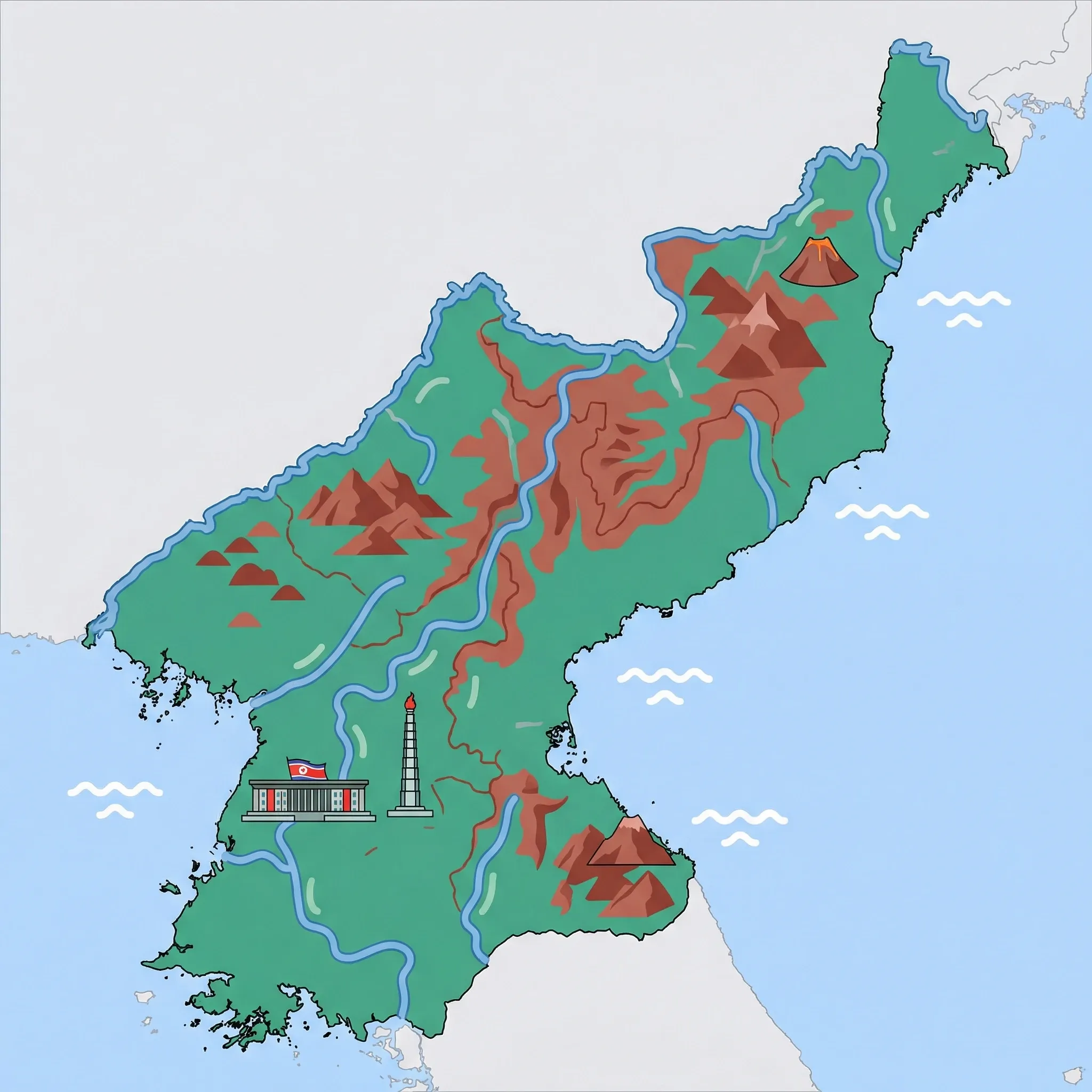
⚠️ SAFETY WARNING: Due to the risk of arbitrary arrest, long-term detention, and the volatile security situation related to the nuclear weapons program, government agencies (including CA, USA, UK, AU, IE, and NZ) advise travelers to avoid all travel to North Korea (DPRK). The United States prohibits the use of US passports for travel to/through the DPRK without special validation. Consular support is extremely limited or non-existent. Families are strongly urged to consult their own government's official travel advisory before considering a trip, as circumstances and risk assessments vary.
For the few families who do visit, North Korea presents a travel experience unlike any other. It is not a holiday destination for relaxation, but an immersive educational expedition into a closed society. Every movement is choreographed; independent exploration is impossible, and visitors must be accompanied by two government guides at all times. The landscape is a mix of utilitarian Soviet-style architecture in the capital, Pyongyang, and surprisingly serene mountains and rice paddies in the countryside. The atmosphere is quiet, orderly, and intensely political, with monuments to the leadership dominating every vista. This trip is best suited for families with mature teenagers who can grasp the historical context and strictly adhere to the rigid protocols required of all visitors.
The cultural experience is focused almost entirely on the nation's revolutionary history and reverence for its leaders. While the environment is restrictive, it offers a unique opportunity to witness a way of life that has virtually disappeared elsewhere. Families can watch disciplined mass dances, visit immaculate parks where locals picnic, and ride the deepest metro system in the world. It is a "time capsule" destination that sparks endless conversation and debate, making it a powerful history lesson rather than a typical vacation.
Key Attractions
The capital city is the showpiece of the nation. The skyline is pierced by the Juche Tower, a stone spire celebrating the national ideology; visitors can take an elevator to the top for panoramic views of the Taedong River. Nearby, the Arch of Triumph-larger than its Parisian counterpart-celebrates Korean resistance. In the heart of the city, the Grand People's Study House serves as the central library and a hub of adult education, where tourists can tour classrooms and enjoy elevated views of Kim Il Sung Square.
For a change of pace, the Kaeson Youth Park offers a rare chance to see locals letting their hair down. This amusement park features modern rides and is one of the few places where interaction with ordinary citizens is somewhat more natural. Similarly, the Munsu Water Park is a massive indoor-outdoor complex where families can swim and slide alongside Pyongyang residents, providing a surreal but humanizing glimpse of leisure in the DPRK.
History comes alive at the Panmunjom (Joint Security Area) in the DMZ. Standing in the blue huts that straddle the military demarcation line offers a tangible sense of the peninsula's division. Further south, the Historic Monuments and Sites in Kaesong offer a look at pre-revolutionary Korea, with the Koryo Museum housed in an old Confucian academy. For those visiting the northeast, the Mount Paektu region is a stunning volcanic landscape held sacred in Korean mythology, though access depends heavily on the season and political climate.
Practical Advice
Travel to North Korea is only possible through authorized tour operators, usually based in Beijing. Visas are processed by the agency and are distinct from your passport (no stamp is left in the passport itself). The best times to visit are April–May and September–October for mild weather. Internet access is non-existent for tourists outside of expensive hotel emails; phones are allowed but will have no service. Families must bring all necessary medications and toiletries, as local shops for foreigners (hard currency shops) have limited stock. Strictly obeying guides is mandatory.
Food & Drink
Typical meal times: Lunch is typically served from 12:00 pm to 2:00 pm, and dinner from 6:30 pm to 8:30 pm. Meals are pre-arranged and strictly scheduled.
Typical meal costs: Most meals are included in tour packages. For extra dishes or drinks, prices are set in hard currency: ₩4,500–9,000 (approx. $5–10 USD / €4.50–9 EUR). Local currency (Won) is generally not used by tourists.
Dietary requirements: Options are limited. Meals are heavy on rice, meat, and pickled vegetables. Vegetarians can be accommodated if the tour agency is notified weeks in advance, but variety will be sparse (mostly tofu, eggs, and cabbage). Gluten-free dining is very difficult to guarantee.
Family-friendly dining: Highchairs are rarely available outside top international hotels. The food is generally not spicy (except kimchi) and palatable for children, but the formal, quiet atmosphere of tourist restaurants can be challenging for energetic kids.
Signature dishes:
- Pyongyang Cold Noodles (Raengmyeon) – Buckwheat noodles served in a chilled, tangy meat broth, often topped with egg, meat slices, and pear.
- Pansangi – A traditional Kaesong royal meal served in nearly a dozen small bronze bowls, featuring various side dishes like kimchi, greens, and jelly.
- Bibimbap – Rice mixed with vegetables, egg, and chili paste, often served in a hot stone bowl (Dolsot) or brass vessel.
- Pine Mushroom Stew – A delicacy made from fragrant mushrooms gathered in the mountains, often available as an expensive add-on.
Safety
Beyond the geopolitical risks, safety in North Korea is about adherence to strict local laws. Actions that are minor elsewhere-such as jaywalking, folding a newspaper with a leader's photo, or taking a photo of a soldier-are considered serious offenses. Photography is restricted; always ask your guide before shooting. Do not bring religious materials, books about the Korean War, or films critical of the regime. The crime rate against foreigners is virtually zero because you are never alone, but the legal system is harsh and arbitrary. Medical facilities are extremely basic; serious illness requires evacuation to Beijing.

Tours are all-inclusive prepaid packages, making the daily rate high but predictable. A typical traveler pays around ₩180,000–360,000 (approx. $200–400 USD / €185–370 EUR) per day for the tour itself. While inside, spending is minimal; bring about ₩45,000 (approx. $50 USD / €45 EUR) per day in cash (small denomination EUR, USD, or RMB) for tips, extra drinks, and souvenirs.
Age Suitability



Why this score?
While travel is highly regimented and independent exploration is strictly forbidden, the region offers a high degree of adventure due to its extreme geopolitical isolation. The terrain is mountainous and includes sites like Mount Paektu and Mount Myohyang, though the physical challenge is often secondary to the psychological intensity of the state-controlled environment. It is an 'adventure' in the sense of entering a fundamentally different and closed society.
Why this score?
Medical services for foreigners are primarily concentrated at the Friendship Hospital in Pyongyang, which offers better care than local clinics but still lacks modern international standards. Outside the capital, facilities are extremely basic and often suffer from shortages of essential medicines, electricity, and diagnostic equipment. Most serious medical emergencies require evacuation to Beijing, which can be logistically complex and time-consuming.
Why this score?
North Korea receives a very low volume of international visitors, with estimates typically ranging from 100,000 to 200,000 annually, the vast majority of whom are from mainland China. Western tourism is extremely limited, consisting of only a few thousand visitors per year who must follow strictly government-sanctioned itineraries. The region remains one of the least accessible and most restricted travel destinations in the world.
While the cost of living is low, the cost of visiting is high because you must pay for a full-service guided tour. Budget tours start around ₩900,000 KPW (approx. $1,000 USD / €920 EUR) for a few days, while longer trips can exceed ₩2,250,000 KPW (approx. $2,500 USD / €2,300 EUR). Extra spending money for drinks and souvenirs is needed in cash (EUR or RMB preferred).

Getting There & Around
Getting There
- By Air – Air Koryo and Air China operate flights from Beijing Capital International Airport (PEK) to Pyongyang Sunan International Airport (FNJ). There are also occasional flights from Vladivostok (Russia).
- By Train – A popular option for seeing the countryside. Trains run from Beijing or Dandong (China) to Pyongyang, crossing the Yalu River. The journey from Beijing takes approximately 24 hours.
- Entry Requirements – All visitors require a visa, which is arranged by your tour operator. US and South Korean passports are generally restricted or require special permissions. Check your government website for the latest visa requirements, or use the IATA Travel Centre entry-requirements checker.
- Border Control – Customs procedures are thorough. Electronic devices (phones, laptops) are inspected for "illegal" content (religious, political, or pornographic material). GPS trackers are often prohibited.
Getting Around
- Tour Bus – The primary mode of transport. Visitors are driven everywhere in private buses or minivans accompanied by guides. Independent travel is forbidden.
- Pyongyang Metro – A tourist attraction in itself. It is the deepest metro in the world, doubling as a nuclear bunker. Visitors can ride between stations like Puhung and Yonggwang to see the ornate mosaics and chandeliers.
- Charter Flights – To reach distant regions like Mount Paektu or Mount Kumgang, tourists may take internal flights on Air Koryo, the state airline.
- Walking – Limited to specific areas like parks or city squares, and always under the supervision of guides. You cannot leave your hotel on foot without an escort.

Packing List
Power cuts are common even in hotels, and street lighting is minimal at night.
There are no ATMs. Bring plenty of small EUR, USD, or RMB notes for spending.
Strictly required (tie for men, dress for women) to enter the Kumsusan Palace of the Sun.
It is customary to tip guides with cash and small gifts like cigarettes or face cream.
Charging devices can be difficult during frequent electricity outages.
There is absolutely no internet or Wi-Fi available for tourists, even in hotels.

Activities & Best Times

Adventure & Nature
Very GoodHiking, wildlife, outdoor exploration, ecotourism
Mount Paektu and Mount Myohyang offer stunning volcanic landscapes and high-altitude trekking that feel untouched by global commercialism. Peak access is restricted by heavy snow in winter and early spring, with autumn offering spectacular foliage and stable conditions.

City & Cultural
GoodUrban tourism, museums, historical sites, architecture
While Pyongyang has unique architecture and ideology, extreme government control, mandatory guides, restricted itineraries, and limited authentic cultural interaction prevent it from reaching 'very good' on international standards. Lacks the cultural institution density and free access of truly very_good destinations like Prague or Kyoto.

Sports & Active
GoodSport tourism, fitness activities, active recreation
Opportunities range from world-class hiking in the Manpok Valley to modern winter sports infrastructure at Masikryong. Seasonal suitability is split between the prime hiking months of spring/autumn and the mid-winter skiing window.

Beach & Sea
MarginalBeach resorts, marine activities: diving, snorkelling, kite surfing, wind surfing, sailing
Wonsan's Songdowon and Majon beaches serve as unique coastal recreation spots, though they lack international luxury standards and marine biodiversity. Warm water temperatures for swimming are limited to the peak summer months.

Educational & Exploratory
MarginalLearning experiences, scientific sites, historical education
While Sci-Tech Complex and DMZ have educational value, heavily propagandized content, restricted access, and lack of independent educational institutions prevent comparison to genuinely 'good' educational destinations like Cambridge or Washington DC. Zero educational attractions in database.

Festivals & Seasonal
MarginalEvents, celebrations, seasonal attractions
The Arirang Mass Games are a world-class spectacle of synchronization and scale, though their scheduling is infrequent and politically contingent. When held, they typically occur in late summer and early autumn.

Relaxation & Wellness
MarginalSpa retreats, wellness centers, peaceful getaways
Traditional hot spring resorts like Kumgangsan and Kyongsong offer authentic, rustic relaxation that is most appealing during the cold winter months. Facilities are basic compared to global spa destinations, emphasizing natural mineral properties over luxury.

Road Trips & Scenic
MarginalScenic drives, countryside tours, route-based travel
Foreigners cannot drive independently in North Korea - all travel is by state-approved guides and drivers. This fundamentally undermines the 'road trip' concept of independent exploration. While scenic routes exist, the lack of autonomy makes 'marginal' more appropriate than 'good'.

Ski & Snow
MarginalWinter sports, ski resorts, snow activities
Masikryong Ski Resort has inconsistent operations, extremely limited international access, and questionable snow reliability. Does not meet global standards for 'good' ski destinations (Japanese Alps, European mid-tier resorts). Zero ski attractions currently in database.

Theme Park & Entertainment
MarginalAmusement parks, family entertainment venues
Rungna People's Pleasure Ground offers a high-standard domestic experience that is interesting to international visitors for its cultural context. Operations are weather-dependent and most vibrant during peak domestic holiday windows in spring and autumn.

Attractions (29 total)



Public Holidays & Calendar Next 12 months
Public holidays, festivals, cultural celebrations, and seasonal natural phenomena coming up in North Korea over the next 12 months.
Loading holidays and events...

Travel Advisory
A clear majority of major travel agencies advise against all travel to North Korea due to extreme risks of arbitrary detention, political volatility, and the absence of consular protection.
Safety Topics
Traveller Advice (4 groups)

Visitors must participate in organized tours led by state-approved guides and are subject to constant surveillance. Dual nationals may not be recognized as such and could be treated solely as North Korean citizens.

Special validation or exemptions are required for aid workers, who operate under extreme restrictions and face high security scrutiny.
Media professionals require explicit permission and a specific visa to enter; attempting to enter as a tourist for professional purposes can lead to arrest.

While laws are ambiguous, the social climate is highly conservative and public displays of affection can lead to official trouble.
Agency Summaries
British nationals should only travel if strictly necessary. Risks include sudden changes in the security climate and the possibility of being detained for actions that would be legal elsewhere.
Irish citizens are cautioned against non-essential visits. Authorities emphasize the lack of local diplomatic representation and the high degree of regulation for foreign visitors.
New Zealanders face serious risks of arrest and detention. The advisory notes that the security environment on the peninsula is unstable and remains technically in a state of conflict.
U.S. citizens are prohibited from using their passports for travel to North Korea without special authorization. The warning highlights a persistent threat of wrongful detention and a lack of direct diplomatic assistance.
Canadians are urged to stay away from North Korea due to the extreme danger of arbitrary imprisonment and the volatile security environment linked to the nation's weapons programs and authoritarian governance.
The Australian government advises against all travel due to the high probability of arbitrary detention and a precarious security situation. Consular help is severely restricted as Australia has no embassy in the country.
Information is provided for general guidance only and does not constitute travel, safety, medical, or legal advice. Conditions may change. Users are responsible for independently verifying information before travel.