
Ohrid & Lake Ohrid
The Jerusalem of the Balkans on an ancient azure lake ⚓✨
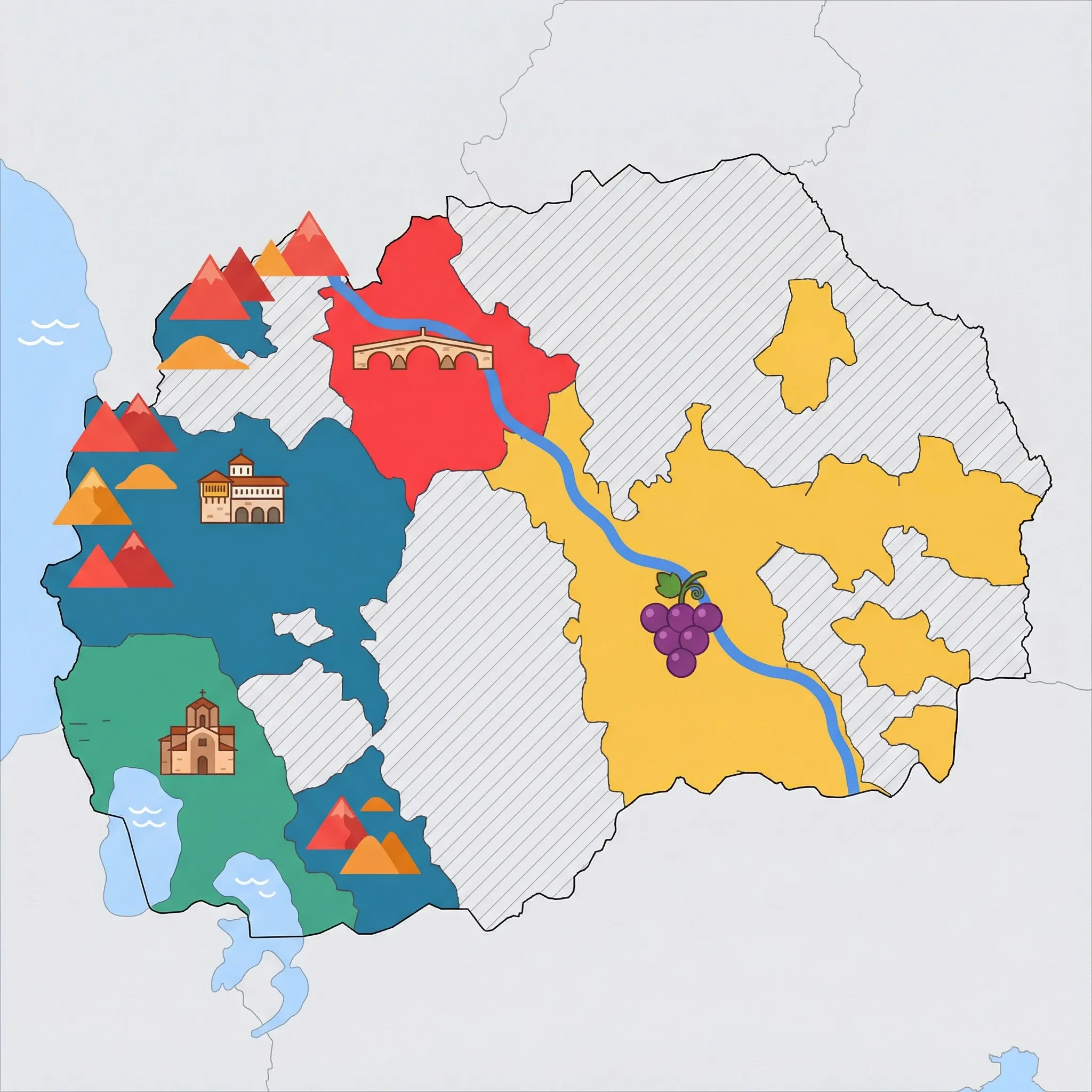
Click a region to explore
Ohrid is widely considered the most beautiful place in North Macedonia, and for families, it is an effortless holiday destination. The region centers around Lake Ohrid, a 3-million-year-old body of water so clear you can see fish swimming meters below the surface. The town of Ohrid itself is a maze of cobblestone streets, flower-filled balconies, and ancient churches cascading down a hill toward the waterfront promenade. It feels more like a coastal Mediterranean town than a landlocked Balkan city. The vibe is lively but safe; in the evenings, the promenade is packed with families eating ice cream, riding carousels, and watching swans glide by the harbor.
For children, the lake is a giant, calm swimming pool. Unlike the ocean, there is no salt to sting eyes and no dangerous currents, making it perfect for young swimmers. The history here is accessible, not stuffy. Kids can climb the ramparts of a fortress, walk on water at the Bay of Bones (a reconstructed prehistoric village on stilts), and spot peacocks at the Saint Naum monastery. It is a place where education and relaxation blend perfectly. While it can get crowded in peak summer, the sheer beauty of the sunsets over the lake—turning the water purple and gold—makes every moment worthwhile.
Key Attractions
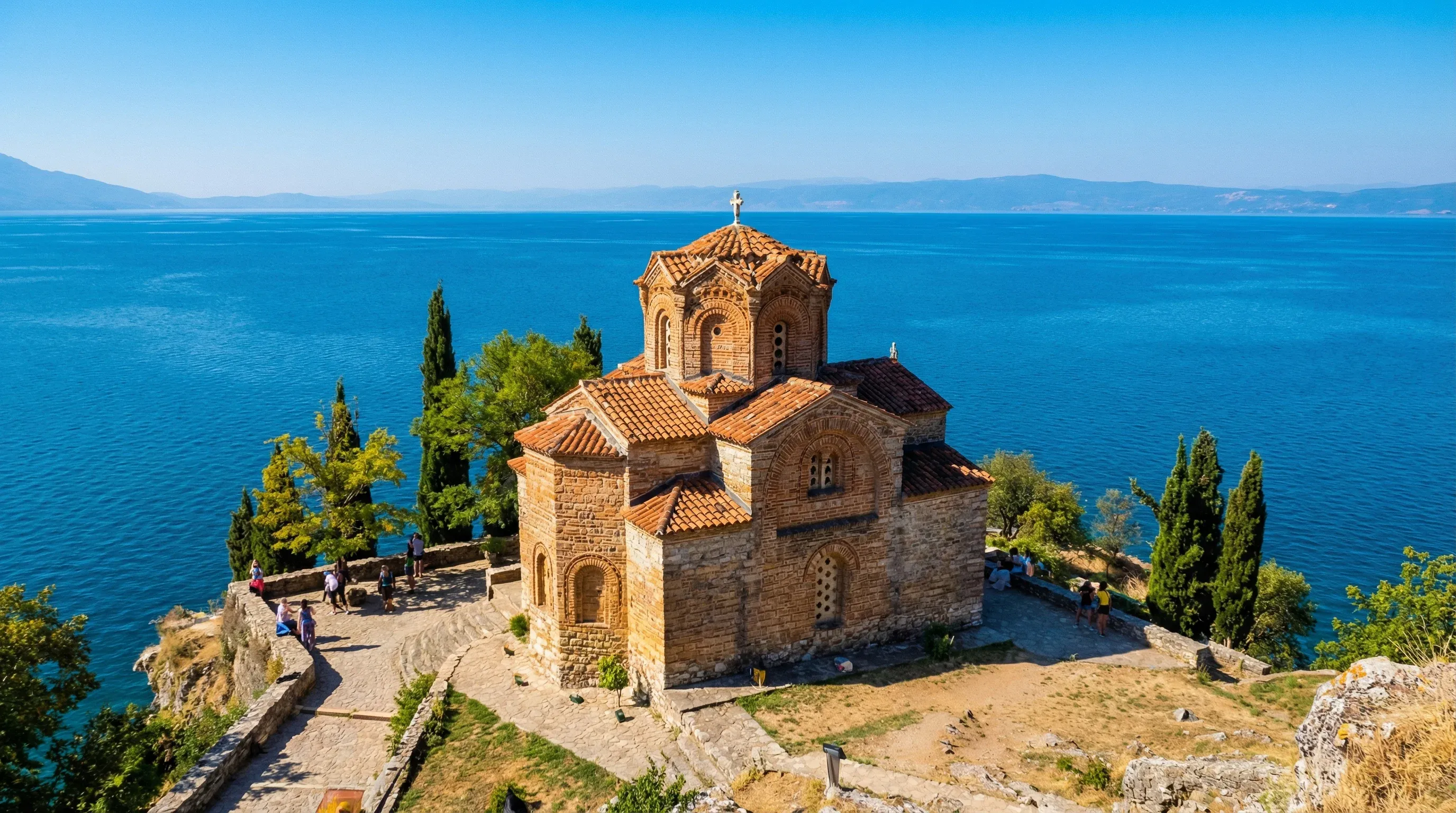
The lake itself is the main attraction. Lake Ohrid offers endless opportunities for boat rentals, pedalos, and swimming beaches (Kaneost and Potpesh are favorites). High above the town stands Samuel's Fortress; hiking up to walk its defensive walls offers the best panoramic view in the country. Just below the fortress, the Plaošnik Archaeological Site and the iconic Church of St. John at Kaneo provide a stunning backdrop for family photos—the walk to Kaneo through the cliffside pine forest is an adventure in itself.
A must-do day trip is to the Monastery of Saint Naum on the south side of the lake. The grounds are filled with free-roaming peacocks which fascinate children, and you can take small rowboats into the pristine springs where the water bubbles up from underground. For nature lovers, a drive up into Galicica National Park offers views over two lakes (Ohrid and Prespa) simultaneously.
Practical Advice
Best time to visit: June and September are perfect—warm enough to swim but less crowded. July and August are vibrant but packed; accommodation must be booked months in advance. May is beautiful for flowers but the water is cold.
Logistics: Ohrid is very walkable. Strollers can handle the promenade, but the Old Town's cobblestones are rough and steep—a carrier is better for babies. Taxis are plentiful and cheap. Boat taxis are a fun way to get from the center to beaches like Kaneo.
Food & Drink
Typical meal times: Lunch 1:00 pm to 3:00 pm. Dinner is a long affair, usually 8:00 pm to 10:00 pm, often accompanied by live traditional music.
Typical meal costs: Slightly higher than the rest of the country. A nice lakeside dinner costs 800–1,500 MKD (approx. $14–26 USD / €13–24 EUR) per person.
Dietary requirements: Excellent for pescatarians. Grilled fish is everywhere. Vegetarian options are standard (grilled veggies, salads, dips). Gluten-free is harder to guarantee in traditional taverns.
Signature dishes:
- Gjomleze – A unique, labor-intensive pie made of layers of thin batter baked under a metal lid (sač). It has a soft, waffle-like texture kids love.
- Makalo – A potent garlic spread/dip, often served with warm bread. Warning: it is very strong!
- Ohrid Trout / Belvica – While the endemic Ohrid Trout is endangered and regulated, the smaller Belvica or farmed trout is a local staple, usually served grilled or in a soup.
Why this score?
The region offers a balanced mix of lakeside relaxation and outdoor exploration within Galicica National Park. Visitors can engage in paragliding, hiking to Magaro Peak, or boat excursions, all while remaining close to comfortable hotels and modern amenities.
Why this score?
Ohrid has established medical centers and specialized orthopedic clinics that are accustomed to treating international tourists during the peak summer season. While adequate for most issues, complex surgical cases are frequently referred to the superior facilities in Skopje.
Why this score?
As a UNESCO World Heritage site, Lake Ohrid is the most famous destination in the country, attracting a consistent flow of European summer tourists and cultural travelers. Its popularity is supported by an international airport and a well-developed hospitality sector catering specifically to foreign families.

Ohrid is the most expensive region in North Macedonia, but still very cheap by European standards. A family apartment near the lake costs 3,000–5,000 MKD (approx. $53–88 USD / €48–80 EUR) per night. Espresso is 80–120 MKD (approx. $1.40–2.10 USD / €1.30–1.95 EUR). Boat trips to St. Naum cost around 600 MKD (approx. $10.50 USD / €9.75 EUR) return.

Getting Here & Around
Getting Here
- Airports – St. Paul the Apostle Airport (OHD) is just 10km from the city, with seasonal flights from Northern Europe. Skopje Airport (SKP) is a 2.5-hour drive away.
- Bus – Frequent buses connect Skopje and Ohrid (approx. 3 hours). The bus station is about 2km from the town center, requiring a short taxi ride.
- Car – The drive from Skopje via Kičevo is scenic but involves mountain roads currently under upgrade/construction. Drive carefully.
Getting Around
- Walking – The best way to see the Old Town and Samuel's Fortress. The waterfront promenade connects the city center to the beaches.
- Boat – Water taxis run from the port to Church of St. John at Kaneo. Larger commercial boats run day trips to Monastery of Saint Naum (approx. 1.5 hours one way).
- Taxi – Cheap and reliable for getting to beaches further out like Lagadin or Gradiste.
Nearby Airports (1 airport)
Ohrid
OHDOhrid
View full flight map for North Macedonia →
Official Links

Packing List
Many beaches on Lake Ohrid are pebbly or rocky, which can hurt little feet.
The Old Town's cobblestones are extremely uneven and steep; strollers struggle here.
The boat ride to St. Naum can get choppy in the afternoon wind.
Required for entering the many active Orthodox churches and monasteries.
Beaches at Lake Ohrid are often pebbly or rocky; these protect feet and prevent slipping.
Required for women to cover shoulders (and sometimes heads) when entering orthodox monasteries.
Many small shops, bakeries, and rural attractions do not accept credit cards.
You may need to remove shoes frequently when visiting mosques or private guesthouses.

Activities & Best Times

Hiking, wildlife, outdoor exploration, ecotourism
Galicica National Park provides exceptional hiking and panoramic views over both Ohrid and Prespa lakes, while the springs of Saint Naum offer unique river-fed ecosystems. This region is a sanctuary for endemic species, with peak accessibility during the dry, warm months of summer and early autumn.

Urban tourism, museums, historical sites, architecture
As a UNESCO World Heritage site, Ohrid offers an extraordinary concentration of Byzantine churches, Ottoman architecture, and ancient history, notably at Samuel's Fortress and the Icon Gallery. The city is most vibrant in summer when heritage sites are fully open and boat taxis are frequent, though spring and autumn offer mild walking weather.

Beach resorts, marine activities: diving, snorkelling, kite surfing, wind surfing, sailing
Although a freshwater destination, Lake Ohrid's crystal-clear waters and established beaches like Kaneo and Sveti Naum offer a Mediterranean-style resort experience. Peak conditions occur in July and August when water temperatures are at their highest and coastal infrastructure is fully operational.

Scenic drives, countryside tours, route-based travel
The P1307 mountain pass through Galicica National Park offers some of Europe's most dramatic lake views, complemented by the R1201 coastal drive to Saint Naum. High-altitude routes are frequently closed due to snow and ice outside of the late spring to early autumn window.

Sport tourism, fitness activities, active recreation
With a dedicated cycling circuit around the lake and organized adventure parks in Ohrid and Struga, the region supports active families well. These activities depend on stable weather and seasonal facility operation, making the period from May to October the only reliable window.

Learning experiences, scientific sites, historical education
The Natural History Museum in Struga highlights the region's ancient lake biodiversity, though the facility is modest compared to global discovery centers. It serves as an informative supplement to a cultural visit rather than a standalone educational destination.

Events, celebrations, seasonal attractions
The Ohrid Summer Festival and Struga Poetry Evenings attract international performers and literary figures to historic venues. These events are highly localized to the peak summer season, leaving the region quiet in terms of major festivals for the remainder of the year.

Amusement parks, family entertainment venues
Aqua Park Izgrev provides seasonal family entertainment, though it lacks the scale of world-class international theme parks. It is only viable during the peak summer heat when outdoor water facilities are functional.

Attractions (17 total)



Public Holidays & Calendar Next 12 months
Public holidays, festivals, cultural celebrations, and seasonal natural phenomena coming up in Ohrid & Lake Ohrid over the next 12 months.
Loading holidays and events...

Travel Advisory
All major agencies agree that North Macedonia is safe for travel with standard safety awareness. No significant security or safety warnings are currently active for the country.
Safety Topics
Traveller Advice (3 groups)

Female travellers should follow standard safety precautions, particularly when travelling alone at night in less populated areas.

While same-sex relations are legal, social acceptance varies and public displays of affection might attract negative attention in some areas.

Infrastructure for accessibility can be limited; travellers are encouraged to research specific facilities and transport options in advance.
Agency Summaries
No specific travel restrictions are in place. Guidance focuses on administrative requirements like police registration, driving regulations, and seasonal environmental risks like wildfires.
Visitors should follow typical safety protocols. It is essential to comply with local police registration rules and maintain awareness of surroundings at night.
Standard safety measures are recommended. Be alert for petty crime and follow local updates regarding political rallies or environmental hazards such as summer forest fires.
The country is considered generally safe for visitors, similar to safety standards in Canada. Travellers should focus on securing personal items and being mindful in crowded urban settings.
There is no specific travel warning for this destination. Travellers are advised to maintain standard security awareness and ensure they have comprehensive insurance.
North Macedonia is overall safe for travel. Visitors should maintain standard awareness, particularly regarding pickpocketing in Skopje and occasional political demonstrations.
Information is provided for general guidance only and does not constitute travel, safety, medical, or legal advice. Conditions may change. Users are responsible for independently verifying information before travel.