
Tinian
Ancient stones and pivotal history on a quiet shore 🗿✈️
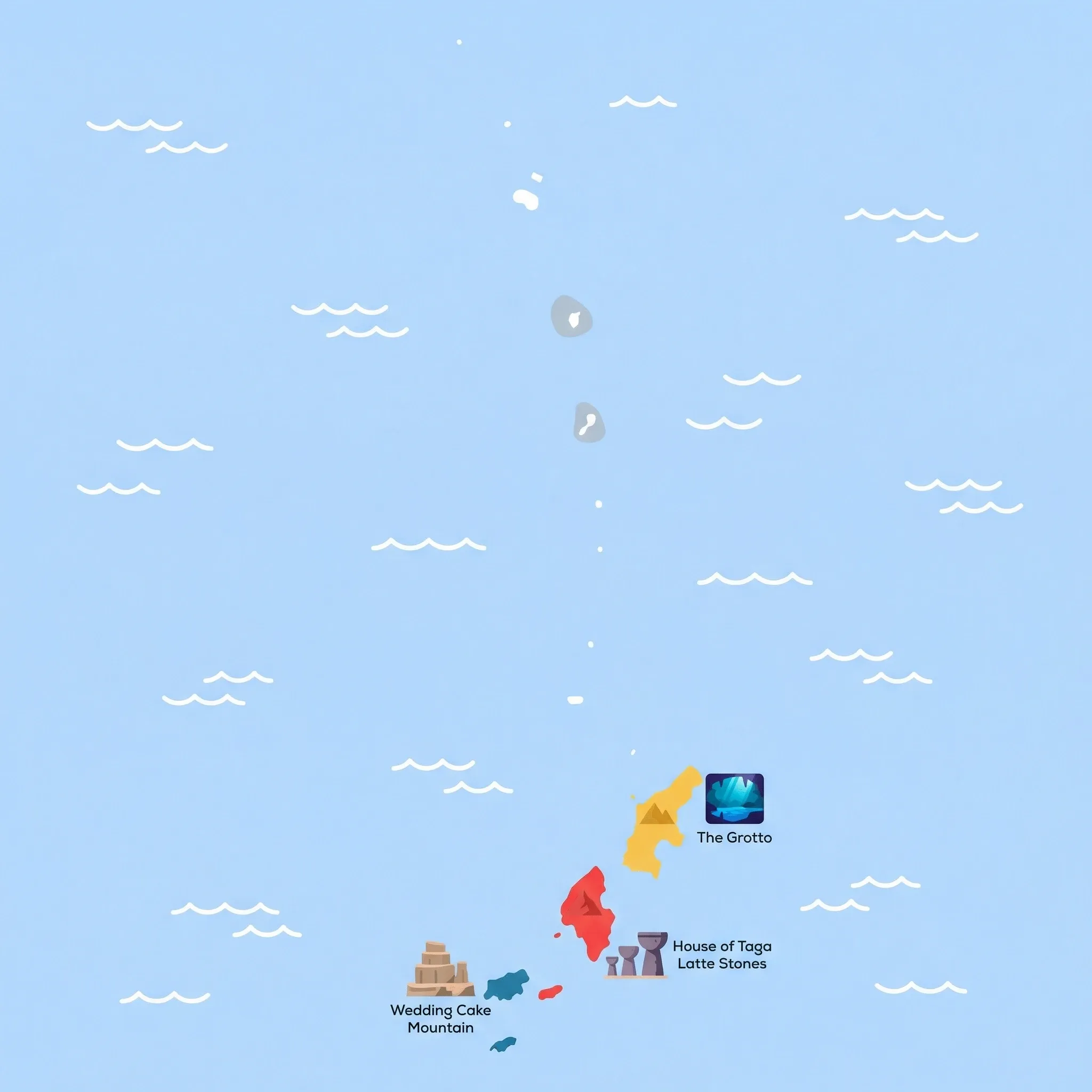
Click a region to explore
Overview
Tinian offers a stark, peaceful contrast to its busier neighbour, Saipan. It is an island of open spaces, grazing cattle, and quiet roads lined with flame trees. For families, Tinian feels like a step back in time to a simpler era. The geography is relatively flat compared to the other islands, making it easy to explore by car. The southern end is home to the main village of San Jose and beautiful swimming coves, while the north is dominated by the sprawling historic airfields of World War II. The atmosphere is incredibly laid-back; it's the kind of place where you might find yourself the only people on a pristine white-sand beach.
The island is a powerful open-air classroom for older children. It holds a unique place in world history as the launch site for the atomic bomb missions that ended WWII. Yet, alongside this heavy history, it celebrates ancient Chamorro heritage through the massive latte stones that still stand today. The local community is small and tight-knit, and the safety and quiet make it an excellent spot for families to decompress. There are no traffic lights and no crowds—just the sound of the ocean and the wind in the ironwood trees.
Key Attractions
The most famous ancient site in the Marianas is the House of Taga. These colossal latte stones—some of the largest ever quarried—are the remains of the legendary Chief Taga's home. Standing next to these megaliths gives children a sense of the scale and skill of the ancient Chamorro builders. It is a quick but essential stop right in San Jose village.
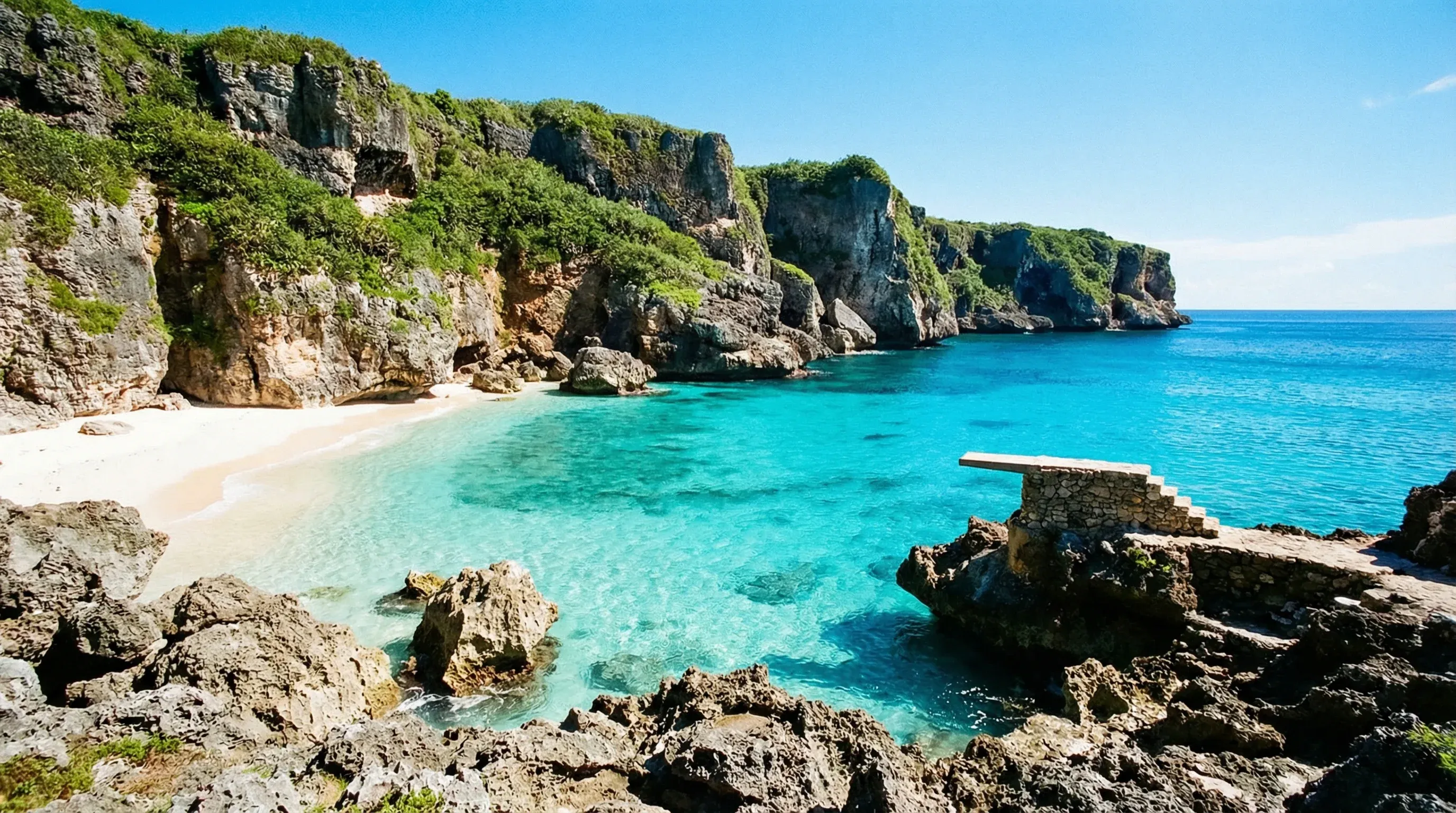
For a dive into modern history, a drive to North Field and Atomic Bomb Pits is unforgettable. Families can drive down the actual runways used during WWII and see the glass-covered pits where the bombs were loaded onto the B-29 bombers. It is a sombre, eerie, but historically significant experience. On the lighter side, Taga Beach offers fantastic cliff jumping for adventurous teenagers and calm shallows for younger kids. The beach is famous for its turquoise water and is a favourite local spot for sunset barbecues.
Practical Advice
Tinian is best visited as a day trip or a 1-2 night stay from Saipan. Transport options are limited to small aircraft or a ferry (ferry schedules can be inconsistent, so flying is more reliable). You must rent a car to see the sights, as the historical fields are miles from the village. Pack snacks and water before heading north, as there are no shops outside of San Jose village.
Food & Drink
Typical meal times: Dining options are limited. Lunch is usually 11:00 am to 1:30 pm, dinner 6:00 pm to 8:00 pm.
Typical meal costs: Meals are affordable, generally $10–20 USD (approx. €9–18 / £8–16) per person at local diners or the hotel restaurant.
Dietary requirements: Very limited. Expect simple menus of burgers, fried rice, and grilled meats. If you have strict allergies, it is wise to bring supplies from Saipan.
Signature dishes:
- Tinian Beef – The island is known for its cattle ranching; local beef dishes are fresh and popular.
- Shrimp Kelaguen – A citrus-marinated shrimp dish, refreshing and spicy, often served with rice.
- Hot Pepper Paste – Tinian is famous for its small, incredibly spicy "donne sali" peppers—try a tiny bit of the local paste if you dare!
Why this score?
Adventure on Tinian is centered on exploring historic ruins at North Field and witnessing the power of the Tinian Blowhole. The island is relatively flat and easy to navigate by rental vehicle, providing a sense of exploration without extreme physical challenge or isolation.
Why this score?
Healthcare is limited to the Tinian Health Center, which provides basic outpatient services and emergency stabilization. For any significant illness or injury, patients must be transferred via a short flight to the main hospital on Saipan.
Why this score?
Tinian is primarily visited as a day-trip or short side-trip from Saipan, known for its significant World War II history and the House of Taga. While it sees more flow than Rota due to its proximity to the capital, it remains a quiet destination with very few international hotel beds.

Costs are similar to Saipan but with fewer options. A night at the main hotel costs around $120–160 USD (approx. €110–148 / £95–125). Car rentals are approx. $50–65 USD (approx. €46–60 / £39–50) per day. Food is inexpensive, with generous local portions costing $10–15 USD (approx. €9–14 / £8–12).

Getting Here & Around
Getting Here
- Flights – The most common way to arrive is via Star Marianas Air from Saipan. The flight takes only 10–15 minutes.
- Ferry – A ferry service sometimes operates from Saipan, but it has been irregular in recent years. Always check current schedules before planning.
Getting Around
- Car Rental – Absolutely necessary. The North Field is far from the village. Rental agencies are located at the airport/hotel.
- Driving – Driving is very easy with wide, empty roads. The straight roads of the old American street grid in the south are easy to navigate.
No airports in this region. See the country flight map for nearby connections.
Official Links

Packing List
Mobile data signal can be spotty in the northern historic fields.
There are no convenience stores near the North Field or Blowhole; bring supplies.
The North Field runways are very exposed and can be windy.
Essential if exploring the jungle areas around the historic sites.
CNMI law bans toxic sunscreens to protect coral; buy zinc/titanium-based brands.
Many beaches have sharp coral rubble near the shore that cuts bare feet.
UV intensity is extreme here; clothing protects better than sunscreen for long swims.
Essential for keeping drinks cold on remote beaches in Tinian/Rota with no vendors.
Protects electronics during the small boat transfer to Managaha Island.

Activities & Best Times

Hiking, wildlife, outdoor exploration, ecotourism
The island features unique geological formations like the Tinian Blowhole and rugged coastal trails such as Long Beach (Unai Dankulo). Peak visitation coincides with the dry season when trails are easily traversable and coastal visibility for observing natural features is at its best.

Beach resorts, marine activities: diving, snorkelling, kite surfing, wind surfing, sailing
Taga Beach and Tachogna Beach offer pristine limestone-framed waters and excellent snorkeling conditions. The winter and spring months are preferred to avoid the heavy monsoon rains and higher typhoon risk of the late summer and autumn.

Urban tourism, museums, historical sites, architecture
While the Atomic Bomb Pits are historically crucial, the overall cultural infrastructure beyond North Field sites is limited. Good is more appropriate than very_good when calibrated internationally.

Sport tourism, fitness activities, active recreation
Dedicated cycling routes through the North Field Historical Loop provide a structured way for active families to explore the island's geography. Optimal conditions occur in the early part of the year when humidity is lower and rainfall is minimal.

Scenic drives, countryside tours, route-based travel
Historic routes are niche interest on a small, undeveloped island. Infrastructure is minimal. Marginal better reflects the limited road trip appeal.




Public Holidays & Calendar Next 12 months
Public holidays, festivals, cultural celebrations, and seasonal natural phenomena coming up in Tinian over the next 12 months.
Loading holidays and events...

Travel Advisory
All major agencies agree that the Northern Mariana Islands are a safe destination requiring only standard travel safety awareness. No elevated security warnings are currently in place.
Safety Topics
Traveller Advice (2 groups)

Women traveling independently may experience occasional verbal abuse or harassment; maintaining awareness in unpopulated areas after dark is recommended.

Maintain standard personal security vigilance, secure valuables on beaches and in vehicles, and obtain comprehensive travel insurance that includes medical evacuation coverage.
Agency Summaries
British nationals should follow standard precautions similar to those in the United States. Entry requirements follow U.S. federal laws, including ESTA or specific island-based travel authorizations.
The environment is stable with a security situation comparable to Australia. Travelers are advised to be mindful of petty theft and monitor weather during the storm season.
Travelers should maintain standard safety awareness. Petty crime is the primary concern, while seasonal typhoons and active volcanoes in the north pose natural risks.
As a U.S. territory, the Northern Mariana Islands do not have an international travel advisory level; however, the region is generally considered safe for visitors with standard vigilance.
New Zealand currently has no specific travel warning for the islands, suggesting a safe environment. Emphasis is placed on health precautions and having comprehensive insurance.
Ireland advises standard safety measures. Entry follows U.S. rules, and visitors should ensure their travel insurance covers the Pacific region, including medical evacuations.
Information is provided for general guidance only and does not constitute travel, safety, medical, or legal advice. Conditions may change. Users are responsible for independently verifying information before travel.