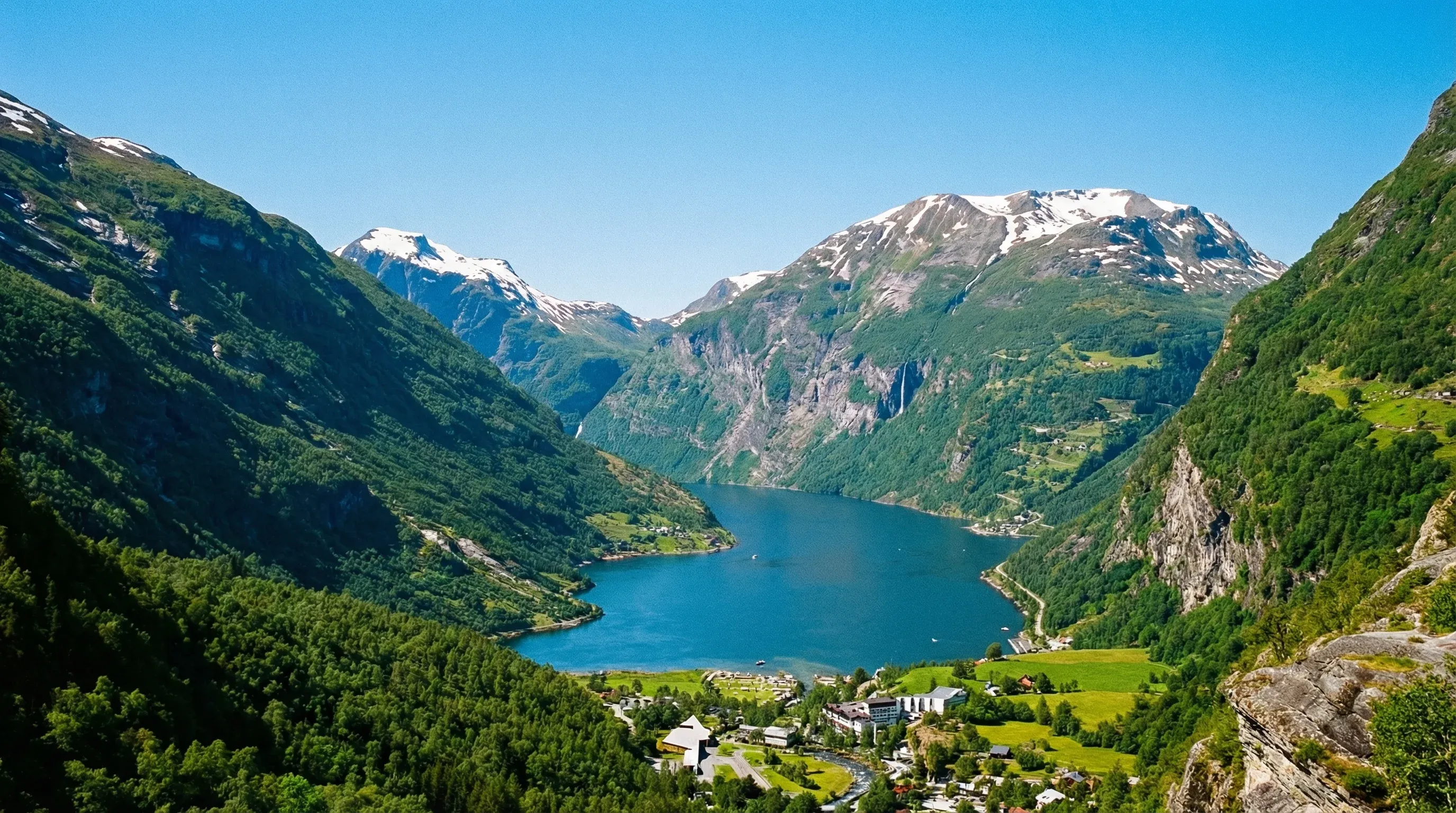

Bergen & Fjords (Sognefjord, Hardangerfjord, Geirangerfjord)
Where trolls hide in the mountains and waterfalls cascade into the deep blue sea 🌧️🏔️
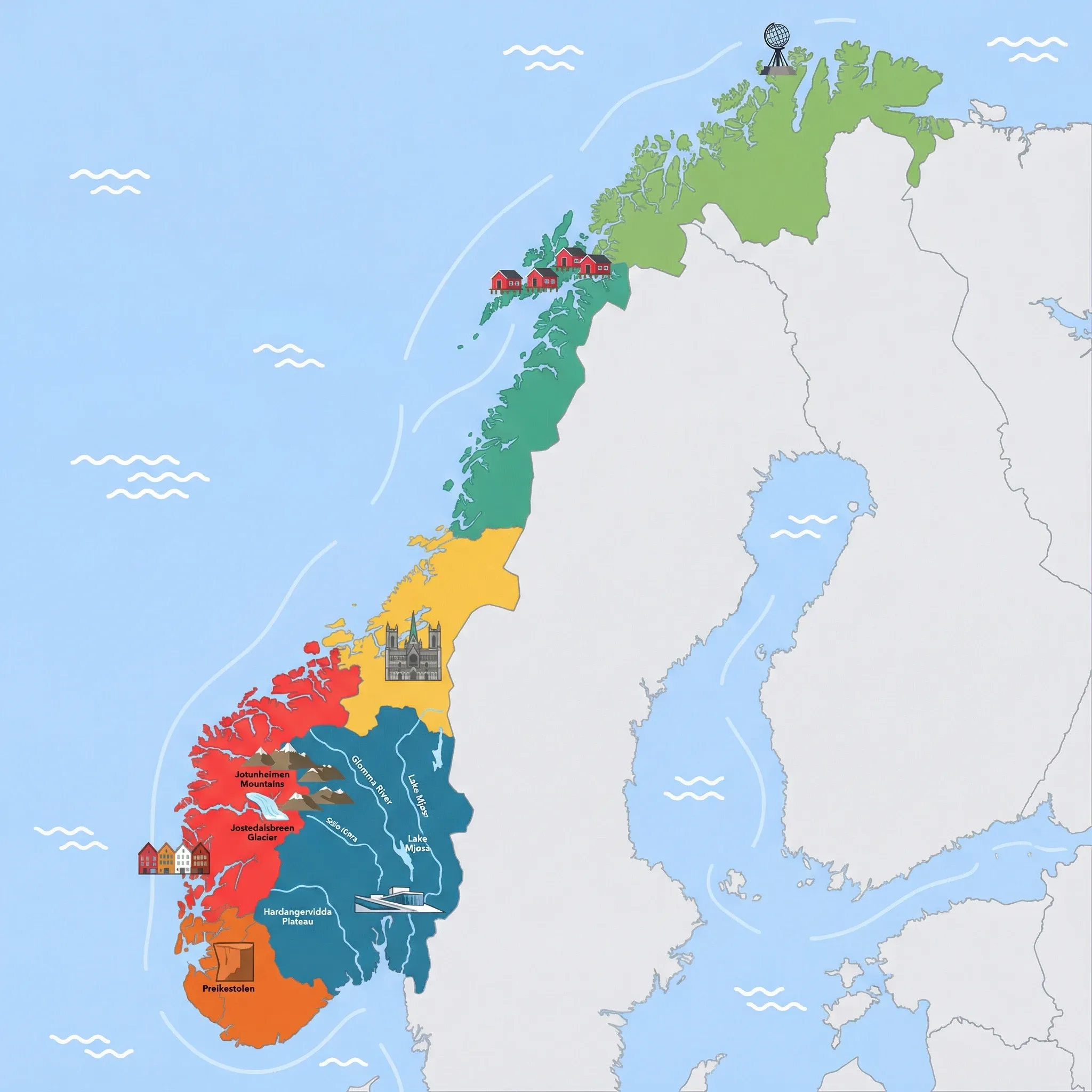
Click a region to explore
The Bergen & Fjords region is the archetypal image of Norway—a landscape of impossibly steep mountains plunging into deep, emerald waters, dotted with orchards and colorful wooden villages. For families, this area is a massive natural playground where the geography itself is the main attraction. The city of Bergen serves as the charming, cobblestoned capital of the region. Despite its reputation for rain, the city is incredibly vibrant and perfectly set up for children, with compact streets that feel like a fairytale set. Beyond the city limits, the fjord arms reach inland like fingers, creating sheltered waters ideal for family boat trips and kayaking adventures.
What makes this region distinct for travelers with children is the accessibility of its wilderness. You don't need to be an expert mountaineer to experience the grandeur of the Geirangerfjord or the Nærøyfjord; ferries, trains, and scenic drives make these UNESCO-listed wonders reachable even with toddlers in tow. The culture here is deeply connected to the sea and the land—you'll find open-air museums that let kids run wild among historic farmhouses and myths of trolls living under bridges. Whether you are riding the funicular high above the city or watching waterfalls thunder down in the Hardanger region, the scale of nature here leaves a lasting impression on young minds.
Key Attractions
Start your adventure in Bergen by taking the funicular up to Mount Fløyen. It’s not just a viewpoint; at the top, you’ll find the 'Troll Forest' with mysterious statues, a huge adventure playground, and friendly goats that roam freely—a guaranteed hit with children. Back in the city center, explore the crooked alleyways of Bryggen, the historic Hanseatic wharf. The leaning wooden buildings are like a real-life Diagon Alley, hiding small craft shops and secret passages that kids love to discover. For a rainy day (which is likely!), the Bergen Aquarium is world-class, featuring sea lions, penguins, and a tunnel where sharks swim overhead.
Venturing out to the fjords, a trip to Nærøyfjord is essential. The narrowest branch of the Sognefjord, it offers calm waters for electric sightseeing boats that are silent and eco-friendly, allowing you to hear the waterfalls. If you are driving, the Hardanger National Scenic Route offers stunning stops, including the chance to walk behind waterfalls like Steinsdalsfossen (near the route). For older kids interested in history, the Borgund Stave Church looks remarkably like a dragon-scaled building from fantasy movies and provides a fascinating glimpse into Viking-era architecture.
Practical Advice
The best time to visit is late May to August. May is particularly beautiful in the Hardangerfjord area due to fruit tree blossoming. Be prepared for weather changes; Bergen is one of the wettest cities in Europe, so embrace the local saying: "There is no such thing as bad weather, only bad clothes." Public transport is excellent, but renting a car allows for flexible stops along the scenic routes.
Food & Drink
Typical meal times: Lunch is usually light, eaten between 11:30 am and 1:00 pm. Dinner is the main family meal, served early by European standards, typically 4:00 pm to 6:00 pm.
Typical meal costs: Norway is expensive. A main course in a mid-range restaurant costs 250–400 NOK (approx. $23–37 USD / €21–34 EUR). A family pizza or burger meal might run 800–1,200 NOK (approx. $75–110 USD / €69–102 EUR).
Dietary requirements: Vegetarian and gluten-free options are widely available in Bergen and tourist hubs like Flåm. In rural fjord villages, options may be limited to salads or pizza, so check ahead. Dairy is heavily used.
Signature dishes:
- Bergensk Fiskesuppe – A rich, creamy fish soup specific to Bergen, often containing small fish dumplings, carrots, and vinegar.
- Raspeballer – Potato dumplings often served with salted meat and mashed swede, a hearty Thursday tradition.
- Skillingsbolle – The Bergen version of a cinnamon bun, large, spiral-shaped, and sugary—perfect for energy after hiking.
Why this score?
The terrain offers world-class hiking and fjord kayaking, providing significant physical challenges for families. However, the infrastructure around the most famous sites is highly developed with well-marked trails and organized tours that mitigate extreme ruggedness.
Why this score?
Bergen is home to Haukeland University Hospital, one of Scandinavia's largest and most advanced medical centers. Staff are highly proficient in English and the region is well-equipped to handle tourist medical needs through a dense network of clinics.
Why this score?
This region is the primary driver of Norwegian tourism, featuring global icons like the UNESCO-listed Bryggen and Geirangerfjord. It receives heavy international traffic from both the cruise industry and independent travelers, though it remains below the volume of global mega-cities like Paris.

Bergen and the fjords are among the most expensive destinations in Europe. A standard hotel room costs 1,800–3,000 NOK (approx. $165–275 USD / €150–255 EUR) per night. Car rental prices are steep, especially in summer. Save money by buying lunch at supermarkets ('Matpakke' culture) rather than cafes. Hot dogs at kiosks cost around 40–60 NOK (approx. $3.50–5.50 USD / €3.50–5 EUR).

Getting Here & Around
Getting Here
- Airports – Bergen Airport Flesland (BGO) is the main hub with direct flights from major European cities.
- Train – The Bergen Line from Oslo is one of the world's most scenic train rides, taking approx. 7 hours across the Hardangervidda plateau.
- Ferry – Fjord Line ferries connect Bergen to Hirtshals (Denmark) and Stavanger, offering a relaxed arrival by sea.
Getting Around
- Boat & Ferry – Express boats connect Bergen to the Sognefjord and Hardangerfjord. The famous 'Norway in a Nutshell' tour utilizes these connections.
- Car – Driving the Hardanger National Scenic Route or Aurlandsfjellet National Scenic Route is unforgettable, but be ready for narrow roads and ferry crossings.
- Public Transport – Bergen has an efficient light rail (Bybanen) and bus system. Children under 6 often travel free.
Nearby Airports (8 airports)
Bergen Airport
BGOBergen
Forde Bringeland
FDEForde
Floro
FROFloro
Orsta-Volda
HOVOrsta-Volda
Kristiansund Kvernberget
KSUKristiansund
Anda Airport
SDNSandane
Sognolal
SOGSogndal
Stord Airport
SRPStord
View full flight map for Norway →
Official Links

Packing List
Umbrellas are useless in windy Bergen; full-body rain gear is standard attire for kids.
Sudden downpours will soak through standard zips and seams quickly.
Ticks (flått) are common in the grassy vegetation along the western coast.
Summer nights remain bright until late, making it hard for children to sleep.
A small foam or wool mat to sit on. Every Norwegian family carries these for breaks on cold rocks or wet grass.
Essential year-round. Thin merino wool tops/leggings regulate temperature better than cotton in the changeable Nordic weather.
Ticks (flått) are common in coastal brush and grassy areas in southern Norway; having a remover handy is wise.
Tap water is glacier-pure and free. Buying bottled water is expensive and culturally frowned upon.

Activities & Best Times

Hiking, wildlife, outdoor exploration, ecotourism
Home to world-famous trails like Trolltunga and the Rallarvegen, this region offers peerless fjord-immersion and wilderness experiences. Peak access occurs in summer when high-altitude snow has melted and mountain services are fully operational.

Urban tourism, museums, historical sites, architecture
Bergen provides an authentic, high-quality urban experience centered on the UNESCO-listed Bryggen and a sophisticated arts district including the KODE museums. The city is most vibrant during the longer, drier days of summer, though December offers charming traditional Christmas markets.

Sport tourism, fitness activities, active recreation
Voss is internationally recognized as an extreme sports capital, offering world-class infrastructure for climbing, ziplining, and mountain biking. Activity is concentrated in the warmer months when the extensive outdoor adventure parks and high-alpine trails are accessible.

Learning experiences, scientific sites, historical education
High-quality facilities like the Bergen Aquarium and VilVite Science Centre provide significant engagement for families. While these are mostly indoor attractions, they follow the broader tourist seasonal pulse with expanded programming and hours during the summer peak.

Scenic drives, countryside tours, route-based travel
The region features several National Scenic Routes with world-class engineering and dramatic vistas, though accessibility is strictly seasonal. Many high mountain passes remain closed due to snow until late May, making summer the only viable period for a complete touring experience.

Winter sports, ski resorts, snow activities
Voss and Myrkdalen provide reliable, high-quality ski infrastructure with particularly snow-sure conditions compared to continental Europe. February and March offer the best balance of deep snow cover and increasing daylight hours for a premium alpine experience.
Amusement parks, family entertainment venues
Unique cultural entertainment like Viking Valley Njardarheimr offers an authentic and immersive historical experience that stands out globally. These outdoor-focused attractions are strictly seasonal, operating primarily during the warmer months to coincide with family travel windows.
Beach resorts, marine activities: diving, snorkelling, kite surfing, wind surfing, sailing
While scenic beaches like Refviksanden exist, water temperatures remain low even in peak summer, appealing mostly to those seeking brisk, authentic coastal recreation. It lacks the infrastructure and climate typical of international beach resort destinations.

Events, celebrations, seasonal attractions
The Bergen International Festival and Ekstremsportveko are significant cultural and sporting events that draw an international crowd. The festival season is narrow, focused on the late spring and early summer window when the region's cultural energy peaks.

Attractions (37 total)



Public Holidays & Calendar Next 12 months
Public holidays, festivals, cultural celebrations, and seasonal natural phenomena coming up in Bergen & Fjords (Sognefjord, Hardangerfjord, Geirangerfjord) over the next 12 months.
Loading holidays and events...

Travel Advisory
All major agencies agree that Norway is a safe destination where standard personal security measures are sufficient. There are no significant travel warnings or regional restrictions.
Safety Topics
Traveller Advice (4 groups)

Norway is generally considered safe for solo female travelers, with low rates of harassment reported in public areas.

Norway is highly progressive regarding sexual orientation and gender identity, with strong legal protections and a generally welcoming social climate.

Maintain standard situational awareness, especially in crowded urban centers and transit hubs. Ensure you have comprehensive insurance that covers all planned activities.

When visiting remote regions like Svalbard, prepare for extreme cold and potential encounters with polar bears. Helicopter rescue services may be limited, so specialized insurance is essential for mountainous or arctic exploration.
Agency Summaries
Visitors should maintain standard safety awareness as they would in their home country, though petty crime is a risk in urban areas.
Irish citizens are advised to use standard common sense and personal security measures while traveling throughout the country.
Norway is considered very safe for international visitors, requiring only standard safety measures and awareness of local conditions.
Travelers are encouraged to stay informed of local security alerts and maintain typical vigilance in public spaces and major cities.
No specific travel restrictions are in place, though travelers should be aware of the general threat of terrorism that exists across Europe.
General safety levels are high, with a moderate national terror threat level and very low crime rates outside of seasonal petty theft.
Information is provided for general guidance only and does not constitute travel, safety, medical, or legal advice. Conditions may change. Users are responsible for independently verifying information before travel.