
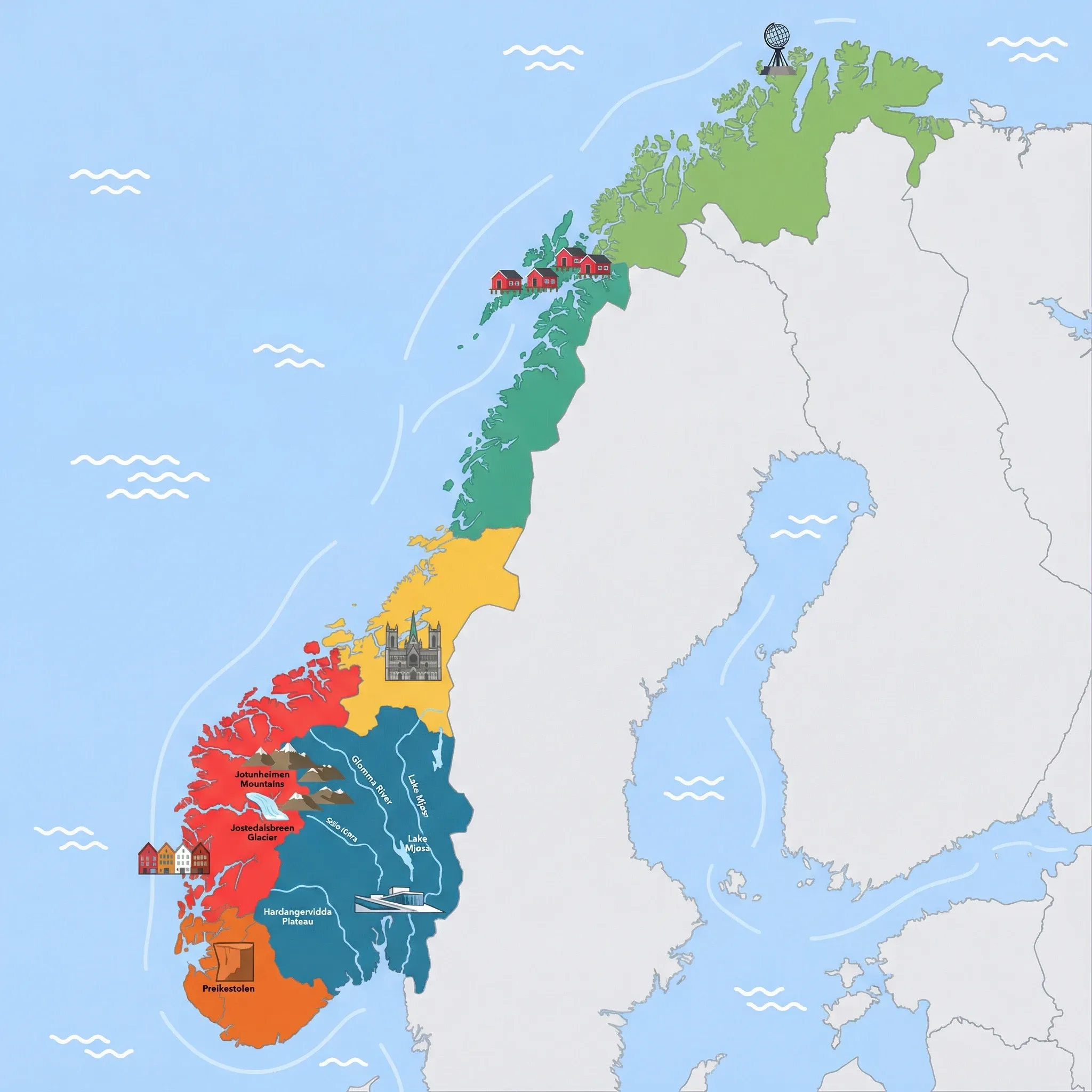
Click a region to explore
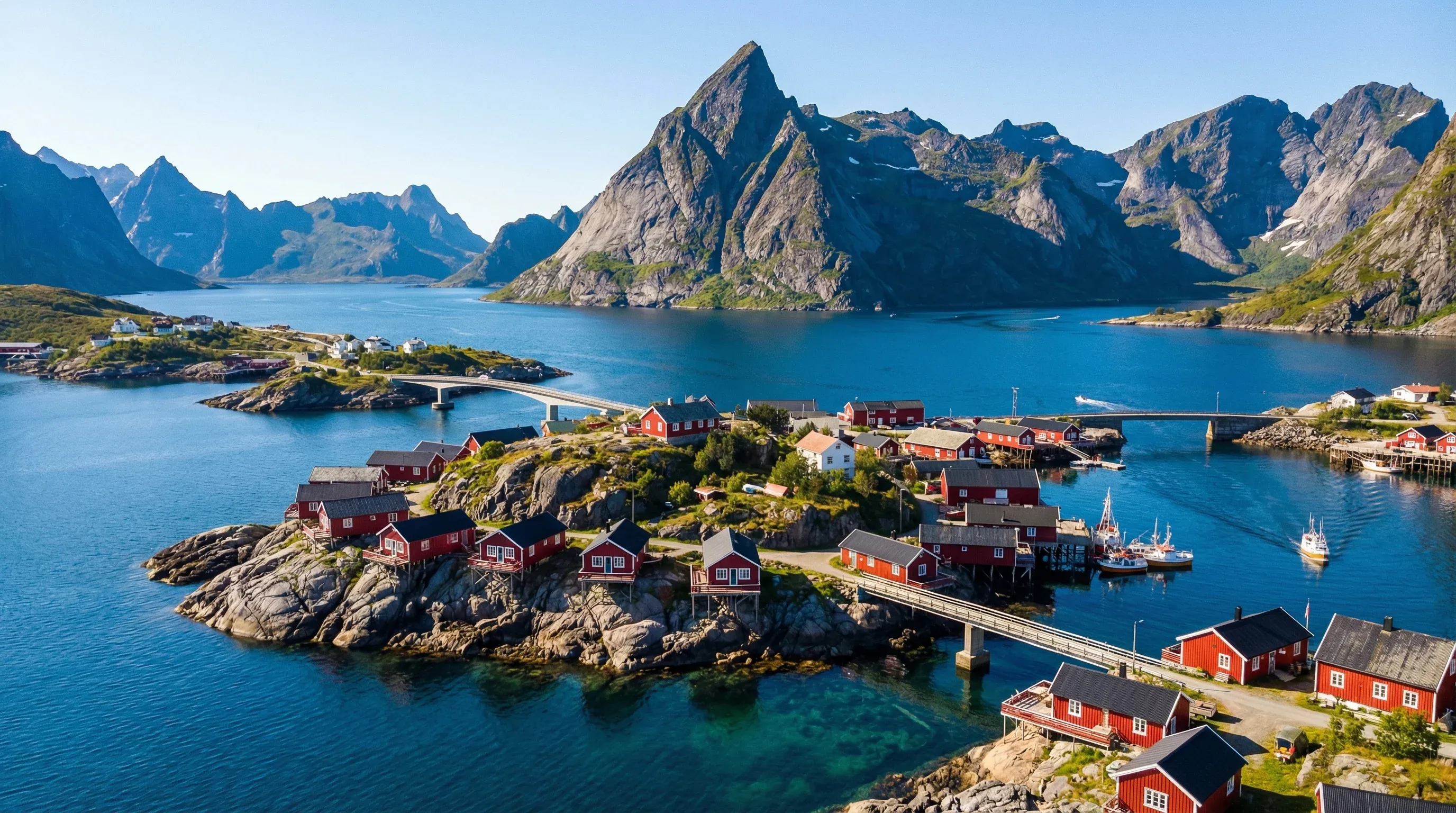
The Lofoten Islands offer some of the most surreal landscapes on Earth, a place where jagged granite teeth rise directly from the ocean, sheltering hidden bays with water so blue and sand so white you'd swear you were in the tropics—until you dip your toe in. For adventurous families, this is a dream destination. The archipelago is connected by bridges and tunnels, making it possible to island-hop by car along one of the world's most beautiful drives. In summer, the Midnight Sun provides 24 hours of daylight, meaning you can hike or play on the beach at midnight. In winter, the Northern Lights dance over the peaks.
Culturally, Lofoten is defined by the 'skrei' (cod) fishery. You will see wooden racks drying fish everywhere, a sight and smell that fascinates (and sometimes disgusts!) children. The history here is ancient; this was a power center for Viking chieftains. The region manages to be wild yet accessible, with cozy 'rorbu' (fishermen's cabins) providing iconic red-painted accommodation right on the water's edge. It is an active destination—expect to spend your days hiking, kayaking, or exploring tidal pools—but the pace is slow and governed by nature.
Key Attractions
History comes alive at the Lofotr Viking Museum in Borg. The museum is housed in the longest Viking longhouse ever found. Children can dress up as Vikings, try their hand at rowing a Viking ship on the lake, and participate in feasts. It’s an immersive experience rather than a dusty museum. For nature lovers, Haukland Beach is a must. Voted one of Europe's best beaches, it offers shallow waters (cold, but swimmable for brave kids!) and easy walking paths around the headland suitable for strollers.
Drive to the end of the road to visit the Norwegian Fishing Village Museum at Å. It’s a preserved 19th-century village where you can visit the old bakery (buy a fresh cinnamon bun!), the cod liver oil factory, and the boathouse. Nearby, the Nusfjord Historic Fishing Village is an open-air museum tucked into a narrow fjord, looking exactly as it did a century ago. For active families, the Svolværgeita peak overlooks the main town, though the climb itself is for older teens; the view from the base is still spectacular.
Practical Advice
Summer (June–August) is the busiest time; book accommodation 6–12 months in advance as capacity is low. The weather changes rapidly; sunny skies can turn to storms in minutes. Mosquitoes can be an issue in inland marshy areas, though less so by the windy coast. Mobile signal is surprisingly good throughout the islands.
Food & Drink
Typical meal times: Lunch is casual, often a packed lunch or cafe stop 12:00 pm to 2:00 pm. Dinner restaurants fill up quickly in summer, typically serving from 5:00 pm to 9:00 pm.
Typical meal costs: Prices are high due to logistics. A fish dinner costs 300–450 NOK (approx. $27–41 USD / €25–38 EUR). Kids' menus are around 120–180 NOK (approx. $11–16 USD / €10–15 EUR).
Dietary requirements: Seafood is dominant. Vegetarians will find options in Svolvær and Leknes, but in smaller fishing villages, the menu might be limited to fish soup or lamb. Inform chefs of shellfish allergies immediately.
Signature dishes:
- Tørrfisk (Stockfish) – Dried cod that has been rehydrated and grilled/stewed. It has a chewy texture and unique flavor.
- Lofotlam – Lamb from sheep that graze on salty coastal vegetation, giving the meat a natural pre-seasoned taste.
- Fried Cod Tongues – A local delicacy often cut by children (as a traditional job) and fried in batter. Kids might enjoy the novelty!
Why this score?
The islands offer significant adventure through steep, often unrailed mountain hikes and unpredictable Arctic weather conditions. The geography is rugged and requires a high degree of physical fitness and preparation compared to southern Norway.
Why this score?
Medical facilities are limited to small local hospitals and clinics in towns like Svolvær and Leknes. Serious emergencies often require medical evacuation by helicopter to mainland facilities in Bodø or Tromsø, posing a challenge for complex care.
Why this score?
Lofoten is an international 'bucket-list' destination famous for its dramatic scenery and Viking history. While extremely popular on social media, its remote location and limited accommodation capacity keep its absolute visitor numbers lower than mainland hubs.

Lofoten is a premium destination. Accommodation is the biggest expense; a 'Rorbu' cabin can cost 2,500–5,000 NOK (approx. $230–460 USD / €215–425 EUR) per night in high season. Ferries for cars are pricey but free for electric vehicles on some routes. Restaurant prices are high; budget travelers should rely on grocery stores like Rema 1000 or Coop Extra.

Getting Here & Around
Getting Here
- Airports – Small airports in Svolvær (SVJ) and Leknes (LKN) connect to Bodø. Harstad/Narvik (EVE) is a larger hub a few hours' drive away.
- Ferry – The car ferry from Bodø to Moskenes takes 3–4 hours and lands you at the dramatic southern tip of the islands.
- Driving – Connected to the mainland via the E10, but it is a long drive from southern Norway.
Getting Around
- Car – Essential for families. The National Scenic Route Lofoten (E10) is the main artery. Parking can be scarce at popular beaches in July.
- Bus – Public buses exist but are infrequent, making them difficult for family logistics.
- Cycling – Popular, but roads are narrow and shared with campervans. Best for older children.
Nearby Airports (10 airports)
Andenes
ANXAndenes
Bronnoy
BNNBronnoysund
Bodo
BOOBodo
Harstad-Narvik
EVEHarstad-Narvik
Leknes Airport
LKNLeknes
Kjaerstad
MJFMosjoen
Røssvoll Airport
MQNMo i Rana
Skagen
SKNStokmarknes
Stokka
SSJSandnessjoen
Svolvaer
SVJSvolvaer
View full flight map for Norway →
Official Links

Packing List
Many cabins have thin curtains; the Midnight Sun makes 2am look like 12pm.
The coastal wind is constant and cold, even on sunny summer days.
Cafes are sparse between towns; carrying hot cocoa for beach stops is a lifesaver.
The sun does not set in summer (Midnight Sun), making it very difficult for children to sleep without total darkness.
A small foam or wool mat to sit on. Every Norwegian family carries these for breaks on cold rocks or wet grass.
Essential year-round. Thin merino wool tops/leggings regulate temperature better than cotton in the changeable Nordic weather.
Ticks (flått) are common in coastal brush and grassy areas in southern Norway; having a remover handy is wise.
Tap water is glacier-pure and free. Buying bottled water is expensive and culturally frowned upon.

Activities & Best Times

Hiking, wildlife, outdoor exploration, ecotourism
A world-class Arctic wilderness featuring dramatic peaks rising from the sea, pristine fjords, and unique maritime ecosystems. Peak summer provides 24-hour daylight for hiking and wildlife observation, while extreme winter conditions limit self-guided exploration for families.

Urban tourism, museums, historical sites, architecture
Home to iconic, authentic fishing villages like Nusfjord and Henningsvær, offering unique Arctic architecture and rich Viking heritage. Cultural facilities and historic sites are most active during the summer season, with many seasonal museums closing during the dark winter months.

Sport tourism, fitness activities, active recreation
Features world-renowned Arctic surfing at Unstad and the unique Lofoten Links golf course, alongside major coastal cycling routes. Activity infrastructure is highly weather-dependent, with the brief Arctic summer providing the only reliable window for most organized sports.

Scenic drives, countryside tours, route-based travel
The E10 National Scenic Route provides a globally recognized driving experience through breathtaking archipelago landscapes. Peak months offer long daylight and safe driving conditions, whereas winter months present significant hazards and limited visibility.
Beach resorts, marine activities: diving, snorkelling, kite surfing, wind surfing, sailing
While Lofoten's beaches are visually spectacular with turquoise waters and white sands, water temperatures remain prohibitively cold year-round (Arctic Circle location). The beaches are scenic attractions rather than swimming destinations. 'Good' implies competitive beach holiday conditions which don't exist at this latitude. Downgrade to 'marginal' for accurate international calibration.

Learning experiences, scientific sites, historical education
Provides specialized learning opportunities at the Lofoten Aquarium and Polarlight Center, focusing on Arctic biology and natural phenomena. These facilities serve as excellent educational supplements for families during the primary summer visitation window.

Winter sports, ski resorts, snow activities
Offers niche sea-to-summit skiing experiences at local centers with dramatic views, though infrastructure is limited compared to major international resorts. The season is best in late winter when snow cover is reliable and the Arctic daylight has returned.
Attractions (15 total)



Public Holidays & Calendar Next 12 months
Public holidays, festivals, cultural celebrations, and seasonal natural phenomena coming up in Lofoten Islands over the next 12 months.
Loading holidays and events...

Travel Advisory
All major agencies agree that Norway is a safe destination where standard personal security measures are sufficient. There are no significant travel warnings or regional restrictions.
Safety Topics
Traveller Advice (4 groups)

Norway is generally considered safe for solo female travelers, with low rates of harassment reported in public areas.

Norway is highly progressive regarding sexual orientation and gender identity, with strong legal protections and a generally welcoming social climate.

Maintain standard situational awareness, especially in crowded urban centers and transit hubs. Ensure you have comprehensive insurance that covers all planned activities.

When visiting remote regions like Svalbard, prepare for extreme cold and potential encounters with polar bears. Helicopter rescue services may be limited, so specialized insurance is essential for mountainous or arctic exploration.
Agency Summaries
Visitors should maintain standard safety awareness as they would in their home country, though petty crime is a risk in urban areas.
Irish citizens are advised to use standard common sense and personal security measures while traveling throughout the country.
Norway is considered very safe for international visitors, requiring only standard safety measures and awareness of local conditions.
Travelers are encouraged to stay informed of local security alerts and maintain typical vigilance in public spaces and major cities.
No specific travel restrictions are in place, though travelers should be aware of the general threat of terrorism that exists across Europe.
General safety levels are high, with a moderate national terror threat level and very low crime rates outside of seasonal petty theft.
Information is provided for general guidance only and does not constitute travel, safety, medical, or legal advice. Conditions may change. Users are responsible for independently verifying information before travel.