
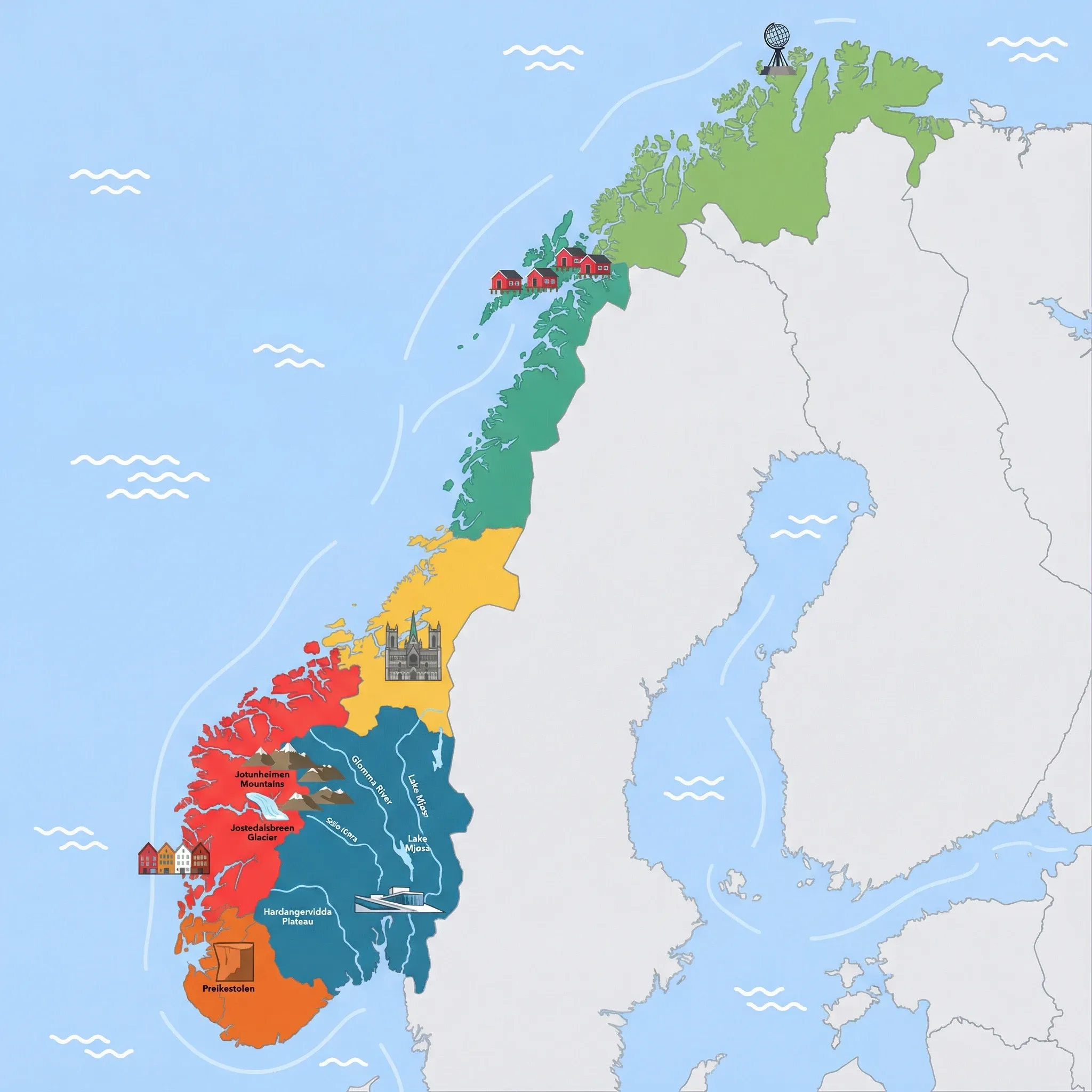
Click a region to explore
Oslo & Eastern Norway is the most populated and accessible part of the country, serving as the perfect entry point for families. The capital, Oslo, is compact, safe, and incredibly green. It is located at the head of the Oslofjord and surrounded by the 'Marka' (forests), meaning you can take a subway from the city center to a ski slope or a hiking trail in 20 minutes. The city has undergone a massive transformation, with a new waterfront promenade that is perfect for strollers and scooters. Beyond the city, the region opens up into rolling farmland, deep lakes, and valleys that feel like classic storybook Norway.
The region is a cultural hub. It hosts the country's biggest museums and family attractions. While the west coast is about dramatic nature, the east is about activities and ease of travel. The climate here is more stable than the west—summers are warmer and drier, and winters offer reliable snow inland. North of Oslo lies Lillehammer, the 1994 Winter Olympics host, which has reinvented itself as a top family destination with theme parks and ski resorts tailored for children.
Key Attractions
In Oslo, the Natural History Museum is a winner, featuring a dinosaur exhibition and a geological garden that kids love exploring. Art becomes accessible at the new MUNCH museum; it has dedicated kids' sections and interactive trails to make Edvard Munch's work engaging rather than scary. A short tram ride away is the Akershus Fortress, a real medieval castle that looks like it belongs in the movie 'Frozen' (which was partly inspired by it). Exploring the ramparts and dungeons is a great free activity.
Heading north to Lillehammer, Maihaugen is an expansive open-air museum with 200 historic buildings. In summer, actors dress in period costumes, and kids can feed farm animals or watch traditional crafts. Nearby is Hunderfossen Eventyrpark, arguably Norway’s best theme park. It is rooted in Norwegian folklore—expect giant trolls, fairy palaces, and rafting rides rather than generic rollercoasters. For winter visits, the Holmenkollen Ski Jump in Oslo offers a ski museum and a simulator that lets you feel what it's like to jump, without the risk!
Practical Advice
Oslo is a year-round destination. May to September is best for parks and island hopping. January to March is prime for skiing and sledding (tobogganing at Korketrekkeren is famous). The 'Oslo Pass' is great value for families, covering most transport and museums.
Food & Drink
Typical meal times: Lunch 11:30 am to 1:30 pm. Dinner 5:00 pm to 8:00 pm. Oslo has late-night options, but rural towns close early.
Typical meal costs: Mid-range to high. A main course costs 200–350 NOK (approx. $18–32 USD / €17–30 EUR). Oslo has good 'street food' halls where meals cost 150–200 NOK (approx. $14–18 USD / €13–17 EUR).
Dietary requirements: Oslo is a haven for dietary needs—vegan, gluten-free, and halal options are abundant and clearly marked. Outside the city, options remain good but less varied.
Signature dishes:
- Pølse i lompe – The Norwegian hot dog wrapped in a potato pancake (lompe) instead of a bun. The unofficial national dish, found at every gas station and birthday party.
- Vaffel (Waffles) – Heart-shaped, soft waffles served cold or warm with brown cheese (brunost) or strawberry jam.
- Kjøttkaker – Meatballs (larger and coarser than Swedish ones) served with brown gravy, potatoes, and pea stew.
Why this score?
While the region offers extensive forests and renowned ski resorts like Hemsedal, the terrain is generally rolling and highly accessible. Most outdoor activities are family-friendly and well-supported by modern, safe infrastructure.
Why this score?
Oslo offers the highest concentration of medical excellence in Norway, including specialized university hospitals with international reputations. Foreign visitors have access to numerous English-speaking private clinics and 24-hour emergency services.
Why this score?
As the nation's capital and primary flight hub, Oslo sees the highest consistent volume of international visitors. It is a major destination for cultural tourism and serves as the starting point for most multi-region Norwegian itineraries.

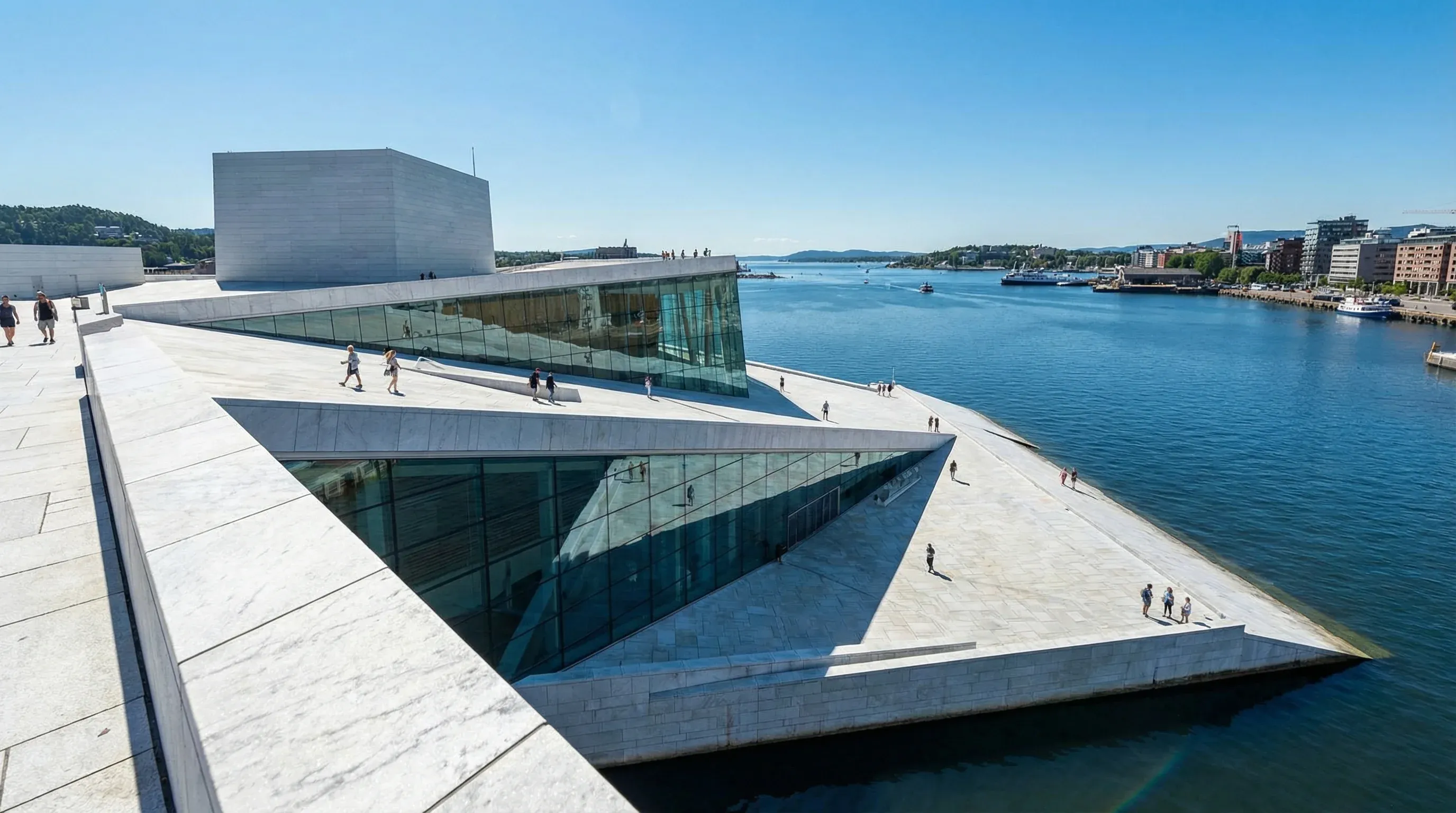
Oslo is one of the world's most expensive cities. A family room in a budget hotel is 1,500–2,200 NOK (approx. $135–200 USD / €125–185 EUR). However, many activities like the Vigeland Sculpture Park or walking on the Opera roof are free. Save money by eating at 'Mathallen' or buying picnic supplies.

Getting Here & Around
Getting Here
- Airports – Oslo Airport Gardermoen (OSL) is the main international gateway, connected to the city by the Flytoget express train (19 mins).
- Ferry – Daily overnight ferries arrive from Kiel (Germany) and Copenhagen (Denmark), landing near the Opera House.
- Train – Central hub for all Norwegian rail lines and international trains from majestic Gothenburg and Stockholm.
Getting Around
- Public Transport – Ruter manages Oslo's buses, trams, metro, and ferries. It is seamless and stroller-friendly. Kids usually travel free or at huge discounts.
- Car – Not recommended in Oslo city center (expensive parking, confusing tunnels). Essential for exploring inland regions like Hallingdal or Telemark.
- Walking – Oslo is very walkable. Attractions like the Akershus Fortress and Opera House are close to the station.
Nearby Airports (3 airports)
Kristiansand Kjevik
KRSKristiansand
Oslo
OSLOslo
Torp
TRFSandefjord
View full flight map for Norway →
Official Links

Packing List
Oslo has a huge culture of fjord swimming and floating saunas right in the city center.
It is polite to remove shoes when visiting homes or some cabins; warm socks/slippers are cozy.
Tap water is delicious and free; buying bottled water is expensive and unnecessary.
The sun does not set in summer (Midnight Sun), making it very difficult for children to sleep without total darkness.
A small foam or wool mat to sit on. Every Norwegian family carries these for breaks on cold rocks or wet grass.
Essential year-round. Thin merino wool tops/leggings regulate temperature better than cotton in the changeable Nordic weather.
Ticks (flått) are common in coastal brush and grassy areas in southern Norway; having a remover handy is wise.
Tap water is glacier-pure and free. Buying bottled water is expensive and culturally frowned upon.

Activities & Best Times

Urban tourism, museums, historical sites, architecture
Oslo is a top-tier cultural hub with world-renowned museums like the MUNCH and National Museum, alongside unique architectural sites. Summer months are ideal for experiencing the vibrant harbor life and outdoor cultural festivals.

Hiking, wildlife, outdoor exploration, ecotourism
Features unique wildlife encounters at Langedrag and extensive wilderness exploration in the surrounding national parks. Peak summer provides optimal conditions for hiking and visiting nature parks, while the shoulder months offer stunning autumn foliage.

Learning experiences, scientific sites, historical education
Features internationally significant facilities like the Norwegian Museum of Science and Technology, providing sophisticated engagement for curious families. Peak timing aligns with broader tourism availability and school travel windows.

Sport tourism, fitness activities, active recreation
Offers exceptional infrastructure for mountain biking at Hafjell and iconic hiking routes like the Besseggen ridge. The season is defined by stable weather and long daylight, essential for completing these high-quality outdoor pursuits.

Amusement parks, family entertainment venues
Boasts distinctive, high-quality attractions like Hunderfossen Eventyrpark that offer a culturally authentic alternative to generic theme parks. These venues are highly seasonal, operating primarily during the school summer holidays.

Scenic drives, countryside tours, route-based travel
Provides access to celebrated National Scenic Routes such as Valdresflye, offering world-class driving through dramatic alpine plateaus. Snow closures on high mountain passes make summer and early autumn the only viable windows for touring.

Winter sports, ski resorts, snow activities
Home to premier, family-focused resorts like Trysil and Hemsedal which offer world-class infrastructure and reliable snow. February and March are peak due to the combination of deep snow bases and longer daylight hours compared to mid-winter.
Beach resorts, marine activities: diving, snorkelling, kite surfing, wind surfing, sailing
Sørenga is primarily an urban swimming facility, not a beach destination. The region has limited coastal access and cold water temperatures severely limit the swimming season. 'Good' suggests international competitiveness as a beach destination, which is misleading. Downgrade to 'marginal' to reflect that while beaches exist, conditions don't support typical beach holidays.

Events, celebrations, seasonal attractions
Anchored by unique international events like the Nobel Peace Prize ceremonies and the culturally rich Constitution Day celebrations. These specific windows offer authentic Norwegian traditions that appeal to sophisticated global travelers.

Spa retreats, wellness centers, peaceful getaways
The region offers historic urban bathhouses like Bislet Bad, providing a traditional and restorative retreat from the Norwegian winter. The wellness appeal is strongest during the cold months when indoor thermal experiences are most sought after.

Attractions (46 total)



Public Holidays & Calendar Next 12 months
Public holidays, festivals, cultural celebrations, and seasonal natural phenomena coming up in Oslo & Eastern Norway over the next 12 months.
Loading holidays and events...

Travel Advisory
All major agencies agree that Norway is a safe destination where standard personal security measures are sufficient. There are no significant travel warnings or regional restrictions.
Safety Topics
Traveller Advice (4 groups)

Norway is generally considered safe for solo female travelers, with low rates of harassment reported in public areas.

Norway is highly progressive regarding sexual orientation and gender identity, with strong legal protections and a generally welcoming social climate.

Maintain standard situational awareness, especially in crowded urban centers and transit hubs. Ensure you have comprehensive insurance that covers all planned activities.

When visiting remote regions like Svalbard, prepare for extreme cold and potential encounters with polar bears. Helicopter rescue services may be limited, so specialized insurance is essential for mountainous or arctic exploration.
Agency Summaries
Visitors should maintain standard safety awareness as they would in their home country, though petty crime is a risk in urban areas.
Irish citizens are advised to use standard common sense and personal security measures while traveling throughout the country.
Norway is considered very safe for international visitors, requiring only standard safety measures and awareness of local conditions.
Travelers are encouraged to stay informed of local security alerts and maintain typical vigilance in public spaces and major cities.
No specific travel restrictions are in place, though travelers should be aware of the general threat of terrorism that exists across Europe.
General safety levels are high, with a moderate national terror threat level and very low crime rates outside of seasonal petty theft.
Information is provided for general guidance only and does not constitute travel, safety, medical, or legal advice. Conditions may change. Users are responsible for independently verifying information before travel.