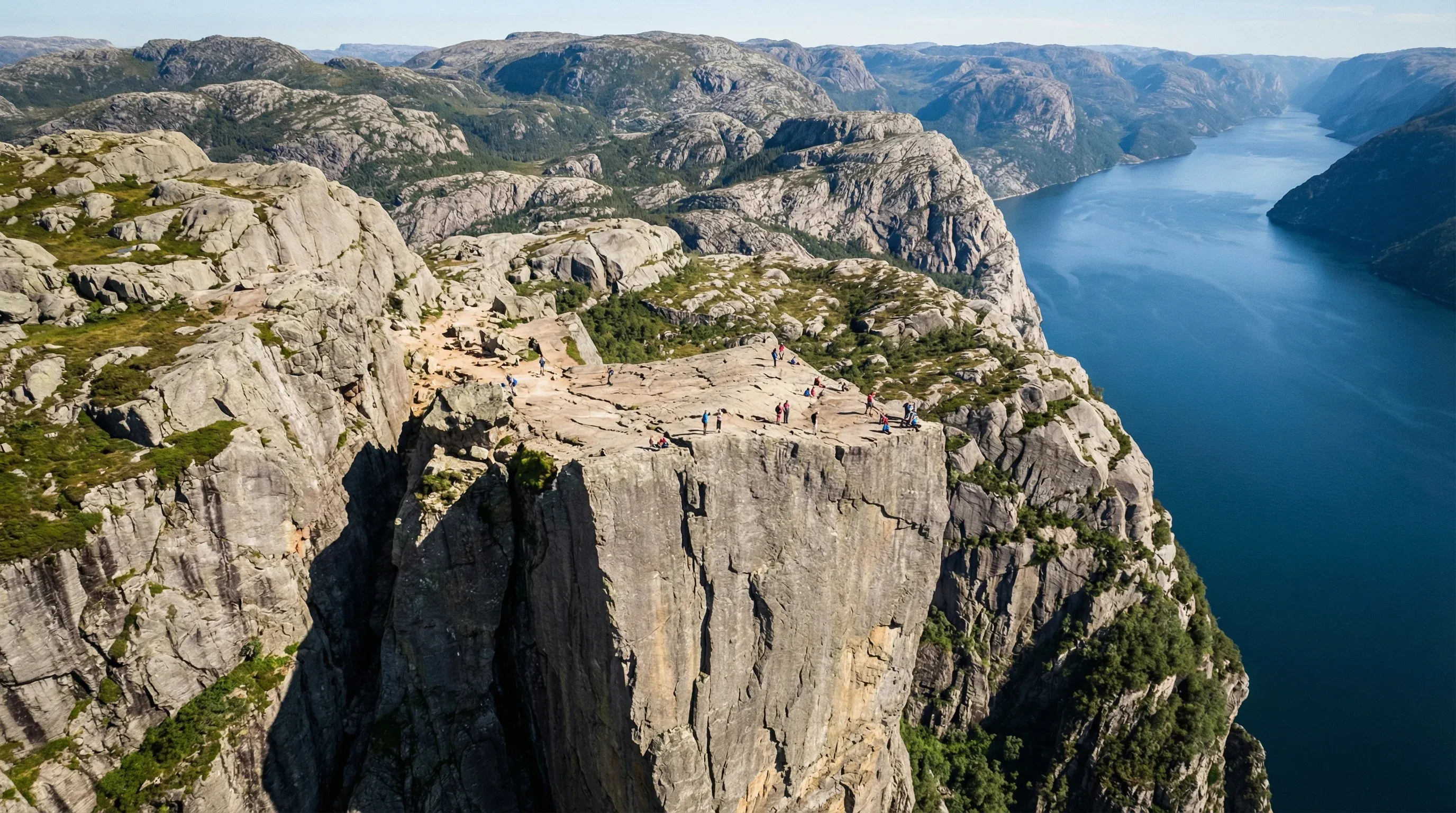

Stavanger & Lysefjord (Preikestolen)
Iconic hikes, white beaches, and oil history 🪨🏖️
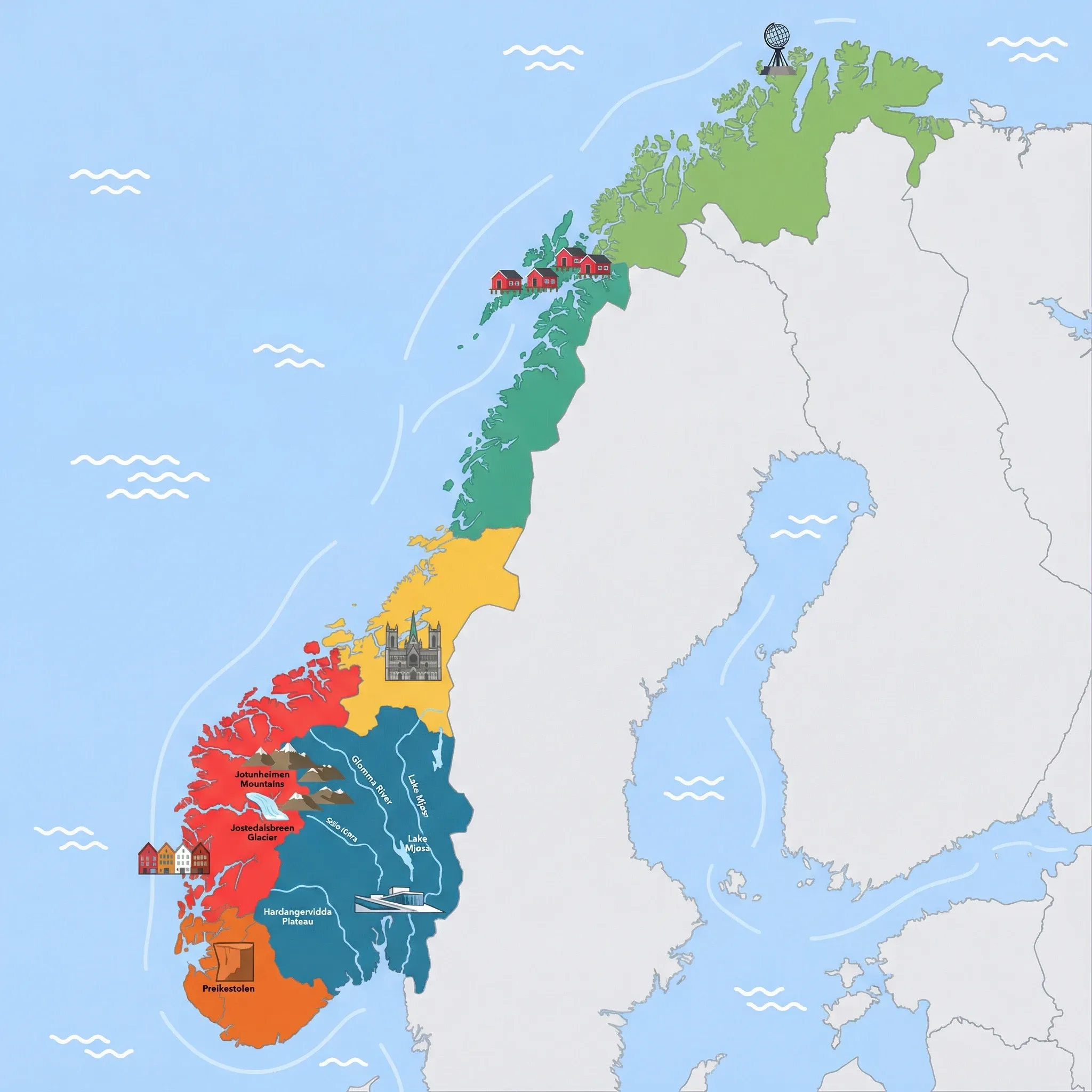
Click a region to explore
Stavanger & Lysefjord is a region of contrasts. To the east, the Lysefjord cuts deep into the mountains, offering some of Norway's most famous hiking destinations. To the south lies Jæren, a flat coastal strip with endless white sandy beaches that look more like Australia than Scandinavia. Stavanger itself is the energy capital of Norway, a wealthy and international city with a beautifully preserved wooden old town (Gamle Stavanger) and a very modern vibe. For families, this mix is perfect: you can hike a mountain one day and surf or build sandcastles the next.
This region is particularly good for active families with slightly older children who can handle hiking, although there are plenty of boat-based ways to see the sights for those with toddlers. The Lysefjord is breathtakingly steep, and seeing it from the deck of a ferry is an adventure in itself. Stavanger is also home to some of the country's best museums and playgrounds. The "Geo-park" outside the Oil Museum is an urban playground made of recycled oil rig parts—graffiti-covered, bouncy, and totally unique.
Key Attractions
The headline act is Preikestolen (Pulpit Rock). It’s a steep cliff rising 604 meters straight above the fjord. The hike takes about 4 hours round trip and is achievable for active kids aged 6+, but care is needed at the top as there are no fences. For a less strenuous thrill, take a fjord cruise to see the rock from below. Back in the city, the Norwegian Petroleum Museum is surprisingly kid-friendly. It has escape chutes (like on oil rigs) that kids can slide down and interactive exhibits explaining how oil is found. It turns an industrial topic into an adventure.
For pure fun, head to Kongeparken, the biggest amusement park in Western Norway. It has a bear theme and attractions where kids can make their own chocolate or drive mini tractors. History buffs should visit Sverd i fjell (Swords in Rock), a monument of three giant viking swords stuck into the ground to commemorate the battle that united Norway. It’s a quick stop, but makes for an epic family photo.
Practical Advice
The weather in Stavanger is windy and changeable. Even on sunny days, the wind on the beaches or cliffs can be cold. Public transport is good in the city, but a car is best for reaching trailheads and beaches. The hike to Preikestolen can be crowded; go early (start walking by 8:00 am) or late afternoon to beat the rush.
Food & Drink
Typical meal times: Lunch 11:30 am to 1:00 pm. Dinner 5:00 pm to 8:00 pm. Stavanger has a very high concentration of quality restaurants due to the oil industry wealth.
Typical meal costs: Mid to High. Casual dinner 250–350 NOK (approx. $23–32 USD / €21–30 EUR). Stavanger hosts the 'Gladmat' food festival in July where small dishes are cheaper.
Dietary requirements: excellent awareness of allergies. Gluten-free options are standard in most cafes.
Signature dishes:
- Jæren Strawberries – The cool, bright summer nights make these local strawberries incredibly sweet. Sold at roadside stands in summer.
- Fiskesuppe (Fish Soup) – Creamy, often with mussels and shrimps, served with good bread.
- Komla – The local potato dumpling (similar to Raspeballer), served with salt meat and bacon fat. A heavy, traditional Thursday dinner.
Why this score?
Iconic hikes to Preikestolen and Kjeragbolten provide a notable physical challenge with steep ascents and high-altitude cliffs. While the paths are well-maintained, the sheer verticality and exposure offer a genuine sense of adventure for families.
Why this score?
Stavanger's role as a global energy hub ensures its medical facilities are world-class and accustomed to serving a diverse international population. The city has excellent hospital capacity and high standards for emergency response in the Lysefjord area.
Why this score?
The region is home to Preikestolen, one of the most visited natural landmarks in Northern Europe. It attracts massive seasonal crowds, particularly from the international cruise sector, though the city of Stavanger itself remains a moderately-sized destination.

Stavanger is a wealthy city. Hotels cater to business travelers and can be pricey Mon-Thu, sometimes cheaper on weekends. Expect to pay 1,600–2,500 NOK (approx. $145–230 USD / €135–210 EUR) per night. Parking in the city is expensive. Hiking is free, but parking at the Preikestolen trailhead costs around 250 NOK (approx. $23 USD / €21 EUR).

Getting Here & Around
Getting Here
- Airports – Stavanger Airport Sola (SVG) is well-connected internationally.
- Train – The Sørlandet Line connects Stavanger to Oslo (approx. 8 hours) via Kristiansand.
- Ferry – Fjord Line ferries run from Hirtshals (Denmark) to Stavanger, an overnight trip that is very comfortable for families.
Getting Around
- Bus – Kolumbus operates the buses. Tickets are zone-based.
- Car – Essential for the Norwegian Scenic Route Ryfylke or visiting beaches. Ferries are a part of the road network here.
- Boat – Express boats and tourist ferries are the best way to see the Lysefjord if not hiking.
Nearby Airports (2 airports)
Haugesund Karmoy
HAUHaugesund
Stavanger Sola
SVGStavanger
View full flight map for Norway →
Official Links

Packing List
The Jæren beaches are exposed to the North Sea; wind protection is needed even in summer.
Strollers won't work on Preikestolen; a solid carrier is essential for toddlers.
A small foam mat for sitting on cold rocks during lunch breaks on hikes.
The sun does not set in summer (Midnight Sun), making it very difficult for children to sleep without total darkness.
A small foam or wool mat to sit on. Every Norwegian family carries these for breaks on cold rocks or wet grass.
Essential year-round. Thin merino wool tops/leggings regulate temperature better than cotton in the changeable Nordic weather.
Ticks (flått) are common in coastal brush and grassy areas in southern Norway; having a remover handy is wise.
Tap water is glacier-pure and free. Buying bottled water is expensive and culturally frowned upon.

Activities & Best Times

Hiking, wildlife, outdoor exploration, ecotourism
The region offers iconic, world-renowned nature experiences including the Preikestolen (Pulpit Rock) and Kjeragbolten hikes overlooking the Lysefjord. These trails are best accessed during the summer months to ensure safe passage and clear visibility of the dramatic fjord landscapes.

Urban tourism, museums, historical sites, architecture
Stavanger combines a historic timber-house district (Gamle Stavanger) with a world-class culinary scene and major attractions like the Flor og Fjære tropical gardens. The city is most vibrant in summer, though December offers a charming and authentic Scandinavian holiday atmosphere.

Sport tourism, fitness activities, active recreation
Active families benefit from high-quality infrastructure for hiking, climbing parks, and coastal sports along the Jæren beaches. The summer months are essential for ensuring all seasonal outdoor adventure facilities are fully operational and weather-safe.

Learning experiences, scientific sites, historical education
The Norwegian Petroleum Museum is an architectural landmark and an internationally significant facility exploring the region's vital offshore history. It remains a primary destination-level educational draw, best visited during the broader spring and autumn tourism windows.

Scenic drives, countryside tours, route-based travel
Named scenic routes like Jæren and Ryfylke offer stunning drives through diverse coastal and mountain scenery, including the famous Lysevegen switchbacks. Peak summer ensures clear roads and the best visibility for experiencing the dramatic contrasts of the Norwegian landscape.
Beach resorts, marine activities: diving, snorkelling, kite surfing, wind surfing, sailing
While Jæren features expansive sandy beaches, Norwegian west coast water temperatures remain cold throughout the year, severely limiting the swimming season. The beaches are scenic and suitable for coastal walks but don't compete internationally as beach holiday destinations. Downgrade to 'marginal' for accurate calibration against Mediterranean/tropical beach standards.

Winter sports, ski resorts, snow activities
Southern location means less reliable snow conditions compared to central and northern Norwegian ski regions. While Sirdal and Sauda provide regional skiing, they don't match the quality and reliability of resorts like Trysil, Hemsedal, or even Oppdal. Downgrade to 'marginal' for consistency with other regional centers and to differentiate from the stronger ski regions.
Amusement parks, family entertainment venues
Local entertainment options include well-maintained aquatic centers and splash pads that serve domestic travelers and residents. These facilities lack the international scale of major theme parks but provide convenient summer diversions for families.

Attractions (20 total)



Public Holidays & Calendar Next 12 months
Public holidays, festivals, cultural celebrations, and seasonal natural phenomena coming up in Stavanger & Lysefjord (Preikestolen) over the next 12 months.
Loading holidays and events...

Travel Advisory
All major agencies agree that Norway is a safe destination where standard personal security measures are sufficient. There are no significant travel warnings or regional restrictions.
Safety Topics
Traveller Advice (4 groups)

Norway is generally considered safe for solo female travelers, with low rates of harassment reported in public areas.

Norway is highly progressive regarding sexual orientation and gender identity, with strong legal protections and a generally welcoming social climate.

Maintain standard situational awareness, especially in crowded urban centers and transit hubs. Ensure you have comprehensive insurance that covers all planned activities.

When visiting remote regions like Svalbard, prepare for extreme cold and potential encounters with polar bears. Helicopter rescue services may be limited, so specialized insurance is essential for mountainous or arctic exploration.
Agency Summaries
Visitors should maintain standard safety awareness as they would in their home country, though petty crime is a risk in urban areas.
Irish citizens are advised to use standard common sense and personal security measures while traveling throughout the country.
Norway is considered very safe for international visitors, requiring only standard safety measures and awareness of local conditions.
Travelers are encouraged to stay informed of local security alerts and maintain typical vigilance in public spaces and major cities.
No specific travel restrictions are in place, though travelers should be aware of the general threat of terrorism that exists across Europe.
General safety levels are high, with a moderate national terror threat level and very low crime rates outside of seasonal petty theft.
Information is provided for general guidance only and does not constitute travel, safety, medical, or legal advice. Conditions may change. Users are responsible for independently verifying information before travel.