
Trondheim & Central Norway
Viking kings, musk oxen, and the world's most scenic drive ⛪🛣️
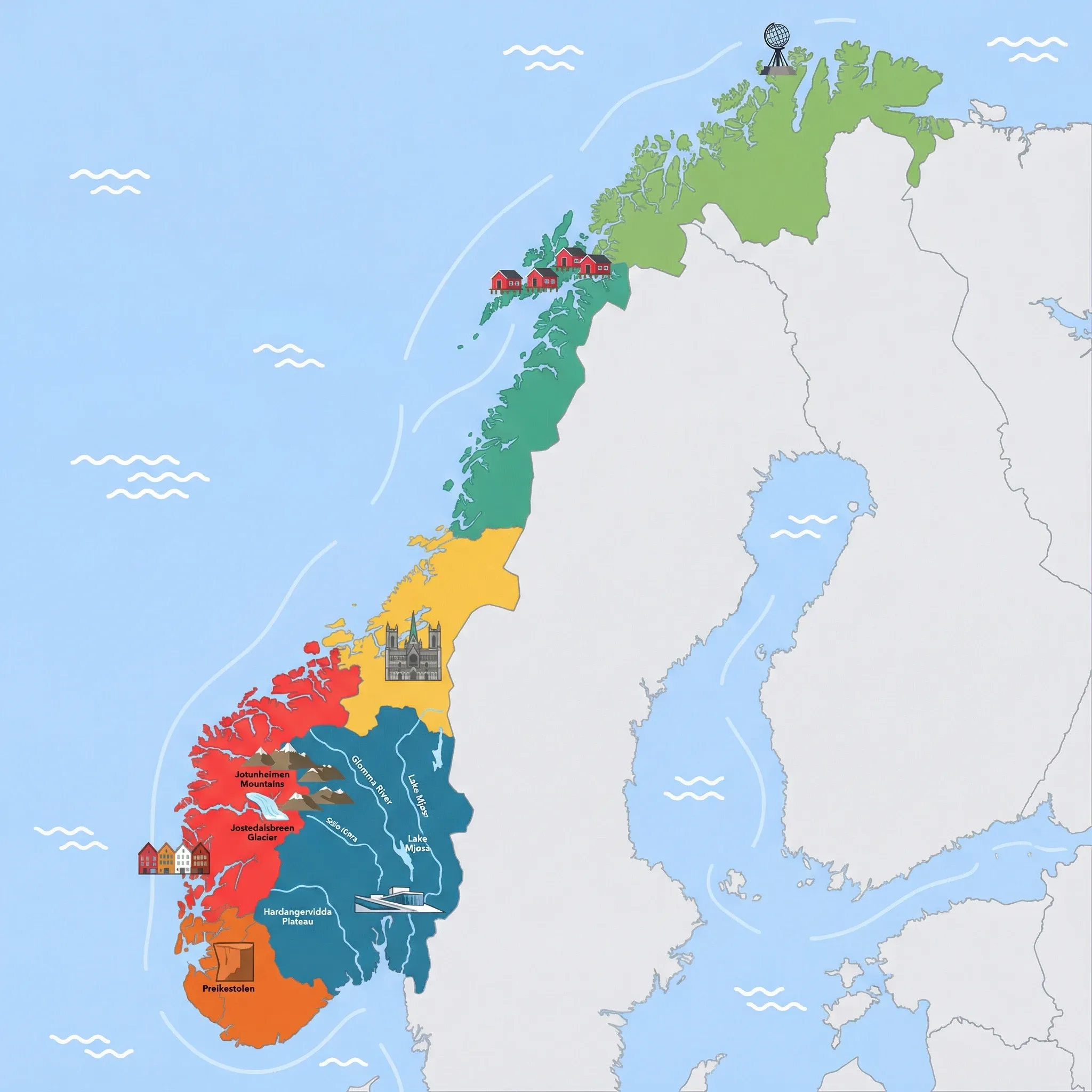
Click a region to explore
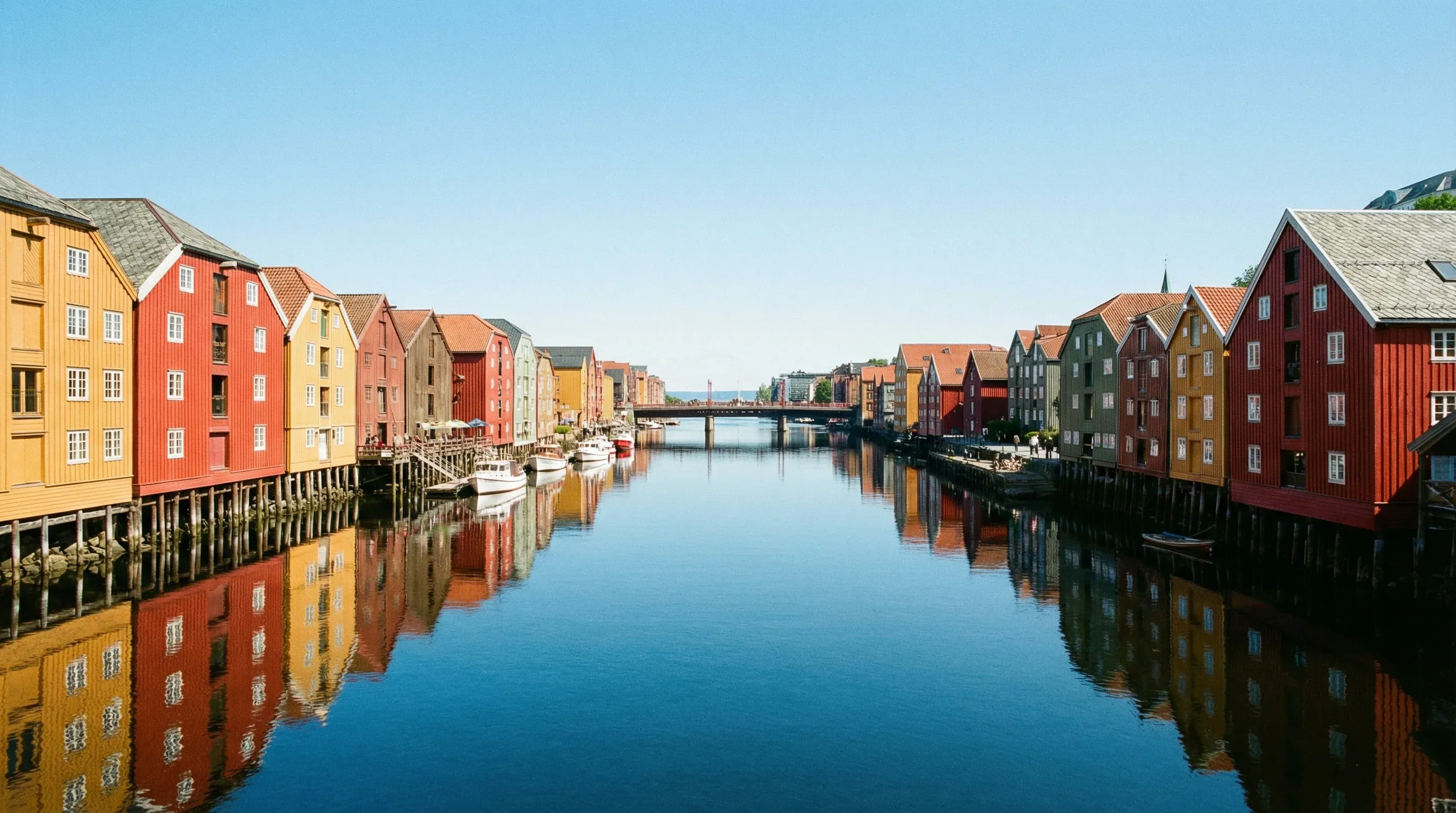
Trondheim & Central Norway is the historical heart of the country. This is where Viking kings were hailed and where pilgrims have walked for centuries to reach Nidaros Cathedral. For families, the region offers a nice balance between city culture in Trondheim and raw wilderness in the Dovrefjell mountains. Trondheim is Norway’s third-largest city but feels small and intimate. It is a student city, which gives it a youthful energy and plenty of cheap eats and cafes. The Nidelva river winds through the center, lined by colorful historic wharves that look great in photos.
Venture inland, and you find Røros, a UNESCO World Heritage mining town that looks exactly like a Christmas card—wooden houses, snow, and sleighs (in winter). It is incredibly atmospheric and was used as a filming location for the Netflix series 'Home for Christmas'. Towards the coast, the landscape changes to rugged islands and the open sea, connected by the famous Atlantic Road, a feat of engineering that skips from island to island. The region is known as Norway’s 'food pantry', focusing heavily on local, organic produce, which makes dining here a highlight.
Key Attractions
Trondheim is dominated by the massive Nidaros Cathedral. It is Gothic, spooky, and impressive. Kids enjoy the dark crypts and the challenge of climbing the narrow tower stairs. Just nearby is the The Archbishop's Palace, where you can see the Crown Jewels (Regalia)—always a hit with aspiring princes and princesses. For swimming, Pirbadet is located right on the waterfront; it’s one of Norway’s largest indoor water parks, with views of the fjord while you swim.
Further afield, the Røros Mining Town offers tours of old copper mines. Walking deep underground into the cold, dark tunnels is a thrilling history lesson. On the coast, driving The Atlantic Road (Atlanterhavsvegen) is a bucket-list experience. It’s a short stretch (8km) but features the 'drunk bridge' that looks like it leads nowhere. Stop at the viewing platforms to spot seals or whales. If your family loves animals, a guided musk ox safari in Dovrefjell-Sunndalsfjella National Park is unique—these prehistoric shaggy beasts are the only wild population in Norway.
Practical Advice
Trondheim can be visited year-round, but Røros is best in winter (for the atmosphere) or summer (for mine tours). The Atlantic Road is spectacular in storms but can be dangerous; calm summer days are safer for stopping. Trondheim has a great city bike scheme that works for older kids.
Food & Drink
Typical meal times: Lunch 11:00 am to 1:00 pm. Dinner 4:00 pm to 7:00 pm. Røros has very traditional meal times.
Typical meal costs: Mid-range. Pizza/Pasta 180–250 NOK (approx. $16–23 USD / €15–21 EUR). Trøndelag was the European Region of Gastronomy 2022, so quality is high even in casual places.
Dietary requirements: Very good. Trondheim has many student-friendly vegetarian cafes. Gluten-free is widely understood.
Signature dishes:
- Sodd – The regional party dish. A clear soup with meatballs and diced meat (sheep/beef) and carrots, served with flatbread and ginger ale.
- Røros Butter/Dairy – Røros is famous for its dairy. The sour cream and butter are yellow and rich, served with waffles or cured meats.
- Local Salmon – The coast here is prime salmon farming territory; it's served everywhere, from sushi to grilled fillets.
Why this score?
The region provides unique wildlife adventures such as musk ox safaris in Dovrefjell and rugged coastal driving on the Atlantic Road. It offers a good balance of wild nature and accessible national parks suitable for active families.
Why this score?
St. Olavs University Hospital in Trondheim is one of the most technologically advanced medical centers in Europe. The city provides exceptional healthcare services that are highly accessible to foreigners, with comprehensive emergency coverage for the Trøndelag region.
Why this score?
Trondheim is a significant historic and pilgrimage site, though it receives fewer international leisure tourists than the Fjord regions. It serves as a regional hub for central Norway but lacks the intense global name recognition of Oslo or Bergen.

Trondheim is slightly cheaper than Oslo or Bergen, thanks to its student population. You can find family hotels for 1,400–2,000 NOK (approx. $130–185 USD / €120–170 EUR). Eating out can be affordable if you stick to burger joints or student cafes. Røros is pricier due to its small size and high tourism demand.

Getting Here & Around
Getting Here
- Airports – Trondheim Airport Værnes (TRD) is a major hub. The airport train takes 35 mins to the city.
- Train – The Dovre Line connects Oslo to Trondheim (approx. 7 hours). It’s a comfortable journey with a dedicated family carriage (playroom included).
- Ferry – A main stop for the southbound and northbound Hurtigruten/Havila coastal ships.
Getting Around
- Bus & Tram – Trondheim has the world's most northerly tram line (Gråkallbanen), which takes you to the recreation area Bymarka.
- Car – Necessary for the The Atlantic Road or visiting Røros. Roads are generally good but watch for moose.
- Walking – Trondheim city center is compact. Walking across the Old Town Bridge (Gamle Bybro) is a highlight.
Nearby Airports (5 airports)
Orland Airport
OLAOrland
Namsos Høknesøra Airport
OSYNamsos
Roeros
RRSRoros
Ryumsjoen Airport
RVKRoervik
Trondheim Vaernes
TRDTrondheim
View full flight map for Norway →
Official Links

Packing List
Essential for spotting musk oxen in Dovrefjell or birds along the Atlantic Road.
Røros is one of the coldest places in Norway; thick socks are mandatory in winter (-30°C is possible).
The Atlantic Road and coastal drives can be twisty; useful for kids in the back seat.
The sun does not set in summer (Midnight Sun), making it very difficult for children to sleep without total darkness.
A small foam or wool mat to sit on. Every Norwegian family carries these for breaks on cold rocks or wet grass.
Essential year-round. Thin merino wool tops/leggings regulate temperature better than cotton in the changeable Nordic weather.
Ticks (flått) are common in coastal brush and grassy areas in southern Norway; having a remover handy is wise.
Tap water is glacier-pure and free. Buying bottled water is expensive and culturally frowned upon.

Activities & Best Times

Hiking, wildlife, outdoor exploration, ecotourism
Home to the Dovrefjell plateau and unique wildlife like musk oxen, Central Norway offers authentic wilderness immersion. Peak summer provides optimal daylight and accessible trails for hiking and national park exploration before winter snow restricts access.

Urban tourism, museums, historical sites, architecture
Trondheim serves as a cultural hub with the Nidaros Cathedral and UNESCO-listed Røros providing world-class heritage sites. Summer peak months offer the best atmospheric conditions for exploring historical quarters, while December is a shoulder peak for traditional Christmas markets.

Sport tourism, fitness activities, active recreation
The region features internationally recognized pilgrimage routes like St. Olav's Way and major outdoor activity centers in Oppdal. Summer provides the necessary conditions for long-distance cycling and technical climbing on established routes.

Learning experiences, scientific sites, historical education
Features destination-level learning centers like the Trondheim Science Centre and the Atlantic Sea-Park. These facilities offer high-quality engagement, though many outdoor-linked components are best experienced during the warmer, more accessible months.

Scenic drives, countryside tours, route-based travel
The Atlantic Road and Kystriksveien are world-class scenic drives offering dramatic coastal views. Peak travel occurs in summer when roads are clear and maritime visibility is highest for these iconic routes.

Winter sports, ski resorts, snow activities
Oppdal and Vassfjellet offer solid alpine and cross-country infrastructure with reliable spring snow. Peak months avoid the darkest winter weeks, offering better visibility and daylight for family skiing.

Beach resorts, marine activities: diving, snorkelling, kite surfing, wind surfing, sailing
While featuring unique coastal areas like Hosnasanden, water temperatures remain low even in summer. Suitability is marginal for international families compared to warmer latitudes, limited primarily to the peak of summer.

Events, celebrations, seasonal attractions
Anchored by the internationally significant Røros Winter Fair (Feb) and St. Olav Festival (July). These specific event windows provide authentic cultural depth, though the festival calendar is not dense year-round.

Amusement parks, family entertainment venues
Pirbadet and local adventure parks provide decent regional entertainment for families. They lack the global scale of top-tier international theme parks, serving primarily as supplementary activities during peak summer travel.

Attractions (24 total)



Public Holidays & Calendar Next 12 months
Public holidays, festivals, cultural celebrations, and seasonal natural phenomena coming up in Trondheim & Central Norway over the next 12 months.
Loading holidays and events...

Travel Advisory
All major agencies agree that Norway is a safe destination where standard personal security measures are sufficient. There are no significant travel warnings or regional restrictions.
Safety Topics
Traveller Advice (4 groups)

Norway is generally considered safe for solo female travelers, with low rates of harassment reported in public areas.

Norway is highly progressive regarding sexual orientation and gender identity, with strong legal protections and a generally welcoming social climate.

Maintain standard situational awareness, especially in crowded urban centers and transit hubs. Ensure you have comprehensive insurance that covers all planned activities.

When visiting remote regions like Svalbard, prepare for extreme cold and potential encounters with polar bears. Helicopter rescue services may be limited, so specialized insurance is essential for mountainous or arctic exploration.
Agency Summaries
Visitors should maintain standard safety awareness as they would in their home country, though petty crime is a risk in urban areas.
Irish citizens are advised to use standard common sense and personal security measures while traveling throughout the country.
Norway is considered very safe for international visitors, requiring only standard safety measures and awareness of local conditions.
Travelers are encouraged to stay informed of local security alerts and maintain typical vigilance in public spaces and major cities.
No specific travel restrictions are in place, though travelers should be aware of the general threat of terrorism that exists across Europe.
General safety levels are high, with a moderate national terror threat level and very low crime rates outside of seasonal petty theft.
Information is provided for general guidance only and does not constitute travel, safety, medical, or legal advice. Conditions may change. Users are responsible for independently verifying information before travel.