

Overview
Oman is a standout destination for families seeking a blend of adventure, safety, and authentic Arabian culture. Unlike the skyscraper-dominated skylines of nearby Dubai, Oman feels grounded in tradition and nature. The landscape is incredibly diverse, shifting from the craggy peaks of Nizwa & Interior to the golden dunes of the desert and the pristine coastline of Muscat & Coast. For children, the country is a massive natural playground where they can hike through "Grand Canyon" style gorges, swim in turquoise pools, and explore castles that look like they belong in a storybook. Omanis are famously hospitable and adore children, making family travel here feel warm and welcoming.
The vibe is relaxed and conservative, moving at a slower pace that suits family holidays perfectly. You can spend your mornings exploring historic forts with secret passageways and your afternoons splashing in a wadi (valley) oasis. While the infrastructure is excellent-with modern highways and high-quality healthcare-the experience remains deeply connected to the land and its history. Whether you are watching dolphins off the coast or camping in the silence of the Wahiba Sands, Oman offers educational and exciting experiences that feel genuinely unique.
Key Attractions
Start your journey in the capital at the Sultan Qaboos Grand Mosque, an architectural masterpiece that welcomes non-Muslim visitors. It is a fantastic educational stop where children can see the world’s second-largest hand-woven carpet and a chandelier the size of a house. Afterwards, head to the Mutrah Souq, a labyrinthine market that feels like stepping back in time. Kids will be fascinated by the smell of frankincense and the treasure-hunt feel of the winding alleys. Nearby, the colourful Al Alam Palace provides a perfect photo backdrop with its unique blue and gold columns.
Venture into the interior to explore Nizwa Fort, the most visited national monument. It is incredibly interactive for kids, who can climb the massive circular tower and look for the "murder holes" used to pour boiling date syrup on invaders in centuries past. Just a short drive away lies Bahla Fort, a UNESCO World Heritage site that is vast and fun to explore. For a cooler climate, drive up to Jebel Shams, Oman's highest mountain, which offers breathtaking views into Wadi Ghul, known as the "Grand Canyon of Arabia."
For water lovers, the Bimmah Sinkhole is a must-visit geological wonder where families can swim in crystal-clear turquoise water. Further south in the Dhofar (Salalah) - South region, Wadi Darbat is a lush paradise during the monsoon (Khareef) season, featuring waterfalls and roaming camels that delight younger travellers. History buffs in the south should also visit the Museum of the Frankincense Land to learn about the ancient trade that shaped this region.
Practical Advice
The best time to visit is between October and April, when temperatures are pleasant (20°C–30°C). The summer months (May to September) are blisteringly hot, except in Salalah, which experiences a cooling monsoon. Renting a car is almost essential for families; a 4WD is recommended if you plan to visit the mountains or desert camps. Oman is a Muslim country, so modest dress is respectful-shoulders and knees should be covered in public places. Visas are often available on arrival or online, but rules change, so check ahead.
Food & Drink
Typical meal times: Lunch is the main meal, typically served from 1:00 pm to 3:00 pm. Dinner is eaten late, usually from 8:00 pm to 10:00 pm, though restaurants are open earlier.
Typical meal costs: Omani Rial (OMR) is a high-value currency. Local meals cost OMR 2–5 (approx. $5–13 USD / €4.50–11.50 EUR). Hotel dining is significantly pricier, ranging OMR 10–25 (approx. $26–65 USD / €23–58 EUR) per person.
Dietary requirements: Vegetarian options are widely available due to the strong Indian cultural influence; lentils (dal) and vegetable curries are common. Vegan food is harder to find in traditional Omani restaurants but easy in Indian restaurants and modern cafes. Nuts (cashews, almonds) and dairy (yoghurt, labneh) are common ingredients.
Family-friendly dining: Omani culture revolves around family, so children are welcome everywhere. "Family sections" in local restaurants offer private booths which can be great for calming tired toddlers. Highchairs are standard in hotels but hit-and-miss in local eateries.
Signature dishes:
- Shuwa – Marinated lamb slow-cooked in an underground sand oven for up to 24 hours, served with savoury rice. The meat is incredibly tender and safe for kids.
- Mashuai – Roasted kingfish served with lemon rice, a delicious introduction to local seafood.
- Harees – A comfort-food porridge made of wheat and meat, beaten until smooth and savoury.
- Halwa – A gelatinous, sticky sweet made from starch, sugar, rosewater, and saffron. It is the symbol of Omani hospitality.
- Mishkak – Skewered meat (beef, chicken, or squid) grilled over charcoal, often sold as a tasty roadside snack.

Oman is not a budget destination, primarily due to the strength of the Omani Rial and the need for car hire. A family of four can expect to spend OMR 80–150 (approx. $208–390 USD / €190–355 EUR) per day for mid-range hotels, a rental car, and a mix of hotel and local meals. Luxury resorts will push costs significantly higher, while camping and eating at local coffee shops can lower daily spend.
Age Suitability





Did you know? Oman welcomes approximately 2.7 million international visitors per year. Most visitors come from Middle East.

Explore Regions
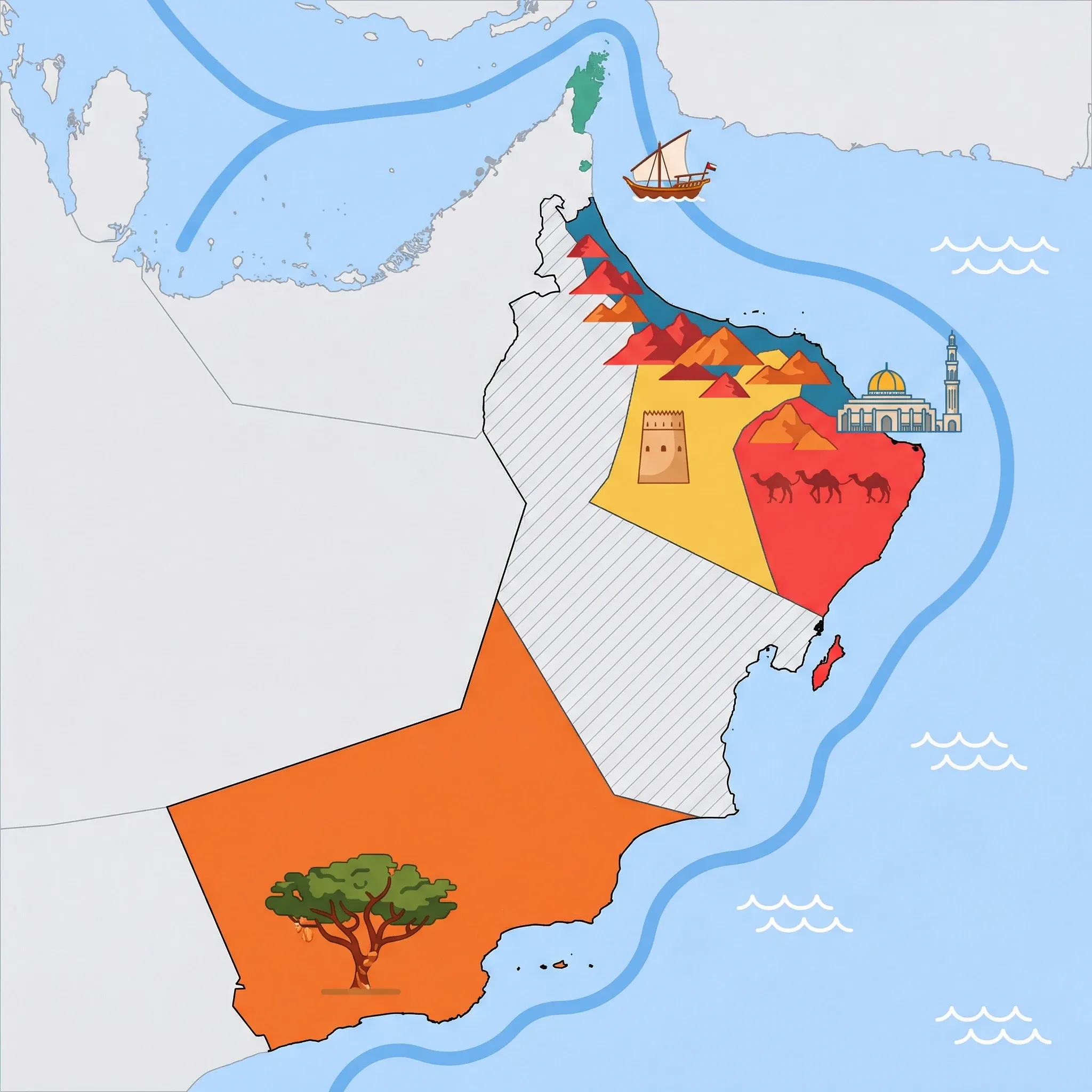
5 Regions
Dhofar (Salalah) - South
A tropical mist-soaked paradise where the desert turns green 🌴🌧️
Musandam Peninsula
Where rugged mountains meet the sea and dolphins play 🐬⛰️
Muscat & Coast
Ancient souqs, turtle beaches, and a capital city between mountains and sea 🐢🕌
Nizwa & Interior
The fortress city and the Grand Canyon of Arabia 🏰⛰️
Wahiba Sands
Endless golden dunes and starry nights ✨🐫
Click on a region marker to explore details. Use the dropdown to color regions by activity suitability.

Getting There & Around
Getting There
- By Air – Muscat International Airport (MCT) is the primary gateway, a modern and efficient hub serving Muscat & Coast. Salalah Airport (SLL) serves the south.
- By Land – Families can drive from the UAE via several border crossings, such as Hatta or Al Ain. The drive from Dubai to Muscat takes roughly 4–5 hours. You must have proof of car insurance that covers Oman.
- Entry Requirements – Citizens of over 100 countries (including the US, UK, and EU) can enter visa-free for up to 14 days, provided they have a confirmed hotel booking, return ticket, and health insurance. For longer stays, an e-visa is required. Check your government website for the latest visa requirements, or use the IATA Travel Centre entry-requirements checker.
Getting Around
- Car Hire – The most practical way for families to explore. Roads are excellent, and fuel is affordable. A 4WD is highly recommended for visiting Nizwa & Interior mountains like Jebel Shams or driving into the desert.
- Taxis – Orange-and-white taxis are common in Muscat but can be expensive as they often do not use meters; negotiate the fare before getting in. Ride-hailing apps like Otaxi are more reliable for fair pricing.
- Domestic Flights – Oman Air and SalamAir fly daily between Muscat and Salalah, which is the best way to reach Dhofar (Salalah) - South (a 1.5-hour flight vs. a 10-hour drive).
- Buses – Mwasalat buses are modern, air-conditioned, and safe, connecting major cities like Nizwa and Muscat. However, they lack the flexibility families need to reach specific sights like wadis or forts.

Packing List
Essential for swimming in public wadis where modest dress (covering shoulders/knees) is expected even in water.
Wadi beds are extremely slippery with mossy rocks; flip-flops will float away or cause slips.
To float your phone and car keys behind you while swimming through deep wadi pools.
You will frequently remove shoes at mosques, forts, and traditional majlis seating areas.
Mountains like Jebel Shams and desert nights drop to surprisingly cold temperatures.
The mountain roads to Jebel Akhdar and Jebel Shams are steep and incredibly winding.

Activities & Best Times

Adventure & Nature
ExcellentHiking, wildlife, outdoor exploration, ecotourism
The region features unique geological wonders like Wadi Shab and the critical turtle nesting sites at Ras Al Jinz. Peak conditions for hiking wadis align with the cooler months, while summer heat makes physical exertion hazardous.
A globally unique ecosystem where the monsoon transforms desert into lush green valleys like Wadi Darbat. Offers world-class frankincense heritage and rare wildlife viewing in the Jebel Samhan clouds during winter and peak Khareef.
Musandam is the 'Norway of Arabia,' offering dramatic fjord landscapes and mountain trekking on Jebel Harim. Peak season is limited to cooler months to ensure safe hiking and wildlife spotting, as summer temperatures make the rugged terrain inaccessible.

City & Cultural
Very GoodUrban tourism, museums, historical sites, architecture
While Muscat offers exceptional Arabian cultural experiences with world-class museums and the Sultan Qaboos Grand Mosque, 'excellent' should be reserved for cities with UNESCO World Heritage density (Rome, Cairo, Kyoto). Muscat has one UNESCO site (Aflaj systems, shared) but lacks the concentration of globally significant heritage that defines 'excellent' cultural destinations.
Boasts UNESCO World Heritage sites like Bahla Fort and iconic cultural experiences such as the Nizwa Friday Livestock Market. Best visited in winter to comfortably walk the historic forts and mud-brick villages; summer heat renders outdoor heritage tours difficult.
Home to the UNESCO-listed Land of Frankincense, featuring the Al Baleed and Sumhuram archaeological parks which offer high-quality historical immersion. Winter months provide the most comfortable climate for exploring these extensive outdoor heritage sites.

Sports & Active
Very GoodSport tourism, fitness activities, active recreation
Diverse terrain supports high-quality hiking trails and growing adventure infrastructure like the Salalah Zipline and Hawana Aqua Park. The cooler winter months provide the necessary climate for strenuous outdoor activities like trekking the Jebel Samhan plateau.
Home to the world's longest over-water zipline and recognized ridge trails for high-altitude trekking. Operations and active participation are highly seasonal, with the peak window defined by the tolerable temperatures required for intense physical activity.
A recognized destination for off-road dune bashing and guided desert trekking between permanent camps. Peak months offer the most favorable thermal conditions for physical activities, while summer heat makes these sports unsafe.

Beach & Sea
GoodBeach resorts, marine activities: diving, snorkelling, kite surfing, wind surfing, sailing
Famous for dhow cruises in Khor Sham and snorkeling at Telegraph Island with abundant dolphin sightings. The winter months offer crystal-clear waters and comfortable air temperatures, while the extreme summer heat and humidity degrade the coastal experience.
Pristine coastal areas and the Bimmah Sinkhole offer unique swimming and snorkeling opportunities for families. Summer months are avoided by international travelers due to extreme air temperatures and high humidity.
Features stunning undeveloped coastlines like Al Fazayah and dramatic blowholes at Mughsail. Peak season offers crystal waters, while the Khareef (June-August) brings dangerously rough seas and low visibility, making beaches unsuitable for swimming.

Educational & Exploratory
GoodLearning experiences, scientific sites, historical education
High-quality scientific and historical engagement is found at the National Museum and Ras Al Jinz Scientific Centre. Visiting is best during the cooler season when travel between sites and outdoor archaeological areas is comfortable.
Khasab Fort serves as a primary educational museum documenting the peninsula's unique maritime and mountain history. While the facility is world-class, it is typically a single-day educational stop for families already visiting the region during the peak winter season.
The Oman Across Ages Museum provides a world-class, purpose-built educational experience for families. Visitation is best aligned with general tourism seasons when supporting outdoor archaeological sites and caves like Al Hoota are accessible.

Road Trips & Scenic
GoodScenic drives, countryside tours, route-based travel
The Khasab-Tibba coastal road and Jebel Harim mountain routes offer world-class scenic driving through limestone peaks and turquoise bays. Peak visibility and safe driving conditions coincide with the cooler winter months; summer haze can occasionally obscure the views.
Home to the legendary North-South desert crossing and scenic coastal drives along Highway 17. The winter season is preferred for driving to ensure vehicle reliability and comfortable temperatures during frequent outdoor stops.
The coastal highway from Muscat to Sur provides dramatic scenic vistas where mountains meet the sea. Optimal driving conditions occur in winter when visibility is high and stops at natural landmarks like the sinkhole are pleasant.

Theme Park & Entertainment
GoodAmusement parks, family entertainment venues
Features modern indoor attractions like Snow Oman, providing a world-class escape from the outdoor heat. Peak visitation occurs during major school holiday windows and the height of summer for climate-controlled entertainment.
Offers regional family entertainment at Wadina and Naseem parks, though these lack the scale of global theme park destinations. Operational and enjoyable during the cooler months when outdoor activity is feasible for families.
The region offers modest family entertainment via Al Naseem Water Park, primarily serving a regional audience. It lacks the world-class scale required for international family travel motivation, and conditions are often too wet or humid during the monsoon.

Festivals & Seasonal
MarginalEvents, celebrations, seasonal attractions

Public Holidays & Calendar Next 12 months
Public holidays, festivals, cultural celebrations, and seasonal natural phenomena coming up in Oman over the next 12 months.
Loading holidays and events...

Climate & Weather
Dhofar (Salalah) - South
Show Details
| Month | Temp °C | Rain | Humidity |
|---|
Musandam Peninsula
Show Details
| Month | Temp °C | Rain | Humidity |
|---|
Muscat & Coast
Show Details
| Month | Temp °C | Rain | Humidity |
|---|
Nizwa & Interior
Show Details
| Month | Temp °C | Rain | Humidity |
|---|
Wahiba Sands
Show Details
| Month | Temp °C | Rain | Humidity |
|---|

Travel Advisory
A unanimous consensus among all six major agencies recommends reconsidering travel to Oman. This elevated risk is driven by recent regional military escalations, potential airspace disruptions, and the threat of falling debris from intercepted projectiles. Most agencies have issued specific shelter-in-place or departure advisories for certain regions.
Safety Topics
Traveller Advice (4 groups)

Travellers should maintain a high degree of situational awareness, keep communication devices charged, and ensure they have adequate supplies of food and water in case shelter-in-place orders are issued.

Homosexual acts are illegal in Oman and can lead to imprisonment. Travellers should exercise extreme discretion in public and avoid any public displays of affection.

Respect local cultural norms by dressing conservatively. Women should avoid walking alone in isolated areas, especially after dark, and be mindful of local sensitivities regarding public behavior.

Personnel operating near the Yemen border face extreme risks of kidnapping and being caught in armed conflict. Heightened security protocols are essential in these regions.
Agency Summaries
The U.S. has elevated the travel advisory to Level 3, advising citizens to reconsider travel because of the risk of armed conflict and terrorism. Non-emergency government employees have been authorized to depart, and there is a specific 'Do Not Travel' warning for the border region with Yemen.
New Zealand has updated its advice to Level 3, recommending that citizens avoid non-essential travel to Oman due to the deteriorating regional security situation and the risk of military strikes or armed conflict.
Canadians are advised to refrain from non-essential travel to Oman due to the risk of falling debris from intercepted missiles, potential airspace closures, and heightened regional tensions. Canadians currently in the country should follow local shelter-in-place orders if issued.
Ireland advises against non-essential travel to Oman as part of a broader regional safety warning. Citizens in Oman are urged to monitor local media closely and adhere to all instructions from local authorities, including potential shelter-in-place orders.
British nationals are advised against all but essential travel to Oman following regional escalation. Specific instructions have been issued for individuals in Duqm and Salalah to shelter in place or depart via commercial means if possible due to security risks.
Australia has raised the risk level for Oman to 'Reconsider your need to travel' citing the volatile security situation in the Middle East. Australians in the Duqm and Salalah regions are specifically advised to shelter in place and prioritize safety over movement.
Information is provided for general guidance only and does not constitute travel, safety, medical, or legal advice. Conditions may change. Users are responsible for independently verifying information before travel.