
Dhofar (Salalah) - South
A tropical mist-soaked paradise where the desert turns green 🌴🌧️
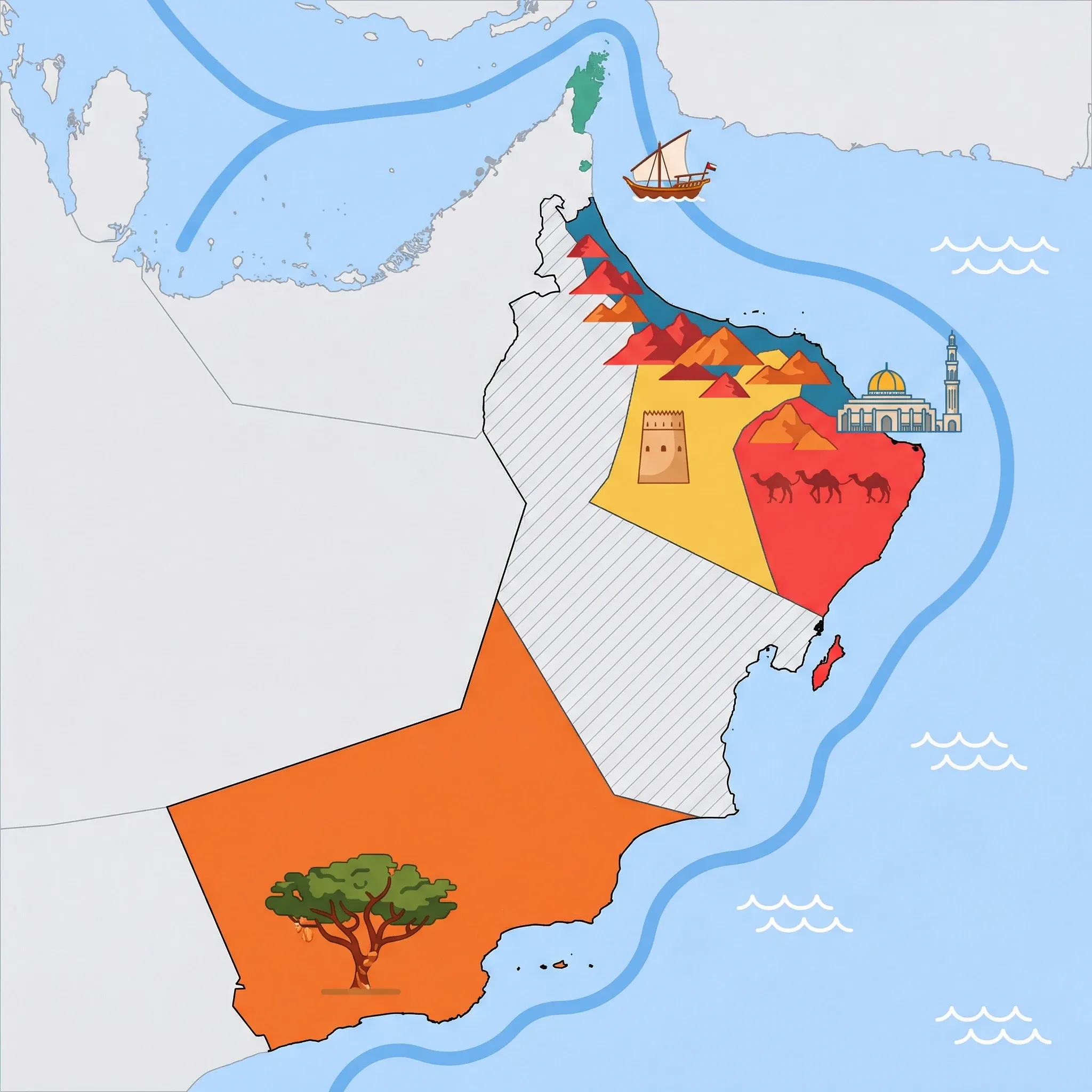
Click a region to explore
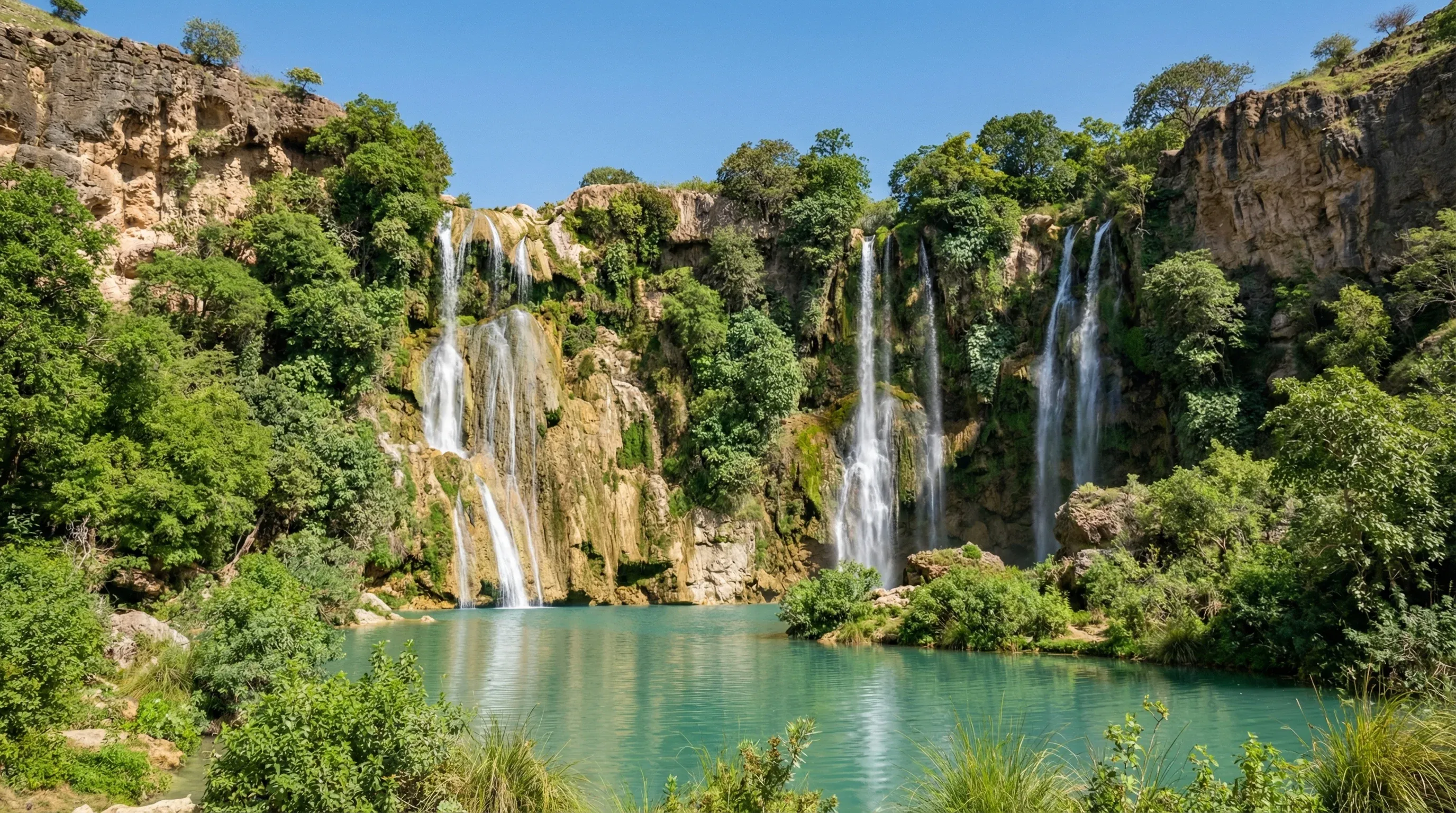
Dhofar is an anomaly in the Arabian Peninsula. While the rest of the region bakes in summer heat, the southern coast of Oman catches the Indian Ocean monsoon (the Khareef) from June to September, turning the landscape into a misty, emerald wonderland. For families, this offers a unique climate where children can play in cool drizzle and watch waterfalls cascade down limestone cliffs, all while surrounded by wandering camels. The atmosphere is relaxed and tropical, with coconut plantations lining the streets of Salalah and banana stands offering fresh local produce on every corner.
Beyond the weather phenomenon, Dhofar is the historic land of frankincense. The culture here is distinct from the north, with a strong heritage of sea trade and mountain tribes. The coastline is stunning, featuring long stretches of white sand and dramatic cliffs, though swimming is often restricted during the monsoon due to strong currents. It is a place where nature and history blend seamlessly, offering families a chance to explore ancient ruins in the morning and picnic by a mountain stream in the afternoon.
Key Attractions
Nature is the primary playground here. Wadi Darbat is the undisputed highlight for families; during the Khareef, the wadi fills with water, creating beautiful lakes where you can rent paddle boats and watch camels grazing in the water. For a deep dive into history that won't bore the kids, the Museum of the Frankincense Land offers excellent interactive exhibits on maritime history and the spice trade, situated right next to the archaeological ruins. To see the rugged side of the region, a drive up to Jebel Samhan Nature Reserve offers breathtaking views above the clouds, where you might spot local wildlife like the Arabian leopard (though they are elusive). History buffs should not miss Al Baleed Archaeological Park, a UNESCO site that allows children to run free among ancient ruins near the sea.
Practical Advice
The best time to visit for the green phenomenon is July to early September, but be prepared for mist and light rain. If you want beach weather and swimming, visit between October and April when the skies are blue and the sea is calm. Renting a car is essential as attractions are spread out. Insect repellent is a must during the monsoon season.
Food & Drink
Typical meal times: Lunch is typically served from 1:00 pm to 3:00 pm, and dinner is late, usually starting from 8:00 pm to 11:00 pm.
Typical meal costs: A hearty family meal at a local restaurant costs OMR 15–25 (approx. $39–65 USD / €36–60 EUR).
Dietary requirements: Rice and meat are staples, but larger hotels in Salalah cater well to allergies. Vegetarian options (mostly Indian cuisine) are widely available. Nut allergies should be communicated clearly as almonds and cashews are used in sweets and rice.
Signature dishes:
- Muthbe – Stones are heated over a fire, and meat (chicken or camel) is grilled directly on the hot stones, a Dhofari specialty.
- Maqbous – A fragrant rice dish cooked with meat (often chicken or lamb), dried limes, and spices, similar to Biryani but with distinct local flavours.
- Harees – A porridge-like dish of boiled wheat and meat, beaten until smooth and savoury.
Why this score?
The region offers rugged coastal drives along the Hasik highway and wildlife spotting in the Jebel Samhan clouds. While Salalah is developed, the surrounding mountains and proximity to the Empty Quarter provide a high degree of remote exploration.
Why this score?
Salalah contains modern facilities like Sultan Qaboos Hospital which are capable of handling most tourist emergencies and have English-speaking staff. However, medical services are very sparse once you venture into the remote mountain wadis or coastal stretches.
Why this score?
Dhofar is a major regional draw during the Khareef monsoon season, attracting hundreds of thousands of visitors from the Gulf. While it has an emerging winter market for European charter flights, it remains less visited than the Muscat-Nizwa circuit on an annual basis.

Dhofar is generally affordable, though prices spike significantly during the Khareef season (July–August). Accommodation can range from OMR 30–80 (approx. $78–208 USD / €72–192 EUR) per night. Street food and local dining are very cheap, with shawarmas costing around OMR 0.5–1 (approx. $1.30–2.60 USD / €1.20–2.40 EUR).

Getting Here & Around
Getting Here
- Airports – Salalah International Airport (SLL) is the main hub, with direct flights from Muscat (1.5 hours) and other Gulf cities.
- Driving – The drive from Muscat is a long journey (approx. 10–12 hours) across the central desert. It is safe but requires endurance.
- Bus – Intercity buses run from Muscat to Salalah, taking roughly 12 hours, but are less convenient for families with small children.
Getting Around
- Car – Renting a car is the most practical way to explore. A 4x4 is recommended if you plan to explore the mountains or Jebel Samhan Nature Reserve, though sedans can handle the main roads to Wadi Darbat.
- Taxi – Taxis are available in Salalah city but can be expensive for multi-stop day trips.
Nearby Airports (1 airport)
Salalah
SLLSalalah
View full flight map for Oman →

Packing List
Essential for the Khareef mist and constant drizzle in summer
The lush vegetation during monsoon brings gnats and mosquitoes
Best for navigating wet wadis and slippery grassy banks
The local culture is all about picnicking on the green mountainsides
Essential for swimming in public wadis where modest dress (covering shoulders/knees) is expected even in water.
Wadi beds are extremely slippery with mossy rocks; flip-flops will float away or cause slips.
To float your phone and car keys behind you while swimming through deep wadi pools.
You will frequently remove shoes at mosques, forts, and traditional majlis seating areas.
Mountains like Jebel Shams and desert nights drop to surprisingly cold temperatures.
The mountain roads to Jebel Akhdar and Jebel Shams are steep and incredibly winding.

Activities & Best Times

Hiking, wildlife, outdoor exploration, ecotourism
A globally unique ecosystem where the monsoon transforms desert into lush green valleys like Wadi Darbat. Offers world-class frankincense heritage and rare wildlife viewing in the Jebel Samhan clouds during winter and peak Khareef.

Urban tourism, museums, historical sites, architecture
Home to the UNESCO-listed Land of Frankincense, featuring the Al Baleed and Sumhuram archaeological parks which offer high-quality historical immersion. Winter months provide the most comfortable climate for exploring these extensive outdoor heritage sites.

Sport tourism, fitness activities, active recreation
Diverse terrain supports high-quality hiking trails and growing adventure infrastructure like the Salalah Zipline and Hawana Aqua Park. The cooler winter months provide the necessary climate for strenuous outdoor activities like trekking the Jebel Samhan plateau.

Beach resorts, marine activities: diving, snorkelling, kite surfing, wind surfing, sailing
Features stunning undeveloped coastlines like Al Fazayah and dramatic blowholes at Mughsail. Peak season offers crystal waters, while the Khareef (June-August) brings dangerously rough seas and low visibility, making beaches unsuitable for swimming.

Scenic drives, countryside tours, route-based travel
Boasts spectacular engineering on the Sarfait 'Zig-Zag' road and scenic coastal drives toward Hasik. Winter offers perfect visibility and safety, whereas the Khareef period brings heavy fog and slick conditions that challenge international safety standards.

Learning experiences, scientific sites, historical education
The Museum of the Frankincense Land provides a high-quality historical overview of the region's unique trade history. While significant, it is generally visited as part of a wider cultural itinerary rather than being a standalone destination-level draw.

Amusement parks, family entertainment venues
The region offers modest family entertainment via Al Naseem Water Park, primarily serving a regional audience. It lacks the world-class scale required for international family travel motivation, and conditions are often too wet or humid during the monsoon.




Public Holidays & Calendar Next 12 months
Public holidays, festivals, cultural celebrations, and seasonal natural phenomena coming up in Dhofar (Salalah) - South over the next 12 months.
Loading holidays and events...

Travel Advisory
A unanimous consensus among all six major agencies recommends reconsidering travel to Oman. This elevated risk is driven by recent regional military escalations, potential airspace disruptions, and the threat of falling debris from intercepted projectiles. Most agencies have issued specific shelter-in-place or departure advisories for certain regions.
Safety Topics
Traveller Advice (4 groups)

Travellers should maintain a high degree of situational awareness, keep communication devices charged, and ensure they have adequate supplies of food and water in case shelter-in-place orders are issued.

Homosexual acts are illegal in Oman and can lead to imprisonment. Travellers should exercise extreme discretion in public and avoid any public displays of affection.

Respect local cultural norms by dressing conservatively. Women should avoid walking alone in isolated areas, especially after dark, and be mindful of local sensitivities regarding public behavior.

Personnel operating near the Yemen border face extreme risks of kidnapping and being caught in armed conflict. Heightened security protocols are essential in these regions.
Agency Summaries
The U.S. has elevated the travel advisory to Level 3, advising citizens to reconsider travel because of the risk of armed conflict and terrorism. Non-emergency government employees have been authorized to depart, and there is a specific 'Do Not Travel' warning for the border region with Yemen.
New Zealand has updated its advice to Level 3, recommending that citizens avoid non-essential travel to Oman due to the deteriorating regional security situation and the risk of military strikes or armed conflict.
Canadians are advised to refrain from non-essential travel to Oman due to the risk of falling debris from intercepted missiles, potential airspace closures, and heightened regional tensions. Canadians currently in the country should follow local shelter-in-place orders if issued.
Ireland advises against non-essential travel to Oman as part of a broader regional safety warning. Citizens in Oman are urged to monitor local media closely and adhere to all instructions from local authorities, including potential shelter-in-place orders.
British nationals are advised against all but essential travel to Oman following regional escalation. Specific instructions have been issued for individuals in Duqm and Salalah to shelter in place or depart via commercial means if possible due to security risks.
Australia has raised the risk level for Oman to 'Reconsider your need to travel' citing the volatile security situation in the Middle East. Australians in the Duqm and Salalah regions are specifically advised to shelter in place and prioritize safety over movement.
Information is provided for general guidance only and does not constitute travel, safety, medical, or legal advice. Conditions may change. Users are responsible for independently verifying information before travel.