
Musandam Peninsula
Where rugged mountains meet the sea and dolphins play 🐬⛰️
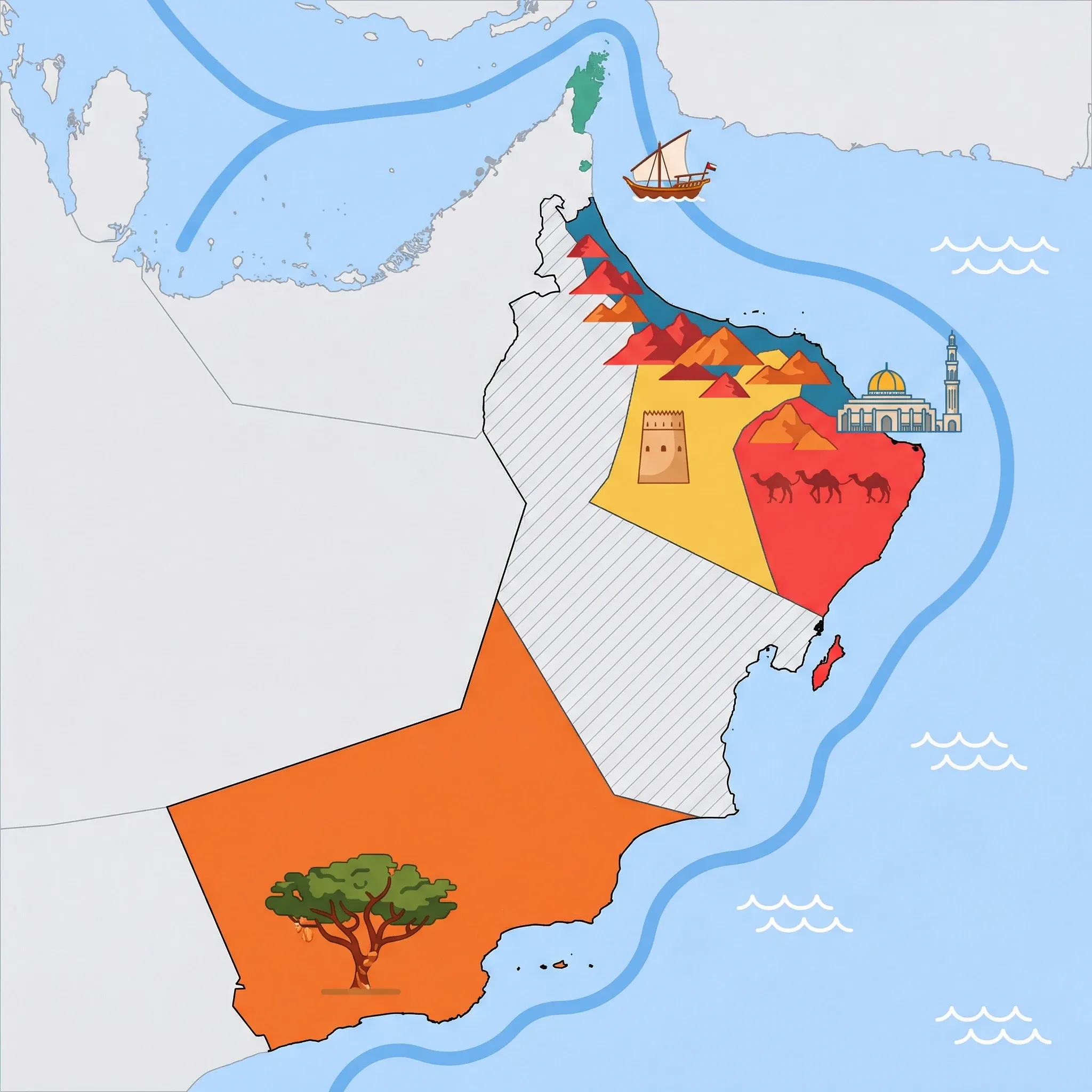
Click a region to explore
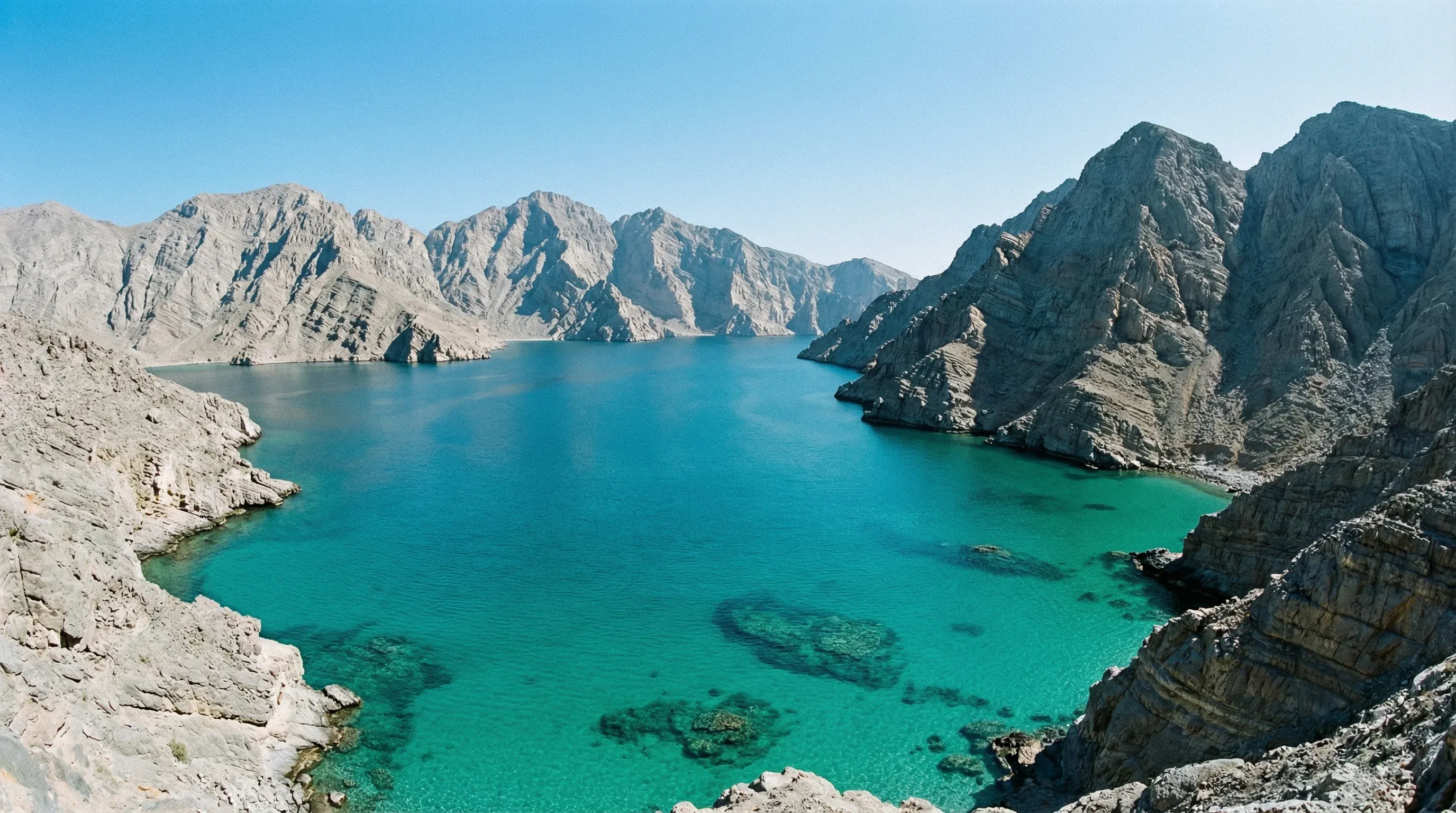
Musandam is a place of stark, rugged beauty. Separated from the rest of Oman by the United Arab Emirates, this exclave guards the strategic Strait of Hormuz. For families, the primary appeal is the water. The coastline is fractured into spectacular fjords (khors), where steep limestone cliffs plunge directly into turquoise waters. It feels like an adventure just to get here, and once you arrive, the pace slows down completely. There are no malls or theme parks; instead, the entertainment is nature itself.
The highlight of any trip to Musandam is a Dhow cruise. These traditional Omani boats drift through the calm fjords, offering a relaxing base for families. Children are almost guaranteed to see Humpback dolphins, which are famous in this region for swimming alongside boats. The water is generally calm within the khors, making it safe for swimming and snorkeling off the boat. On land, the terrain is dry and mountainous, offering 4x4 safaris that climb high into the peaks for views that stretch all the way to Iran on a clear day.
Key Attractions
The absolute must-do is a Dhow Cruise into the fjords, often departing near Khasab Castle. The castle itself is a fantastic educational stop for kids; it has been beautifully restored and houses a museum that explains local history, geology, and wildlife in a way that is accessible to younger visitors. The central tower displays traditional jewelry, clothes, and weapons. Beyond the castle, the attraction is the landscape. Families can take 4x4 tours up Jebel Harim (Mountain of Women) to see fossils embedded in the rock, proving these peaks were once underwater.
Practical Advice
The best time to visit is October to April when the weather is pleasant (25°C–30°C). Summers are extremely hot and humid. Visas can be tricky as you cross UAE borders to drive here; ensure your documents are in order if driving. Flying or taking the ferry avoids border crossings.
Food & Drink
Typical meal times: Lunch is usually 12:30 pm to 2:30 pm. Dinner is served from 7:30 pm to 10:00 pm.
Typical meal costs: Dining options are limited. A meal in a hotel or local restaurant costs OMR 8–15 (approx. $20–39 USD / €19–36 EUR) per person.
Dietary requirements: Seafood is the staple here. Vegetarians can find options (hummus, salads, vegetable curries), but gluten-free options are rare outside of high-end hotels.
Signature dishes:
- Grilled Hamour – Fresh grouper fish, caught locally and grilled simply with lemon and spices.
- Kingfish Curry – A rich, coconut-milk based curry using fresh Kingfish, a local favourite.
- Omani Bread (Rakhal) – Paper-thin bread often filled with cheese, honey, or egg, great for a quick snack.
Why this score?
The 'Norway of Arabia' features incredibly rugged terrain with mountains like Jebel Harim and villages accessible only by sea. The isolation and dramatic vertical geography of the fjords offer a highly adventurous experience for families.
Why this score?
Medical facilities in Khasab are basic and suitable only for minor ailments or stabilization. Serious conditions typically require an emergency evacuation to Muscat or across the border to high-end hospitals in the UAE.
Why this score?
Its status as an exclave means many visitors arrive via day trips or cruises from the UAE rather than staying long-term. While iconic for its dhow cruises and fjords, the total international visitor count is lower than the mainland hubs.

Musandam is more expensive than mainland Oman due to its isolation. Tours (Dhow cruises and mountain safaris) are the main expense, costing around OMR 20–40 (approx. $52–104 USD / €48–96 EUR) per person. Hotels are limited and mid-to-high range.

Getting Here & Around
Getting Here
- Airports – Khasab Airport (KHS) has daily flights from Muscat (1 hour). The approach through the mountains is spectacular.
- Ferry – A high-speed ferry runs from Shinas (mainland Oman) to Khasab. It takes about 5 hours and allows you to bring a car.
- Driving – You can drive from Dubai (approx. 3 hours) or Ras Al Khaimah, but this involves crossing the border. You must have car insurance that covers Oman.
Getting Around
- Boat – The most common way to see the region is by boat. Dhow cruises are the primary mode of transport for sightseeing.
- Car – There is no public transport. Taxis are available in Khasab, but to explore the mountains or visit Khasab Castle independently, a rental car or guided tour is best.
Nearby Airports (1 airport)
Khasab
KHSKhasab
View full flight map for Oman →

Packing List
Essential for dhow cruises if you are prone to motion sickness
Boat operators provide gear, but child sizes are often poor quality
It gets surprisingly breezy and cool on the open water, even on sunny days
To protect phones and cameras during boat transfers and swimming stops
Essential for swimming in public wadis where modest dress (covering shoulders/knees) is expected even in water.
Wadi beds are extremely slippery with mossy rocks; flip-flops will float away or cause slips.
To float your phone and car keys behind you while swimming through deep wadi pools.
You will frequently remove shoes at mosques, forts, and traditional majlis seating areas.
Mountains like Jebel Shams and desert nights drop to surprisingly cold temperatures.
The mountain roads to Jebel Akhdar and Jebel Shams are steep and incredibly winding.

Activities & Best Times

Hiking, wildlife, outdoor exploration, ecotourism
Musandam is the 'Norway of Arabia,' offering dramatic fjord landscapes and mountain trekking on Jebel Harim. Peak season is limited to cooler months to ensure safe hiking and wildlife spotting, as summer temperatures make the rugged terrain inaccessible.

Beach resorts, marine activities: diving, snorkelling, kite surfing, wind surfing, sailing
Famous for dhow cruises in Khor Sham and snorkeling at Telegraph Island with abundant dolphin sightings. The winter months offer crystal-clear waters and comfortable air temperatures, while the extreme summer heat and humidity degrade the coastal experience.

Urban tourism, museums, historical sites, architecture
Features well-preserved defensive architecture like Khasab and Bukha Castles and the unique Kumzari cultural enclave. Cultural exploration is best during the winter tourism peak when the lack of shade in historic sites is mitigated by pleasant weather.

Scenic drives, countryside tours, route-based travel
The Khasab-Tibba coastal road and Jebel Harim mountain routes offer world-class scenic driving through limestone peaks and turquoise bays. Peak visibility and safe driving conditions coincide with the cooler winter months; summer haze can occasionally obscure the views.

Sport tourism, fitness activities, active recreation
Home to the world's longest over-water zipline and recognized ridge trails for high-altitude trekking. Operations and active participation are highly seasonal, with the peak window defined by the tolerable temperatures required for intense physical activity.

Learning experiences, scientific sites, historical education
Khasab Fort serves as a primary educational museum documenting the peninsula's unique maritime and mountain history. While the facility is world-class, it is typically a single-day educational stop for families already visiting the region during the peak winter season.




Public Holidays & Calendar Next 12 months
Public holidays, festivals, cultural celebrations, and seasonal natural phenomena coming up in Musandam Peninsula over the next 12 months.
Loading holidays and events...

Travel Advisory
A unanimous consensus among all six major agencies recommends reconsidering travel to Oman. This elevated risk is driven by recent regional military escalations, potential airspace disruptions, and the threat of falling debris from intercepted projectiles. Most agencies have issued specific shelter-in-place or departure advisories for certain regions.
Safety Topics
Traveller Advice (4 groups)

Travellers should maintain a high degree of situational awareness, keep communication devices charged, and ensure they have adequate supplies of food and water in case shelter-in-place orders are issued.

Homosexual acts are illegal in Oman and can lead to imprisonment. Travellers should exercise extreme discretion in public and avoid any public displays of affection.

Respect local cultural norms by dressing conservatively. Women should avoid walking alone in isolated areas, especially after dark, and be mindful of local sensitivities regarding public behavior.

Personnel operating near the Yemen border face extreme risks of kidnapping and being caught in armed conflict. Heightened security protocols are essential in these regions.
Agency Summaries
The U.S. has elevated the travel advisory to Level 3, advising citizens to reconsider travel because of the risk of armed conflict and terrorism. Non-emergency government employees have been authorized to depart, and there is a specific 'Do Not Travel' warning for the border region with Yemen.
New Zealand has updated its advice to Level 3, recommending that citizens avoid non-essential travel to Oman due to the deteriorating regional security situation and the risk of military strikes or armed conflict.
Canadians are advised to refrain from non-essential travel to Oman due to the risk of falling debris from intercepted missiles, potential airspace closures, and heightened regional tensions. Canadians currently in the country should follow local shelter-in-place orders if issued.
Ireland advises against non-essential travel to Oman as part of a broader regional safety warning. Citizens in Oman are urged to monitor local media closely and adhere to all instructions from local authorities, including potential shelter-in-place orders.
British nationals are advised against all but essential travel to Oman following regional escalation. Specific instructions have been issued for individuals in Duqm and Salalah to shelter in place or depart via commercial means if possible due to security risks.
Australia has raised the risk level for Oman to 'Reconsider your need to travel' citing the volatile security situation in the Middle East. Australians in the Duqm and Salalah regions are specifically advised to shelter in place and prioritize safety over movement.
Information is provided for general guidance only and does not constitute travel, safety, medical, or legal advice. Conditions may change. Users are responsible for independently verifying information before travel.