
Muscat & Coast
Ancient souqs, turtle beaches, and a capital city between mountains and sea 🐢🕌
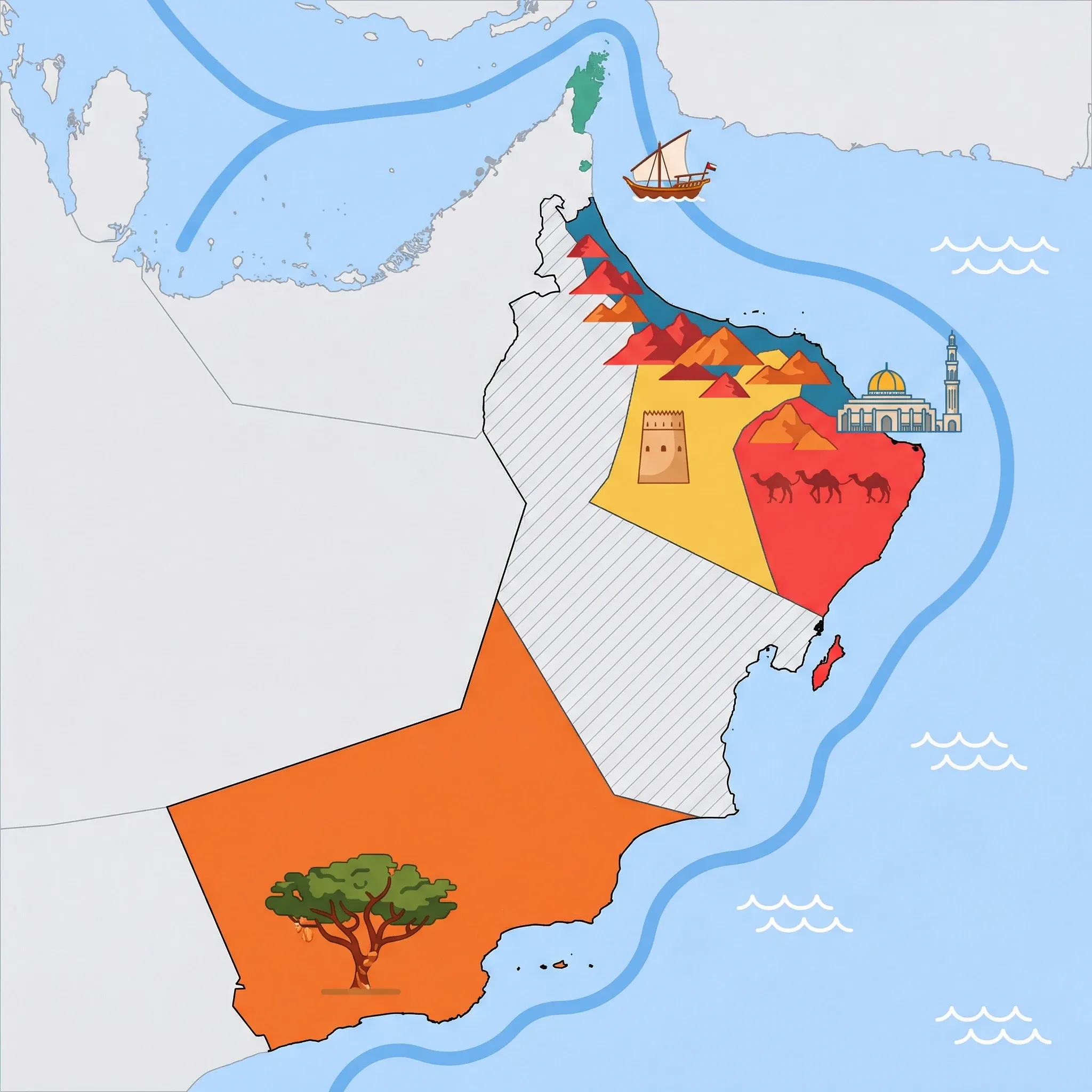
Click a region to explore
Muscat is unlike any other Gulf capital. There are no forests of skyscrapers; instead, the city is a low-rise white wash of elegant buildings nestled between jagged brown mountains and the deep blue Arabian Sea. It is incredibly clean, safe, and family-friendly. The city stretches along the coast, offering distinct districts: the old port of Mutrah with its bustling market, the ceremonial heart of Old Muscat, and the modern, energetic areas of Qurum and Al Mouj. For families, this means you can enjoy world-class amenities and parks while still feeling deeply immersed in Omani culture.
Driving south from Muscat, the coast opens up into a playground of natural wonders. The coastal road is one of the most scenic drives in the region, leading to natural swimming holes and pristine beaches. This region is also famous for its wildlife; the Daymaniyat Islands offer some of the best snorkeling in the Middle East, while the beaches towards Sur are world-renowned nesting grounds for green turtles. It is a region that rewards curiosity, offering a mix of urban exploration and seaside adventure.
Key Attractions
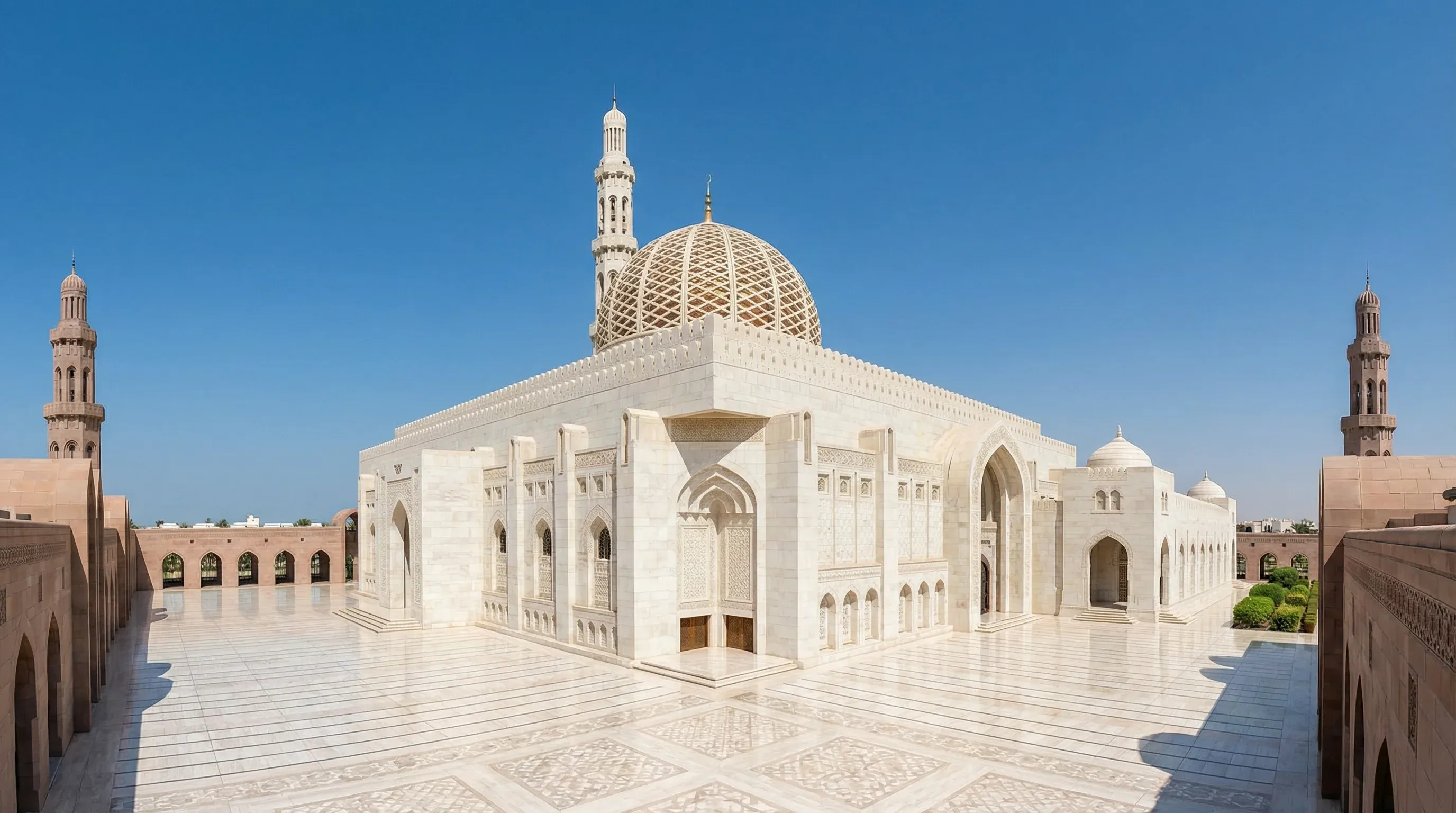
Start your journey at the Sultan Qaboos Grand Mosque. It is one of the few mosques open to non-Muslims and is a breathtaking architectural marvel; children are often awed by the massive chandelier and handmade carpet (Note: strict dress code applies). For a sensory experience, visit Mutrah Souq. It’s a maze of frankincense smoke and narrow alleys where kids can buy Aladdin-style lamps and old coins. Nature lovers should drive down the coast to the Bimmah Sinkhole, a stunning limestone crater filled with clear emerald water perfect for a cooling dip. For a day trip, a boat ride to Daymaniyat Islands Nature Reserve offers the chance to snorkel with turtles in crystal-clear water.
Practical Advice
November to March is the ideal time to visit. Avoid walking outdoors between 12:00 pm and 3:00 pm even in winter, as the sun is strong. Muscat is very spread out; you cannot walk between districts. Renting a car is the easiest way to get around, although taxis (Otaxi app) are reliable. When visiting the Grand Mosque, men must wear long trousers and women must cover their hair and body entirely.
Food & Drink
Typical meal times: Lunch is 1:00 pm to 3:00 pm. Dinner is 8:00 pm to 11:00 pm.
Typical meal costs: A mid-range meal for a family of four costs OMR 20–35 (approx. $52–90 USD / €48–84 EUR). High-end hotels will be significantly more.
Dietary requirements: Muscat is very cosmopolitan. You will find gluten-free and vegan options in modern cafes in Al Mouj and Qurum. Traditional restaurants heavily feature rice, bread, and meat.
Signature dishes:
- Shuwa – Marinated meat (usually lamb) slow-cooked underground for up to 24 hours. The meat is incredibly tender and served with rice.
- Mishkak – Skewers of marinated beef, chicken, or squid grilled over charcoal, often sold at roadside stalls in the evening.
- Omani Halwa – A sticky, sweet gelatinous dessert made with saffron, cardamom, rose water, and nuts.
Why this score?
The region is highly developed with modern highways, luxury beachfront resorts, and manicured parks. While activities like snorkeling at the Daymaniyat Islands exist, they are conducted in a controlled, tourist-friendly environment.
Why this score?
Muscat offers the best healthcare in the country, featuring world-class private hospitals like Muscat Private Hospital that cater to expats and tourists. Staff are highly trained, English-proficient, and familiar with international insurance protocols.
Why this score?
As the primary international gateway, Muscat sees the vast majority of Oman's 2.6 million annual tourists. Major sites like the Sultan Qaboos Grand Mosque and the turtle reserves at Ras al Jinz are established global attractions.

Muscat has options for all budgets. 5-star resorts are expensive (OMR 100+ / $260+ per night), but comfortable apartment hotels are available for OMR 25–40 (approx. $65–104 USD / €60–96 EUR). Petrol is cheap, making self-drive affordable.

Getting Here & Around
Getting Here
- Airports – Muscat International Airport (MCT) is the primary entry point to the country, with excellent connections to Europe and Asia.
- Driving – The coastal highway connects Muscat to Sur (2 hours) and continues down to the south. Roads are in excellent condition.
- Bus – Mwasalat buses connect the airport to main city hubs, but a car is preferred for families.
Getting Around
- Car – Highly recommended. Muscat is a linear city stretching over 50km. Navigation is easy with Google Maps.
- Taxi – Use the 'Otaxi' app for fair, metered rates. Orange and white street taxis often require bargaining.
- Walking – Only feasible in specific areas like the Mutrah Souq corniche or Al Mouj; the city is not designed for walking between districts.
Nearby Airports (2 airports)
Seeb International
MCTMuscat
Sohar Airport
OHSSohar
View full flight map for Oman →
Official Links

Packing List
Crucial for swimming at Daymaniyat Islands to protect the coral
Essential for women to cover heads/shoulders when visiting mosques
Beaches can be rocky and the sinkhole has rough limestone edges
Water heats up instantly in the car; insulation is vital
Essential for swimming in public wadis where modest dress (covering shoulders/knees) is expected even in water.
Wadi beds are extremely slippery with mossy rocks; flip-flops will float away or cause slips.
To float your phone and car keys behind you while swimming through deep wadi pools.
You will frequently remove shoes at mosques, forts, and traditional majlis seating areas.
Mountains like Jebel Shams and desert nights drop to surprisingly cold temperatures.
The mountain roads to Jebel Akhdar and Jebel Shams are steep and incredibly winding.

Activities & Best Times

Hiking, wildlife, outdoor exploration, ecotourism
The region features unique geological wonders like Wadi Shab and the critical turtle nesting sites at Ras Al Jinz. Peak conditions for hiking wadis align with the cooler months, while summer heat makes physical exertion hazardous.

Urban tourism, museums, historical sites, architecture
While Muscat offers exceptional Arabian cultural experiences with world-class museums and the Sultan Qaboos Grand Mosque, 'excellent' should be reserved for cities with UNESCO World Heritage density (Rome, Cairo, Kyoto). Muscat has one UNESCO site (Aflaj systems, shared) but lacks the concentration of globally significant heritage that defines 'excellent' cultural destinations.

Beach resorts, marine activities: diving, snorkelling, kite surfing, wind surfing, sailing
Pristine coastal areas and the Bimmah Sinkhole offer unique swimming and snorkeling opportunities for families. Summer months are avoided by international travelers due to extreme air temperatures and high humidity.

Learning experiences, scientific sites, historical education
High-quality scientific and historical engagement is found at the National Museum and Ras Al Jinz Scientific Centre. Visiting is best during the cooler season when travel between sites and outdoor archaeological areas is comfortable.

Scenic drives, countryside tours, route-based travel
The coastal highway from Muscat to Sur provides dramatic scenic vistas where mountains meet the sea. Optimal driving conditions occur in winter when visibility is high and stops at natural landmarks like the sinkhole are pleasant.

Sport tourism, fitness activities, active recreation
The region's wadis and coastal waters support world-class trekking and maritime activities through established operators like SeaOman. Active tourism is concentrated in the cooler months to avoid the oppressive summer heat.

Amusement parks, family entertainment venues
Features modern indoor attractions like Snow Oman, providing a world-class escape from the outdoor heat. Peak visitation occurs during major school holiday windows and the height of summer for climate-controlled entertainment.

Events, celebrations, seasonal attractions
The Green Sea Turtle nesting at Ras Al Jinz is a significant natural spectacle. While sightings occur year-round, peak nesting activity happens during the summer months, attracting dedicated nature enthusiasts despite the high heat.

Attractions (12 total)



Public Holidays & Calendar Next 12 months
Public holidays, festivals, cultural celebrations, and seasonal natural phenomena coming up in Muscat & Coast over the next 12 months.
Loading holidays and events...

Travel Advisory
A unanimous consensus among all six major agencies recommends reconsidering travel to Oman. This elevated risk is driven by recent regional military escalations, potential airspace disruptions, and the threat of falling debris from intercepted projectiles. Most agencies have issued specific shelter-in-place or departure advisories for certain regions.
Safety Topics
Traveller Advice (4 groups)

Travellers should maintain a high degree of situational awareness, keep communication devices charged, and ensure they have adequate supplies of food and water in case shelter-in-place orders are issued.

Homosexual acts are illegal in Oman and can lead to imprisonment. Travellers should exercise extreme discretion in public and avoid any public displays of affection.

Respect local cultural norms by dressing conservatively. Women should avoid walking alone in isolated areas, especially after dark, and be mindful of local sensitivities regarding public behavior.

Personnel operating near the Yemen border face extreme risks of kidnapping and being caught in armed conflict. Heightened security protocols are essential in these regions.
Agency Summaries
The U.S. has elevated the travel advisory to Level 3, advising citizens to reconsider travel because of the risk of armed conflict and terrorism. Non-emergency government employees have been authorized to depart, and there is a specific 'Do Not Travel' warning for the border region with Yemen.
New Zealand has updated its advice to Level 3, recommending that citizens avoid non-essential travel to Oman due to the deteriorating regional security situation and the risk of military strikes or armed conflict.
Canadians are advised to refrain from non-essential travel to Oman due to the risk of falling debris from intercepted missiles, potential airspace closures, and heightened regional tensions. Canadians currently in the country should follow local shelter-in-place orders if issued.
Ireland advises against non-essential travel to Oman as part of a broader regional safety warning. Citizens in Oman are urged to monitor local media closely and adhere to all instructions from local authorities, including potential shelter-in-place orders.
British nationals are advised against all but essential travel to Oman following regional escalation. Specific instructions have been issued for individuals in Duqm and Salalah to shelter in place or depart via commercial means if possible due to security risks.
Australia has raised the risk level for Oman to 'Reconsider your need to travel' citing the volatile security situation in the Middle East. Australians in the Duqm and Salalah regions are specifically advised to shelter in place and prioritize safety over movement.
Information is provided for general guidance only and does not constitute travel, safety, medical, or legal advice. Conditions may change. Users are responsible for independently verifying information before travel.